Calling a Tennessee Gobbler Off the Roost
There are few things as frustrating as hearing a big Tennessee gobbler thunder on the roost, sounding like he’s ready to fly down right into your lap, only for him to clam up, drift away, or fly down with a harem of hens completely out of your reach. It’s a common scenario that leaves many turkey hunters scratching their heads and stomping their feet in frustration. This guide is here to unravel the mysteries of those early morning roost calls and equip you with practical, real-world tactics to coax that strutting tom off his limb and into your shooting lane.
Understanding the Morning Roost Routine
Successfully calling a gobbler off the roost starts with understanding why he's there and what his natural tendencies are once that first hint of dawn streaks across the eastern sky. It’s not just about making turkey sounds; it’s about mimicking the entire social dynamic of a spring morning in the woods.
Why Gobblers Stick to the Roost
For a wild turkey, the roost is a fortress. High in the treetops, often in mature hardwoods like oaks or sycamores, they are relatively safe from nocturnal predators like coyotes, bobcats, and owls. They gain a commanding view of their surroundings as daylight approaches, allowing them to survey for danger before committing to the ground. This safety factor is paramount. Until they feel secure, or until they hear and see something compelling enough to override that instinct, they'll often stay put.
Beyond safety, there’s a social aspect. Many gobblers will roost near hens, particularly during the early parts of the spring season. He's there because his potential mates are there, and his main goal isn't just to gobble; it's to breed. If he's got hens roosting with him, or within earshot, he's less likely to commit to a lone hen call from the ground. He already has what he's looking for, or at least he thinks he does. Wind, rain, and cold can also influence how long a gobbler stays on the limb, as they'll often wait for more favorable conditions.
The Silent Period and Fly-Down
The earliest moments of dawn are often marked by what we call the "silent period." This is the time before the first gobble, when turkeys are just stirring on their limbs, shaking out their feathers, and getting ready for the day. This period is critical for hunters to get into position without being detected. Once the first gobble cracks through the quiet, usually followed by the characteristic sounds of crows, owls, or even an excited squirrel, the show begins.
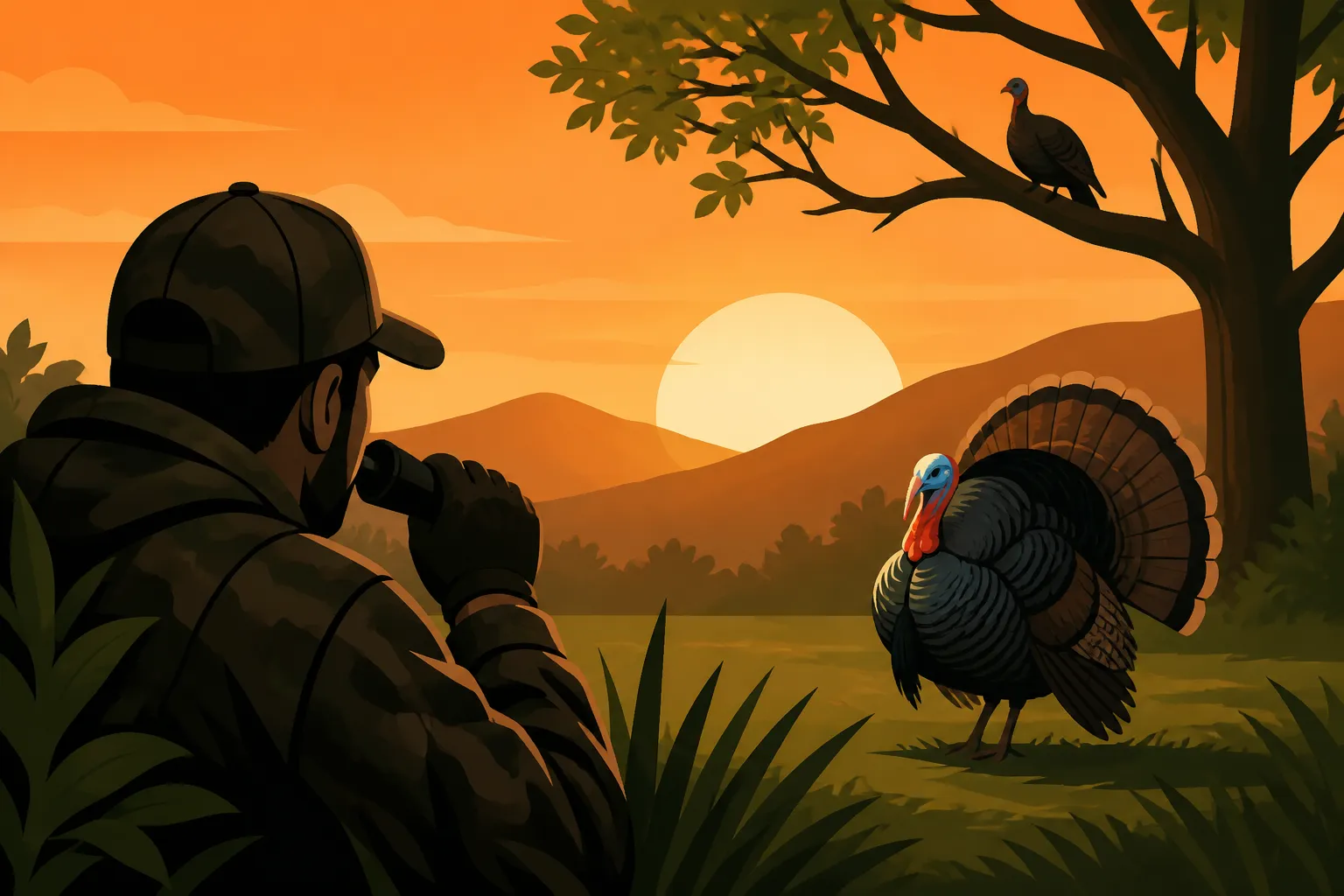
After a series of gobbles, and as the light brightens, the hens will typically be the first to fly down. They often give soft tree yelps and clucks before pitching off their roost. The gobbler, especially one with hens, will often wait for them to hit the ground. He'll continue to gobble, trying to gather his flock, and might even strut on his limb, putting on a display. His fly-down is usually less subtle than a hen's, often accompanied by heavy wing beats and a loud thump as he lands, usually on a slightly elevated spot or an open area where he can immediately begin strutting. The key is to be set up and ready during this transition, because once his feet hit the dirt, the game changes entirely.
Early Morning Scout and Setup
Getting into position before the first gobble is absolutely crucial. This means scouting the evening before to locate roost trees, if possible, or using an owl hoot or coyote howl locator call in the predawn darkness to pinpoint a gobbler's location. A good mapping app, like one found on GoHunt, can be invaluable for marking potential roost sites, planning your access route, and identifying suitable setup locations. You want to get as close as you dare, ideally within 100-150 yards, without alarming the birds. Use the terrain, natural cover, and even the ambient noise of the woods to mask your approach.
Once you’ve identified where he’s roosted, finding the right setup on the ground is paramount. Think about where he’s likely to fly down. Is there an open field edge, a logging road, or a sparse timber ridge? You want to be between him and his likely travel route, or in a position where he’ll have to pass by you to get to where he thinks the "hen" (you) is. Always try to set up with some sort of natural barrier or visual obstruction behind you to break up your silhouette, like a large tree trunk or a thick briar patch. Being able to blend in and remain still is often more important than the most aggressive calling. For more on how to approach these setups, check out our guide on Roost Hunting Tennessee Gobblers.
Strategic Calling from the Ground
Once you're set up, the real art of calling begins. It's not about how loud or fancy you can call, but how effectively you can communicate with that particular gobbler.
Soft Calls and Patience
When a gobbler is still on the roost, especially if it's early and he's just started gobbling, less is often more. Start with soft, subtle calls. A few tree yelps, a soft cluck, maybe a purr or two. Imagine a hen just waking up, still on her limb, calling to her flock mates. You're trying to sound like a hen already on the ground, or one just about to fly down, inviting him to join her. The goal is to pique his interest, make him think there’s a lonesome hen waiting, but not to pressure him into doing something he’s not ready for.
Patience is your biggest weapon here. After a few soft calls, listen. Does he gobble again, closer? Does he sound more agitated? Resist the urge to call too often or too loudly. If he's already gobbling frequently, a few soft calls every 5-10 minutes might be all you need to keep him engaged until he decides to fly down. This strategy works particularly well for a gobbler that is roosted alone or only with a few other gobblers. He’s looking for company, and you’re offering it in a non-threatening way. Think of it like a subtle wink, not a full-blown proposition.
Aggressive Calling for Hung-Up Birds
Sometimes, those soft, subtle calls just aren't cutting it. This is often the case when a gobbler is "henned up," meaning he's roosted with real hens, or if he's being particularly stubborn. In these situations, you might need to change your approach and become more aggressive. This doesn't mean ear-splitting yelps, but rather a more confident, assertive series of calls. Think about a boss hen calling to a stray gobbler.
You might try a series of loud, sharp yelps, cutting calls, or even some excited cackles. The idea is to create a sense of urgency or jealousy. If he's with hens, you're trying to make them jealous enough to come check out the "new hen in town," or make him think he's missing out on an easy rendezvous. If he's alone and just being stubborn, more aggressive calling might convince him that a real hot hen is waiting, and he needs to get down there before another gobbler beats him to it. However, always gauge his reaction. If he gobbles back with more intensity, you’re on the right track. If he shuts down or moves away, you might need to back off or try a different tactic, perhaps mimicking another gobbler challenging him. For challenging hung-up birds, understanding Rattling Volume in Thick Cover (though for deer, the principle of adjusting volume applies) can help you decide how loud to go with turkey calls.
Decoy Placement and Visibility
Decoys can be a game-changer when trying to pull a gobbler off the roost, especially if you're dealing with a wary bird or one with hens. The key is realistic placement and knowing when to use them. As the light begins to break, having a single hen decoy or a jake/hen combination strategically placed where the gobbler can see it once he hits the ground can be incredibly effective. Make sure the decoy is visible from his likely fly-down path but positioned so he has to come past your setup to get to it.
Placement is critical. Avoid putting the decoy too close to your setup, as this can draw his attention directly to your position. Generally, 20-30 yards out from your blind or position is a good starting point. Consider the terrain; if he's flying down to an open field, a decoy spread can be a strong visual magnet. If you're in thicker timber, a single hen might be more appropriate. In some areas, like those described in Decoy Placement for Pressured Tennessee Birds, birds are warier, so subtle decoys or even no decoys might be preferred. Always make sure your decoy is securely set and facing the direction you expect the gobbler to approach from. Using a mapping application can help you visualize the sight lines from the roost to your decoy and your hide.
Adapting to the Gobbler's Behavior
Turkeys are unpredictable, and what works one morning might fail the next. Being able to adapt on the fly is a hallmark of a successful turkey hunter.
Dealing with Hens on the Roost
This is perhaps the biggest challenge when calling a gobbler off the roost. If he's got live hens clucking and yelping on the limbs around him, he has little incentive to leave them for your calls. His priority is breeding, and he's already got his potential mates. In this scenario, patience and subtle aggression are your best friends. Start with those soft tree yelps and clucks, mimicking another hen who’s already on the ground, perhaps trying to steal his attention.
If the hens start calling back aggressively to you, that's a good sign! You're making them jealous, and they might even drag the gobbler off the roost and past your setup to confront the "intruder hen." You can also try to mimic the hens themselves, making similar calls to build their comfort, then slightly increasing the intensity to draw them in. Sometimes, the best strategy is to let them fly down and then try to intercept the gobbler as he follows them. Often, the gobbler will follow the hens wherever they go for the first few hours of the morning. You might need to make a quick move after they fly down to get ahead of their travel path. Our article on Hunting the Tennessee Rut in Early November (though for deer, it touches on animal behavior during mating season) offers insights into how animals prioritize mating over other stimuli.
The "Silent Treatment" After Fly-Down
Here's a scenario that plays out far too often: the gobbler flies down, hits the ground, gobbles a few times, and then… silence. Or he might just gobble once or twice more and start walking away. This is where the "silent treatment" can be incredibly effective. Once a gobbler is on the ground, especially if he knows where your calls came from, sometimes the best thing you can do is stop calling altogether.
Turkeys are curious creatures, and a "hen" that suddenly goes silent can often be an irresistible draw. The gobbler might think the hen has moved away, or he might just be curious enough to come investigate the last known location of the sounds. Give him 15-20 minutes of complete silence, remain perfectly still, and watch. He might sneak in quietly, or he might just appear. This strategy works well for birds that are "hung up" at a distance or those that are extremely wary. The key is absolute patience and discipline. It can feel counterintuitive to stop calling when a gobbler is close, but often, it's exactly what you need to do.
When to Move and Reset
Despite your best efforts, sometimes a gobbler just won't commit. He might fly down heading in the opposite direction, or get hung up at 100 yards and refuse to budge. Knowing when to cut your losses and make a move is crucial. If the gobbler has clearly moved off with hens, or if he's been unresponsive for an extended period after fly-down, it's time to reposition. Don’t chase him blindly.
Try to circle widely, using terrain features and natural cover to your advantage, to get ahead of his likely travel path. If you watched him fly down and head into a specific creek bottom or across a ridge, try to anticipate where he's going. Use the middle of the day, when birds are often less vocal, to make your big moves. This is where scouting intelligence comes into play; knowing the lay of the land, potential travel corridors, and preferred feeding areas can help you make an educated guess about where he’s headed. You might need to employ Run-and-Gun Turkey Tactics on Public Land to get back in the game. Remember, sometimes the best call is the one you make by walking.
Advanced Roost Calling Scenarios
Beyond the basics, there are a few more nuanced techniques that can make a difference, especially when dealing with tough birds.
Using Locator Calls Effectively
Locator calls—like owl hoots, crow calls, or even coyote howls—are invaluable tools for pinpointing a gobbler's location without sounding like a turkey. The beauty of a good locator call is that it often elicits a shock gobble without putting the bird on high alert. You can use these in the predawn darkness to find a roosted bird, or even later in the morning if you’ve lost track of a bird or are trying to locate a new one.
The key is timing and realism. An owl hoot right before dawn often gets a response. A crow call works well throughout the morning. Don’t overuse them; once you get a gobble, you know where he is. Overcalling with a locator can sometimes shut a bird up. Also, pay attention to the intensity and direction of the gobble. Is he close? Far? Moving? This information is vital for planning your approach and setup. You can even use these during mid-day scouting to mark areas for a future Spring Turkey Hunting in Tennessee adventure.
Mid-Morning Roosting and Re-Engaging
It’s not unheard of for gobblers to re-roost mid-morning, especially if they’ve been pressured, spooked, or simply want to take a break. This often happens after they’ve bred hens and are looking for a place to rest or regroup before venturing out again. If you hear a lone gobble around 10 AM or 11 AM from a location you didn't expect, it might be a bird that's settled back onto a limb.
If you encounter a mid-morning roosted bird, treat him similarly to an early morning bird, but with even more caution. He's likely warier, having been on the ground and potentially encountered hunters or predators. Use soft, subtle calls initially. A few quiet yelps or clucks, then listen intently. He might be easier to pull off the limb since hens might have dispersed by this time, leaving him feeling more solitary. However, be prepared for him to come in quietly. Approaching these birds requires careful movement and often leveraging topography, similar to how one might scout with a tool like GoHunt to understand contour lines and potential approach angles.
Table of Roost Calling Strategies by Gobbler Behavior
Here's a quick reference for adapting your calling strategy based on what the gobbler is doing:
| Gobbler Behavior | Initial Calling Strategy | Follow-up Strategy (if stubborn) | Decoy Use & Placement | Key Hunter Tactic |
|---|---|---|---|---|
| Lone Gobbler on Roost | Soft tree yelps, clucks, purrs | Increase volume slightly, add cuts | Single hen, 20-30 yards out, visible from fly-down | Extreme patience, mimic a lonesome hen. |
| Gobbler with Hens Roosted | Soft tree yelps, focus on hens | Aggressive cutting, jealous yelps | Hen/jake combo, 20-30 yards out, challenging | Make hens jealous, draw them past you, gobbler will follow. |
| Gobbler Flies Down Away | Stop calling, try locator | Re-position (wide circle), reset | None initially, maybe a single hen if you re-setup | Anticipate travel, get ahead of him, try fresh calls. |
| Gobbler Flies Down, Hung Up | Silent treatment, soft clucks | Try an aggressive cut then silence | Single hen, far out (40+ yards) to draw him further | Be completely still, let curiosity bring him in. |
| Gobbler Re-Roosted Mid-Day | Very soft yelps, clucks | Occasional soft calling every 10-15 min | None or very subtle hen decoy | Super cautious approach, he's extra wary. |
Ultimately, calling a Tennessee gobbler off the roost is a game of reading the bird, understanding his priorities, and adapting your strategy accordingly. It takes practice, patience, and a deep appreciation for the subtle nuances of turkey communication. Get out there, listen, learn, and good luck pulling that longbeard off his limb!
Disclaimer
Hunting is an inherently dangerous activity. Always prioritize safety, adhere to all Tennessee Wildlife Resources Agency (TWRA) regulations, and obtain proper licenses and permits before engaging in any hunting activities. This guide is for informational purposes only and does not substitute for professional instruction or adherence to local laws. Always be aware of your surroundings and identify your target positively.