Wind and Thermals on a Ridge System
There’s nothing quite as frustrating as feeling that crisp morning air against your face, only to realize your carefully planned stand is being betrayed by swirling, unpredictable winds. Hunting the ridge systems of Tennessee, whether you're on the steep slopes of the Cherokee National Forest or the rolling hills of the Cumberland Plateau, means constantly battling an unseen force: the wind and its subtle cousins, thermals. This guide is all about demystifying these aerial currents, helping you understand their patterns, and giving you the knowledge to finally turn them into an advantage, not a hindrance, in your pursuit of Tennessee game.
The Unseen Force: Understanding Wind Dynamics on Tennessee Ridges
It’s easy to look at a weather app and see a big arrow pointing one direction, assuming that’s the wind you’re dealing with. But anyone who’s spent more than a few hours on a true ridge system in Tennessee knows it’s rarely that simple. The landscape itself is a giant sculpture that redirects, funnels, and blocks air movement in ways a general forecast can never truly predict.
Prevailing Winds Versus Localized Micro-Currents
First, let's talk about the big picture: the prevailing wind. This is the wind the weather forecast is telling you about, often influenced by large-scale weather systems. It's important, of course, because it sets the general direction of air movement. If the prevailing wind is out of the west, the air will generally be moving from west to east. However, once that wind hits the complex topography of a ridge, it starts to get broken up and twisted into what we call "micro-currents" or localized winds.
Imagine a westerly wind hitting a tall, east-facing ridge. Instead of just blowing straight over, the air hits the face of the ridge and is forced upwards, creating an updraft. As it crests, it can tumble down the leeward side, creating eddies and swirling patterns. Further down the ridge, in a protected hollow or a dense thicket, the wind might be completely calm, or even blowing in a completely different, localized direction. This is why you can feel a strong breeze on one side of a tree and absolute stillness on the other. Relying solely on your phone's general wind direction is a recipe for getting busted, especially when you're trying to figure out where Cumberland Plateau bucks bed or how to manage your scent when still-hunting those winding ridges.
Topography as a Wind Sculptor
The natural contours of Tennessee's ridge systems are the primary architects of these micro-currents. Every draw, saddle, bench, and point acts like a channel or a barrier, actively shaping how the wind moves.
Consider a deep draw or a ravine cutting into a ridge. These aren't just pathways for deer; they're also natural funnels for air. Even if the prevailing wind is quartering across the ridge, a draw can suck that air in and funnel it straight up or down its length, concentrating scent. Conversely, a prominent point or a bluff can act as a windbreak, creating a pocket of calm air directly behind it. Deer often understand and use these calm spots or predictable wind channels to their advantage, traveling through areas where their scent is either carried away effectively or where they can easily detect approaching danger. When you're Reading a Ridge for East Tennessee Deer, pay close attention to how these features might influence wind flow. This knowledge is critical for properly executing Treestand Setups in Cherokee National Forest or anywhere else with complex terrain.
Understanding how the land manipulates the air is perhaps the most crucial skill for a ridge hunter. Before you even set foot in the woods, using a detailed topographic map or a sophisticated hunting app like GoHunt can give you a major leg up. Look at the elevation changes, the direction of draws, and where saddles pinch down. Visualize how the wind, coming from a certain direction, would interact with those features. This armchair scouting can save you hours of wasted effort and prevent you from setting up in a swirling scent vortex.
The Daily Dance of Thermals: Your Ridge System Calendar
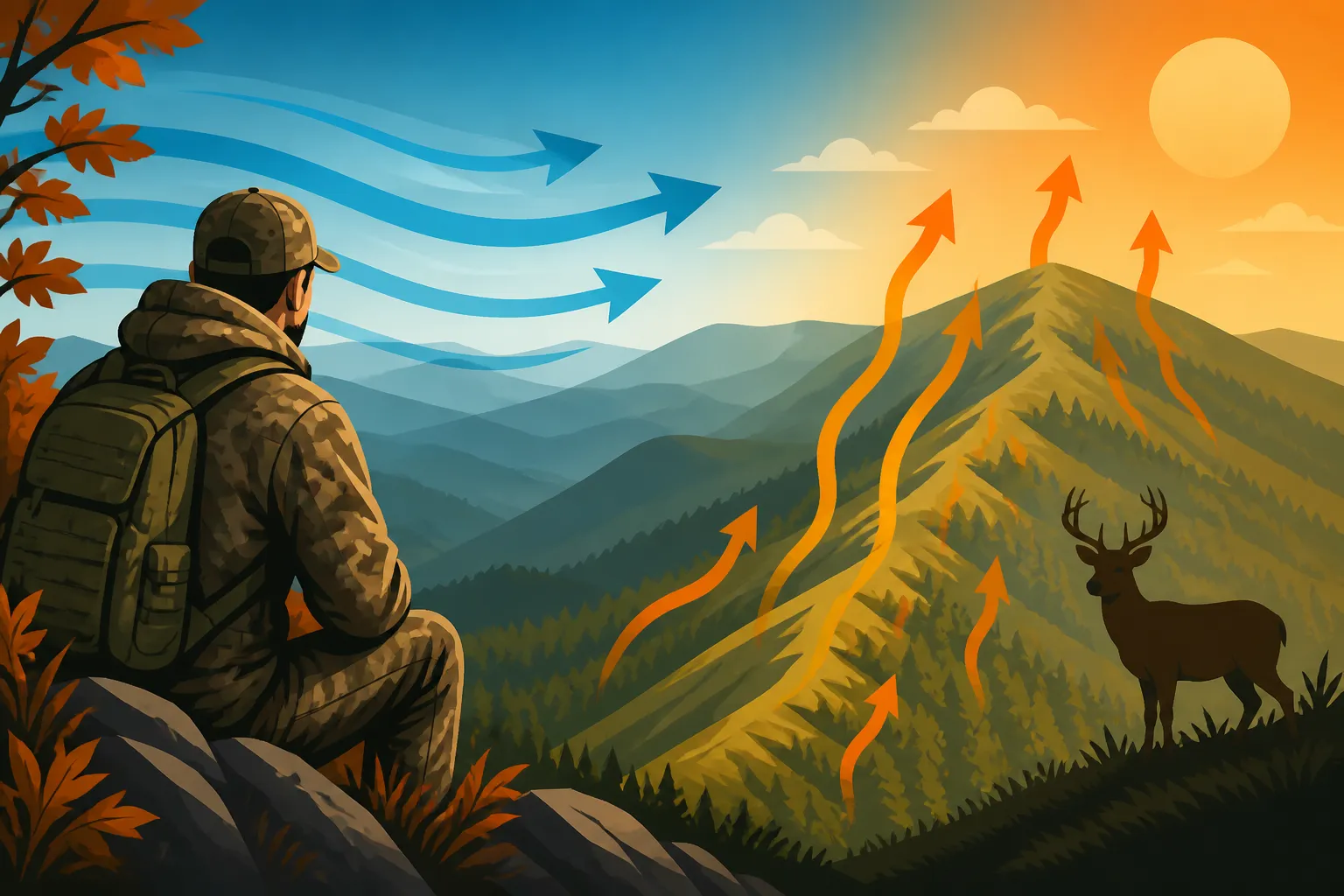
Beyond the prevailing wind, there’s another critical atmospheric phenomenon at play on any ridge system: thermals. These are localized air currents driven by temperature differences, and they follow a remarkably consistent daily cycle. Understanding this rhythm is like having a hidden calendar for predicting deer movement and managing your scent.
Early Morning's Downhill Drift
As the sun begins to peek over the eastern horizon, especially in the crisp air of fall and winter, the cooler, denser air that has settled overnight in the higher elevations starts its slow descent. This is the morning thermal, a gentle but powerful force that pulls air, and with it, your scent, downhill. Think of it as gravity for air molecules.
For hunters, this means that any scent you emit at a higher elevation will naturally drift down into the valleys, hollows, and lower benches. Deer bedding high on a ridge, often just below the crest, will have their noses pointed downhill, naturally detecting anything coming up from below. Therefore, when you're Hanging a Stand on a Cumberland Ridge for a morning hunt, it's often wise to set up below where you expect deer to be bedding. This allows your scent to blow harmlessly downhill and away from their likely travel corridors as they get up to feed or make their way to lower ground. You want to intercept them as they drop, staying below their level, allowing the thermals to work in your favor.
The Afternoon's Upward Ascent
Just as predictably as morning thermals fall, afternoon thermals rise. As the sun climbs higher and begins to warm the earth, especially the exposed slopes and rocky outcrops, that warmer, lighter air begins to ascend. This creates an upward draft that pulls air, and your scent, from lower elevations up towards the ridge tops.
This shift means your morning stand is now likely a bust if you don't adjust. For an afternoon or evening hunt, your strategy should reverse. You want to set up above where you expect deer to be moving or feeding. If deer are going to be grazing in a food plot in a valley or working an acorn flat on a lower bench, positioning yourself on the ridge above them, with the rising thermal carrying your scent over their heads, is ideal. This upward current is strongest on sunny days and can be quite pronounced on steep, south-facing slopes. This knowledge is crucial for Hunting Cumberland Plateau Ridgelines effectively in the evening.
Navigating the Tricky Transition Times
While the morning descent and afternoon ascent of thermals are generally reliable, there are tricky transition periods where things can get dicey. The most notable are dawn and dusk, and a particularly challenging time around midday.
At dawn, as the ground starts to warm but before the full thermal flow has established, you can experience a confusing mix of swirling winds. Similarly, at dusk, as the sun dips and temperatures equalize, the thermal might stall or even temporarily reverse before settling into the downhill pattern of night. These periods are often characterized by light, swirling breezes that make scent control incredibly difficult. Around midday, especially on overcast or calm days, thermals can become stagnant or weak, leading to swirling air pockets that are impossible to predict. It's during these times that many hunters get busted because their scent isn't being carried consistently in any one direction. If you have to hunt during these transition times, try to pick areas with some prevailing wind to help dissipate your scent, or consider Using a Ground Blind on Tennessee Public Land in a location where the terrain offers natural windbreaks. For hunters in areas like West Tennessee River Bottoms, where extreme elevation changes aren't as prevalent, these subtle shifts can be even harder to detect but remain equally important.
Strategic Positioning: Hunting Tennessee Ridges with Wind and Thermals in Mind
Understanding wind and thermals isn't just academic; it's about putting that knowledge into practice to outsmart those wary Tennessee whitetails. Strategic positioning based on air currents is arguably the most critical component of consistent success, especially when you're hunting heavily pressured public land.
Mastering Scent Control for Success
Scent control isn't just about special soaps and sprays; it's fundamentally about managing how your scent interacts with the air currents around you. On a ridge, this means constantly evaluating where your scent is going and ensuring it's not drifting into a deer's nose.
For morning hunts, as the thermals carry scent downhill, you want to approach from below or parallel to the ridge, staying low and out of the primary deer movement zones. Set your stand up just below a natural travel route, perhaps a bench or a subtle finger ridge, knowing that your scent will fall harmlessly into the deeper hollows. For afternoon hunts, the reverse is true. Approach from a low angle, circling wide to get above your desired stand location. Position yourself so your scent is carried up and over the ridge, ideally away from any bedding areas. Always err on the side of having the wind and thermals carry your scent away from where you expect deer to appear. Using a wind checker, like milkweed seeds or a small bottle of unscented powder, becomes your best friend. Constantly check the micro-currents around your stand, not just the prevailing wind. Even a subtle shift can spell disaster.
Identifying Key Terrain Features for Wind Advantage
The ridge itself offers natural advantages if you know how to read it. Certain terrain features are magnets for deer, and they often use these spots precisely because of how they manipulate wind and thermals.
- Saddles: These low points between two higher ridge sections are classic travel corridors. Deer often use them to cross from one side of a ridge to another. The wind here can be tricky, often swirling or funneling, but on a consistent prevailing wind, it can be a predictable pinch point. By understanding the primary wind direction, you can often set up on the downwind side of a saddle, catching deer as they cross.
- Bench Systems: Flat areas or "benches" that break up a steep slope are natural deer highways and bedding locations. Deer will often travel along these benches, using the prevailing wind to their advantage, or bedding on them with their backs to the wind and their noses pointed downhill to catch thermals. Setting up on the downwind side of a bench, just off the primary travel route, can be highly effective.
- Ridge Points: These finger ridges jutting out from the main ridge offer excellent vantage points for deer and can create predictable wind patterns. Deer often skirt the downwind side of these points. As you are Scouting Tennessee Public Land Before Season, use your GoHunt app or other mapping tools to identify these features and plan your approach and stand locations accordingly. A well-placed stand just off a ridge point can offer a shot at a deer moving around it, with your scent blowing away.
Adjusting Your Hunt Throughout the Day
Perhaps the most crucial, yet often overlooked, aspect of hunting ridge systems is the need for flexibility. A perfect morning setup is almost guaranteed to be a terrible afternoon setup on the same ridge due to thermal shifts.
Smart hunters often have multiple stand locations or are willing to still-hunt or move throughout the day. If you're set up for a morning thermal drop, you might need to quietly relocate to a higher position for the afternoon's uphill thermal. This adaptability is key, especially during colder months when Hunting the Late-Season January Lull, as deer patterns become more dependent on food sources and thermal cover. Don’t be afraid to adjust your game plan. It’s better to move and reset than to sit in a busted stand all day, letting deer smell you from a mile away.
Practical Application: Tools and Techniques for Smart Hunters
Successfully hunting Tennessee's ridge systems means equipping yourself with the right knowledge, the right mindset, and a few key pieces of gear to help you interpret the invisible world of wind and thermals. It’s about being proactive and constantly assessing your situation.
Essential Gear for Real-Time Wind Assessment
While technology has its place, some of the best tools for understanding wind are simple and low-tech.
- Scent Checkers: These are non-negotiable for serious ridge hunters. Milkweed pods, readily found across Tennessee, provide light, floating fluff that shows exactly how the air is moving, even subtle micro-currents. Commercial powder-based scent checkers work similarly. You need to pull it out frequently – every 15-20 minutes – to truly understand the swirls and drifts around your stand. This small act can mean the difference between seeing a deer and having it ghost you before you ever know it was there.
- Advanced Mapping Apps: Digital mapping tools like GoHunt are indispensable. They don't just show property lines; many offer wind prediction overlays that factor in topography, giving you a much more accurate representation of how the wind will behave on a specific ridge. You can plan your approach and exit routes to ensure you're never blowing your scent into known bedding or travel areas. These apps also help you identify those crucial ridge points, saddles, and bench systems we discussed earlier, allowing you to visualize wind flow before you even hit the timber.
- Anemometer: For the truly dedicated, a small, handheld anemometer can measure wind speed, which helps you understand how strongly the wind is moving and how far your scent might be carrying. While not strictly necessary, it adds another layer of data to your wind assessment.
Learning from the Land: Observation and Experience
No amount of technology or expert advice can replace time spent in the field. The best thermal and wind experts are those who have spent countless hours observing the subtle cues the land provides.
- Look for Natural Indicators: Watch the leaves on trees, the movement of tall grass, or even spiderwebs. These natural indicators are often more reliable than any instrument for showing localized air movement. A slight quiver in a leaf can tell you about a gentle thermal, while a swirling cobweb indicates a micro-eddy.
- Keep a Hunting Journal: Documenting your hunts is invaluable. Note the prevailing wind, the observed thermals, your stand location, deer movement, and any busts. Over time, you’ll start to see patterns emerge for specific ridges and conditions. You'll learn which draws consistently funnel wind in a particular direction or which slopes produce strong updrafts on sunny afternoons. This personal data collection will significantly enhance your ability to make informed decisions.
- Spend Time Scout Hunting: Even outside of hunting season, go to your chosen ridges and observe the wind and thermals. Watch how they shift throughout the day, how they interact with different terrain features. This will give you confidence when the season opens. Understanding Cold-Weather Sitting Strategy in Tennessee includes knowing how these air currents behave when temperatures drop, often making thermals even more pronounced.
By understanding the forces at play and equipping yourself with the right tools and mindset, you can transform the challenge of wind and thermals on Tennessee’s ridge systems into a genuine advantage. It takes effort and observation, but the reward of a successful hunt makes it all worthwhile.
Ridge System Wind & Thermal Behavior
Here's a quick reference table to help visualize how wind and thermals typically behave on a Tennessee ridge system throughout the day:
| Time of Day | General Thermal Direction | Prevailing Wind Influence | Scent Management Implication | Ideal Stand Placement (Relative to Deer) |
|---|---|---|---|---|
| Pre-Dawn/Dawn | Downhill (starts) | Variable, can be swirling/light | Scent falls into hollows; can be unpredictable near the top | Below bedding/travel routes |
| Morning (Post-Dawn) | Downhill | Consistent with prevailing wind | Scent reliably travels down the slope | Below bedding/travel routes |
| Mid-Day | Stagnant/Swirling | Weakened, prone to micro-eddies | Highly unpredictable; high risk of scent busts | Avoid hunting or use extreme caution |
| Afternoon | Uphill | Consistent with prevailing wind | Scent reliably travels up the slope | Above feeding/travel routes |
| Dusk | Uphill (starts to weaken) | Variable, can be swirling/light | Scent rises but may become unpredictable as temps equalize | Above feeding/travel routes |
| Night | Downhill | Consistent with prevailing wind | Scent reliably travels down the slope into valleys and hollows | Not applicable for active hunting |
Disclaimer
Hunting is an inherently dangerous activity. Always prioritize safety, understand and follow all Tennessee Wildlife Resources Agency (TWRA) regulations, and obtain the necessary Tennessee Hunting Licenses and What They Cost. The information provided here is for educational purposes only and should not replace professional guidance or personal experience gained in the field. Conditions can vary, and responsible hunters always adapt to their specific environment.