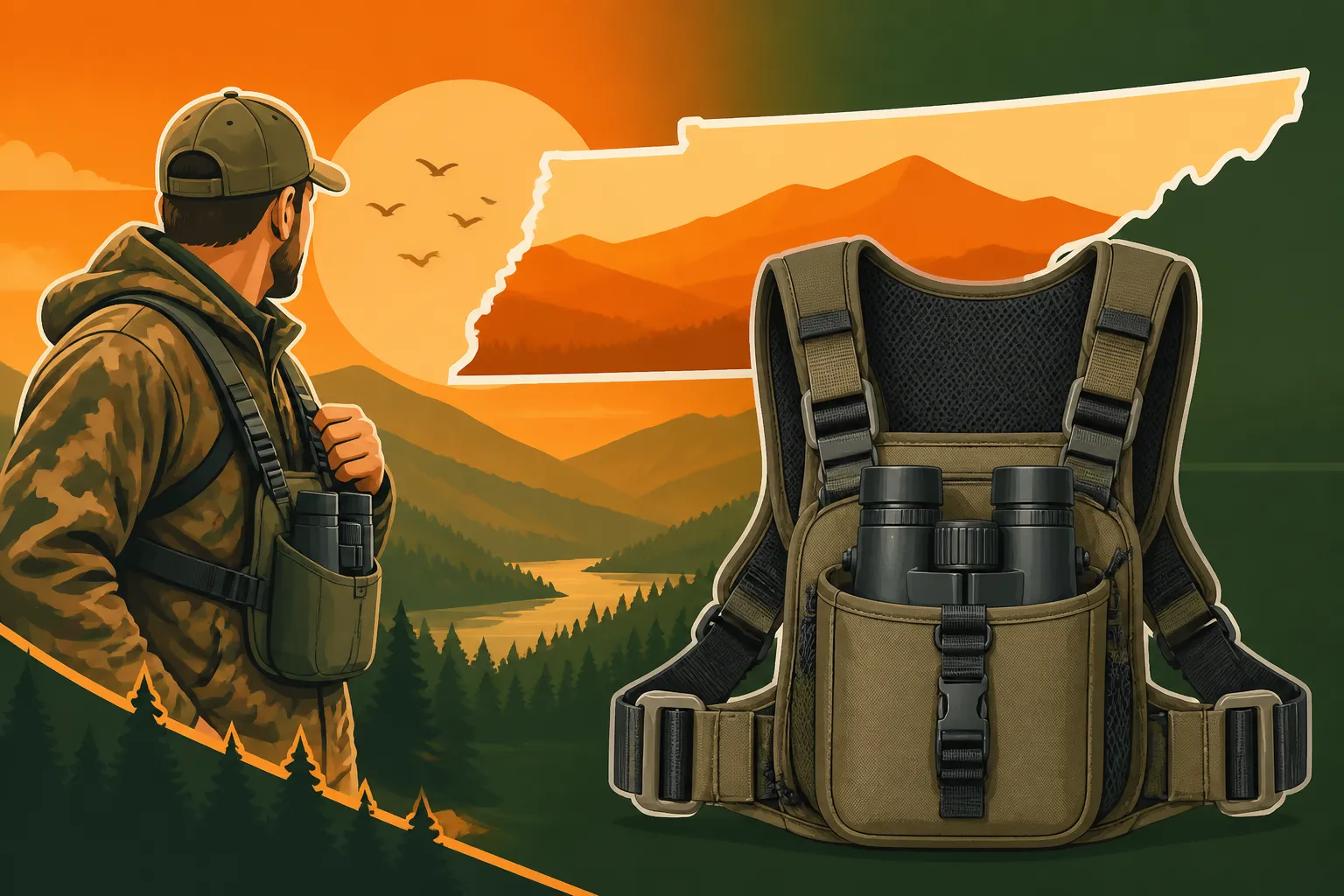
Binocular Harnesses Worth Wearing
Hunters in Tennessee know the struggle: a long day of hiking up and down steep ridges or crawling through thick briar patches, all while your binoculars bounce, swing, and dig into your neck, making you miss critical opportunities. It's frustrating when the gear meant to help you spot that elusive buck or gobbler becomes a constant distraction and source of discomfort. This comprehensive guide is here to help you understand why a quality binocular harness is an absolute game-changer for your Tennessee hunts and how to choose one that fits your style, keeping your optics secure, accessible, and your focus where it needs to be – on the hunt.
The Frustration of Neck Straps and Why a Harness is a Game Changer
It's a scenario every Tennessee hunter has lived through: you're still-hunting a hardwood ridge on the Cumberland Plateau, easing through the timber, eyes scanning for movement. Your binoculars, hanging from that traditional neck strap, swing forward with every step, smacking your chest. You need them quickly for a suspicious flicker of white, but they're tangled, or worse, they've slid to your side, forcing you to fumble around. Then there's the inevitable neck strain that sets in after a few hours, a dull ache that takes away from the enjoyment of being in the woods. These aren't just minor inconveniences; they're genuine frustrations that can impact your effectiveness and endurance in the field.
The Pain of a Bouncing Bino
Imagine you're on a morning hunt in the hills of East Tennessee, working your way to a secluded bench where you've seen deer before. The terrain is broken, requiring you to navigate fallen logs and rocky patches. With each careful step, your binoculars swing and bounce, not just creating noise that could spook game, but also making it incredibly difficult to stay balanced and focused. That constant thud, thud, thud against your chest isn't just annoying; it's a sensory overload that detracts from the subtle sounds and movements you need to detect. Even worse, if you're scrambling up a steep incline, those binoculars can swing up and hit your chin, or snag on a branch, putting stress on the strap and your neck. It's a recipe for distraction and discomfort, especially during those crucial moments when stealth is paramount. A good harness solves this by holding your optics snug to your body, eliminating the bounce and the potential for a painful impact.
Access When Seconds Count
We've all had those moments in the Tennessee woods – a deer steps out unexpectedly, a turkey gobbles just out of sight, or an elk ghost shows itself for a fleeting second in the North Cumberland Wildlife Management Area. In these situations, every second counts. Fumbling with a neck strap that has allowed your binoculars to migrate to your hip, or worse, get caught on your pack straps, means valuable time lost. By the time you get your optics up, the animal might have vanished into the timber. A properly designed binocular harness keeps your binoculars centered on your chest, ready for an instant draw. It's not just about convenience; it's about maximizing your chances for that critical observation that could make or break your hunt. The quick, fluid motion of reaching, unlatching, and raising your binos directly to your eyes is a significant advantage, especially when you're hunting in thick cover where opportunities are often brief, or when trying to confirm details before Shot Placement on a Tennessee Black Bear.
Protecting Your Investment from Tennessee Elements
Tennessee's weather can be unpredictable. One moment it's a crisp, clear autumn morning, the next a sudden shower rolls through, drenching everything. Or you might be pushing through dense brush, and your binoculars are exposed to thorns, branches, and mud. Traditional neck straps offer minimal protection, leaving your expensive optics vulnerable to bumps, scratches, and the elements. A quality binocular harness, particularly those with an integrated main compartment or lid, offers a protective shell. It keeps dust, rain, and snow off your lenses and housing, and shields them from impacts as you navigate through the woods. This is especially important if you're like me and have invested in high-quality optics designed for low-light conditions. Protecting that investment means they'll serve you faithfully for many seasons to come, whether you're navigating the challenges of Hunting West Tennessee Bottomland Deer or scaling rocky slopes in the Cherokee National Forest Hunting.
Key Features to Look for in a Quality Binocular Harness
So, you're convinced a harness is the way to go. But walk into any sporting goods store or browse online, and you'll quickly see there are dozens, if not hundreds, of options. How do you sort through them all? It really boils down to a few core features that separate the "good enough" from the "game-changing." Think about your typical Tennessee hunt: are you still-hunting dense hardwoods, sitting patiently in a treestand, or traversing miles of rugged terrain? Your choice should reflect those demands.
Comfort and Adjustability for Long Days
The most crucial aspect of any harness is how it feels on your body, especially during those marathon hunts from pre-dawn to dusk. Look for wide, padded shoulder straps that distribute the weight of your binoculars evenly across your upper back, rather than concentrating it on your neck. The best harnesses use breathable materials to prevent sweat buildup, which is a real concern during Tennessee's warmer early seasons or even mild late-season days. Beyond padding, adjustability is key. A good harness will have multiple adjustment points – on the shoulder straps, chest strap, and sometimes even side straps – allowing you to fine-tune the fit for your body type and the layers of clothing you might be wearing. This ensures the binoculars sit high and snug against your chest without restricting movement or causing pressure points. Some harnesses even have modular components that let you add or remove features, giving you maximum flexibility. For hunters who spend long hours glassing from a ridge, say while Reading a Ridge for East Tennessee Deer, this comfort is paramount.
Protection and Quiet Operation
Your binoculars are precision instruments, and they deserve protection from the harsh realities of the hunting environment. A quality harness will feature a main compartment that fully encloses your binoculars. Look for durable, weather-resistant materials like Cordura or similar synthetics that can shed rain and resist abrasion. Many harnesses offer a magnetic or silent buckle closure system for the main lid. This is absolutely critical; you don't want a loud velcro rip or a clunky plastic buckle clacking when you're trying to sneak a peek at a wary whitetail. Inside, some harnesses have soft lining to prevent scratches on your binos. Pay attention to how the harness carries and if there are any loose straps or components that could flap or make noise as you move. A truly quiet harness is designed with every potential sound source in mind, ensuring your approach remains undetectable. When you're trying to call in a Tennessee Gobbler Off the Roost, the last thing you want is a noisy piece of gear.
Storage and Organization Beyond Just Binos
While the primary job of a binocular harness is to carry your binoculars, many modern designs offer thoughtful additional storage. This can be incredibly useful for keeping essential items readily accessible without having to dig through your main pack. Look for features like:
- Front zippered pockets: Perfect for a lens cloth, wind checker, or a small headlamp.
- Side mesh or stretch pockets: Great for a rangefinder, GPS unit, or even a small game call.
- Back pockets: Sometimes a flat pocket on the back of the main compartment can hold your hunting license, a small map, or a few protein bars.
- Attachable pouches: Some modular systems allow you to add small accessory pouches for things like a cell phone, extra calls, or even a small first-aid kit.
The goal here is efficient organization. You want to be able to reach for your rangefinder, for example, without having to unlatch your main bino compartment. This kind of thoughtful design enhances your efficiency in the field. When you're Scouting Tennessee Public Land Before Season or tracking a deer, having your essential tools at your fingertips can make a huge difference, freeing up space in your pack for other necessities.
Different Types of Binocular Harnesses and Who They're For
Just like there are different types of hunters and hunting styles in Tennessee, there are different types of binocular harnesses designed to meet those varied needs. What works for a treestand hunter might not be ideal for someone covering miles on foot each day. Understanding the distinctions can help you pinpoint the perfect match for your adventures.
Minimalist Harnesses for Lightweight Stalking
If your hunting style involves a lot of walking, stalking, and minimal gear, a minimalist harness might be exactly what you need. These harnesses typically feature a simple strap system that holds your binoculars close to your chest, often with an open top or a very basic elastic cover. They prioritize light weight and unobstructed access above all else. There's usually little to no extra storage, and the protection from the elements is limited.
- Pros: Extremely lightweight, maximum ventilation, quick and easy access to binoculars, minimal bulk, often more affordable. Great for hot early season hunts or when you’re Still-Hunting Cumberland Plateau Ridges with only a rifle and a small daypack.
- Cons: Little to no protection from rain, dust, or impact; no extra storage; binoculars can still swing slightly more than in a full chest rig.
- Ideal for: Archery hunters who value stealth and quick drawing, small game hunters, those who carry a separate full pack for other gear, or anyone who hates feeling weighed down. Think about a quiet morning of Squirrel Hunting Tennessee Bottomland Hardwoods – you want to be agile and unencumbered.
Full Chest Rigs for Gear Junkies
On the opposite end of the spectrum are the full chest rigs. These are robust systems that typically feature a fully enclosed, protective main compartment for your binoculars, often with a magnetic or buckle closure. Beyond the main compartment, they often boast multiple accessory pockets, side pouches, and sometimes even a back sleeve for a map or small hydration bladder. These rigs essentially become a mini-pack on your chest, keeping a lot of essential gear within easy reach.
- Pros: Excellent protection for binoculars, ample storage for other essential items (rangefinder, wind checker, calls, phone, license), keeps gear quiet and organized, distributes weight well. Perfect for Hunting the Tennessee Rut in Early November when you want to be prepared for anything, or for long sits during Tennessee's Gun Deer Season Into January.
- Cons: Can be bulkier and heavier, might feel warm in hot weather, potentially more expensive.
- Ideal for: Hunters who carry a lot of small accessories, those who spend long hours glassing, elk hunters (though we don't have a huge elk population, the few who hunt the Preparing for a North Cumberland Elk Hunt will appreciate this), or anyone who wants everything important immediately accessible without needing to open their main backpack. These are also fantastic for anyone utilizing an app like GoHunt for mapping or scouting data, as they provide a secure, accessible place for your phone.
Hybrid Designs for Versatile Hunters
Many manufacturers now offer hybrid designs that try to strike a balance between minimalism and maximum utility. These harnesses might have a streamlined main compartment with good protection but offer only one or two smaller accessory pockets instead of a full array. They aim for a blend of comfort, protection, and enough storage for the essentials without becoming overly bulky.
- Pros: Good balance of weight, protection, and storage; versatile for various hunting styles; often a middle-ground price point.
- Cons: May not offer enough storage for true "gear junkies" or be too bulky for extreme minimalists.
- Ideal for: The average Tennessee deer or turkey hunter who wants their binoculars protected and easily accessible, along with a rangefinder and maybe a wind checker, but doesn't need to carry every conceivable gadget on their chest. If you're Hunting Tennessee River Bottom Funnels or trying to get a read on the wind, these can be a perfect compromise.
Here's a quick comparison table to help visualize the differences:
| Feature/Harness Type | Minimalist Harness | Hybrid Harness | Full Chest Rig |
|---|---|---|---|
| Weight | Very Low | Moderate | High |
| Protection | Low (Open top) | Moderate (Lid) | High (Enclosed) |
| Storage | Minimal | Limited Pockets | Ample Pockets |
| Accessibility | Excellent (Open) | Very Good | Good (Lid) |
| Bulk | Very Low | Moderate | High |
| Cost | Lower | Mid-range | Higher |
| Ideal Use | Stalking, hot weather, archery | General hunting, treestand, mixed terrain | Long glassing, multi-day, cold weather, extensive gear |
Tips for Choosing, Wearing, and Maintaining Your Harness in Tennessee
Once you've considered the features and types, it's time to make a choice and get it dialed in. A great harness is only great if it's used correctly and cared for properly. Think of it as another essential piece of your hunting kit, just like your favorite rifle or bow.
Getting the Right Fit
This is probably the most critical step after selecting a harness. A poorly fitting harness will negate all the benefits and might even cause new discomfort. When you first put it on, ensure the shoulder straps sit comfortably and evenly. Adjust the main straps so the binocular compartment rests high on your chest, ideally just below your sternum. You want it snug enough that it doesn't bounce or shift when you walk, but not so tight that it restricts your breathing or arm movement.
- Layer Up: If you plan to hunt in cold weather with multiple layers, try the harness on over those layers. You might need to adjust it seasonally.
- Full Load: Put your binoculars, rangefinder, and any other gear you typically carry in the harness. The weight will change how it sits.
- Move Around: Do some squats, bend over, simulate drawing your bow or shouldering your rifle. Ensure the harness doesn't interfere with your movements.
- Accessibility: Make sure you can easily access your binoculars and any other pockets. You shouldn't have to contort your body.
Remember, every body is different, and what's comfortable for one person might not be for another. Don't be afraid to experiment with the adjustments until it feels like a natural extension of your body. When you're spending all day Hunting the August Antlerless-Only Archery Hunt in the summer heat, a good fit makes all the difference.
Field-Testing Before Opening Day
Never wait until opening day to use a new piece of gear for the first time, especially something as crucial as a binocular harness. Take it on scouting trips, practice walks, or even just long hikes around your property or a local park. This "break-in" period allows you to fine-tune the fit, identify any potential hotspots for rubbing, and get used to the feel and accessibility of your gear.
- Simulate Hunting: Walk through brush, climb a hill, sit in a mock stand. Does anything snag? Is it quiet? Can you access everything smoothly?
- Weather Test: If possible, take it out in varying weather conditions. How does it handle a light drizzle? Does it get sweaty on a warm day? This helps you understand its real-world performance.
- Practice Draws: Repeatedly draw your binoculars, rangefinder, and other items. Build muscle memory so the action becomes second nature when that trophy buck steps out.
- Map Integration: If you use mapping tools like GoHunt on your phone, make sure your phone fits securely in an accessible pocket of your harness. Practice pulling it out, checking your location, and stowing it away discreetly. The last thing you want is a screen cracking because it wasn't secure.
This preparatory work is invaluable. It ensures that when you're actually hunting, your harness isn't a distraction but a reliable tool that supports your efforts. It can be particularly useful when you're Finding Ground Others Walk Past by using your optics and mapping to identify overlooked areas.
Keeping Your Harness Ready for the Next Hunt
A quality binocular harness is an investment, and proper maintenance will ensure it lasts for many seasons. Tennessee's varied terrain and weather can be tough on gear, so a little care goes a long way.
- Clean Regularly: After a dusty or muddy hunt, wipe down the harness with a damp cloth. For heavier grime, a mild soap and water solution can be used, but always check the manufacturer's cleaning instructions. Avoid harsh chemicals that could degrade the fabric or waterproof coatings.
- Dry Thoroughly: If your harness gets wet, either from rain or sweat, make sure to dry it completely before storing it. Hang it in a well-ventilated area, away from direct sunlight or heat sources. This prevents mold, mildew, and unpleasant odors. This is especially important after a hunt in the wet conditions of Hunting West Tennessee Bottomland Deer.
- Inspect for Wear: Periodically check all straps, buckles, and zippers for signs of wear and tear. Look for fraying, cracks, or loose stitching. Addressing small issues early can prevent a major failure in the field.
- Store Properly: When not in use, store your harness in a cool, dry place, ideally away from direct sunlight. Keeping it clean and dry will extend its lifespan significantly.
- Integrate with Your System: Consider how your harness integrates with other gear. For example, if you use GoHunt for digital scouting, ensure the harness has a dedicated, secure spot for your phone that allows for quick and silent retrieval. Knowing your whole system works together smoothly saves time and frustration.
By following these simple tips, your binocular harness will be a reliable, comfortable, and indispensable part of your Tennessee hunting kit for years to come, helping you spot more game and enjoy your time in the beautiful Tennessee outdoors.
Disclaimer
This article is for general informational purposes only and does not constitute professional advice. Laws, prices and regulations vary by location and change over time. Consult a qualified professional for guidance on your specific situation.