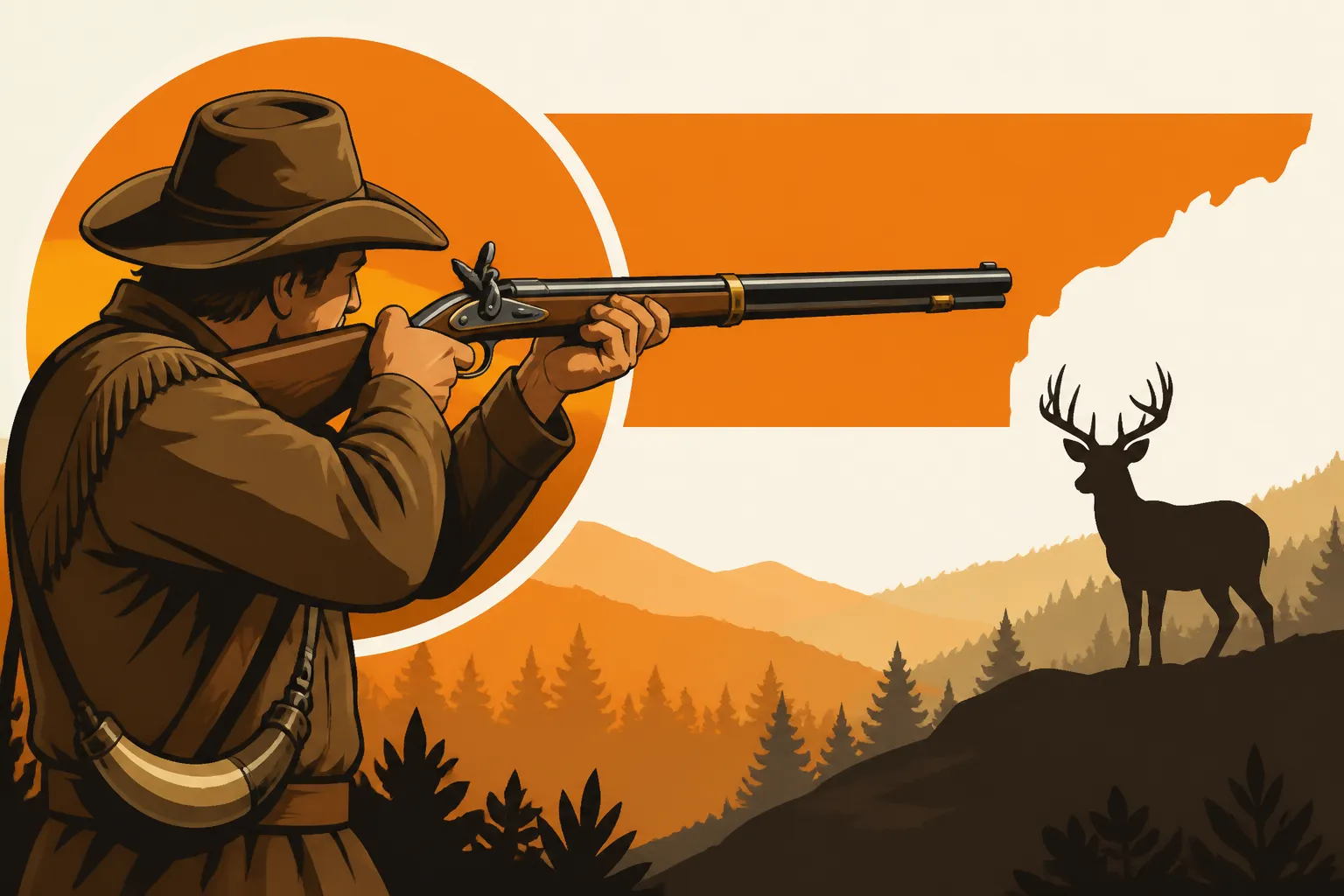
Tennessee Muzzleloader Season Tactics
The Tennessee muzzleloader season can often feel like a brief, challenging window, sandwiched between the long archery season and the high-pressure gun hunts. Many hunters struggle to pinpoint exactly how deer behavior shifts during this unique period, making it tough to transition tactics and find consistent success. But don't despair! This comprehensive guide is dedicated to helping you master the art of muzzleloader hunting in Tennessee, offering detailed strategies to turn those frustrating outings into successful harvest opportunities.
Understanding Tennessee's Muzzleloader Window
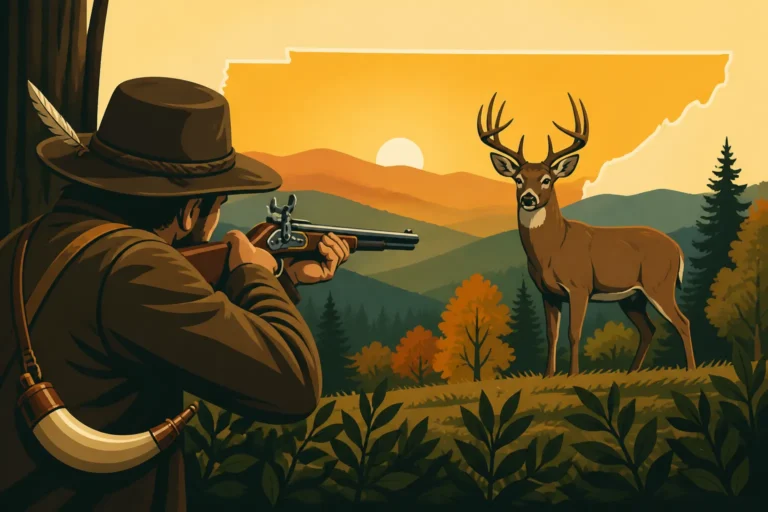
Tennessee's muzzleloader season is a distinct opportunity that demands a unique approach. It's not just about using a different weapon; it's about understanding the nuances of deer behavior and environmental conditions during this specific timeframe. Without that understanding, you might find yourself hunting an archery deer with a muzzleloader, or a gun season deer too early, missing the subtle cues that lead to success.
When Muzzleloader Season Typically Falls
The timing of Tennessee's muzzleloader season is absolutely critical to grasp. Generally, it opens after the initial archery-only periods have concluded, often in late October or early to mid-November, sometimes extending through the Thanksgiving week. This placement means it can either precede the peak of the rut, fall directly into the early stages of it, or even bridge the gap between early rut activity and the main gun season. For instance, in many zones, it perfectly aligns with the crucial pre-rut phase when bucks are beginning to cruise more widely, rubbing and scraping, but aren't yet in full chase mode.
This distinct window means deer have already experienced some hunting pressure from archers, making them warier than in early September. The woods are often transitioning from lush green to crunchy autumn leaves, making silent movement a real challenge. You'll need to stay updated on the official dates for your specific DMU and county, as they can vary slightly year to year and across the state. Knowing the exact dates will allow you to plan your scouting and vacation time effectively. A quick check of the official TWRA regulations will confirm Tennessee Muzzleloader Season Dates for the current year, which is always the best first step.
Key Deer Behavior During This Time
Deer behavior during the muzzleloader season is highly dynamic and depends significantly on whether the season falls before, during, or after the peak of the rut in your area. If it’s pre-rut, you'll see bachelor groups of bucks beginning to break up, and individual bucks starting to lay down more rubs and create distinct scrape lines. These are not just random acts; they're signposts indicating increased aggression and readiness for breeding. Bucks will still be highly focused on food sources, but with an added layer of seeking out does. They're trying to establish dominance and scent-mark their territories.
As the season progresses towards early November, if the muzzleloader season overlaps with this period, you might start to witness the initial stages of the rut, where bucks are actively scent-checking does and occasionally engaging in short chases. This is when your tactics really need to shift. Instead of just focusing on feeding patterns, you'll want to target travel corridors, pinch points, and areas where does congregate. Deer movement becomes less predictable, as bucks throw caution to the wind in pursuit of estrous does. Understanding Hunting the Rut in Early November becomes paramount for successful muzzleloader hunting, as the window often perfectly encapsulates the early signs of this exciting period. Keep an eye out for increased daylight activity, especially from mature bucks that were largely nocturnal during early archery.
Essential Muzzleloader Gear and Preparation
Switching to a muzzleloader isn't just a change of weapon; it's a change of mindset and requires specific attention to gear. Unlike a modern rifle with a quick follow-up shot or an archery setup for close encounters, the muzzleloader demands precision, reliability, and preparedness for a single, impactful shot. Many hunters underestimate the preparation needed, leading to frustration in the field.
Choosing the Right Muzzleloader and Components
When it comes to muzzleloaders for Tennessee deer hunting, the modern in-line design has largely taken over due to its reliability and accuracy. Brands like CVA, Traditions, and Thompson/Center offer excellent options. These rifles typically use 209 shotgun primers, which are much more reliable in damp conditions than the old percussion caps. You'll want to consider the caliber, with .50 caliber being the most popular and versatile for deer.
Beyond the rifle itself, your choice of components—powder, primers, and bullets—is crucial. For powder, you generally have two main choices: loose powder (like Hodgdon Triple Seven or IMR White Hots) or pre-measured pellets (like Pyrodex or Hodggon Triple Seven pellets). Pellets offer convenience and consistent charges, while loose powder allows for more precise load development, but requires more care in the field. For bullets, sabots (a plastic cup holding a smaller diameter bullet, like a .45 caliber bullet in a .50 caliber sabot) are incredibly accurate and offer excellent ballistic performance. Conical bullets, which are full-bore projectiles, also work well, especially for larger game or in areas with specific regulations. Always check Muzzleloaders Under Tennessee Rules to ensure your chosen setup is compliant.
Sighting In and Practice Drills
Sighting in a muzzleloader isn't like sighting in a centerfire rifle. The recoil and the cloud of smoke after each shot require a different approach to practice. Start by getting comfortable with the loading process – consistency is key to accuracy. Practice your loading routine repeatedly until it's second nature, even under pressure. When shooting, aim for consistent groups at 50, 75, and 100 yards. While many shots might be closer in Tennessee's timber, being confident out to 100 yards gives you crucial flexibility, especially on the more open ridges of the Cumberland Plateau or across a field edge.
Don't just shoot from a bench rest. Practice shooting from real-world hunting positions: kneeling, sitting, leaning against a tree, and even from your treestand or ground blind. This will build muscle memory and expose any potential issues with your setup or form. Remember that most muzzleloaders are only legal for a single shot without reloading, so that first shot is everything. Take the time to truly master your rifle, understanding its quirks and capabilities.
Protecting Your Investment from the Elements
Tennessee weather during muzzleloader season can be unpredictable. You might start a morning with crisp, dry air, only for a light drizzle or heavy fog to roll in by midday. Moisture is the enemy of black powder and primers. To ensure reliability, always keep your powder and primers as dry as possible. Many hunters use electrical tape over their primer and around the breech plug to seal out moisture. Some even carry their pellets in sealed plastic bags or waterproof containers.
After each hunt, especially in damp conditions, a thorough cleaning is essential to prevent rust and corrosion. Black powder is corrosive, and neglecting your rifle will quickly lead to problems. Carry a small, portable cleaning kit with you for emergency field cleaning if you take a shot, ensuring you can quickly prepare for a follow-up if needed, or simply maintain your firearm between more thorough cleanings. A little prevention goes a long way in ensuring your muzzleloader fires when that trophy buck steps into view. This attention to detail will help you avoid the dreaded "click" instead of "bang" when the moment of truth arrives, and understanding Keeping Powder Dry in Wet Weather is critical.
Scouting and Stand Placement Specifics
Successful muzzleloader hunting in Tennessee hinges on thorough scouting and strategic stand placement. Since you're often limited to a single shot and potentially closer ranges, getting into the ideal position is paramount. You can't just throw up a stand anywhere; you need to understand where deer are moving, what they're eating, and how hunting pressure is influencing their behavior during this specific season.
Identifying Prime Muzzleloader Hotspots
During the muzzleloader season, deer, especially bucks, are increasingly driven by two primary factors: food and does. Therefore, your scouting efforts should focus on identifying key feeding areas and potential travel corridors. Hard mast, particularly white oak acorns, is a major draw for deer in the timbered regions of the Cumberland Plateau and East Tennessee. Scout for fresh acorn cuttings and deer droppings in these areas. In agricultural areas of West and Middle Tennessee, standing cornfields, soybean fields, and planted food plots (clover, brassicas) will be magnets for deer. Look for heavily used trails leading into and out of these areas.
Beyond food, look for transition zones. These are the subtle funnels, saddles, and pinch points that deer use to travel between bedding areas and feeding sites. A ridge-top saddle connecting two large blocks of timber, a creek bottom winding through a dense thicket, or a narrow strip of woods between two open fields – these are all prime locations. Muzzleloader season often occurs when bucks are starting to cruise, so these travel routes become even more important. Understanding how deer utilize Late-Season Food Sources for Tennessee Whitetails is crucial, even if your muzzleloader hunt happens before the truly bitter cold sets in.
Adapting to Changing Conditions
Tennessee weather is notoriously fickle. A warm, extended fall can delay rut activity and keep deer on summer feeding patterns longer. Conversely, an early cold snap can kickstart deer movement and push them towards more calorie-rich food sources. This means your scouting isn't a one-and-done affair; it needs to be an ongoing process, even during the season. Utilize trail cameras to monitor deer activity in real-time, observing changes in their patterns based on weather shifts or increased hunting pressure.
Don't be afraid to move your stand if conditions change. If the acorns have all been eaten in one area, deer will shift. If a new food source becomes available, they'll gravitate towards it. Rely on fresh sign – recent tracks, shiny rubs, actively pawed scrapes – to dictate your moves. Old sign is just a historical record; new sign tells you where the deer are now. Sometimes, a quick mid-day scout can reveal a new hot spot that was completely inactive just a day or two before. This adaptability, especially when the mast crop is inconsistent, is key to success, and highlights the importance of anticipating and reacting to Hunting After a Poor Acorn Year.
Stand vs. Ground Blind Tactics
Both treestands and ground blinds have their place in muzzleloader season tactics, and choosing the right one depends heavily on your specific hunting situation and the terrain.
Treestands offer several advantages. Getting elevated helps with scent control, allowing your scent to disperse above deer-level, especially in areas with consistent wind patterns. They also provide a much better vantage point, allowing you to spot deer movement at greater distances and pick out shooting lanes more effectively. For hunting the rolling hills of the Cumberland Plateau or mature timber in West Tennessee, a well-placed treestand can be invaluable. Being up high also helps with visibility through falling leaves and brush. If you're considering setting up high, read up on Hanging a Stand on a Cumberland Ridge for practical advice.
On the other hand, ground blinds excel in specific scenarios. If you're hunting an open field edge, a small woodlot, or an area with limited suitable trees for a stand, a ground blind offers excellent concealment. They're also fantastic for staying warm and dry in inclement weather, which is a real bonus during the chillier muzzleloader days. Modern pop-up blinds from brands like Ameristep or Primos offer quick setup and a comfortable hunt. Just make sure to brush them in thoroughly to break up their outline. For hunting those tricky field edges or thickets, a ground blind can be the perfect solution. Learn more about effective concealment with Using a Ground Blind on Tennessee Public Land.
Ultimately, the best approach might be to utilize both. Scout your area, assess the terrain and typical deer movement, and choose the setup that gives you the best advantage for a clean, ethical muzzleloader shot.
In-Season Hunting Strategies
Once you've done your homework scouting and chosen your setup, it's time to execute. The muzzleloader season demands heightened awareness of your surroundings and precise execution of various in-season strategies. Since you're dealing with a single-shot weapon and often closer engagement distances, every detail matters.
Scent Control and Wind Awareness
This cannot be stressed enough: scent control is absolutely paramount when muzzleloader hunting. With no quick follow-up shot, getting busted by a deer's nose before you can take that critical first shot is incredibly frustrating. Deer possess an olfactory system far superior to ours, capable of detecting the faintest human scent. You need to approach your stand site silently and scent-free, as much as humanly possible.
This starts long before you even leave your truck. Wash your hunting clothes in scent-eliminating detergent, store them in airtight containers, and dress as close to your stand as possible. Use a quality scent-eliminating spray on your clothes and gear. Pay close attention to the wind direction. Always, always hunt with the wind in your favor, carrying your scent away from where you expect deer to approach. In the hilly terrain of East Tennessee, remember to account for thermals: scent generally rises in the morning as the air warms and falls in the evening as it cools. On flat land, prevailing winds are your primary concern. Some hunters even use advanced ozone generators from brands like ScentLok or Ozonics, but even without them, meticulous attention to basic scent control rules will vastly improve your odds. Think about how GoHunt's mapping features can help you identify wind direction at your stand location relative to potential deer bedding and feeding areas.
Calling and Decoying During Muzzleloader
Depending on where the muzzleloader season falls in relation to the rut, calling and decoying can be incredibly effective tools. If you're in the early pre-rut phase, subtle calling is usually best. Soft grunts, doe bleats, and fawn bleats can pique a buck's curiosity without alerting it. Bucks at this time are looking for does, but they're not yet aggressively challenging other bucks. A well-timed doe bleat could be just enough to draw a cruising buck into range. As you approach the rut, more aggressive tactics, like light rattling sequences, can sometimes provoke a response from younger, more territorial bucks. However, use caution, as over-calling can also spook wary deer. For deeper insights, check out Rattling and Grunting in Tennessee.
Decoying can also work wonders, especially on field edges or in open timber. A single doe decoy can draw in curious bucks, while a small buck decoy might challenge a territorial male. Position your decoy so that any approaching buck will expose itself to a good shot opportunity. Always set your decoy facing away from you, as this often causes an approaching buck to circle to the front, offering a broadside shot. Ensure your decoy is visible but not overly prominent, blending naturally into the environment. Remember, when using a muzzleloader, you want to draw the deer close, but not so close that it picks up your movement or scent.
Still-Hunting and Stalking with a Muzzleloader
While sitting in a stand is often the go-to tactic, still-hunting and stalking can be incredibly effective, especially in dense cover or during mid-day lulls when deer might be bedded down. Still-hunting involves moving incredibly slowly through the woods, taking one or two steps, then pausing for several minutes to scan for deer. Use your binoculars to pick apart every shadow, every stump, and every patch of brush. This method works best in areas with soft leaf litter or pine needles that allow for quiet movement.
Stalking, on the other hand, is a more aggressive tactic, often used when you've spotted a deer at a distance and need to close the gap for a shot. This requires extreme stealth, careful use of cover, and a keen understanding of the wind. With a muzzleloader, the challenge of still-hunting or stalking is magnified by the single-shot nature of the weapon. You have to be absolutely certain of your shot before taking it, as a follow-up is not quick or easy. This is where practicing shooting from unconventional positions really pays off. For expert advice on this method, delve into Still-Hunting Cumberland Plateau Ridges. Remember, patience is your greatest virtue when still-hunting; rushing will only lead to blowing out deer.
Maximizing Your Shot Opportunity
The muzzleloader season often comes down to one shot. There's no room for error, no quick follow-up. That's why maximizing your shot opportunity through ethical shot placement and diligent tracking is arguably the most critical aspect of this hunting method.
Ethical Shot Placement and Follow-Up
When a deer presents itself, the pressure is on. With a muzzleloader, your focus must be on making that first shot count. Aim for the vital organs – the heart and lungs – which offer the largest kill zone and the quickest, most humane kill. A broadside or slightly quartering-away shot provides the best opportunity to hit these vitals. Avoid quartering-to shots, and never take a Texas heart shot with a muzzleloader.
Once you squeeze the trigger, the world will momentarily turn to a cloud of smoke. It's crucial to resist the urge to immediately run to where the deer was standing. The smoke will obscure your view, and you might miss critical visual cues about the deer's reaction and direction of travel. Instead, stay focused on the spot where the deer was standing and try to remember exactly where it was hit. Listen intently for crashing sounds. Many hunters use a mental marker, like a specific tree or rock, to pinpoint the impact zone. Waiting for the smoke to clear and mentally replaying the shot is invaluable. While the target species differs, the principles of ethical shot placement are universal, and tips found in Shot Placement on a Tennessee Black Bear can still be relevant for understanding vital zones and shot angles.
Tracking After the Shot
After taking your shot, patience becomes your most valuable asset. Unless you witnessed the deer drop in its tracks, resist the urge to immediately jump out of your stand. Give the deer time – typically at least 30 minutes for a good lung shot, and often an hour or more for marginal hits. This allows the deer to bed down and expire. Pushing a wounded deer too quickly can send it on a long run, making recovery incredibly difficult.
Once you begin tracking, meticulously search the impact area for blood, hair, bone fragments, or internal organs. Mark the location of your stand and the impact site with flagging tape or by dropping a pin on your GPS or a hunting app like GoHunt. Then, follow every speck of sign. If the blood trail is sparse, expand your search in the direction the deer was last seen. Look for disturbed leaves, broken twigs, or even overturned rocks. If the trail goes cold, try walking circles to pick it back up. Remember that deer often seek water or thick cover when wounded. If darkness approaches, marking your last known sign and returning in the morning with fresh eyes and potentially more trackers is often the best course of action. Mastering Blood Trailing After Dark in Tennessee or Tracking a Deer Through Tennessee Leaf Litter is a skill every muzzleloader hunter should develop, as it's often the difference between a successful harvest and a lost animal.
Muzzleloader Bullet and Powder Comparison
Choosing the right components for your muzzleloader can significantly impact accuracy and downrange performance. Here's a brief comparison of popular options:
| Component Type | Examples | Pros | Cons | Ideal Tennessee Use Case |
|---|---|---|---|---|
| Powder | Pyrodex Pellets, Triple Seven Pellets | Convenient, consistent charges, easy to load | Less versatile for fine-tuning loads, sometimes less power | Quick reloading practice, reliable hunting in varied weather |
| Hodgdon Triple Seven (loose), Goex FFFg | Customizable loads, potentially more powerful/accurate | Messier, requires careful measuring in the field | Precision shooting at longer ranges, experienced users | |
| Bullets | PowerBelt Aerolite, Hornady SST | Excellent accuracy, high ballistic coefficient | Can be expensive, requires matching sabot to bore size | Open field edges, longer shots, maximizing downrange energy |
| Maxi-Ball, Great Plains Bullet | Heavy hitting, good for deep penetration | Lower ballistic coefficient, less accurate at long range | Thick timber, close-range shots, traditional muzzleloaders |
Disclaimer
Hunting is an inherently dangerous activity. Always adhere to all local, state, and federal hunting regulations. Ensure you have the proper licenses and permits before hunting. Practice firearm safety and be aware of your surroundings at all times. This guide provides general information and tactics, but ultimately, responsible and safe hunting practices are the individual hunter's responsibility.