Washington County Public Land Access
Finding decent public hunting land in Washington County, Tennessee, can feel like a real needle-in-a-haystack situation for many local hunters. Unlike some of our more rural counties with sprawling national forests, Washington County is a bit more developed, and prime public hunting spots aren't always immediately obvious or abundant. This guide is here to walk you through the realities of public land access in Washington County and surrounding areas, giving you the tools and insights to effectively find and hunt the publicly accessible ground available to you.
The Reality of Public Land in Washington County
Let's be upfront: if you're picturing vast, unbroken tracts of public hunting land directly within Washington County, you might be a little disappointed. Washington County, nestled in the beautiful Ridge and Valley province of Northeast Tennessee, is home to cities like Johnson City and a growing population. This development naturally limits the amount of large, untouched public hunting ground within the county lines themselves.
However, that doesn't mean you're out of luck. It simply means your approach to public land hunting in this region needs to be a bit more strategic. You'll likely be dealing with smaller, sometimes fragmented parcels managed by the Tennessee Wildlife Resources Agency (TWRA) or other state entities, or you'll need to expand your search to adjacent counties that offer more extensive public access, such as portions of the Cherokee National Forest. Many hunters in Washington County are accustomed to driving a short distance to find the bigger blocks of habitat.
Identifying Local Public Hunting Opportunities
While Washington County doesn't boast its own massive Wildlife Management Areas (WMAs) like some other parts of the state, there can be smaller, often overlooked parcels that offer limited hunting opportunities. These might include:
- Smaller TWRA-Managed Tracts: Sometimes the TWRA manages smaller pieces of land that might not be large enough to be full-fledged WMAs but still allow public hunting under specific regulations. These are often tucked away, bordering private land, and require careful scouting and attention to boundary lines.
- State Forest Sections: Tennessee does have state forests, and while not all allow hunting, some might have designated areas or seasons. These often have different rules than WMAs, so always double-check.
- Utility Line Corridors or Flood Control Areas: Very occasionally, certain utility rights-of-way or flood control properties might permit hunting under strict conditions. These are rare and usually require explicit permission or are very well marked by the managing authority if public hunting is allowed. Don't assume anything here; always verify.
The key to finding these smaller, less obvious spots is diligent research and using modern mapping tools. They won't be advertised with big billboards. You might find some of these listed on the TWRA's official website under a general "public lands" section or through detailed WMA descriptions that might include satellite parcels.
Expanding Your Search to Nearby Counties
For many Washington County hunters, the true public land opportunities lie just a short drive away. Northeast Tennessee is rich in national forest land, and these areas often provide the kind of expansive, rugged hunting experience many outdoorsmen crave.
The most prominent example is the Cherokee National Forest Hunting, which borders Washington County to the east and south, extending into counties like Unicoi, Greene, Carter, and Johnson. While not in Washington County, it's often the go-to for residents seeking significant public ground. These forest lands offer thousands upon thousands of acres for deer, bear, turkey, and small game hunting. Understanding the specific units and rules of the Cherokee National Forest is crucial if you plan to hunt there. Areas like the Unaka Mountains provide challenging terrain but can hold excellent game.
Similarly, other counties might have larger WMAs worth considering. Always check the TWRA's interactive map or the Go Outdoors Tennessee website for a comprehensive list of WMAs and their specific regulations, seasons, and permissible game. You'd be surprised what a 30-60 minute drive can open up in terms of hunting opportunities.
Navigating and Scouting Public Lands with Modern Tools
Once you've identified potential public hunting areas, whether they're small tracts within Washington County or larger areas nearby, the next step is effective navigation and scouting. This is where modern technology really shines, especially when dealing with fragmented or less-familiar territory.
Utilizing Digital Mapping Applications
Gone are the days of relying solely on paper maps and compasses (though those are still great to have as backups!). Apps like onX Hunt and GoHunt have revolutionized how hunters locate and navigate public land. These platforms allow you to:
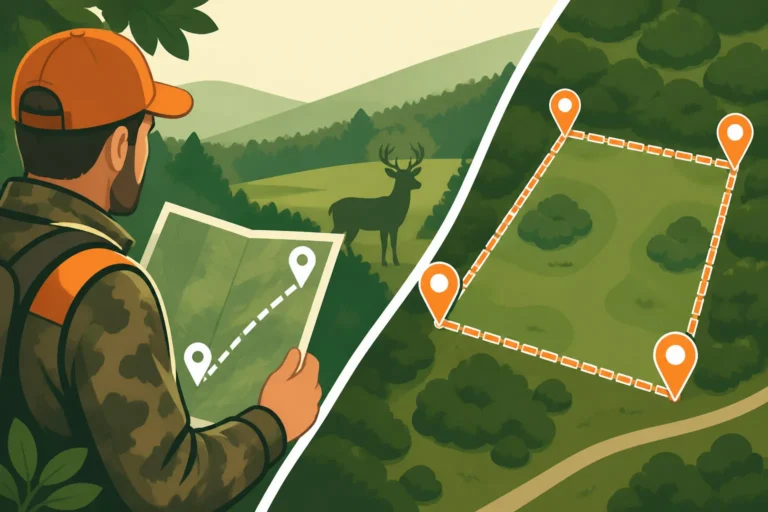
- Identify Public/Private Boundaries: This is absolutely critical in an area like Washington County where public parcels might be small and surrounded by private property. onX Hunt, for example, uses colored overlays to clearly distinguish public land from private, and even shows property owner names in many cases. This helps prevent accidental trespassing, a common concern on smaller, mixed-ownership tracts.
- Layer Satellite Imagery and Topo Maps: You can switch between satellite views, topographic maps, and hybrid options to get a complete picture of the terrain. This helps identify potential food sources, bedding areas, water sources, and travel corridors like ridge lines, saddles, and creek bottoms.
- Mark Waypoints and Tracks: Drop pins for promising sign (scrapes, rubs, tracks), potential stand locations, parking spots, and access points. You can track your movements to retrace your steps or analyze how you covered ground. This is invaluable when Scouting Tennessee Public Land Before Season.
- Offline Maps: Many of these apps allow you to download maps for offline use, which is a lifesaver when you're deep in the woods or a hollow where cell service is non-existent. You can't rely on streaming maps when you're miles from the nearest signal tower.
When using these tools, pay close attention to the details. A thin strip of public land along a creek might be overlooked by others, offering a quiet hunting spot if you can access it legally and safely.
On-the-Ground Scouting Strategies
Digital tools are fantastic, but nothing replaces boots-on-the-ground scouting. Even in smaller public tracts, understanding game movement requires direct observation.
- Seasonal Scouting: Different times of the year reveal different things. In late winter and early spring, look for shed antlers to gauge buck quality and movement. In summer, observe feeding patterns in agricultural fields bordering public land, or look for early mast crops.
- Focus on Edge Habitat: Where public and private lands meet, especially where there's a transition from timber to fields, can be highly productive. Deer often use these edges for travel and feeding, especially under the cover of darkness or low light.
- Walk the Lines: Physically walk the boundary lines of any public property you intend to hunt. This helps you confirm what your map app tells you and find potential entry/exit points that might be less obvious. Look for game trails crossing these lines.
- Sign, Sign, Everywhere: Look for fresh tracks, droppings, rubs, and scrapes. In thick cover, these can tell you a lot about where deer are moving and bedding. Pay attention to Reading Tennessee Mud for Fresh Deer Movement. If hunting turkey, listen for gobblers on the roost and look for strut marks and scratching.
- Water Sources: Even in areas with abundant creeks and rivers, smaller seeps or isolated water holes can be critical, especially during dry spells or late season when other sources freeze.
Remember, consistent scouting, both digitally and on foot, builds a mental map and understanding of the area that no amount of in-season hunting can replace. It's how you unlock the secrets of even the smallest public parcels.
Overcoming Challenges and Maximizing Success
Hunting public land, especially in a county with limited large tracts like Washington, comes with its own set of challenges. However, with the right mindset and tactics, you can still have a successful and rewarding experience.
Dealing with Hunting Pressure
One of the most common complaints about public land, even smaller parcels, is hunting pressure. In more developed areas, even limited public access can attract a fair number of hunters.
- Walk Further: The old adage holds true: the further you get from a road or established trail, the fewer hunters you'll encounter. While Washington County might not have vast wilderness, even a half-mile deep into a small WMA can put you ahead of the casual hunter. Learn How Far to Walk From a Forest Road.
- Hunt Mid-Week: If your schedule allows, hunting on weekdays, especially outside of opening weekend, can drastically reduce pressure.
- Utilize Overlooked Terrain: Steep hillsides, thick briar patches, or swampy areas that are difficult to access often get passed over. If you're willing to put in the effort, these areas can hold pressured game.
- Scout Smarter: Find pinch points, funnels, and natural barriers that concentrate game movement. If you can set up on a travel corridor that other hunters aren't noticing, you're ahead of the game.
Adapting Your Hunting Strategies
Your hunting strategy needs to adapt to the specific type of public land you're on and the typical game behavior in more populated regions.
- Still-Hunting and Stalking: On smaller, fragmented public lands, a slow, methodical still-hunt might be more effective than sitting for hours. These deer are often accustomed to human activity and might move more in response to subtle pressure.
- Early and Late Season: Consider focusing your efforts on the fringes of the season. The very beginning and the very end often see less hunting pressure than the rut or the peak of gun season. Hunting the Late-Season January Lull can be surprisingly productive as deer focus on available food sources.
- Private Land Permission: While this article focuses on public land, remember that in a county like Washington, securing permission to hunt adjacent private land can drastically increase your success. Often, smaller public parcels act as bedding or travel corridors for deer living primarily on private land. Being able to access both can be a game-changer. Getting Private Land Permission in Tennessee is a skill worth developing.
- Understand Local Regulations: Always, always check the specific regulations for any WMA or public land you plan to hunt. Washington County itself falls into a specific Deer Management Unit (DMU) with its own antlerless limits and season dates. Make sure you know Finding Which DMU Your County Sits In and any WMA-specific rules that might override statewide regulations. Also, be aware of blaze orange requirements, especially during firearm seasons.
Table: Public Land Hunting Pros & Cons in Washington County Area
| Feature | Pros | Cons | Strategy for Success |
|---|---|---|---|
| Availability | Some smaller tracts exist; vast options in nearby CNF | Limited large tracts directly within Washington County | Expand search to adjacent counties; focus on smaller parcels |
| Hunting Pressure | Less pressure in remote sections of nearby CNF or overlooked local spots | Can be high on easily accessible local tracts and popular CNF areas | Hunt mid-week; walk further; use mapping to find hidden access |
| Terrain | Varied; flat river bottoms to steep mountain ridges | Local tracts often fragmented, surrounded by private land | Utilize digital maps (onX Hunt) to identify boundaries and entry |
| Game Density | Deer, turkey, bear (CNF); small game possible locally | Can be lower in highly pressured or developed local spots | Scout religiously for fresh sign; adapt to game patterns |
| Regulations | Standard statewide rules apply, WMA-specific rules available | WMA rules can differ from statewide; CWD zone considerations | Check TWRA website and specific WMA brochures before every hunt |
Licensing, Safety, and Ethical Hunting
Before you even step foot on public land, ensure you have all your ducks in a row regarding licenses and safety. Tennessee has clear requirements for hunters, and ignorance is no excuse.
Understanding Tennessee Hunting Licenses
Every hunter in Tennessee needs the appropriate licenses and permits. This typically includes a basic hunting license and specific big game permits if you're targeting deer, turkey, or bear.
- Resident vs. Non-Resident: Costs and options vary significantly.
- Big Game Permits: Don't forget these for deer, bear, or turkey.
- WMA Permits: Many WMAs require a specific WMA permit in addition to your regular hunting license. Always check if a Tennessee WMA Permit Requirement applies to your chosen spot.
- Online Purchase: You can easily purchase your licenses through the Go Outdoors Tennessee portal. They make it pretty convenient. Tennessee Hunting Licenses and What They Cost can vary, so check current prices.
Always carry proof of your license and permits with you while hunting. Digital copies on your phone are often acceptable, but a physical copy never hurts, especially if your phone battery dies or signal is nonexistent.
Hunter Education and Safety
Safety should always be your top priority. Accidents happen, but many can be prevented by following basic safety rules and having proper training.
- Hunter Education: If you were born on or after January 1, 1969, you generally need to have successfully completed a hunter education course to hunt in Tennessee. There are some exceptions, like the apprentice license, but generally, it's a must. Understand Tennessee Hunter Education Requirements.
- Blaze Orange: During most firearm deer seasons on public land, wearing blaze orange or blaze pink is mandatory. Make sure you know the specific requirements for how much and what type of outer wear is needed.
- Treestand Safety: If you use a treestand, always use a full-body harness and a safety line. Inspect your stand and straps regularly. Many accidents occur from falls from treestands.
- Know Your Target and Beyond: This is paramount. Especially on public land where other hunters might be present, identify your target definitively and be absolutely certain of what lies beyond before taking any shot.
Ethical Hunting Practices
Hunting public land often means sharing the resource with other users – hikers, birdwatchers, mountain bikers, and other hunters. Being a good steward and ethical hunter contributes to a positive image for all.
- Respect Boundaries: Use your mapping tools to stay off private land. If you need to retrieve game from private property, always seek permission first.
- Leave No Trace: Pack out everything you pack in, including spent shell casings, food wrappers, and anything else.
- Report Poaching: If you witness illegal activity, report it to the TWRA.
- Share the Woods: Be courteous to other hunters and outdoor enthusiasts. Giving a wide berth to another hunter's setup or quietly exiting an area if you discover someone else is already there goes a long way.
Hunting public land in Washington County and its surrounding areas requires a bit more effort and strategic thinking than hunting vast, untouched wilderness. However, with the right tools, diligent scouting, and an understanding of local nuances, you can absolutely find rewarding opportunities. Embrace the challenge, enjoy the beautiful Tennessee landscape, and remember that every successful hunt starts with preparation and respect for the resource.
Disclaimer
This article is for general informational purposes only and does not constitute professional advice. Laws, prices and regulations vary by location and change over time. Consult a qualified professional for guidance on your specific situation.