Finding Which DMU Your County Sits In
It can feel incredibly daunting to wrap your head around all the rules and regulations when you're just trying to enjoy a peaceful hunt in Tennessee. One of the biggest head-scratchers for many hunters, especially those venturing into new areas or new to the state, is figuring out which Deer Management Unit (DMU) their hunting county sits in. This guide is here to untangle that confusion, providing you with clear steps and resources to confidently identify your county's DMU and understand what that means for your deer season.
Understanding Tennessee's Deer Management Units
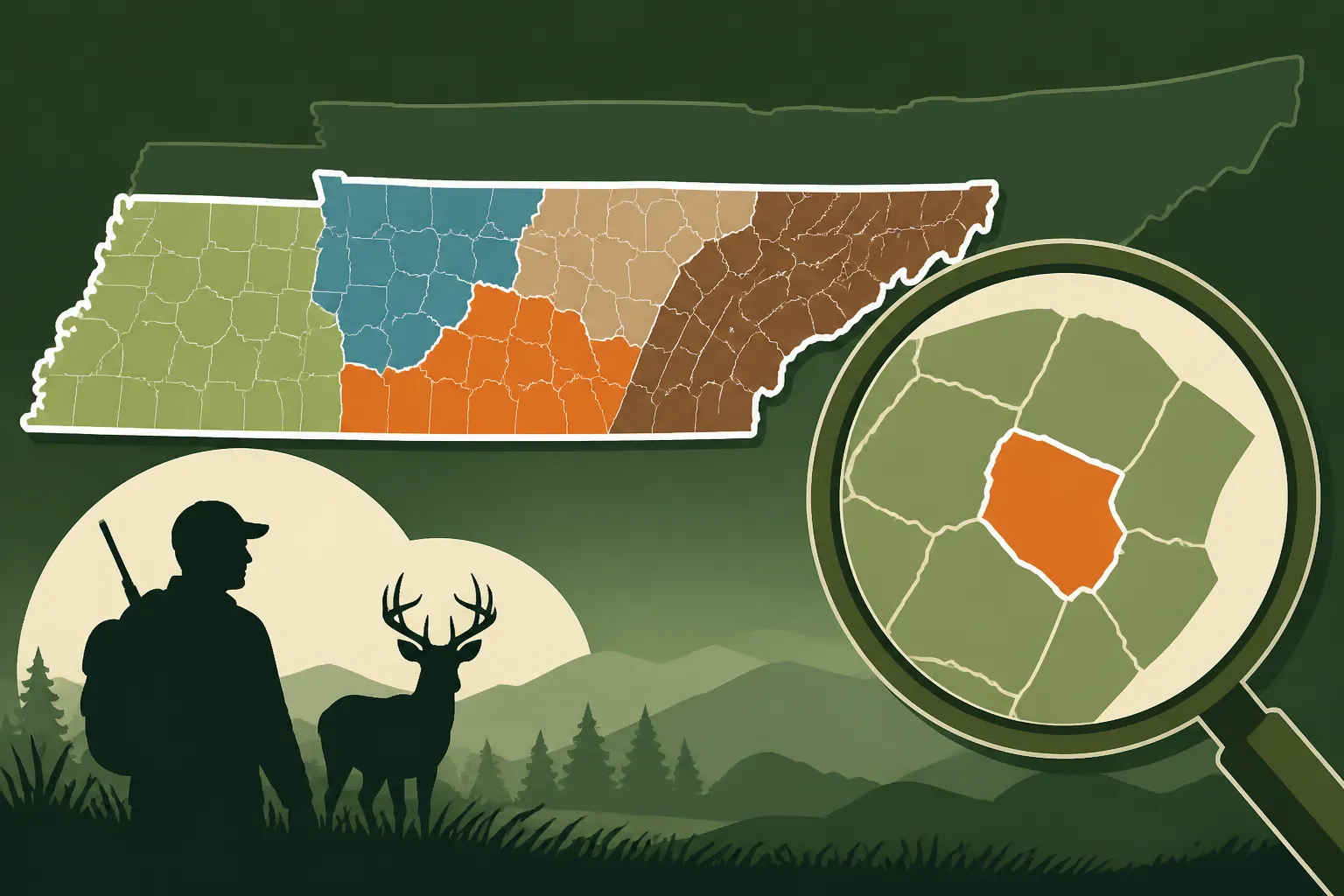
Before we dive into how to find your DMU, let's take a moment to understand why these units exist and why they're so crucial to your hunting strategy. The Tennessee Wildlife Resources Agency (TWRA) manages the state's deer herd through a system of six distinct Deer Management Units, often just called DMUs. These aren't arbitrary lines on a map; they're carefully drawn zones based on factors like deer population density, habitat quality, historical harvest data, and, increasingly, disease prevalence.
The Purpose Behind DMU Divisions
The primary goal of DMUs is to allow the TWRA to apply specific management strategies to different parts of the state where deer populations and conditions vary widely. Think about it: the agricultural rich, high-deer-density farmlands of West Tennessee are a world away from the rugged, vast timberlands of the Cherokee National Forest in East Tennessee. A "one-size-fits-all" approach simply wouldn't work. By dividing the state into DMUs, the TWRA can set tailored bag limits, antlerless deer opportunities, and even season lengths to either increase, decrease, or maintain deer numbers in a given area. This targeted management helps ensure healthy deer populations and sustainable hunting opportunities for years to come. You can learn more about the broader structure of deer season in our article on Tennessee Deer Season Structure Explained.
How DMUs Influence Your Hunt
The DMU your hunting spot falls into directly impacts key aspects of your season. Most notably, DMUs dictate your antlerless deer bag limits and, sometimes, the specific dates when antlerless harvest is permitted. For example, some DMUs might have very liberal antlerless limits to help control population growth, while others might be more restrictive. This is vital information, as mistakenly harvesting an antlerless deer outside of a legal period or exceeding the limit could lead to fines and penalties. Understanding your DMU is as fundamental as knowing the weather forecast for your hunt.
Pinpointing Your County's Deer Management Unit
So, how do you actually figure out which DMU your particular county belongs to? Thankfully, the TWRA provides straightforward resources, and with a little navigation, you'll have your answer.
Utilizing the Official TWRA Website and Maps
The most reliable and up-to-date source for DMU information is always the official TWRA website. They typically publish a comprehensive hunting guide each year that includes maps and tables detailing which counties are in which DMU.
Here's a general approach you can take:
- Navigate to the TWRA Website: Head to tn.gov/twra.
- Find the Hunting & Trapping Guide: Look for a link to the current year's "Tennessee Hunting & Trapping Guide" or "Deer Hunting Guide." This is usually found under the "Hunting" section.
- Locate the DMU Section: Within the guide, there will be dedicated pages or sections explaining the DMU system. You'll often find a map of Tennessee clearly marked with the six DMU boundaries and a corresponding table listing each county and its assigned DMU.
For instance, if you're hunting in Obion County, a quick check of the TWRA map or table would show you it falls into DMU 1. Meanwhile, if you're planning a trip to Wayne County, you'd find it in DMU 2. This direct reference is your gold standard for accuracy.
Harnessing Digital Mapping Tools and Apps
In today's digital age, many hunters rely heavily on mapping applications, which can be invaluable for identifying DMUs, especially if you're hunting near a county line or in an area you're unfamiliar with.
Many serious hunters rely on apps like GoHunt (often referring to GoHunt, a popular hunting map and information platform, though TWRA also has its own app). Tools like GoHunt allow you to layer different types of information, including public land boundaries, property lines, and crucially, wildlife management zones like DMUs. By downloading the state-specific maps and data, you can zoom in on your exact hunting location and see precisely which DMU you're in, often with color-coded overlays. This is incredibly helpful when you're scouting or even sitting in your stand, as it provides real-time geographic context. The Go Outdoors Tennessee app, the official TWRA app, also offers similar functionalities, often with up-to-date regulations integrated directly. Using these apps, you can literally draw a boundary around your property or even a specific field edge and quickly identify its DMU.
DMU Lookup Table Example
To give you a clearer picture, here's a simplified example of how Tennessee counties are divided among the DMUs. Keep in mind that exact boundaries and specific counties can occasionally be adjusted, so always double-check with the official TWRA guide each season.
| Deer Management Unit (DMU) | General Location (Examples of Counties) | Typical Antlerless Limit (Consult TWRA for current year) | CWD Zone Overlap Potential |
|---|---|---|---|
| DMU 1 | West TN (e.g., Obion, Weakley, Dyer) | High (e.g., 3 per day) | High (Central/Western TN) |
| DMU 2 | Middle West TN (e.g., Henderson, Wayne) | Moderate (e.g., 2 per day) | High (Central/Western TN) |
| DMU 3 | Middle TN (e.g., Maury, Giles, Marshall) | Moderate (e.g., 2 per day) | Moderate |
| DMU 4 | Cumberland Plateau (e.g., Fentress, Rhea) | Lower (e.g., 1 per day) | Lower |
| DMU 5 | East TN Foothills (e.g., Greene, Loudon) | Lower (e.g., 1 per day) | Lower |
| DMU 6 | Eastern Mountains (e.g., Monroe, Polk) | Lowest (e.g., 1 per season) | Lowest |
Note: This table is for illustrative purposes. Always refer to the current TWRA Hunting & Trapping Guide for precise, up-to-date regulations for each DMU, especially concerning antlerless limits and CWD zones.
Navigating DMU-Specific Regulations
Once you've identified which DMU your hunting area falls into, the next critical step is understanding the specific regulations tied to that unit. This is where the rubber meets the road, as these rules directly impact what you can harvest and when.
Antlerless Deer Limits and Seasons
The most significant difference between DMUs often lies in the antlerless deer limits. Some DMUs, particularly those in West and Middle Tennessee with robust deer populations, might offer generous antlerless opportunities. For example, DMUs One Through Three Antlerless Limits might allow for multiple antlerless deer per day during designated periods. This helps manage herd numbers and balance the sex ratio. Conversely, in the more rugged, lower-density areas like those covered by DMUs Four Through Six Antlerless Limits, antlerless limits are often much more conservative, perhaps only one per day or even one for the entire season, outside of specific youth or landowner permits.
It's not just the number of antlerless deer; it's also when you can take them. Some DMUs might have extended antlerless-only archery periods, or specific gun season dates that differ for antlerless harvest. Always check the annual hunting guide for your DMU's specific calendar. Missing these details could inadvertently lead to a violation, which is the last thing any responsible hunter wants.
Chronic Wasting Disease CWD Management Zones
The issue of Chronic Wasting Disease (CWD) has added another layer of complexity to Tennessee's deer management, and these CWD management zones often overlap with or are defined by DMU boundaries, or even specific counties within them. If your county falls within Tennessee's Chronic Wasting Disease Management Zone, there will be additional regulations you must adhere to. These might include mandatory CWD testing for harvested deer, restrictions on carcass transportation out of the zone, and specific earn-a-buck programs designed to increase harvest and aid in disease surveillance.
For instance, counties in West Tennessee, where CWD was first detected, often have more stringent rules. It's not uncommon for hunters to need to quarter or debone deer before transporting them across CWD zone lines. These regulations are in place to try and slow the spread of this devastating disease, and compliance is absolutely essential for the health of Tennessee's deer herd. Always consult the TWRA CWD section of their hunting guide if you're hunting in or near a CWD management area.
Practical Considerations for Hunters
Even with all the information at your fingertips, real-world hunting scenarios can still throw curveballs. What happens if you hunt along a county line, or your deer crosses into a different DMU after the shot? Having a plan for these situations is part of being a prepared hunter.
Hunting Across County Lines
It's not uncommon for hunters to have access to land that straddles two different counties, or to hunt multiple properties in adjacent counties. When this happens, it's paramount to know which DMU each parcel of land falls into. If you have stands in both counties, you need to understand and follow the regulations for the specific DMU where you're actively hunting at that moment. For example, if you're in a stand in a DMU 1 county on one day and then move to a stand in a DMU 3 county the next, your antlerless limits or even antler restrictions might change. Using detailed mapping apps like GoHunt can highlight these county and DMU lines, helping you avoid confusion when you're in the field. This precise geographic awareness is crucial.
What if Your Deer Crosses into Another DMU?
This is a scenario every hunter hopes to avoid but needs to be prepared for: you shoot a deer, and it runs across a county or DMU line onto land with different regulations, or even onto property where you don't have permission. While Tennessee law generally permits retrieval of legally shot game from private land if you have "permission to retrieve," the DMU regulations can get tricky.
Legally, the deer's point of kill typically dictates which DMU's regulations apply to that specific animal, especially for tagging and reporting. However, if you pursue a wounded animal into a different DMU, you must be acutely aware of any changes in legal weapon type, hunting hours, or land access rules. The best practice is always to attempt to recover the animal as quickly as possible and, if necessary, contact the local TWRA officer to explain the situation before crossing into an unfamiliar DMU or private property without permission. Having clear communication and understanding of Tennessee Trespass and Permission Law is key here.
Scouting and Planning with DMUs in Mind
Incorporating DMU knowledge into your preseason scouting is a smart move. When you're out there months before the season, evaluating habitat, finding sign, and hanging trail cameras, you should also be confirming your DMU. This allows you to plan your hunt around the specific opportunities and restrictions that will be in place. For instance, if you're in a DMU with a very tight antlerless limit, you might focus your efforts more on buck sign. Conversely, if you're in a DMU with liberal antlerless tags, you might target areas where you know does frequent to help fill your freezer.
Using tools like GoHunt to overlay DMU boundaries while you're virtually scouting or physically in the field can highlight areas where regulations shift, allowing you to strategically place stands or plan drives. This foresight can be the difference between a successful, compliant hunt and a frustrating, rule-breaking one. Considering the long and varied deer season, from Bowhunting Tennessee's Long Archery Season to Tennessee's Gun Deer Season Into January, knowing your DMU from the outset helps you maximize your opportunities throughout.
Essential Resources for Tennessee Hunters
To ensure you're always squared away with the latest DMU information and other hunting regulations, here are the go-to resources you should bookmark and utilize every season.
The TWRA Official Website and Hunting Guides
As mentioned, the Tennessee Wildlife Resources Agency website (tn.gov/twra) is your ultimate authority. Every year, before hunting season kicks off, they release the comprehensive "Tennessee Hunting & Trapping Guide." This guide is an absolute must-read. It contains detailed maps of all six DMUs, county-by-county breakdowns, and all the specific regulations for deer, turkey, small game, and waterfowl. You can download a PDF version, which is fantastic to keep on your phone or tablet for quick reference in the field, even if you lose cell signal. It's also where you'll find current information on Tennessee's Chronic Wasting Disease Management Zone and any associated regulations.
The Go Outdoors Tennessee App
The official "Go Outdoors Tennessee" app is a game-changer for many hunters. Available for both iOS and Android, this app allows you to purchase and store your Tennessee Hunting Licenses and What They Cost digitally, report harvests, and, most relevant to our discussion, access interactive maps. These maps often include public land boundaries, WMA information, and, yes, DMU overlays. Having these interactive maps in your pocket means you can verify your location's DMU instantly, even when out in the woods. It's an indispensable tool for staying informed and compliant.
Third-Party Mapping Applications (e.g., GoHunt)
For hunters who want even more advanced features, third-party mapping applications are incredibly powerful. While the TWRA app is excellent, apps like GoHunt often provide more detailed landowner information, advanced scouting tools, and a user interface that some hunters find more intuitive for complex planning. When you subscribe to a service like GoHunt for Tennessee, you can overlay property boundaries, terrain features, and critical hunting zones like DMUs, helping you visualize your hunting area and its associated rules with incredible precision. This can be especially useful for Scouting Tennessee Public Land Before Season or planning a trip to an unfamiliar WMA.
Before hitting the woods, take a few moments to look up the specific counties you plan to hunt. Cross-reference them with the current TWRA hunting guide and, if you use one, double-check on your preferred mapping app like GoHunt. This small bit of homework will save you a lot of headaches and ensure your time in the woods is spent enjoying the hunt, not worrying about regulations.
Disclaimer
The information provided in this guide is for general informational purposes only and is not a substitute for the official regulations published by the Tennessee Wildlife Resources Agency (TWRA). Hunting laws and regulations can change annually. It is the hunter's responsibility to consult the most current TWRA Hunting & Trapping Guide and any relevant proclamations before participating in any hunting activity.