Finding Ground That Sees Fewer Hunters
There's nothing quite as deflating as hauling your gear out onto public land in Tennessee, hiking in a mile or two, only to find another hunter's stand already there, or fresh boot tracks everywhere you look. It feels like every good spot is already taken, and the peace you seek in the woods is constantly interrupted. This guide is all about equipping you with the strategies and mindset to consistently find those elusive, less-pressured hunting grounds that often hold bigger, less wary animals.
The Frustration of Crowded Public Land in Tennessee
It's a common lament among Tennessee hunters: public land can feel like Grand Central Station during peak season. You spend hours scouting, planning, and preparing, only to arrive on opening day or a crisp November morning and find you're sharing your "secret spot" with a half-dozen other folks. This isn't just annoying; it directly impacts your hunting success.
Why Everyone Seems to Be in the Same Spot
The truth is, many hunters are creatures of habit, myself included sometimes! We tend to gravitate towards what's easy or what we know. This often means the nearest parking lot on a Wildlife Management Area (WMA) or National Forest, followed by a walk down the most obvious logging road or ATV trail. These easily accessible areas, especially those visible from main roads or popular access points, become high-pressure zones very quickly.
Think about it: who wouldn't prefer a shorter walk in, especially when it's still dark or you're hauling a treestand? This collective preference creates predictable patterns of hunter distribution. The "herd mentality" often leads to congestion in the same familiar valleys, along the same field edges, or in the most picturesque stands of hardwoods. On opening weekend, these areas are often swarming, making it tough to even find a quiet place to sit, much less encounter unpressured game.
How Hunting Pressure Changes Deer Behavior
Deer are incredibly adaptable, and constant human pressure teaches them quickly. When every crack in the timber and every rustle of leaves could mean a hunter, deer become much more wary, nocturnal, and secretive. That mature buck you're after isn't going to casually stroll through an open hardwood flat in daylight if he's been bumped by three different hunters in as many days.
What you'll often see in heavily pressured areas are young deer, mostly does and fawns, or smaller bucks that haven't learned enough to become fully nocturnal. The older, wiser animals will either relocate to genuine sanctuaries or become almost exclusively active after dark. You might find plenty of tracks, but if they're all made in the dead of night, your chances of seeing that deer while hunting are slim. It becomes a frustrating cycle where hunters put more pressure on the remaining visible deer, further solidifying their nocturnal habits. Hunting Pressure on Tennessee Public Land is a very real challenge many of us face.
Digital Scouting: Your Secret Weapon for Solitude
In today's hunting world, digital tools are indispensable for breaking free from the crowds. They allow you to "walk" countless miles from your couch, identifying potential low-pressure areas long before you ever step foot in the woods. This upfront research is crucial for finding those overlooked pockets.
Mastering Aerial and Topographical Maps
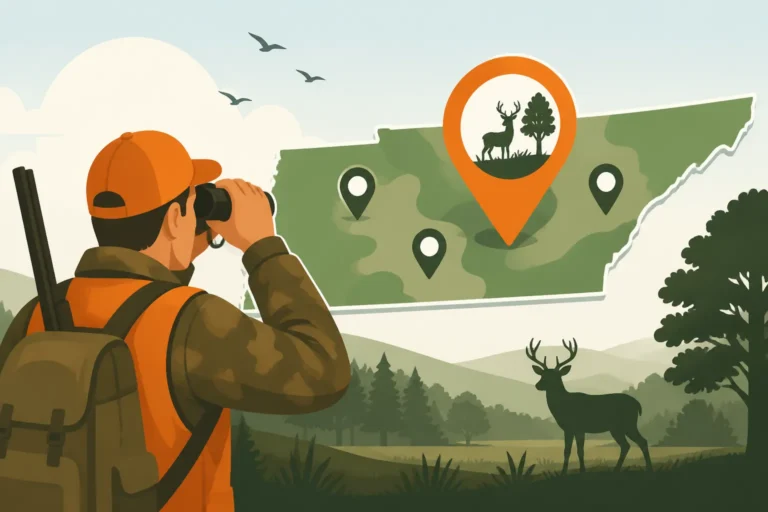
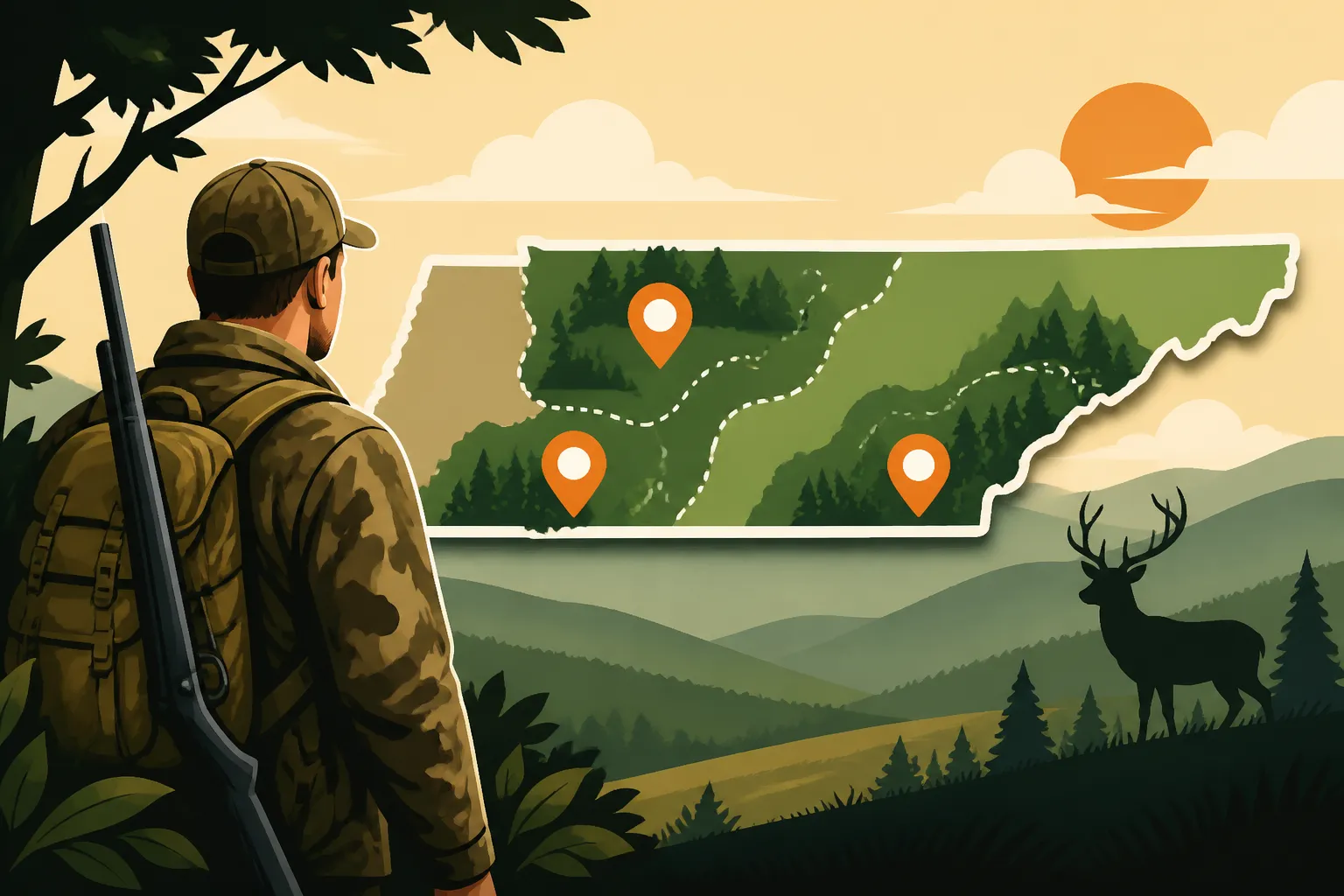
Modern mapping apps like onX Hunt and GoHunt are game-changers. They overlay property boundaries, topographic lines, and public land designations onto detailed aerial imagery. Instead of just looking at the obvious access points, you can zoom in and scan miles of terrain, searching for those subtle features that deter other hunters. Are there narrow strips of public land bordering difficult private property? Is there a remote ridge line only accessible by crossing a steep ravine or a wide, shallow creek?
I've personally spent countless hours on onX Hunt identifying small, forgotten public tracts or fingers of WMA land that are miles from the nearest parking area or separated by tricky terrain. Look for drainages that run deep into public land, leading to remote benches or saddles. Identify thick, dark sections of timber or swampy areas that appear difficult to navigate. These digital scouting sessions allow you to find "backdoor" entrances that require a bit more effort but promise a higher reward. onX Layers for Tennessee Land Status can show you not just property lines, but also different land types, historical wildfires, and timber cuts, all of which influence deer movement and hunter access. Don't underestimate the power of Reading Aerial Photos for Cumberland Plateau Deer to find hidden gems.
Identifying Natural Barriers and Remote Pockets
The key to finding solitude often lies in identifying natural barriers that dissuade the average hunter. These aren't just property lines; they're features like steep bluffs, deep hollows, wide creeks or rivers that require wading, or incredibly dense stands of briars and thickets. Most hunters want an easy walk. When you see a large section of public land that's only accessible by crossing a substantial obstacle, that's often your golden ticket.
Imagine a section of Cherokee National Forest where a steep, rocky bluff runs for a mile, with only one or two difficult breaks. Most hunters will avoid that entire stretch, leaving the ground above and below the bluff largely undisturbed. Similarly, a sprawling bottomland WMA with numerous flooded timber areas and oxbow lakes might intimidate hunters not equipped or willing to wade. These "hard to reach" areas naturally become sanctuaries for deer and other game, as they offer security from human disturbance. Learning to Hunting Cumberland Plateau Ridgelines effectively means understanding how to navigate these natural barriers, using them to your advantage. Finding where the deer Where Cumberland Plateau Bucks Bed often aligns with these less accessible areas.
Strategic Ground Tactics for Less Pressure
Once you've done your digital scouting, it's time to put boots on the ground with a plan. Your success will often come down to a willingness to do what others won't.
The "Extra Mile" Principle
This is perhaps the most fundamental strategy for finding unpressured ground: walk further than everyone else. It sounds simple, but it requires dedication and the right gear. Most hunters won't venture more than a half-mile to a mile from their vehicle. Every step beyond that dramatically increases your chances of finding untouched territory.
This "extra mile" might mean navigating dense blowdowns, pushing through overgrown clear-cuts, or following faint game trails deep into a hollow. It requires packing lighter, wearing comfortable but durable boots, and being prepared for a strenuous hike, especially if you're planning to pack out a deer. The effort is worth it; the further you go, the less human scent and noise disturbance you'll encounter, and the more likely you are to find deer acting naturally during daylight hours. Don't be afraid to leave the obvious trails and push through ugly cover.
Timing Your Hunts for Fewer Crowds
Your choice of when to hunt can be just as important as where. Peak hunting times, like opening day, weekends, and crisp, clear mornings, naturally draw the most hunters. If you want solitude, try to reverse engineer this.
Hunting during weekdays, especially Tuesday through Thursday, will significantly reduce the number of hunters you encounter. Another excellent strategy is to embrace less desirable weather. A steady, light rain, a cold snap, or even a light dusting of snow often keeps fair-weather hunters at home, leaving the woods to the more dedicated. Deer often move well during these conditions, especially after a cold front. This is a great time to implement your Hunting the Late-Season January Lull tactics or capitalize on hunting after a January cold front, when many other hunters have hung up their gear. You'll be surprised how much quieter the woods become when the temperature drops or the skies open up.
Strategies for Locating Low-Pressure Hunting Ground
| Characteristic | High-Pressure Ground | Low-Pressure Ground |
|---|---|---|
| Access | Close to paved roads, large parking lots, well-maintained trails, obvious entry points. | Requires longer walks, crossing natural barriers (creeks, bluffs), faint or no trails, difficult parking. |
| Terrain | Gently rolling hills, accessible creek bottoms, open timber. | Steep slopes, dense thickets, swampy areas, rocky outcrops, deep hollows. |
| Hunter Sign | Frequent boot tracks, old treestands, cut shooting lanes, garbage, visible deer blinds. | Minimal to no human sign, undisturbed leaf litter, natural browse. |
| Deer Behavior | Largely nocturnal, extremely wary, quick to spook, mostly does and young bucks during daylight. | More daylight movement, less wary, higher chance of mature bucks acting naturally. |
| Time of Year/Week | Opening day, peak rut weekends, clear weather. | Weekdays, late season, inclement weather (rain, cold, snow), mid-day. |
| Digital Map Clues | Near main roads, visible clearings, popular WMA boundaries. | Hidden points of entry, dense canopy cover, remote fingers of public land, areas bounded by rivers or bluffs. |
Real-World Tennessee Examples
Tennessee's diverse landscape offers unique opportunities and challenges for finding unpressured hunting ground. Knowing how to adapt your strategy to the specific terrain is crucial.
Unlocking West Tennessee Bottomlands
The river bottoms of West Tennessee, particularly along the Mississippi River or major tributaries, can be phenomenal deer country. However, they're often choked with thick cover, prone to flooding, and crisscrossed with sloughs and oxbows. This is where many hunters get discouraged, but it's also where you can find solitude. Focus on areas that require wading through water or navigating dense, mosquito-ridden swamps. Look for higher ground—small islands of timber within flooded areas, or subtle ridges that run parallel to the main river channel. These spots can concentrate deer that are trying to escape the water or the thickest muck.
Often, these areas are only accessible by boat or by a long, wet walk, which weeds out the majority of hunters. Consider Hunting West Tennessee River Bottoms but look for the least obvious ways in. A pinch point or Hunting a Funnel Between Two Bottoms that is difficult to reach will likely hold deer that feel safe. Don't be afraid to put on waders and explore.
Navigating East Tennessee Mountain Terrain
Hunting the mountains of East Tennessee, like the vast Cherokee National Forest, presents a different set of challenges and opportunities. The sheer elevation changes and rugged terrain naturally deter many hunters from venturing far off well-worn paths. To find solitude here, you need to understand how deer and hunters navigate these steep slopes. Focus on benches, saddles, and deep hollows that are a significant climb or descent from any road or trail.
Deer will use these terrain features for travel and bedding, often preferring the security of difficult-to-access areas. Learn to read a topo map for subtle benches or "flat" spots on steep hillsides that hold bedding areas. Pay close attention to Wind and Thermals on a Ridge System; thermals can be your friend, allowing you to approach from above or below without being detected. The secret to Hunting Smoky Mountain Foothill Deer and other mountain regions is often in finding these remote, overlooked pockets, sometimes a mile or two down a steep, rocky ravine that most people simply won't bother with. A careful read of the topography can reveal Reading a Ridge for East Tennessee Deer and where deer are most likely to travel.
Finding unpressured hunting ground in Tennessee requires effort, smart scouting, and a willingness to step outside your comfort zone. But for those willing to put in the work, the reward of a quiet morning in the woods and the chance at an unpressured deer is absolutely priceless.
Disclaimer
This article is for general informational purposes only and does not constitute professional advice. Laws, prices and regulations vary by location and change over time. Consult a qualified professional for guidance on your specific situation.