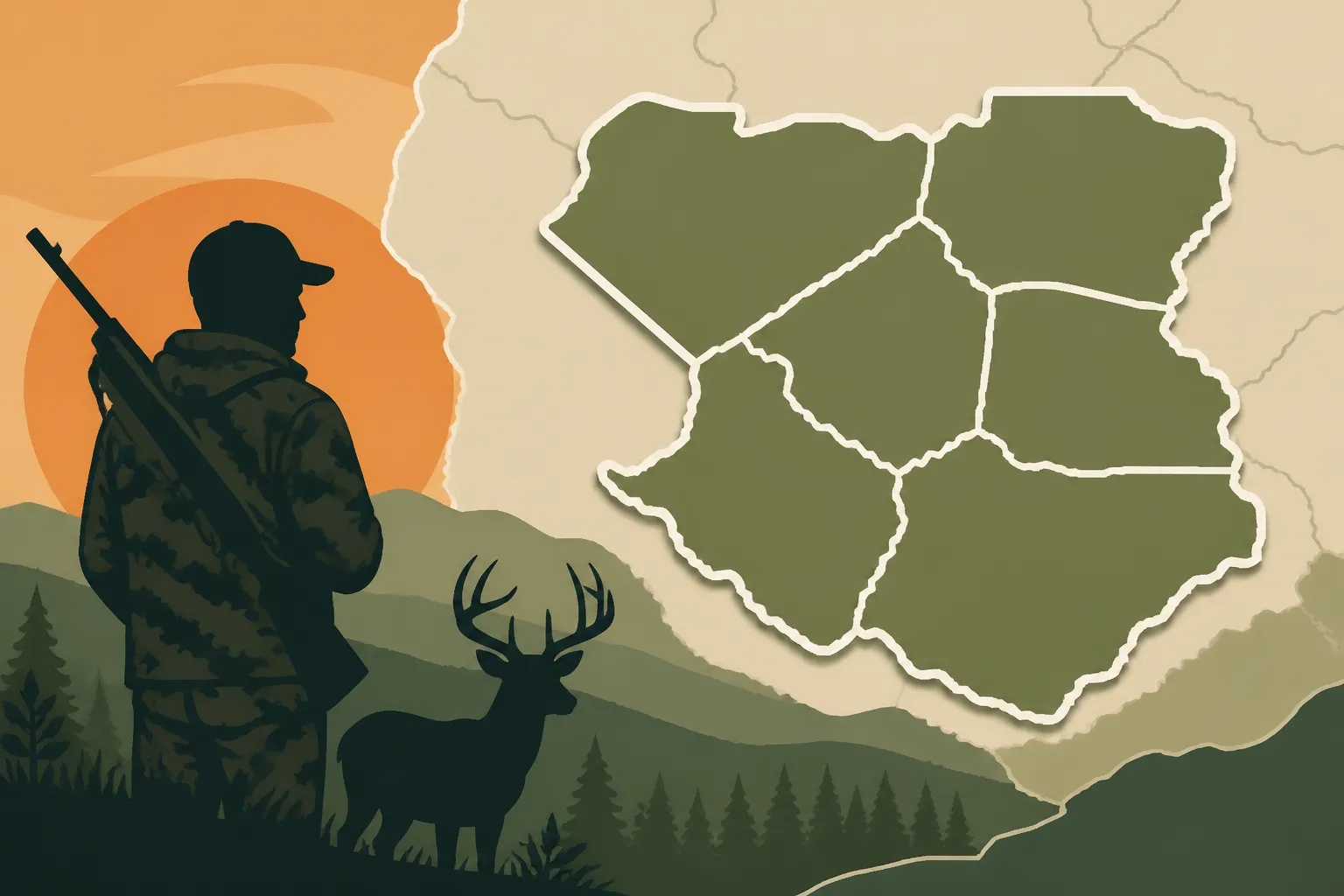
North Cumberland’s Five-County Footprint
Many hunters dream of vast, untamed wilderness where game roams freely, but few realize Tennessee offers an incredible opportunity right in their backyard: the sprawling North Cumberland Wildlife Management Area. Its sheer size and the fact it stretches across five counties can feel daunting to new and even seasoned outdoorsmen who might be accustomed to smaller, more defined hunting areas. This comprehensive guide will meticulously break down the North Cumberland's multi-county footprint, detailing its unique features, diverse hunting opportunities, how to effectively navigate its wild expanses, and what makes it such a special part of Tennessee's hunting landscape.
Understanding the North Cumberland WMA: A Giant Among Us
The North Cumberland Wildlife Management Area (NCWMA) isn't just another patch of public land; it's a truly immense and rugged region that provides a unique challenge and reward for Tennessee hunters. Encompassing over 140,000 acres of steep, forested mountains, deep hollows, and reclaimed mine lands, it offers an immersive backcountry experience unlike many other WMAs in the state. For those seeking to escape the crowds and truly test their woodsman skills, North Cumberland stands as a testament to wild Tennessee.
Why North Cumberland Stands Out
What truly sets the North Cumberland WMA apart, beyond its impressive acreage, is its raw, untamed character. Unlike many smaller WMAs that might have more easily accessible perimeters and manicured trails, North Cumberland demands a higher level of preparation and physical exertion. The terrain is relentlessly rugged, with steep climbs, challenging descents, and dense undergrowth that can make even a short walk feel like a marathon. This environment, while physically demanding, is precisely what helps foster robust populations of big game and offers a genuine sense of wilderness. Hunters here aren't just pursuing game; they're engaging with a truly wild landscape on its own terms.
Moreover, the NCWMA holds a prestigious place as the heart of Tennessee's elk restoration zone. The presence of a thriving elk herd gives this WMA a unique prestige, drawing hunters from across the nation who dream of hearing a bull bugle across a misty autumn hollow. This makes the North Cumberland a dynamic and complex ecosystem, supporting a diverse array of game animals—from cunning whitetail deer and robust black bears to elusive wild turkeys and a variety of small game. It’s a multi-faceted hunting experience that shifts dramatically with the changing seasons, a true testament to successful conservation and a jewel in Tennessee’s public land crown.
A History of Restoration and Management
The sheer scale and ecological richness of the North Cumberland WMA are not accidental; they are the result of decades of dedicated conservation and collaborative land management. This vast area is a mosaic of state-owned lands, including significant portions of the Tennessee State Forests, all managed jointly for sustainable timber production, wildlife habitat, and public recreation. Its history is most famously intertwined with the ambitious reintroduction of elk, which began in the early 2000s. Elk from various states were carefully selected and released into these mountains, marking a monumental achievement in species restoration for our state. You can read more about this incredible journey in How North Cumberland Elk Were Reintroduced.
Managing such an expansive and diverse landscape requires constant, vigilant effort. The Tennessee Wildlife Resources Agency (TWRA) works tirelessly alongside the Tennessee Department of Agriculture's Division of Forestry, as well as private partners, to maintain and enhance habitat quality. This includes strategic timber management practices that create a mosaic of forest ages, providing different types of cover and forage. Prescribed burns are regularly conducted to mimic natural fire regimes, which control undesirable vegetation and stimulate new, nutritious growth. Additionally, wildlife plantings are established in key areas to supplement natural food sources. This proactive and science-based approach ensures a healthy, thriving environment for deer, bear, elk, turkey, and small game populations, securing the future of this invaluable resource for generations of Tennessee hunters.
The Five Counties: Mapping the North Cumberland Footprint
The immense size of the North Cumberland WMA means it isn't confined to a single county. Instead, it sprawls across parts of five distinct counties in northeast Tennessee, each contributing its own unique characteristics and hunting opportunities. Understanding this multi-county footprint is key to planning a successful hunt, as terrain, access, and game concentrations can vary significantly from one county line to the next.
Scott County: The Heart of the Elk Zone
When the discussion turns to elk hunting in Tennessee, Scott County invariably takes center stage. It is widely considered the very core of the North Cumberland WMA's elk habitat, boasting extensive tracts of rugged mixed hardwood forests, numerous reclaimed strip mines that provide vital open forage, and a labyrinth of creek bottoms. For many hunters applying for a coveted Tennessee Elk Quota Hunt Rules permit, Scott County represents the dream, offering the highest likelihood of encountering these majestic animals. The terrain here can be incredibly demanding, characterized by steep, unforgiving climbs, deep ravines, and nearly impenetrable laurel thickets. However, it is precisely this challenging environment that allows the elk herd to thrive with minimal human disturbance, offering truly wild and exhilarating hunting experiences.
Beyond its famed elk, Scott County also supports robust populations of whitetail deer and black bears. The vast, unfragmented forests provide ample cover and diverse food sources, allowing deer to reach impressive maturity. Bear hunters, too, find ample opportunity, especially in the more remote sections where natural mast crops, like acorns and beechnuts, are abundant during the fall. Access into many prime hunting areas can be challenging, often involving long walks along logging roads that may not always be in peak condition. For many, this remoteness is part of the appeal, a way to truly escape the more accessible and pressured areas. To navigate the intricate web of roads, trails, and property lines in this challenging landscape, a reliable mapping application like onX Hunt is an absolute necessity. It allows hunters to pinpoint their location, mark waypoints, and stay on public land with confidence.
Campbell County: Diverse Terrain and Access Points
Immediately to the east of Scott County lies Campbell County, forming another substantial portion of the North Cumberland WMA. This county presents a fascinating blend of landscapes, ranging from towering, rugged ridges and deep, shadowed hollows to areas with more gradual slopes and extensive reclaimed lands. This diverse topography makes Campbell County incredibly versatile for hunting various species. Notably, Campbell County often features a more extensive network of public trails and forest roads, many of which are popular with ATV riders. While this can mean more human activity in some areas, these same trails often provide crucial access points for hunters willing to venture deeper into the timber on foot. More detailed information on access in this region can be found in Campbell County Public Hunting Ground.
The ecological diversity within Campbell County translates directly into excellent hunting opportunities for deer, bear, and even wild turkeys in the spring. While elk are certainly present, they may be more dispersed or use different types of habitat than in Scott County, often requiring more extensive scouting to locate. For deer hunters, the key is often finding remote pockets away from the heavily trafficked ATV trails, where whitetails can find refuge. These secluded areas can be particularly productive during the rut when bucks are actively searching for does. Bear hunters will find the dense cover and often abundant fall mast crops in Campbell County particularly attractive, making it a prime area for patient still-hunting or employing well-trained hounds.
Morgan, Anderson, and Claiborne Counties: Eastern Extents
Rounding out the North Cumberland's impressive five-county footprint are Morgan, Anderson, and Claiborne counties. These counties generally comprise the eastern and southern peripheries of the WMA, offering additional vast tracts of public land that, in some areas, may experience slightly less hunting pressure than the more central regions. Morgan County, for example, provides exceptionally rugged and broken terrain, which is ideal for the stealthy approach of still-hunting deer and bear. Its numerous remote coves, steep ridges, and thick draws offer excellent sanctuaries where game can elude more concentrated hunting efforts.
Anderson and Claiborne counties, while containing somewhat smaller portions of the overall WMA, are equally valuable to the astute hunter. Claiborne County, situated further northeast, can offer fantastic deer and turkey hunting, particularly in areas that border private agricultural lands. The juxtaposition of vast public timber with adjacent food sources on private land can create dynamic game movement patterns. These counties often feature a healthy mix of mature timber and younger clear-cuts or pine plantations, creating a patchwork of diverse habitats that benefit a wide array of game species. Hunters willing to venture into these perhaps less-talked-about corners of the North Cumberland can often discover highly productive and less-pressured spots. Utilizing sophisticated mapping tools like those offered by GoHunt becomes invaluable in identifying these nuanced landscape features, such as remote benches, thick bedding areas, and overlooked funnels, especially once the leaves have fallen and visibility improves.
Key Hunting Opportunities Across the Zone
The North Cumberland WMA is a big game paradise, offering challenging and rewarding hunts for Tennessee's most iconic species. Each animal presents its own unique set of challenges and demands specific strategies tailored to the rugged mountain environment.
Deer Hunting: Whitetails in the Mountains
Deer hunting in the North Cumberland WMA is a truly distinct experience compared to pursuing whitetails in flatter agricultural or more gently rolling hill country. These are undeniably mountain deer – often smaller in body size than their farm-country cousins, but incredibly tough, resilient, and cunning, perfectly adapted to the steep terrain and dense cover. Success here hinges on a deep understanding of how deer utilize the contours of the land, moving efficiently through saddles, along benches, up and down creek bottoms, and across ridge systems. Internal links like Hunting Cumberland Plateau Ridgelines and Reading a Ridge for East Tennessee Deer offer excellent foundational insights into these specific types of terrain.
Hunters must be prepared for rigorous physical exertion, often involving strenuous hikes, and cultivate an acute ability to read subtle sign in an environment where tracks might be scarce in rocky soil. Primary food sources are overwhelmingly natural mast crops, such as acorns, beechnuts, and wild grapes, supplemented by various forms of browse and strategically placed WMA food plots. During the early archery and muzzleloader seasons, accurately locating and keying in on these critical food sources is paramount. Once the general gun season opens, deer in North Cumberland will quickly adapt to increased pressure, retreating into the densest, most difficult-to-access cover. Patience, unwavering persistence, and the ability to move silently and efficiently across demanding terrain are your most valuable assets when pursuing these resilient mountain whitetails. Don't expect easy hunts; expect hard-earned success that tastes all the sweeter.
Elk Hunting: The Crown Jewel Quota Hunt
The North Cumberland WMA holds the distinguished honor of being the only place in Tennessee where you can legally hunt wild elk, making the state's Tennessee Elk Quota Hunt Rules the absolute pinnacle of big game aspirations for many hunters. With only a severely limited number of permits issued annually, drawing an elk tag is, for many, a true once-in-a-lifetime opportunity. The elk that roam these mountains are genuinely wild, wary, and immensely powerful, demanding extensive scouting, unwavering physical endurance, and a deep understanding of their behavior to successfully pursue. They typically stick to dense, protective cover during daylight hours, emerging to feed in the numerous reclaimed mine lands or secluded forest clearings at dawn and dusk. Preparing for a North Cumberland Elk Hunt will give you a better idea of the effort involved.
Successful elk hunting in North Cumberland almost always involves extensive pre-season scouting. This means spending significant time in the woods, not just before the season but throughout the year, learning the travel patterns, identifying specific bedding areas, and locating the primary feeding grounds of particular herds. Calling, especially during the archery and early firearm seasons when bulls are actively bugling, can be an incredibly effective tactic to locate and draw in elk. However, these animals are incredibly intelligent and wary; knowing when to be aggressive with your calls and when to exercise subtle patience makes all the difference. Calling a North Cumberland Bull Elk provides excellent strategies. Hunters must be prepared for physically demanding, multi-day stalks, be ready to take quick, ethical shots under challenging conditions, and have a robust plan in place for the immensely difficult task of retrieving a massive animal from steep, remote terrain.
Bear Hunting: A Growing Population
Tennessee's black bear population has experienced a truly remarkable resurgence across the state, and the North Cumberland WMA stands as a significant cornerstone of that conservation success story. Much of the WMA falls within Tennessee Bear Zone One Rules, offering fantastic bear hunting opportunities whether you prefer the quiet intensity of still-hunting, the strategic patience of spot-and-stalk tactics, or the thrilling chase of hunting with trained hounds. Bears are most active and visible during the fall months, when their singular focus is on gorging themselves on available natural mast crops—acorns, beechnuts, and various berries—to accumulate vital fat reserves for their impending winter hibernation.
Hunters often find success by diligently scouting for fresh bear sign, which can include distinctive claw marks high on trees, torn-up logs where they've searched for insects, and distinctive scat piles, particularly around areas known for abundant mast production. Spot-and-stalk tactics can be effective in more open areas, such as along powerline cuts or in older reclaimed mine sites, while patient still-hunting in the thickest timber, focusing on areas with fresh feeding sign, is another highly viable approach. For those who participate in hound hunting, the North Cumberland's rugged and expansive terrain provides an exciting, albeit demanding, challenge for both the dogs and the hunters. Retrieving a mature bear from a deep, steep hollow can be an incredibly arduous task, so proper gear, a well-thought-out recovery plan, and often extra hands are absolutely essential.
Navigating the Vastness: Tools and Tactics
The sheer scale and topographical complexity of the North Cumberland WMA mean that effective navigation is not just helpful, it's absolutely critical for safety and success. Venturing into these mountains without proper tools and a solid plan can quickly lead to disorientation and frustration.
Mapping Tools for Success
The labyrinthine network of trails, forest roads, and often unmapped game paths in the North Cumberland WMA makes traditional paper maps alone quite challenging to rely upon. Modern hunting apps have truly revolutionized how hunters approach vast public lands. Platforms like onX Hunt, for example, offer incredibly detailed satellite imagery, highly accurate topographic maps, and—most importantly—clearly delineated public/private property boundaries. These features are invaluable for ensuring you stay on WMA land and avoid accidental trespass, a common concern in areas bordering private timber tracts or small landholdings. Scouting With the Tennessee TWRA App also offers valuable insights, often integrating specific WMA boundary layers and information unique to Tennessee.
Before even stepping foot into the field, dedicate significant time to thoroughly familiarize yourself with your chosen hunting area using your mapping application. Mark all potential access points, identify likely bedding areas based on topography and cover, pinpoint natural food sources, and plan out potential escape routes for pressured game. It is absolutely crucial to download offline maps, as cell service is notoriously unreliable, often nonexistent, in the deeper, more remote sections of the WMA. Utilize features like distance measuring tools to gauge the true length of a hike or the effective range for a shot, which can save precious time and conserve energy. Always carry a fully charged power bank for your phone or a dedicated GPS unit as a backup; a dead battery can turn a minor inconvenience into a serious predicament in the backcountry. This thoughtful preparation is the cornerstone of a safe and successful North Cumberland hunt.
Access Points and Forest Road Etiquette
Accessing the various sections of the North Cumberland WMA typically involves navigating a vast network of unpaved forest roads. While some main arterial roads are relatively well-maintained and open to general vehicular traffic, many others are secondary logging roads that can range from passable in a two-wheel-drive vehicle to requiring a high-clearance 4×4, especially after heavy rains. Furthermore, numerous gates strategically restrict vehicular access to interior sections, often necessitating that hunters walk, hike, or even mountain bike in for miles. It is paramount to always pay close attention to all signage regarding road closures, seasonal access restrictions, and designated parking areas. Respecting these rules is not only crucial for legal compliance and your safety but also for maintaining positive relationships with land managers and other recreational users.
When parking your vehicle, ensure it is entirely off the main travel way, even if you perceive the logging road to be seldom-used. An improperly parked vehicle can obstruct emergency access for first responders, impede essential forestry operations, or block access for other hunters. Be continuously mindful of other WMA users—hikers, mountain bikers, horseback riders, and fellow hunters—and consistently practice responsible outdoor ethics. If you plan to utilize an ATV or UTV, which are popular in certain sections of North Cumberland, ensure you meticulously review the specific WMA regulations for designated trails and seasonal access, as these rules can vary significantly and are strictly enforced. The key to successful navigation in this vast area is to thoroughly plan your entry and exit strategies, paying particular attention to how you will recover and extract a harvested animal from a remote location. A good plan can mean the difference between an enjoyable memory and a grueling, potentially dangerous ordeal.
Conservation and Management: Protecting a Gem
The continued success and health of the North Cumberland WMA as a premier hunting destination are not accidental; they are the direct result of proactive and science-based conservation and management efforts. A massive undertaking for such a large and complex ecosystem, these efforts ensure that both wildlife populations and their habitats thrive.
TWRA's Role in Elk and Bear Management
The Tennessee Wildlife Resources Agency (TWRA) bears the monumental responsibility for the ongoing success and ecological health of the North Cumberland WMA’s wildlife populations, especially its marquee species: elk and bear. Their dedicated team of biologists, wildlife managers, and law enforcement officers conducts rigorous annual surveys, meticulously tracks population trends, and implements cutting-edge scientific management strategies. The primary goal is to ensure sustainable hunting opportunities while simultaneously promoting robust and healthy animal numbers for future generations. For the elk herd, this involves careful oversight of the Tennessee Elk Herd Size Today, continuous monitoring of their range expansion, and the precise management of the limited quota hunts to strike a delicate balance between population growth and public recreational demand.
For the black bear population, TWRA's forward-thinking management has been instrumental in facilitating their incredible expansion, not just within their traditional strongholds like the Cherokee National Forest, but increasingly into areas like the North Cumberland. This comprehensive approach includes detailed monitoring of bear health, assessing cub survival rates, and engaging in vital public education initiatives on how to safely and respectfully coexist with bears. The invaluable data collected from hunter harvests, including CWD testing when applicable for deer, provides critical information that directly informs these sophisticated management efforts. This underscores the profound importance of accurate harvest reporting and the active participation of the hunting community in these conservation endeavors.
Habitat Improvement and Forest Practices
A truly healthy and abundant wildlife population is inextricably linked to the quality and diversity of its habitat. The North Cumberland WMA stands as a living testament to continuous, aggressive habitat improvement efforts that ensure a thriving ecosystem. Collaborations between the TWRA, state foresters, and other land management agencies are critical. These partnerships lead to strategically planned and executed timber harvests, which are not merely for economic gain but are vital tools for creating early successional habitat—dense, young regrowth crucial for deer, turkey, and many other ground-nesting and browse-dependent species. These clear-cuts, when properly managed and regenerated, provide diverse forage and dense protective cover that mature, closed-canopy forests often lack. Timber Cuts and Where Deer Move After offers deeper insights into how these practices influence game movement.
Furthermore, prescribed burning is a cornerstone tool utilized to manage vegetation. These controlled fires effectively reduce hazardous fuel loads, significantly mitigating the risk of catastrophic wildfires, and simultaneously stimulate vigorous new growth of native grasses, forbs, and desirable browse species. These carefully orchestrated habitat practices ensure a continuous and varied supply of food and cover across the entire expansive WMA, creating a dynamic environment where wildlife can flourish. For the savvy hunter, understanding these habitat cycles is key to predicting where game will be concentrated. For example, a clear-cut that is five to ten years old might be an absolute magnet for deer, while a recently burned area could rapidly become prime turkey habitat due to the fresh insect activity and new plant growth it stimulates. This integration of forestry and wildlife management creates a truly productive hunting landscape.
Permits, Regulations, and Special Hunts
Hunting on a vast, managed area like the North Cumberland WMA comes with specific rules and requirements that go beyond a general statewide license. Being fully informed about these regulations is not just about compliance; it's about ensuring a safe, legal, and ultimately more successful hunting experience.
General WMA Permits and Special Requirements
Hunting on any Tennessee Wildlife Management Area, including the massive North Cumberland, typically requires more than just a standard statewide hunting license. Most WMAs necessitate the purchase of an annual WMA permit, frequently referred to as a Type 01, which must be acquired in addition to your basic hunting license and any applicable big game permits. It is always prudent to double-check the current Tennessee Hunting Licenses and What They Cost and the specific WMA regulations before you head afield, as these rules and fees can be updated periodically. Certain localized areas or specific hunt units within the sprawling North Cumberland might even have further specialized requirements or restrictions, such as designated archery-only zones during certain periods, or unique drawing periods for access to specific hunts.
Furthermore, it's crucial to be intimately familiar with other general WMA rules that universally apply. For instance, the use of ATVs and UTVs is generally restricted to clearly marked, designated trails and specific seasonal access periods. Regulations regarding treestands and ground blinds are also of paramount importance; typically, all temporary stands and blinds must be removed at the conclusion of the hunting season and are often required to bear identification tags with the hunter's TWRA ID number. Always ensure you are fully aware of and comply with blaze orange requirements, which can vary significantly depending on the specific hunting season, the type of weapon being used, and the presence of other hunters. Being thoroughly informed about all of these regulations not only keeps you legal and safe but also significantly contributes to a more harmonious and enjoyable experience for everyone utilizing the WMA. Most permits can be purchased easily through the Go Outdoors Tennessee online platform.
Understanding Elk Quota Hunt Rules
As the exclusive location for hunting wild elk in Tennessee, the North Cumberland WMA’s elk quota hunt is, quite understandably, the most highly sought-after permit and operates under exceptionally specific and stringent rules. Unlike the more general deer or bear seasons, this is a strictly lottery-based draw, meaning aspiring elk hunters must apply for a permit during a very specific and often short application window. The detailed application process and comprehensive rules for the Tennessee Elk Quota Hunt Rules cover everything from eligibility criteria and application fees to the specific boundaries of the hunt zones within the vast WMA. Successful applicants are typically assigned to one of the Tennessee's Ten Elk Hunt Zones that are carefully delineated within the greater North Cumberland area.
These hunts are meticulously regulated, featuring strict bag limits (usually one elk, with the specific sex and antler restrictions depending on the type of permit drawn) and mandatory check-in procedures. The TWRA frequently hosts important informational sessions specifically for successful elk hunters, providing crucial logistical details, emphasizing safety protocols, and reviewing ethical hunting practices tailored to these unique hunts. Given the extreme rarity and immense prestige associated with these permits, thorough preparation is absolutely key to maximizing your opportunity. This includes maintaining peak physical conditioning to handle the demanding terrain, conducting extensive pre-season scouting to locate animals and understand their movements, and ensuring all your gear—from optics to footwear—is in top shape for what will undoubtedly be a demanding, yet potentially incredibly rewarding, hunting experience.
| County | Primary Game Species | Terrain Overview | Key Features | General Access Notes |
|---|---|---|---|---|
| Scott | Elk, Deer, Bear | Extremely rugged, steep climbs, dense forests, reclaimed mine lands | Core Elk Zone, true backcountry feel, remote wilderness | Many gated interior roads, requires extensive hiking, 4×4 often advised for main access |
| Campbell | Deer, Bear, Turkey, Elk | Diverse: high ridges, deep hollows, some more moderate slopes, ATV trail systems | Extensive forest road network, varied habitat, good for mixed bag hunting | Good vehicular access to main trails, popular area for ATV use on designated routes |
| Morgan | Deer, Bear, Turkey | Rugged and broken terrain, remote coves, mature hardwoods, thick undergrowth | Often offers less pressure in deeper areas, strong natural mast crops | Mixed quality of forest roads, significant walking required in many parts |
| Anderson | Deer, Turkey, Bear | Eastern fringe of WMA, varied forest types, some areas closer to populated zones | Smaller WMA portion but still offers solid general hunting opportunities | Relatively accessible from major routes, potential for higher day-use traffic |
| Claiborne | Deer, Turkey, Bear | Northeastern edge, blend of timbered mountains and agricultural influence | Borders private farmland, creating diverse habitat and game movement patterns | Good mixture of public forest roads and access points near agricultural areas |
Disclaimer
This article is for general informational purposes only and does not constitute professional advice. Laws, prices and regulations vary by location and change over time. Consult a qualified professional for guidance on your specific situation.