Do You Need Written Permission in Tennessee?
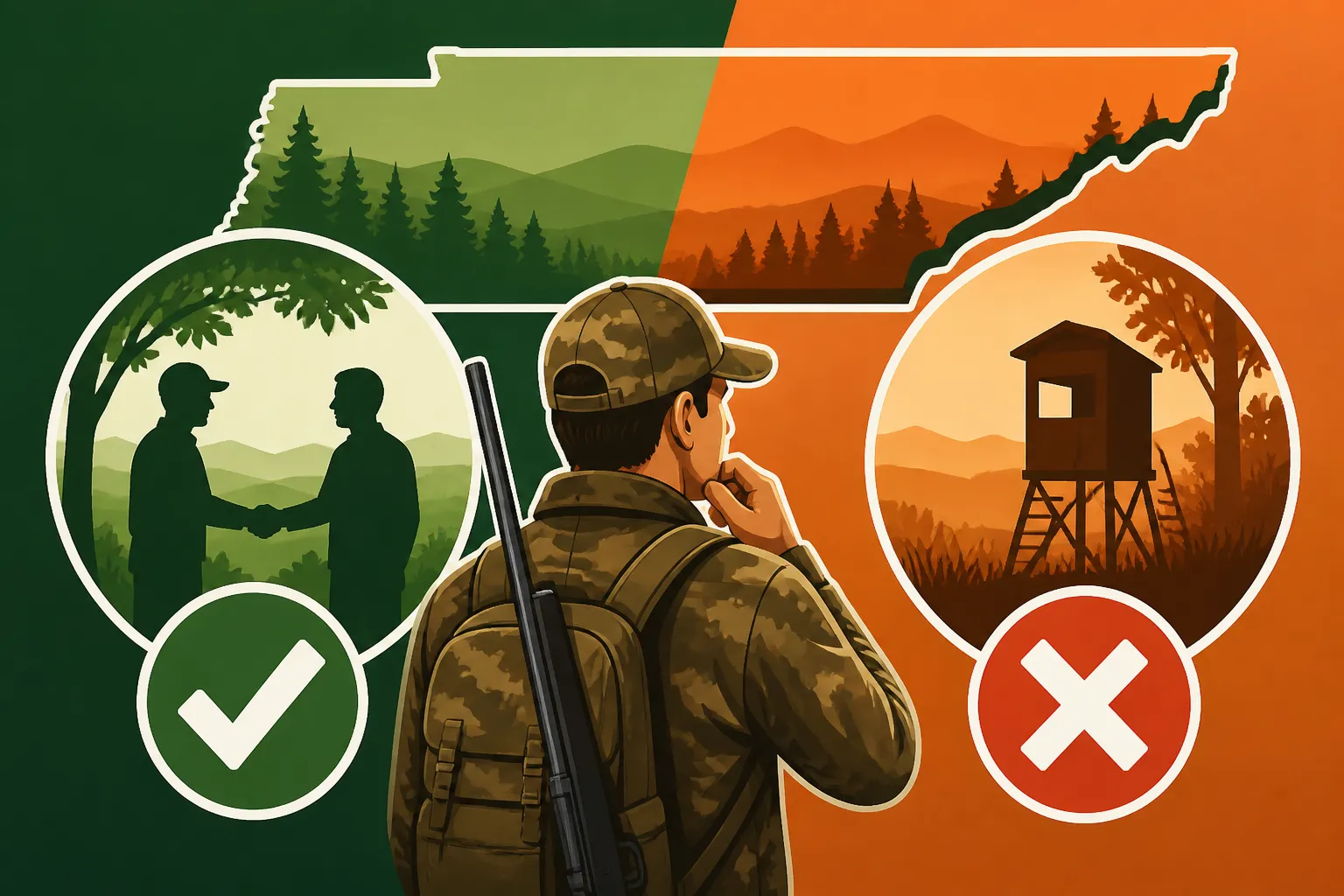
It's a question that keeps many Tennessee hunters up at night or causes them to second-guess their plans: when you're knocking on a farmer's door or simply wondering about that enticing woodlot, do you really need to get permission in writing? It's a valid concern, and navigating the nuances of land access in our great state can feel like walking a legal tightrope. This guide aims to demystify Tennessee's permission requirements for hunters, explaining when a handshake is enough, when it's absolutely not, and how to best protect yourself and ensure you're always hunting legally and ethically.
Understanding Tennessee's Trespass Law for Hunters
Tennessee has laws in place to protect private property, and as hunters, it's our responsibility to understand and respect them. The legal requirement for permission often hinges on whether the land is "posted" or not, but even then, a verbal agreement carries its own set of risks. Let's dig into what that means for your next hunt.
The General Rule: Verbal Permission is Often Sufficient
In many parts of Tennessee, particularly in rural communities, there’s a long-standing tradition of verbal agreements between landowners and hunters. You might knock on a farmer's door, have a quick chat, and receive a friendly "Sure, go ahead" or "You're welcome to hunt that back forty." And for a basic trespass law perspective on unposted land, that verbal permission generally covers you. It's a testament to the trust and neighborly spirit that still exists in our state.
However, relying solely on verbal permission, while common, is akin to building a house without a strong foundation. Imagine you've hunted a tract for years with a verbal agreement, but the landowner suddenly falls ill, or perhaps a new family member inherits the property. What then? The new owner might not know you, or worse, they might interpret the previous arrangement differently. Misunderstandings can arise quickly, and if you're ever questioned by law enforcement or confronted by an upset landowner, proving that verbal consent can be incredibly challenging. It becomes your word against theirs, and that's a situation no hunter wants to be in when facing potential trespass charges. While the law might acknowledge verbal permission, proving it in a dispute is a different beast entirely. This is also why understanding the broader Tennessee Trespass and Permission Law is so crucial.
When Written Permission Becomes Essential
While a verbal agreement can be legally sufficient in some contexts, there are specific scenarios where written permission isn't just a good idea, it's either legally required or so strongly recommended it might as well be. The most common trigger for requiring written permission is when private land is posted. Tennessee Posted Land Rules clearly outline what constitutes properly posted land (usually signs at specific intervals with clear lettering). If land is marked according to these regulations, you absolutely, unequivocally need written permission to step foot on it for hunting. No exceptions.
Beyond "posted" land, certain Wildlife Management Areas (WMAs) may have specific regulations requiring written permission for certain activities, even if it’s generally public land. Always check the specific rules for any WMA you plan to hunt, as they can vary greatly. Additionally, if you're dealing with a new landowner, an absentee landowner, or a property where there have been previous disputes or misunderstandings, getting permission in writing drastically reduces your risk. Consider situations where landowners are concerned about liability, or if you're seeking permission to hunt on land adjacent to sensitive areas like suburban developments or active agricultural operations. In these cases, a clear, documented agreement protects both you and the landowner from future headaches.
The Benefits of Getting It in Writing
It's easy to think of written permission as an extra hurdle, a formality that slows down the process. But in reality, it's one of the best tools a responsible hunter can use to ensure a smooth, ethical, and legally sound hunting experience. It's not about distrust; it's about clarity and mutual protection.
Protecting Yourself and the Landowner
A written permission slip acts as a clear, undeniable contract between you and the landowner. For you, the hunter, it provides irrefutable proof that you have the right to be on that property. This can be invaluable if you're ever approached by another hunter, a curious neighbor, or law enforcement. Without it, you might find yourself in an awkward, stressful, and potentially legally precarious situation. Imagine tracking a deer you've shot onto neighboring property, only to be confronted by an angry homeowner who claims you're trespassing, even if you thought you had an understanding. Having that written agreement, especially one that outlines clauses for Retrieving Game From Private Land in Tennessee, makes all the difference.
For the landowner, a written agreement is equally beneficial. It allows them to clearly define the terms of access, ensuring you understand their boundaries, preferred hunting dates, specific game you're allowed to pursue, and even what methods are permitted. This level of detail helps prevent misunderstandings and can even offer some protection regarding liability, as it demonstrates due diligence in granting access under specific conditions. It formalizes a relationship, moving it beyond a simple handshake into a mutually respectful partnership.
Clarity on Specifics and Expectations
One of the greatest advantages of written permission is the ability to lay out all the details that verbal agreements often overlook. How many times have you gotten a verbal "yes" only to wonder later about driving your truck on their field road, or where exactly the property line truly lies? A written agreement can address these critical questions and more.
You can specify vehicle access points and approved routes, preventing damage to sensitive areas. You can clarify where you're allowed to set up a treestand, avoiding conflicts or damage to specific trees—details that tie into rules like Treestand Rules on Tennessee Public Land. It can even cover the placement of trail cameras Trail Camera Rules on Tennessee Public Land, which is a growing point of contention on many properties. Think about clarifying if you can bring a guest, or if only you are permitted to hunt. Without these specifics documented, confusion is inevitable. Tools like onX Hunt can be incredibly useful here; you can pull up a map of the property, clearly mark boundaries, access routes, and stand locations directly on the map, and then include that marked map as an addendum to your written permission. This leaves no room for doubt for either party, ensuring everyone is on the same page before you even step into the woods.
Crafting Your Written Permission Agreement
So, you're convinced that written permission is the way to go. But what should it actually look like? You don't need a fancy legal document, but a few key pieces of information are essential to make it effective and binding.
Key Information to Include
A good written permission agreement doesn't need to be overly complicated, but it should be thorough. Here’s a rundown of what to include:
- Names and Contact Information: Clearly state the full names, addresses, and phone numbers of both the landowner (or their authorized agent) and the hunter(s) granted permission.
- Property Description: Be specific about which land you have permission to hunt. Include the county, a tax parcel ID number if available, and a clear description of the boundaries. Using identifiable landmarks or a basic map sketch can be incredibly helpful. This is where apps like onX Hunt or GoHunt truly shine, allowing you to generate and print maps with property boundaries clearly delineated.
- Dates of Permission: Specify the exact dates the permission is valid. Is it for a single day, a week, a specific season, or an entire year? Being precise prevents any confusion about when your access begins and ends.
- Permitted Activities: Clearly state what you are allowed to do. "Hunting" is broad. Specify if it's deer hunting, turkey hunting, small game, predator control, or a combination. Mention if archery, muzzleloader, or firearms are allowed. You might also include other activities like scouting, Shed Hunting on Tennessee Public Land, or habitat work.
- Restrictions and Conditions: This is crucial for the landowner. Detail any areas off-limits (e.g., near the house, livestock pastures, specific fields). Mention rules about gates, parking, vehicle use, camping, or the use of ATVs on specific trails ATV Rules on Tennessee Forest Roads. Any specific concerns the landowner has should be noted here.
- Signatures and Date: Both the landowner and the hunter(s) must sign and date the document. This signifies mutual agreement to the terms. It's often a good idea to have two copies, one for each party.
A simple table can help organize some of these details:
| Item | Detail to Include | Why It's Important |
|---|---|---|
| Landowner Info | Full Name, Address, Phone | Identifies the grantor of permission. |
| Hunter Info | Full Name, Address, Phone, TWRA ID (optional) | Identifies who is granted permission. |
| Property Details | County, Parcel ID, Legal Description, Map (e.g., from onX Hunt) | Clearly defines the huntable area, avoiding confusion. |
| Valid Dates | Start Date, End Date (e.g., "October 1, 2024 to January 31, 2025") | Defines the duration of permission. |
| Permitted Game | Deer (Archery/Gun), Turkey, Small Game, etc. | Specifies target species and weapon types. |
| Vehicle Access | Designated parking, approved roads, no off-roading, etc. | Protects landowner property from damage. |
| Other Restrictions | No trespassing near residence, respect crops/fences, specific times, guest policy | Addresses specific landowner concerns and rules. |
| Signatures & Date | Landowner, All Hunters Granted Permission | Legalizes the agreement and confirms understanding. |
Digital Tools and Templates for Hunters
In today's digital age, securing written permission doesn't always mean a formal, notarized document. While a printed and signed paper copy is always ideal, technology can certainly help. Many hunters use apps like onX Hunt, which not only provides detailed property boundary lines and landowner information (a huge help when you're Finding Tennessee Property Lines) but also allows you to mark specific features, draw out access routes, and even create a visual representation of the huntable area. You can often export these maps to print and attach to a simple permission form.
Some hunters even go as far as to create a basic template on their phone or computer, filling in the blanks as they talk to a landowner. This allows for quick customization and ensures all the necessary information is captured. Even an email exchange or a text message detailing the permission can hold legal weight, especially if the landowner replies affirmatively. However, a physical signature on a printed document remains the gold standard for clarity and legal defensibility. Always consider the landowner's comfort level; some prefer traditional paper, while others are perfectly fine with a digital exchange. And remember, the Scouting With the Tennessee TWRA App can also give you crucial public land boundaries and regulations, which helps in differentiating property types.
Navigating Public Land and Posted Boundaries
Understanding permission isn't just about private property. It also involves knowing the specific rules that apply to Tennessee's vast public hunting opportunities.
The Difference Between Private and Public Land Rules
When you're hunting on public land in Tennessee, like a Wildlife Management Area (WMA) or portions of the Cherokee National Forest, the concept of "permission" changes. You don't need to ask an individual landowner for permission in the same way you would for private property. Instead, your "permission" comes from abiding by the rules and regulations set forth by the Tennessee Wildlife Resources Agency (TWRA) and federal agencies that manage these lands.
This means purchasing the appropriate hunting licenses and permits, which often include a Tennessee WMA Permit Requirement in addition to your general hunting license. You must also adhere to specific WMA or National Forest regulations regarding season dates, bag limits, weapon restrictions, vehicle access, and even things like stand placement or camping. These rules are usually published annually and are readily available online through the TWRA website. The key difference is that on public land, your access is granted by law as long as you comply with those rules, rather than by a specific individual's consent. This distinction is vital, especially when considering the significant acreage of Public Hunting Land in Tennessee available.
What "Posted" Land Really Means in Tennessee
"Posted" land in Tennessee refers to private property where the owner has explicitly indicated that entry is forbidden without their consent. This isn't just a suggestion; it's a legal demarcation. According to Tennessee Posted Land Rules, land is considered posted if it's marked with signs or noticeable painted marks on trees or posts at specific intervals along the property boundary. The specific requirements can dictate the size of the signs, the color and size of the paint marks, and the distance between them.
The crucial takeaway for hunters is this: if you encounter land that is clearly and legally "posted," you must have written permission from the landowner to enter for any purpose, including hunting. A verbal "go ahead" won't cut it in the eyes of the law if the land is posted. This rule is designed to give landowners clear recourse against unwanted trespass, and it means hunters need to be extra diligent in identifying posted boundaries. Using a reliable mapping app like GoHunt or onX Hunt, which often display property lines and sometimes even indicate public vs. private status, can be incredibly helpful in avoiding accidental trespass onto posted land. Always err on the side of caution: if you see signs or paint marks, seek written permission.
Disclaimer
This article is for general informational purposes only and does not constitute professional advice. Laws, prices and regulations vary by location and change over time. Consult a qualified professional for guidance on your specific situation.