Tennessee Ruffed Grouse Numbers Today
For many Tennessee hunters, the idea of chasing ruffed grouse evokes a nostalgic, almost mythical image of exploding birds in thick cover. However, the frustrating reality today is that finding a healthy population of these elusive upland birds in our state is an increasingly difficult endeavor. This guide aims to provide a clear, realistic picture of current ruffed grouse numbers in Tennessee, exploring why they've declined and where you might still encounter them.
The Shrinking Realm of the Ruffed Grouse in Tennessee
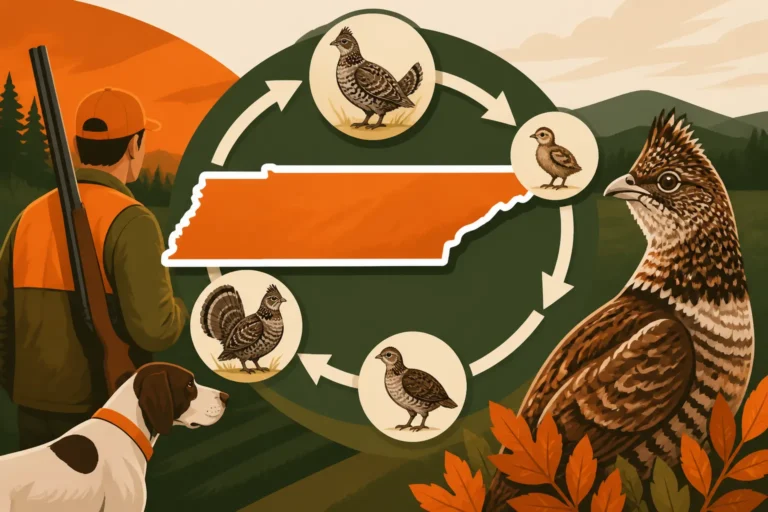
Let's be honest, it's not the easiest subject to talk about. For those of us who remember grouse hunting in Tennessee from decades past, the woods felt alive with more birds. Today, the drum of the male grouse or the sudden thunder of a covey flush is a rare, almost startling occurrence. The ruffed grouse, Bonasa umbellus, is a bird deeply tied to specific forest conditions, and as our landscape has changed, so too has its presence.
A Look Back at Historical Abundance
There was a time when ruffed grouse were far more widespread across Tennessee, particularly in the eastern and central parts of the state where mature hardwoods dominated and agricultural practices created a patchwork of diverse habitats. These birds thrived in a mosaic of young forests, brushy clearings, and mature timber. Early logging practices, while destructive in some ways, often inadvertently created the early successional habitat that grouse rely on. As forests were cut and regenerated, they provided the dense, protective cover and diverse food sources that allowed grouse populations to flourish. Hunters would boast of flushing multiple birds in a single outing, a stark contrast to the occasional lone bird we might encounter today. The memories of dogs locking up on a grouse in thick briars or hearing that distinctive drumming sound echoing through the hills were once a more common part of the Tennessee hunting experience.
The Modern Decline: What Went Wrong?
The decline of the ruffed grouse in Tennessee isn't a simple story; it's a complex interplay of factors, with habitat loss being the undeniable lead antagonist. Imagine a bird that absolutely needs dense, regenerating forest—often 5 to 20 years post-timber harvest—to thrive. This young forest provides crucial escape cover from predators and is rich in the insects and tender plant growth grouse feed on. As our forests have matured, and land management practices have shifted away from frequent, small-scale disturbances like logging and burning, that critical young forest habitat has simply vanished across vast tracts of the state.
Here in Tennessee, much of our timberland is either privately owned and managed for mature sawtimber, or it's public land allowed to grow largely undisturbed. While beautiful, a mature, open forest floor just doesn't provide what a grouse needs to survive or raise chicks. Tennessee Ruffed Grouse Decline delves deeper into these specific challenges. Furthermore, increased predation by species like coyotes, foxes, and raptors, which can thrive in more open forest structures, adds another layer of pressure on an already struggling population. The fragmentation of existing suitable habitat also isolates small populations, making them more vulnerable to localized extinctions and preventing gene flow.
Where Grouse Still Roam: Current Strongholds in Tennessee
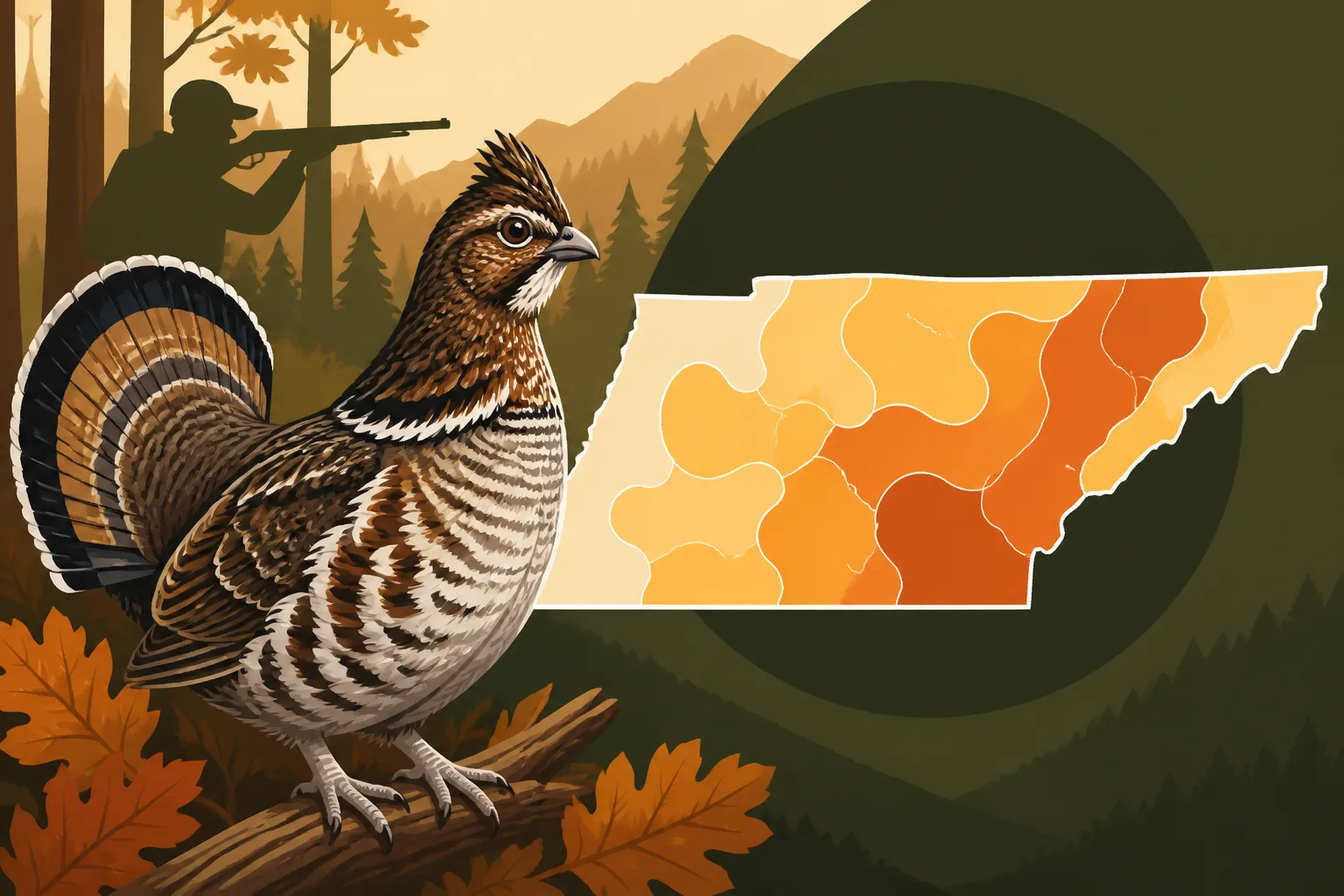
Despite the overall decline, ruffed grouse aren't entirely gone from Tennessee. They cling to existence in specific areas where suitable habitat still persists, primarily concentrated in the higher elevations and more rugged terrains of the eastern and central regions. These are the places where the forest still provides the conditions they absolutely need, or where localized management efforts have created pockets of hope.
The Cumberland Plateau: A Last Bastion
If there's one region that still offers a realistic, albeit challenging, opportunity for grouse hunting in Tennessee, it's the Cumberland Plateau. This rugged, expansive region, with its higher elevations, dense timber, and varied topography, holds the most consistent, albeit low, grouse populations in the state. Areas with active timber management, particularly those creating young forest stands, are key. We're talking about places where you find thick saplings, laurel and rhododendron thickets, and areas where logging occurred a decade or two ago. Grouse Hunting Cumberland Plateau outlines some of the general areas.
Public lands within the Cumberland Plateau, such as parts of the Catoosa Wildlife Management Area or sections of the Big South Fork National River and Recreation Area, can offer glimpses of this elusive bird. However, even here, you'll need to work for them. It's not about finding large, booming populations; it's about locating those small, isolated pockets where the habitat is just right. This often means bushwhacking through dense, almost impenetrable cover that most other hunters avoid.
Pockets in East Tennessee's Mountains
Beyond the Cumberland Plateau, scattered populations of ruffed grouse can still be found in the mountainous regions of East Tennessee, particularly in the Cherokee National Forest. These areas, characterized by steep slopes, mixed hardwood and conifer forests, and occasional clearcuts, can offer some grouse habitat. However, similar to the Plateau, these birds are not evenly distributed. You're looking for specific conditions: dense regeneration on old logging sites, areas with substantial undergrowth like mountain laurel or rhododendron, or the edges of mature timber adjacent to younger growth.
Hunting these areas requires serious effort, a good understanding of topography, and often, the willingness to put in miles on foot. The birds in these steeper, rockier terrains tend to be incredibly wary and flush hard, often downhill, making for challenging shots. Spot-and-Stalk Tactics for Cherokee Forest Bears might not be about grouse, but it gives you an idea of the challenging terrain found in these regions.
Habitat and Management: What It Takes to Support Grouse
Understanding where grouse exist today is really about understanding their habitat needs. These aren't birds that can just live anywhere; they are habitat specialists. And any hope for their future in Tennessee hinges on purposeful habitat management.
The Critical Role of Early Successional Habitat
Let's break it down: ruffed grouse absolutely need young, regenerating forests. Think about timber cuts or areas disturbed by fire that are now growing back with a vengeance. We're talking about areas where the trees are saplings, maybe 5 to 20 feet tall, growing so densely you can barely walk through them. This thick, tangled growth provides unparalleled protection from aerial predators like hawks and owls, and ground predators like coyotes and bobcats. It's their fortress. It also offers a bounty of food, from the buds of aspen and birch in winter to insects, berries, and tender leaves in spring and summer.
Unfortunately, this type of habitat is increasingly scarce. Our forests are largely maturing into older stands, which, while beautiful, lack the dense understory grouse need. For areas like the Cumberland Plateau, foresters often identify How Old a Cut Should Be for Grouse to maximize their benefit to grouse. Without active timber management, including clear-cutting in appropriate areas on a rotating basis, these critical habitats will continue to disappear.
TWRA's Efforts and Future Outlook
The Tennessee Wildlife Resources Agency (TWRA) recognizes the challenges facing ruffed grouse. They conduct surveys and participate in regional efforts to monitor populations, but direct, widespread management solely for grouse can be difficult given the vast scale of land management needed. Many WMA plans do incorporate habitat diversity, which can incidentally benefit grouse, but it's often a secondary consideration to deer or turkey management.
For hunters, this means tempering expectations. While you can still pursue grouse in Tennessee, it's fundamentally a different experience than what our grandparents might have known. It's about finding those isolated pockets, working hard, and cherishing every flush. Tools like GoHunt can be invaluable for scouting, allowing you to pour over aerial maps to identify potential clearcuts or areas of dense regrowth before you ever set foot in the woods. Look for areas with a mix of age classes in the timber, especially focusing on younger, brushier sections adjacent to more mature woods for cover and food. Scouting Tennessee Public Land Before Season is crucial for this kind of hunting.
Here's a quick look at some factors impacting grouse numbers:
| Factor | Impact on Grouse Numbers | Description |
|---|---|---|
| Habitat Loss | High Negative | Maturation of forests, lack of young, regenerating stands. |
| Habitat Fragmentation | Moderate Negative | Suitable areas becoming isolated, preventing population dispersal. |
| Predation | Moderate Negative | Increased efficiency of predators in less dense, mature forests. |
| Climate Change | Potential Negative | Shifting weather patterns, warmer winters, and altered vegetation cycles. |
| Forest Management | High Positive (if present) | Active timber harvests (clear-cuts) creating critical early successional habitat. |
| Disease | Low/Moderate Negative | West Nile Virus and other diseases can impact populations, especially in the south. |
Ultimately, the future of ruffed grouse in Tennessee is tied directly to our approach to forest management. Without a conscious effort to create and maintain early successional habitat, these iconic birds will continue to be a rare and treasured ghost of the past for future generations of Tennessee hunters. Grouse Hunting Cumberland Plateau Cover and Flushing Grouse Without a Dog offer some practical tips for those determined to chase these fantastic birds despite the odds.
Disclaimer
This article is for general informational purposes only and does not constitute professional advice. Laws, prices and regulations vary by location and change over time. Consult a qualified professional for guidance on your specific situation.