How Many Wild Hogs Tennessee Has
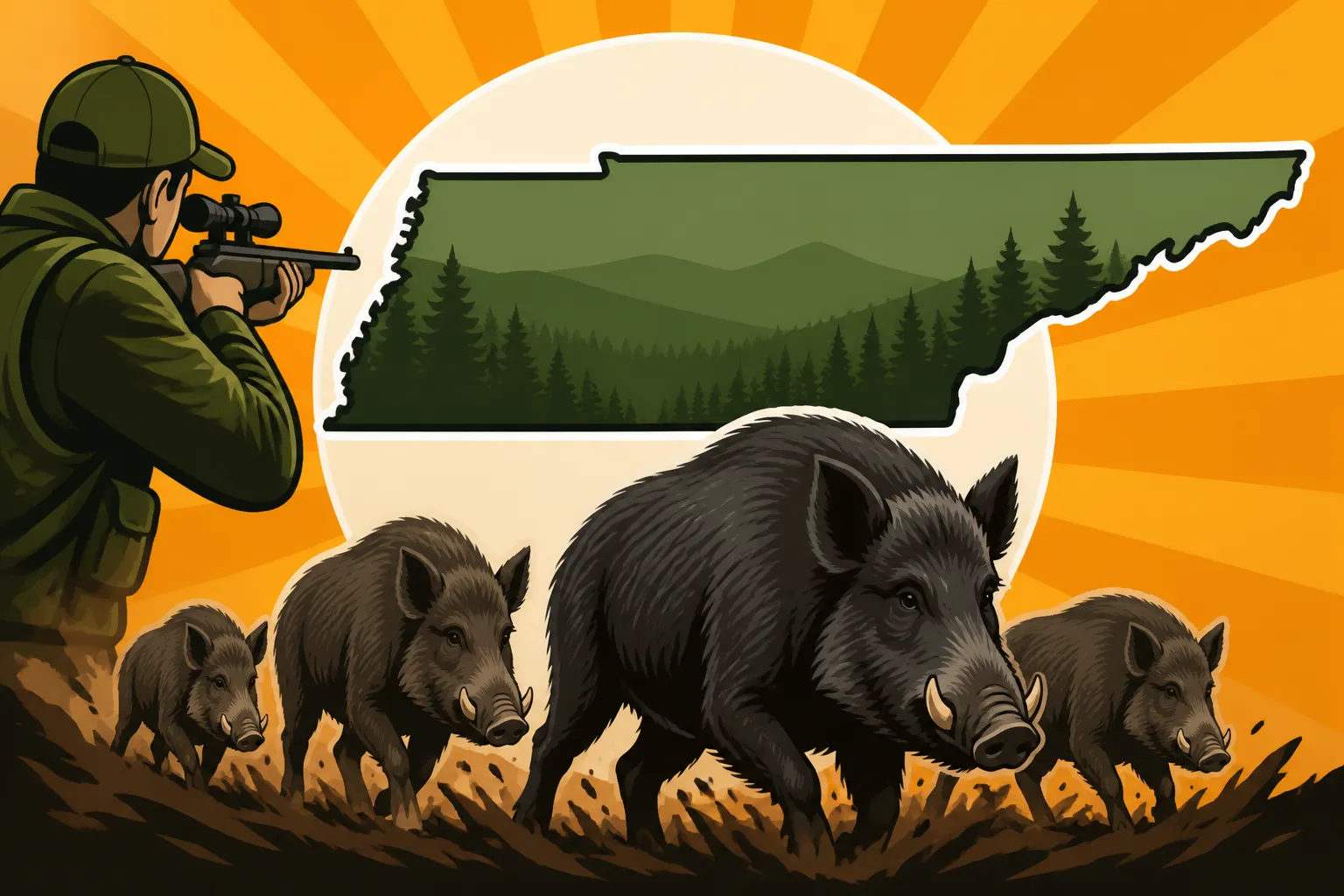
It’s a question that echoes across every coffee shop and deer camp in Tennessee: "Just how many wild hogs do we have, anyway?" If you’ve spent any time in the woods, especially in the western and central parts of our great state, you’ve likely seen the tell-tale signs of these destructive animals – torn-up fields, rooted creek bottoms, and maybe even a quick glimpse of a sounder disappearing into the thicket. You might feel like their numbers are exploding, and you’re not wrong to feel that way. Pinning down an exact number for Tennessee’s wild hog population is notoriously difficult, but this guide will dive deep into what we do know, why these animals are such a challenge, and what it means for hunters and landowners alike.
Understanding the Challenge of Counting Wild Hogs in Tennessee
Let’s be honest, trying to get a precise census of wild hogs is like trying to count individual raindrops in a thunderstorm. It’s an impossible task, and anyone who tells you otherwise is probably selling something. The truth is, there isn't a definitive, statewide head count for wild hogs in Tennessee, or really any state where they roam free. This isn't for lack of trying or caring; it's simply a testament to the incredible resilience, intelligence, and prolific nature of these animals.
First off, wild hogs are incredibly elusive. They’re largely nocturnal, masters of camouflage, and can disappear into the thickest cover faster than you can blink. Unlike deer, which tend to have more predictable movement patterns, hogs are constantly on the move, searching for food, water, and new bedding areas. Their home ranges can be vast and overlap significantly, making traditional survey methods like aerial counts or trail camera grids incredibly unreliable for total population estimates. You might get a good sense of how many are in a specific area, but extrapolating that across hundreds of thousands of acres of diverse Tennessee habitat just doesn't work.
Then there's the rapid reproduction. This is perhaps the biggest factor that thwarts any attempt at a stable count. Sows can start breeding as young as six months old and can have two litters a year, with each litter averaging four to eight piglets, sometimes even more. Imagine trying to count a population that can double in size in a single year under ideal conditions! The numbers fluctuate so wildly, so quickly, that any count taken today would be outdated by next season. This biological reality makes population control a constant uphill battle, let alone accurate counting.
Finally, consider the varied terrain of Tennessee. From the dense river bottoms of West Tennessee, through the rolling hills and agricultural lands of Middle Tennessee, all the way to the rugged mountains of the Cumberland Plateau and the eastern part of the state, hogs find a way to thrive almost anywhere. Each habitat presents its own challenges for survey efforts, from thick canebrakes to steep, remote hollows. What works for estimating numbers in an open agricultural field certainly won’t work in the dense timber of the Cherokee National Forest.
What We Know About Tennessee's Wild Hog Presence
While we might not have a precise number, we absolutely know that wild hogs are widespread and their presence is growing. The consensus among wildlife biologists and those of us who spend a lot of time in the woods is that their population is robust and actively expanding into new areas. They are an established problem, not just an occasional nuisance.
Historically, wild hogs were largely concentrated in specific regions, often stemming from escaped domestic pigs or European wild boar introduced for sport hunting decades ago. Over time, these populations interbred and expanded. Today, the distribution is far less confined. We see strong, established populations in many counties in West Tennessee, particularly along major river systems like the Mississippi and the Tennessee River bottoms. These areas provide ample food sources, dense cover, and easy travel corridors. Hunting West Tennessee Bottomland Deer often means you're sharing the woods with plenty of hogs, too.
Moving east, Middle Tennessee has seen a significant increase in hog activity. Farmers are reporting more and more instances of Feral Swine Sightings in Middle Tennessee, causing extensive damage to row crops and pasture land. The fertile agricultural landscape and scattered woodlots offer ideal conditions for hogs to find food and cover. It's a frustrating reality for many landowners who are suddenly dealing with a problem they never anticipated.
Even in East Tennessee, particularly around the Cumberland Plateau and some parts of the Cherokee National Forest, wild hogs are making their presence felt. While the population density might not be as high as in the western parts of the state, their ability to adapt to mountainous terrain and remote areas means they are constantly pushing into new territory. Hunters pursuing deer or bear in these areas are increasingly encountering hogs, sometimes quite unexpectedly.
The Tennessee Wildlife Resources Agency (TWRA) closely monitors harvest reports and landowner complaints, which provide critical data points, even if they don't yield a total population count. When you report a harvest, you're contributing to this understanding. The overall trend from these data points clearly indicates increasing populations and an eastward expansion across the state. It's not just a hunter's perception; it's backed by consistent observations across Tennessee.
| Characteristic | Impact on Counting Hogs | Hunter's Reality |
|---|---|---|
| Rapid Reproduction | Numbers fluctuate wildly; counts quickly become outdated. | You might clear out a sounder, but they'll be back in force surprisingly fast. |
| Elusive Nature | Mostly nocturnal, masters of cover, difficult to spot or track. | Often seen only as fleeting shadows or heard as crashing brush. |
| Vast Home Ranges | Constantly moving, making localized counts unrepresentative. | What's here today could be miles away tomorrow. |
| Habitat Diversity | Thrive in swamps, fields, mountains; different terrain challenges. | No matter where you hunt in TN, a hog could pop up. |
| Intelligence | Learn to avoid traps and pressure, making control difficult. | They get wise to your tactics quickly. |
| Lack of Predators | Few natural checks on population growth. | It's largely up to humans to manage their numbers. |
Why Wild Hogs Are So Prevalent and Hard to Control
The prevalence of wild hogs and the difficulty in controlling them stem from a perfect storm of biological advantages and environmental factors. It’s not just one thing; it’s a combination that makes them an incredibly formidable invasive species. Understanding these factors helps us appreciate why they’re such a challenge and why their numbers are so robust.
First, let's talk about their incredible reproductive capacity again because it truly is the engine behind their spread. As mentioned, a sow can breed at a very young age and have multiple litters per year. This means exponential growth. If you start with just a few hogs, within a couple of years, you can have dozens, and within a decade, hundreds, all from that original small group. This makes managing their numbers incredibly difficult, as even aggressive harvest efforts can struggle to keep pace with their birth rates. It's often said that to simply maintain the current population level, you'd need to remove 70-80% of the hogs annually, which is an astronomical challenge.
Beyond reproduction, wild hogs are incredibly adaptable and intelligent. They are true generalists when it comes to diet, consuming almost anything – acorns, roots, tubers, agricultural crops, insects, small animals, even fawns and turkey poults. This diverse diet means they can thrive in various ecosystems and don’t rely on a single food source, unlike many native species. Their intelligence allows them to quickly learn to avoid traps, evade hunters, and adjust their patterns based on human pressure. They are not easily fooled, and they remember what worked and what didn't. This is why you'll often see seasoned hunters using tools like GoHunt to analyze terrain and historical data, trying to outsmart these cunning creatures.
Furthermore, wild hogs have virtually no natural predators in Tennessee that can significantly impact their population on a broad scale. While coyotes or bobcats might take an occasional piglet, they don't hunt adult hogs or make a dent in the overall population. Without natural checks and balances, their numbers are primarily limited by disease, starvation (though their diverse diet makes this rare), or human intervention. This lack of predation allows sounders to grow large and move with little fear beyond human encounters. Tennessee Predator Impact on Fawn Recruitment is a real concern, but those same predators aren't much of a threat to a mature hog.
The sheer scale of their destructive behavior also contributes to their continued success. Their rooting behavior, which is essential for them to find food, destroys agricultural fields, pastures, and natural habitats. This constant turning over of soil displaces native plant species, increases erosion, and can even damage infrastructure like levees and roads. For landowners, the Crop Damage Hogs Cause in Tennessee can be devastating, prompting desperate measures to control them, but often, the effort feels like bailing water from a sinking ship.
The Impact of Wild Hogs and Management Strategies
The consequences of a booming wild hog population in Tennessee are far-reaching, impacting not just hunters but farmers, landowners, and the delicate balance of our natural ecosystems. Understanding these impacts is crucial for appreciating why effective management strategies are so vital, even if a total eradication seems like a distant dream.
From an ecological standpoint, wild hogs are highly destructive. Their constant rooting disturbs vast areas of soil, destroying native vegetation and making it difficult for new plants to grow. This habitat destruction negatively impacts many native wildlife species that rely on stable ecosystems for food and cover. For ground-nesting birds like turkeys and quail, their nests and eggs are incredibly vulnerable to hungry hogs. They also compete directly with native wildlife, like deer and bear, for critical food sources such as acorns and other mast crops. A year with a poor acorn crop becomes even more challenging for our native species when hogs are vacuuming up every last nut.
Beyond direct habitat damage, wild hogs are also known carriers of various diseases, some of which can be transmitted to livestock, pets, and even humans. While diseases like Chronic Wasting Disease (CWD) are specific to cervids like deer and elk, hogs can carry other diseases such as brucellosis, leptospirosis, and pseudorabies. This presents a serious concern for both public health and the state's agricultural industry. The TWRA and other agencies are keenly focused on Tennessee Wildlife Disease Monitoring to track these threats.
For hunters, wild hogs present a unique opportunity and a significant challenge. Many hunters appreciate the chance to pursue a challenging quarry, especially during seasons like Hunting Wild Hogs Alongside Deer Season. Unlike deer or turkey, there are generally no bag limits or closed seasons for wild hogs in Tennessee, making them a year-round hunting opportunity. This unrestricted hunting is a key part of the state's management strategy, encouraging hunters to help reduce their numbers. However, the presence of hogs can also disrupt deer patterns, making traditional deer hunting more difficult in some areas.
Management strategies primarily focus on population reduction rather than eradication, which is largely considered unachievable given their biology and distribution. Hunting is a critical component, with the TWRA encouraging hunters to take hogs whenever and wherever legally possible. Trapping is another highly effective method, especially for capturing entire sounders. Large, corral-style traps with remote triggers have proven successful in removing significant numbers of hogs from specific areas. For landowners dealing with severe damage, sometimes specialized contractors employ aerial shooting under strict permits, which can be very effective in open agricultural settings.
Ultimately, managing Tennessee's wild hog population requires a multi-pronged approach involving hunters, landowners, and wildlife agencies working together. It’s a continuous effort, and while an exact count might remain elusive, the goal is always to reduce their numbers and mitigate their devastating impact on our lands and native wildlife. Hunters play a huge role in this ongoing battle, and every hog harvested makes a difference.
Disclaimer
This article is for general informational purposes only and does not constitute professional advice. Laws, prices and regulations vary by location and change over time. Consult a qualified professional for guidance on your specific situation.