Where Cherokee Forest Bears Range
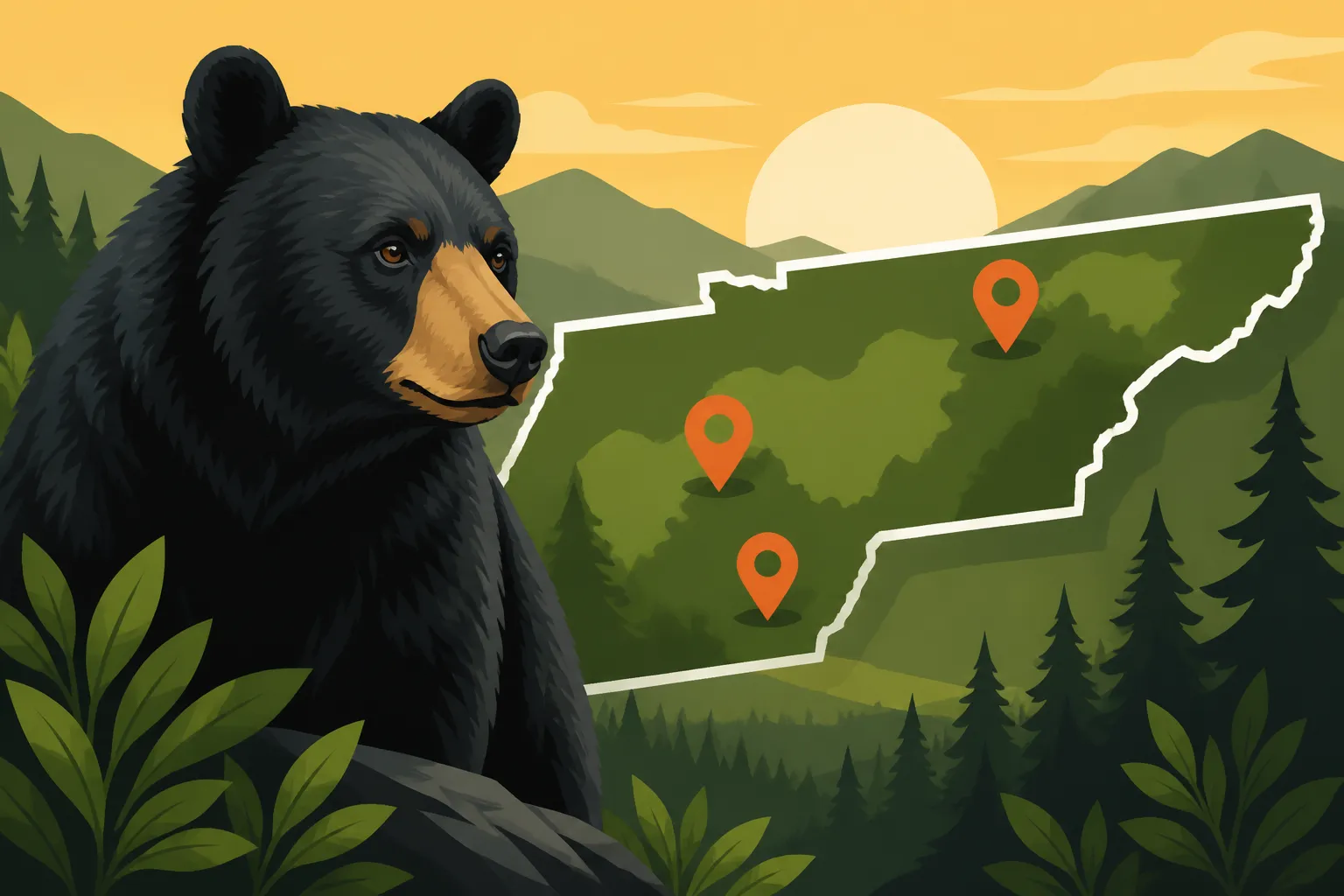
Finding a black bear in the sprawling, rugged beauty of the Cherokee National Forest can feel like searching for a needle in a haystack for many hunters and outdoor enthusiasts. It’s not just about knowing bears exist there; it's about understanding their movements, their preferred habitats, and how the vast and varied landscape influences their daily lives. This guide is designed to peel back the layers of mystery, giving you a comprehensive look at where Tennessee's magnificent black bears roam within the Cherokee National Forest, from the highest peaks to the deepest hollows.
Understanding the Cherokee National Forest Bear Habitat
The Cherokee National Forest isn't just a big chunk of woods; it's a dynamic ecosystem that spans over 650,000 acres across the eastern edge of Tennessee. This vastness, combined with its diverse terrain and abundant natural resources, makes it prime real estate for black bears. For a species that relies so heavily on varied food sources and ample cover, the Cherokee offers everything a bear could want, from dense rhododendron thickets to mature hardwood ridges.
Geographic Scope and Terrain Diversity
Imagine hiking through the Cherokee National Forest, and you'll quickly realize it's a land of contrasts. You've got everything from the lower elevation river valleys, like those carved by the Hiwassee and Tellico Rivers, which offer lush growth and cooler temperatures, to the towering peaks of the Appalachian Mountains, some reaching over 5,000 feet. This dramatic elevation change means diverse vegetation, which in turn provides a staggered smorgasbord for bears throughout the seasons. The steep, often rocky slopes are frequently covered in thick, almost impenetrable mountain laurel and rhododendron, creating perfect bedding and escape cover for bears.
This incredible diversity means that a bear's range isn't static; it's a dynamic response to the changing landscape and available resources. One day, a bear might be foraging for berries in an open clear-cut, and the next, it might be hunkered down in a remote, inaccessible hollow. Understanding this geographical quilt is key to appreciating why bears are found throughout the forest, rather than confined to one specific area. It’s also why scouting is so critical for hunters looking for Finding Sign in Big Cherokee Forest Timber.
Food Sources and Seasonal Movements
Bears are opportunistic omnivores, and their movements within the Cherokee National Forest are largely dictated by the availability of food. Spring brings the tender shoots of emerging plants and berries like serviceberry and blackberry, often found in lower elevations or along forest edges. As summer progresses, bears will move to higher elevations and denser forests, gorging on blueberries and raspberries. But the real game-changer comes in the fall: the mast crop. Acorns from oak trees and nuts from hickory and beech trees are critical for bears to pack on the necessary fat reserves for winter hibernation.
When the acorn crop is abundant in one area, you'll find bears concentrated there. If a specific ridge or hollow has a phenomenal white oak crop, you can bet bears will be feasting there until it’s depleted. Conversely, in years of poor mast crops, bears will expand their search, often moving into areas closer to human habitation or agricultural fields in the forest's periphery. This seasonal migration, driven purely by their stomachs, means that a productive bear hunting spot in September might be completely barren by November if the mast has been consumed or was never there to begin with. Understanding this natural rhythm is fundamental to anticipating Hunting Bears Over Natural Mast in the Mountains.
Key Bear Zones Within Cherokee National Forest
While bears can be found across much of the Cherokee National Forest, the Tennessee Wildlife Resources Agency (TWRA) has designated specific areas as bear hunting zones. These zones, while primarily for management, also reflect areas of higher bear density or historical activity. Knowing these zones is crucial for any hunter planning a trip to the Cherokee, as rules and hunting pressure can vary significantly. Tennessee actually has Tennessee's Three Bear Hunting Zones that delineate different management strategies, and the Cherokee National Forest falls primarily within two of these.
The Unaka Unit's Northeast Foothills
The Unaka Unit of the Cherokee National Forest, stretching across counties like Johnson, Carter, Greene, and Unicoi in Northeast Tennessee, is widely considered prime bear country. This area is characterized by its rugged mountains, deep valleys, and extensive tracts of remote forest. It’s wild, unforgiving, and exactly the kind of place black bears thrive. The dense, mixed hardwood forests provide ample mast, while the endless rhododendron and mountain laurel thickets offer sanctuary. Hunters often find this area challenging due to the steep terrain, but the reward can be significant.
Bear populations in the Unaka Unit are generally robust, and historical data confirms this region's importance for the species. Many hunters specifically target this unit for Hunting Bear Zone One in Northeast Tennessee. Access can be tricky, with many logging roads closed seasonally or requiring high-clearance vehicles. This remoteness, however, contributes to its appeal for bears, as it provides them with vast undisturbed habitats. The steep grades mean that scouting with good optics and a reliable mapping app, like one from GoHunt, becomes indispensable for locating potential travel corridors and feeding areas before you even set foot on the ground.
The Ocoee-Hiwassee Unit's Southern Expanse
Moving south, the Ocoee-Hiwassee Unit of the Cherokee National Forest, encompassing parts of Polk, Monroe, and McMinn counties, offers another significant bear habitat. This unit shares many characteristics with the Unaka, including mountainous terrain and dense forest cover, but it also has unique features like the Ocoee River and Hiwassee River corridors. These river drainages create lower elevation areas that can provide different food sources and habitat types, especially during dry spells.
While perhaps not as historically renowned for bear density as the Unaka, the Ocoee-Hiwassee Unit still holds a strong, growing bear population. This unit is part of Bear Zone Two and Three, depending on the specific location. Hunters here often rely on Spot-and-Stalk Tactics for Cherokee Forest Bears in the expansive timber stands or focus on finding natural funnels near water sources. The sheer size of this unit means that bears have plenty of room to roam and establish large territories. Understanding the nuances of this southern unit is part of what makes Cherokee National Forest Hunting such a diverse experience.
South Cherokee Bear Reserve and Its Significance
Within the broader Ocoee-Hiwassee Unit, the South Cherokee Bear Reserve stands out as a critical area for bear management and conservation. This reserve is explicitly managed to protect and promote the bear population, with specific regulations in place to limit disturbance and ensure a healthy breeding population. It's an important sanctuary, particularly during certain periods, and knowing its boundaries and rules is paramount for any hunter in the area.
While hunting is permitted in designated areas of the reserve, the focus is on sustainable management, and hunters must adhere to strict guidelines. For instance, Hunting Bear Zone Three on South Cherokee often involves different season dates or methods compared to other zones. This focus on preservation ensures that the core bear population remains strong, allowing bears to disperse into surrounding areas. It highlights the TWRA's commitment to the long-term health of Tennessee's black bear population, providing a protected haven where they can thrive relatively undisturbed.
Factors Influencing Bear Distribution and Density
Bears are incredibly adaptable creatures, but their presence and numbers in any given area of the Cherokee National Forest are not random. Several key factors, from human activity to natural cycles, play a significant role in where you're likely to find them and in what concentrations. Understanding these influences is like getting a peek behind the curtain of their wild lives.
Human Presence and Pressure
It’s an undeniable truth: where people go, wildlife often changes its patterns. The Cherokee National Forest, while vast, sees significant human activity, from hikers and campers to mountain bikers and, of course, hunters. Areas with high recreational use, particularly those easily accessible by roads or popular trails, tend to have lower bear densities during peak human activity. Bears are naturally wary and will typically avoid areas where they frequently encounter humans.
However, this doesn't mean bears disappear entirely. They often become more nocturnal in pressured areas, moving and feeding primarily under the cover of darkness. This shift in behavior makes them harder to locate during daylight hours. Conversely, remote, difficult-to-access pockets of the forest, far from trailheads and paved roads, often hold higher densities of bears simply because they offer solitude. When planning a hunt, considering areas with less foot traffic, perhaps marked as wilderness study areas on a topographical map, can significantly increase your odds of finding undisturbed bears. This is where a good mapping system like GoHunt really shines, helping you identify those hidden gems.
Mast Crop Fluctuations and Bear Activity
As mentioned earlier, the annual mast crop is perhaps the single most important factor driving bear movements and density. Hard mast, primarily acorns from various oak species (red, white, black, chestnut) and nuts from hickory and beech trees, provides the critical fat reserves bears need for hibernation. The Cherokee National Forest is a diverse hardwood forest, meaning different areas will have varying concentrations and species of mast trees.
A bumper crop of white oak acorns in a specific hollow can draw bears from miles around, creating a temporary, but intense, localized density. Conversely, a poor mast year in one section of the forest will force bears to travel further and wider, often into less ideal habitats or even towards agricultural lands on the forest fringe, increasing human-bear conflicts. This constant chase for sustenance means that scouting for mast, even before bear season opens, is paramount. Observing what tree species are dropping their bounty and checking for fresh sign like scat and disturbed leaves under productive trees will tell you exactly where the bears are focusing their energy.
Water Availability and Travel Corridors
While bears get a good amount of moisture from their food, access to reliable water sources is still vital, especially during drier periods or in hotter months. Springs, creeks, and river systems within the Cherokee National Forest serve as essential hydration points. Bears will often establish travel corridors along these water sources, using the cover provided by riparian vegetation to move unseen between feeding and bedding areas.
These natural corridors, often along stream bottoms or parallel to a river, can be excellent places to set up a stand or still-hunt, especially if they connect two good feeding areas. You might not find bears bedding directly beside a large river due to human disturbance, but they will certainly use the adjacent cover to travel through. Look for tracks in soft mud or sand near water crossings, and investigate smaller, secluded springs on ridge sides—these can be overlooked gems that bears frequent, especially if other water sources dry up.
Scouting and Locating Bears in Cherokee National Forest
Successfully finding bears in the vastness of the Cherokee National Forest isn't just luck; it's a learned skill that combines keen observation with modern tools. For many, the challenge lies not in the presence of bears, but in pinpointing their exact locations within such extensive, rugged terrain. It's a testament to the wildness of the Cherokee that these magnificent creatures can remain so elusive.
Reading Sign: Tracks, Scats, and Rubs
The forest floor is a newspaper for wildlife, and for bears, it tells a compelling story. Learning to read this "newspaper" is fundamental to locating where Cherokee Forest bears range. Fresh tracks in mud along a creek bank or in soft dirt on a logging road are unmistakable. Look for the distinct five-toed print, often with claw marks visible, and notice the size – a big bear leaves big tracks! Beyond just tracks, the direction of travel can tell you a lot about their movements between different parts of the forest.
Scat is another invaluable indicator. What a bear eats directly influences the appearance of its scat. During berry season, you'll see purple-stained droppings filled with berry seeds. In the fall, scat will often be darker and packed with acorn hulls or other nut fragments. The freshness of the scat also tells a story; moist, glistening scat is very recent, while dry, crumbly scat is older. Beyond these, look for bear rubs on trees, often marked by claw scratches or patches of hair where a bear has scratched an itch or marked its territory. These rubs are common on larger trees, often along frequently used game trails, and can persist for a long time, showing historic bear activity. Finding these signs is crucial for effective Scouting Tennessee Public Land Before Season.
Utilizing Technology and Mapping Tools
In today's hunting world, technology can be a game-changer, especially in challenging environments like the Cherokee National Forest. While traditional scouting is indispensable, modern mapping apps and GPS devices can significantly enhance your efforts. Platforms like GoHunt allow you to overlay satellite imagery with topographical maps, identifying potential bedding areas in dense cover, natural travel corridors along ridge lines or creek bottoms, and even marking known mast trees or water sources.
Before you ever step foot in the woods, you can use these tools to virtually scout, pinpointing remote areas that are difficult to access but might hold less pressured bears. You can mark waypoints for potential stand locations, note areas of dense cover, and plan your entry and exit routes, which is vital in steep terrain. Many hunters use GoHunt to drop pins on historical bear sightings, fresh sign, or even areas where they've heard about good mast crops. This digital intelligence empowers you to cover more ground efficiently and intelligently, turning vast tracts of forest into manageable hunting zones. Having such detailed information at your fingertips for Packs for a Cherokee Forest Day Hunt can make a huge difference in your success and safety.
Bear Behavior and Encounter Avoidance
Understanding where Cherokee Forest bears range is only half the battle; the other half is understanding how they behave. Black bears, by nature, are typically shy and avoid confrontation. However, like any wild animal, they can be unpredictable, especially if surprised, cornered, or if cubs are involved. Respecting their space and knowing how to react in an encounter is crucial for both your safety and their well-term well-being.
Understanding Bear Biology and Habits
Tennessee's black bears are incredibly adaptable, but they generally follow a predictable pattern driven by their biology. They are most active during the early morning and late evening hours, especially during warmer months. In the fall, leading up to hibernation, they can be active almost constantly as they try to consume enough calories to last through the winter. They typically enter dens in late fall or early winter and emerge in spring, often with new cubs. These cubs stay with the sow for about 18 months, meaning you should always be extra cautious if you encounter a lone cub, as the mother is likely nearby and highly protective.
Their diet, as we discussed, shifts seasonally, but they are constantly foraging. This means they are often moving slowly through the forest, nose to the ground, sniffing out berries, grubs, nuts, and carrion. They have an incredible sense of smell, far superior to dogs, which they use to locate food from great distances. Understanding these fundamental habits—their activity times, seasonal diet changes, and maternal instincts—allows you to predict where they might be and how they might react to your presence. The population size of Tennessee's Black Bear Population has steadily increased, making these encounters more common.
Staying Safe in Bear Country
The best way to handle a bear encounter is to avoid it altogether. When hiking or hunting in the Cherokee National Forest, make noise—talk, sing, or attach a bell to your pack. This alerts bears to your presence, giving them ample time to move away before you get too close. Be especially vigilant in dense cover, near loud streams that might mask your sound, or where visibility is limited. Always travel in groups if possible, as a larger presence is usually enough to deter a bear.
If you do encounter a bear, remain calm. Do not run, as this can trigger a chase instinct. Instead, make yourself look as large as possible by waving your arms, stand your ground, and speak in a firm, confident voice. Back away slowly, making sure the bear has an escape route. If the bear stands up, it’s usually just trying to get a better look or smell; it’s not necessarily a sign of aggression. Never approach a bear, especially a cub. If a bear does charge, it's often a bluff charge, stopping short. If a bear makes physical contact, fight back aggressively. Carrying bear spray is a good precaution in bear country, and knowing how to use it can be a lifesaver.
Conservation Efforts and Management of Cherokee Bears
The thriving black bear population in the Cherokee National Forest is a success story, a testament to decades of dedicated conservation efforts. It's not just about protecting bears; it's about managing their numbers, their habitat, and their interactions with humans and the ecosystem as a whole. Understanding these efforts helps paint a complete picture of Tennessee's Black Bear Population.
TWRA's Role in Population Monitoring
The Tennessee Wildlife Resources Agency (TWRA) is the primary organization responsible for the management of black bears in the Cherokee National Forest and throughout the state. Their work involves extensive research, including population surveys, cub tagging, and tracking studies, to monitor bear numbers, health, and distribution. This data is critical for making informed decisions about hunting seasons, bag limits, and management zones like those we discussed in the Cherokee Forest's Unaka Unit or Hunting Bear Zone Three on South Cherokee.
The TWRA also plays a crucial role in managing human-bear conflicts. As bear populations expand and sometimes venture closer to residential areas, the agency responds to nuisance calls, provides public education on living with bears, and, when necessary, relocates problem bears. Their goal is to maintain a healthy, sustainable bear population that can coexist with the human communities bordering and within the Cherokee National Forest, ensuring that future generations can also experience the thrill of seeing these magnificent animals in their natural habitat.
Hunter's Role in Sustainable Management
Hunters are not just participants in bear season; they are vital partners in the conservation and management of the black bear population in the Cherokee National Forest. Through the purchase of hunting licenses and permits, hunters provide significant funding that directly supports TWRA's wildlife management programs, including those dedicated to bears. Furthermore, ethical hunting practices contribute to a healthy population by helping to regulate numbers, especially in areas where bears might become overpopulated or cause agricultural damage.
Responsible hunters understand the importance of adhering to all regulations, reporting harvests accurately, and respecting the environment. They contribute valuable data through harvest reports, which helps the TWRA assess population trends. By engaging in sustainable practices and supporting conservation initiatives, hunters ensure that the tradition of Bear Hunting Cherokee National Forest remains a viable and ethical pursuit for years to come. Their commitment helps maintain the ecological balance and the wild character of one of Tennessee's most cherished natural treasures.
Cherokee National Forest Bear Habitat Summary
The Cherokee National Forest is a complex tapestry of mountains, valleys, and dense forests that provides an ideal home for Tennessee's black bears. From the rugged Unaka Mountains in the north to the southern Ocoee-Hiwassee Unit, bears roam across diverse terrain, their movements dictated by seasonal food availability, water sources, and human activity. Understanding these factors, along with developing effective scouting techniques and employing responsible outdoor practices, is key to appreciating and coexisting with these magnificent creatures.
| Cherokee National Forest Unit | Primary Counties | Terrain Characteristics | Key Bear Habitat Features | Typical Bear Movement Drivers |
|---|---|---|---|---|
| Unaka Unit | Johnson, Carter, Greene, Unicoi | Rugged mountains, deep valleys, extensive remote forests | Dense hardwood forests, rhododendron thickets, high elevation berries | Mast crops (acorns, nuts), solitude, water sources |
| Ocoee-Hiwassee Unit | Polk, Monroe, McMinn | Mountainous with major river corridors (Ocoee, Hiwassee) | Mixed hardwoods, riparian zones, varied elevations | Seasonal berries, mast crops, river bottoms for travel |
| South Cherokee Bear Reserve | Polk, Monroe | Designated protected areas within Ocoee-Hiwassee | Core habitat, focus on undisturbed breeding areas | Conservation efforts, limited human pressure, consistent food |
Disclaimer
Please be aware that hunting regulations, seasons, and local conditions can change. Always consult the latest Tennessee Wildlife Resources Agency (TWRA) regulations and official resources before planning any hunting trip to ensure compliance and safety. This guide is for informational purposes only.