How Wild Hogs Spread Across Tennessee
If you've spent any time hunting or simply driving through the rural parts of Tennessee, chances are you've either seen signs of wild hogs or heard the horror stories from landowners and fellow hunters. These aren't your grandpa's barnyard pigs; these are a tenacious, destructive force that has, seemingly overnight, become one of the most pressing wildlife management challenges facing our state. This guide is dedicated to pulling back the curtain on how these incredible, yet incredibly damaging, animals have managed to spread their hoofprint across the Volunteer State.
The Alarming Rise of Wild Hogs in Tennessee
It wasn't that long ago that the idea of hunting a truly wild hog in Tennessee was a rarity, often relegated to specific, remote pockets. Now, it's a common, albeit often frustrating, reality for hunters and farmers alike. Understanding how we got to this point requires a look back at their history and a clear-eyed assessment of the damage they inflict.
Historical Presence Versus Modern Proliferation
For centuries, pigs have been part of the American landscape, first brought over by early European explorers. Many of these animals inevitably escaped domestication, forming small, localized feral populations. For a long time, these feral swine largely remained in specific areas, often in remote bottomlands or swamps, living a relatively quiet existence. They weren't seen as the widespread menace we face today. The term "feral hog" refers to domesticated pigs that have returned to the wild, and historically, these were the bulk of Tennessee's wild pig population. They might look like a domestic pig, but they quickly revert to a more wild, robust form.
However, the "wild hog" problem we grapple with now is often a blend of these older feral populations and a newer, more aggressive lineage: European wild boar or their hybrids. These animals, often distinguishable by their longer snouts, coarser hair, and generally more streamlined, powerful physique, were introduced in some areas for sport hunting purposes, sometimes intentionally released into new territories. This distinction is important because while all wild pigs are problematic, the wild boar genetics often contribute to an even more resilient, elusive, and rapidly breeding animal. The earlier feral populations, left to their own devices, never expanded at the rate we've seen in recent decades.
What changed was not just the genetics, but the sheer numbers and distribution. What was once isolated became interconnected. These animals, whether purely feral or wild boar hybrids, have proven incredibly adept at exploiting new habitats and rapidly multiplying, far beyond the capacity of traditional hunting pressure to control them.
Understanding Their Destructive Impact
The economic and ecological costs of wild hogs are staggering, making them far more than just another game animal. For farmers, the sight of a newly rooted-up field is soul-crushing. Hogs will tear up vast expanses of crops – corn, soybeans, peanuts, you name it – in a single night. They don't just eat what they want; they destroy far more through their rooting behavior, which is essentially plowing the ground with their powerful snouts in search of tubers, roots, and invertebrates. This kind of extensive crop damage hogs cause in Tennessee can decimate a season's profits and lead to significant financial strain for agricultural operations. Beyond the crops, they damage irrigation systems, fences, and pastureland, which can lead to livestock injuries and costly repairs.
Environmentally, their impact is just as severe, if not worse. Their rooting disrupts soil structure, leading to increased erosion and sedimentation in waterways. This pollutes streams and rivers, negatively affecting aquatic life and water quality. They decimate native plant communities, destroy sensitive habitats like wetlands, and compete directly with native wildlife, like deer, turkey, and small game, for critical food resources. Imagine a group of hogs moving through a forest floor after a good acorn crop; they can consume nearly everything, leaving little for other animals. They'll even prey on the fawns of deer and the nests of ground-nesting birds, directly impacting the reproduction of other species.
Then there's the insidious threat of disease transmission. Wild hogs are notorious carriers of a host of diseases, including brucellosis, leptospirosis, salmonella, and even pseudorabies, which can infect domestic livestock, pets, and even humans. While thankfully not related to the devastating Chronic Wasting Disease in deer, the potential for these zoonotic diseases to jump from wild hogs to other species or humans is a constant concern for public health and agricultural agencies. Organizations like the Tennessee Wildlife Resources Agency (TWRA) and USDA constantly monitor Tennessee wildlife disease monitoring for these threats, but the sheer number and mobility of hogs make containment incredibly difficult.
The Urgency of Control Measures
Given their destructive nature and rapid reproductive rate, it’s clear that simply hunting wild hogs for sport, while enjoyable, is not a viable population control method on its own. The TWRA has classified wild hogs as a nuisance species with no closed season or bag limit on private land, precisely because they need to be eradicated, not managed. They are not considered a game animal that contributes positively to the ecosystem; rather, they are an invasive species that poses a significant threat.
The urgency stems from the exponential nature of their spread. A small group of hogs can quickly become dozens, then hundreds, in a remarkably short time. Every year that goes by without aggressive, coordinated control efforts means more land damaged, more crops lost, and more native wildlife impacted. The financial burden on farmers continues to climb, and the ecological degradation of Tennessee's natural resources accelerates. This isn't just a nuisance; it's an economic and environmental crisis that demands a comprehensive, multi-faceted approach, moving beyond traditional hunting models to more active removal strategies.
Key Factors Fueling the Hog Explosion
To truly understand how wild hogs have spread so effectively across Tennessee, we need to delve into their biological superpowers. These animals are, in a word, survivors, equipped with an array of traits that make them incredibly resilient and difficult to eradicate.
Unparalleled Reproductive Capabilities
This is perhaps the single most important factor contributing to the wild hog problem. Their breeding potential is astounding. Sows can become sexually mature as early as 6 months of age, though typically it's closer to 8-10 months. What's more, they can produce multiple litters per year, often two, sometimes even three, if conditions are favorable. Each litter can range from 4 to 12 piglets, with an average of 6-8. Do the math: one sow can easily contribute 12-24 new hogs to the population annually.
This rapid turnover and high litter size mean that even if you remove a significant number of hogs from an area, the population can rebound incredibly quickly. It's a continuous uphill battle. A group of hunters might remove five or ten hogs from a property, feeling a sense of accomplishment, but within months, those numbers can be replaced, or even exceeded, by prolific breeding. This makes conventional recreational hunting insufficient for effective population control.
Incredible Adaptability and Survival Skills
Wild hogs are the ultimate generalists, able to thrive in an astonishing variety of environments and on virtually any food source. As omnivores, their diet is incredibly diverse, ranging from roots, tubers, nuts (like acorns), fruits, and fungi to insects, eggs, reptiles, small mammals, and carrion. If it's edible, they'll eat it. This dietary flexibility means they aren't dependent on a single food source, allowing them to exploit whatever is abundant in a given season or habitat. This is a stark contrast to more specialized wildlife that can struggle if their primary food source is scarce.
Their habitat adaptability is equally impressive. They are found in dense bottomland swamps along the Mississippi River, rugged mountainous terrain within the Cherokee National Forest, agricultural fields across West and Middle Tennessee, and even increasingly on the fringes of suburban areas. They utilize dense thickets, overgrown clear-cuts, creek bottoms, and forested ridges for cover, bedding, and farrowing their young. This ability to make a home almost anywhere, coupled with their intelligence and natural wariness, makes them incredibly difficult to locate and remove. They are often nocturnal, moving under the cover of darkness, making visual detection during the day a rare event for most hunters. They learn quickly from pressure, adapting their patterns to avoid human contact.
Lack of Natural Predators
In Tennessee, adult wild hogs have virtually no natural predators that can significantly impact their population numbers. While coyotes or bobcats might occasionally take a very young piglet, and black bears might opportunistically prey on a lone, vulnerable juvenile, these instances are rare and certainly not enough to keep hog numbers in check. Unlike deer, which are a primary food source for many predators, wild hogs are large, aggressive, and well-defended, especially sows with piglets.
Essentially, humans are their only significant predator. This means that without sustained, aggressive removal efforts by people, wild hog populations will continue to grow unchecked. This unique absence of natural population control mechanisms is a critical reason why they proliferate so rapidly and why the responsibility for managing them falls squarely on human intervention.
Human-Assisted Spread: The Dark Side of Relocation
While a hog's biology is undoubtedly a major factor, human actions have undeniably accelerated their spread across Tennessee in ways that natural dispersal never could. This is where the narrative shifts from biological resilience to deliberate (and often illegal) human intervention.
Intentional Illegal Stocking
One of the most insidious ways wild hogs have spread is through intentional, illegal stocking for recreational hunting purposes. In some areas, individuals have released hogs into new territories, hoping to establish a local population for future hunting opportunities or to create a "pay-to-hunt" operation. This practice, often driven by a misconception that hogs are a desirable game animal, is incredibly damaging. It bypasses the slow, natural dispersal patterns of hogs and instantly establishes breeding populations in previously uninfested areas. The motivation might be misguided or purely financial, but the outcome is always the same: a new front in the fight against these destructive animals.
The illegal trade in wild hogs for stocking purposes further exacerbates the problem. Hogs are trapped in one area and transported, often across state lines, to be released elsewhere. This not only spreads the animals but also the diseases they carry. The TWRA, like wildlife agencies nationwide, has strict laws against this kind of activity, recognizing the severe threat it poses to agriculture and native ecosystems. The penalties for illegal hog releases are significant, yet the practice persists in some circles, highlighting the need for increased public awareness and enforcement.
Unintentional Movement via Baiting and Feeding
While not as overtly destructive as illegal stocking, certain human activities can unintentionally contribute to the movement and establishment of wild hog populations. Baiting, particularly with corn, is a common practice for hunting deer and other game in many areas. While legal for deer hunting in some contexts, consistent baiting can also attract wild hogs and hold them in an area. If hogs are present even peripherally, a steady food source like a bait pile can draw them in and encourage them to establish themselves. Once a sounder (group of hogs) finds a reliable food source, they are much less likely to move on, even if it's new territory for them.
Beyond intentional baiting for hunting, the general practice of supplemental feeding for wildlife, whether for deer, birds, or other animals, can also inadvertently benefit hogs. Any readily available food source can draw them in. This isn't to say people should stop feeding birds, but it highlights how easily hogs can exploit human activity. They are opportunists, and if a free meal is on offer, they'll take it. Over time, these opportunistic visits can lead to permanent residency, especially if the new area offers good cover and water. Hunters using mapping tools like GoHunt might notice patterns of hog activity around consistent food sources, whether natural mast crops or supplemental feed.
Agricultural Practices and Habitat Creation
Tennessee's diverse agricultural landscape, while vital to the state's economy, also inadvertently provides ideal conditions for wild hog proliferation. Extensive crop fields, particularly those with corn or soybeans, offer an irresistible buffet for hogs. Not only do they provide ample food, but the tall crops themselves offer excellent cover, allowing hogs to feed undisturbed, especially during daylight hours. Farmers can consult resources like GoHunt or their local extension offices to identify patterns of depredation around specific field edges.
Furthermore, certain land management practices, or lack thereof, can create prime hog habitat. Abandoned fields that are allowed to grow up in thick briars and brush, or timber cuts that result in dense regrowth, offer impenetrable cover. These areas become perfect sanctuaries where hogs can bed down, farrow their young, and escape hunting pressure. Coupled with access to water sources like creeks, ponds, and river bottoms, these areas become strongholds. As these types of habitats are widespread across Tennessee, they provide a continuous network that facilitates the gradual, and sometimes rapid, expansion of hog populations into new territories.
Geographic Progression Across Tennessee
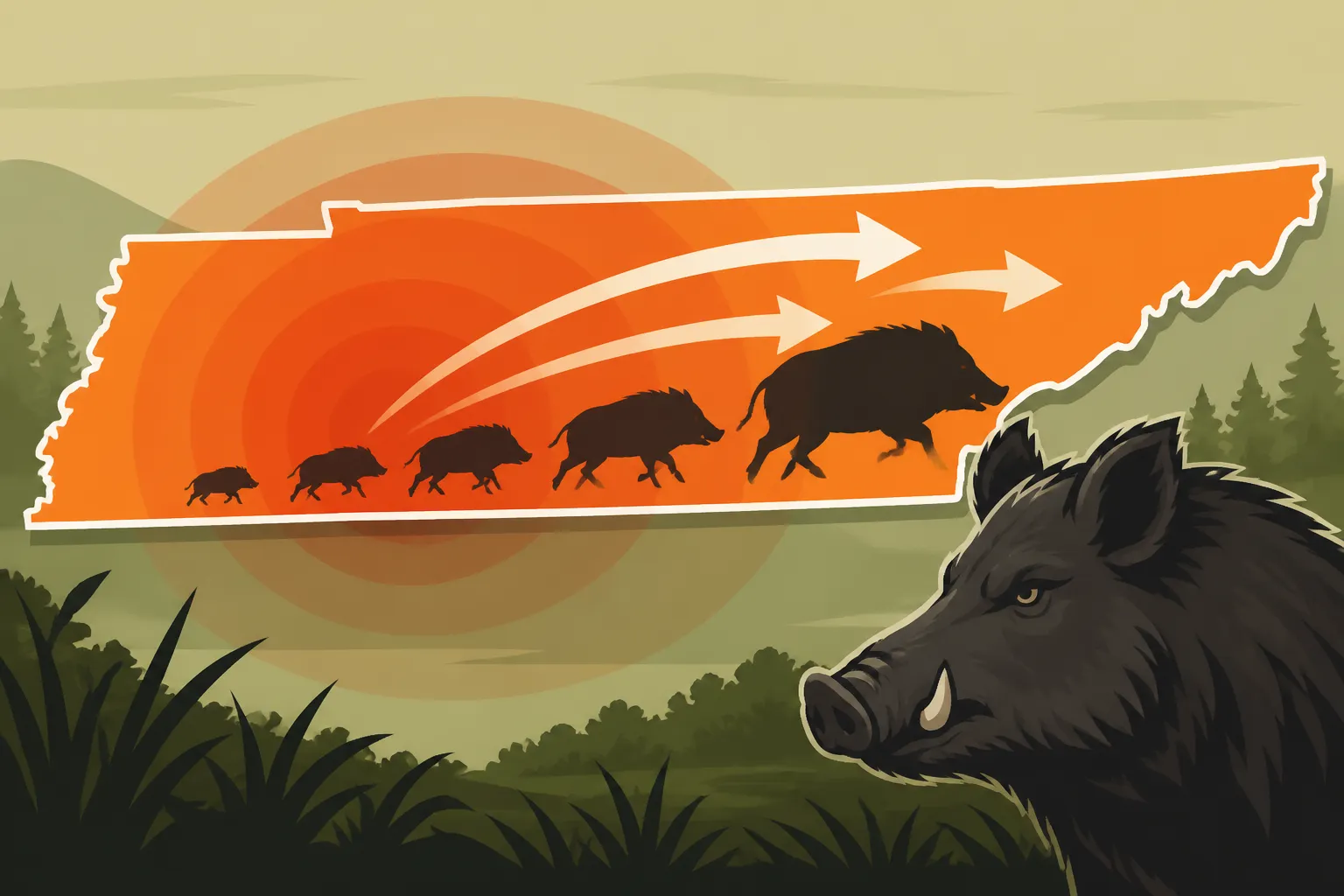
The spread of wild hogs wasn't uniform; it started in certain regions and then radiated outward, often following natural corridors and exploiting human-created opportunities.
Early Footholds in West Tennessee
West Tennessee, with its vast agricultural lands, extensive river bottomlands, and proximity to states like Arkansas and Mississippi (where hog populations were already well-established), provided the perfect initial foothold for wild hogs. The fertile soil and abundant food sources from crops like corn and soybeans, combined with the dense cover provided by the Mississippi River bottoms and its tributaries, allowed small populations to thrive and expand. These early populations were often a mix of escaped domestic pigs that reverted to the wild and individuals that likely swam or walked across river systems from neighboring states.
The lower reaches of the Tennessee River and the various drainages flowing into the Mississippi provided natural travel corridors. Hogs are strong swimmers and can cover significant distances, making rivers less of a barrier and more of a highway. Initially, these populations might have been small, perhaps only a few sounders in isolated pockets. However, given their incredible reproductive rate and the rich resources available, these small groups quickly grew, becoming entrenched in the landscape. This region remains one of the densest hog populations in the state, and hunters interested in Hog Hunting Tennessee's Wild Boar often focus their efforts here.
Infiltration of Middle Tennessee
As populations grew in West Tennessee, and with increasing illegal stocking events occurring statewide, it was only a matter of time before hogs made their way into Middle Tennessee. The Cumberland River and its tributaries, as well as the main stem of the Tennessee River, provided excellent corridors for dispersal. These river systems, often flanked by agricultural lands and dense hardwood forests, offered both food and cover, allowing hogs to move steadily eastward. Early sightings in counties like Humphreys and Dickson slowly turned into established populations, a concerning trend that led to increased Feral Swine Sightings in Middle Tennessee.
Today, Middle Tennessee grapples with a burgeoning hog problem that extends beyond traditional rural areas. While agricultural damage remains a primary concern, hogs are increasingly being observed on the fringes of suburban developments, rooting up yards, golf courses, and green spaces. This brings them into closer contact with humans and domestic animals, increasing the potential for disease transmission and vehicle collisions. The mixed habitat of rolling hills, farmland, and expanding exurban areas in Middle Tennessee presents a particularly complex challenge for management, as densely populated areas make certain control methods difficult or impractical.
Eastern Mountain and Plateau Expansion
The expansion into Eastern Tennessee, encompassing the Cumberland Plateau and the rugged Appalachian mountains of the Cherokee National Forest, might seem counterintuitive given the tougher terrain. However, wild hogs have proven their adaptability once again. While the sheer density might be lower than in the fertile west, hogs are certainly present and expanding their range in these areas. The Plateau offers vast tracts of public land, often characterized by dense timber, rocky outcrops, and deep hollows, which provide excellent cover from human disturbance. Hunters trying Reading Aerial Photos for Cumberland Plateau Deer might now notice rooting patterns that indicate hog presence.
In the mountains, they utilize steep slopes, dense rhododendron thickets, and remote creek drainages. Mast crops, particularly acorns, provide a critical food source, and springs and streams offer constant access to water. The challenges for management in these rugged areas are significant. The terrain makes trapping operations difficult, and the sheer vastness of the public lands means hogs can spread undetected for longer periods. Despite the perceived natural barriers of mountains and plateaus, these areas are not immune. Wild hogs are a testament to nature's tenacity, finding a way to survive and thrive even in seemingly inhospitable landscapes.
Managing the Menace: Strategies for Control
Given the scope of the wild hog problem in Tennessee, a multi-pronged approach is absolutely essential. There's no single silver bullet, but rather a combination of methods, sustained effort, and public cooperation.
Trapping and Removal Programs
For effective population control, targeted trapping is widely considered the most efficient method. Large, corral-style traps, often equipped with remote-controlled gates and cameras, allow landowners and wildlife managers to capture entire sounders (groups of hogs) at once. The strategy involves pre-baiting an area for an extended period to habituate hogs to the trap site, ensuring that all members of a sounder are entering the trap before it's sprung. This method is far more effective than individual hunting for reducing overall numbers, as it can remove a significant portion of the breeding population.
The TWRA often partners with USDA Wildlife Services and local landowners to implement these trapping programs. These are not casual endeavors; they require significant planning, monitoring, and ongoing effort. Once captured, the hogs are typically euthanized on site, adhering to humane protocols. The goal is complete removal, not relocation, due to the inherent risks of spreading disease and establishing new populations. This continuous, systematic removal is the only way to make a dent in the rapidly expanding hog numbers.
Targeted Hunting Efforts
While not a primary population control method, hunting does play a role, particularly in reducing localized damage and providing opportunities for recreation. In Tennessee, there are no closed seasons or bag limits for wild hogs on private land, reflecting their status as an invasive nuisance species. Hunters are encouraged to take them whenever legally encountered. Specific regulations apply to Tennessee Hog Hunting Permit Requirements on certain public lands or WMAs, so always check the local rules.
Hunters can use various methods, from still-hunting and stalking to hunting over bait or with dogs (where legal and permissible). The use of thermal or night vision optics, where legal, can be particularly effective given the nocturnal habits of hogs. For those looking to increase their chances, scouting for fresh sign like rooting, tracks, and scat is crucial. Using mapping apps like GoHunt can help identify potential travel corridors, bedding areas, and food sources. However, it's important for hunters to understand that simply shooting a few hogs here and there will not solve the broader problem. Hunting must be part of a larger, coordinated effort. The primary benefit of hunting often lies in preventing localized crop destruction or protecting specific properties, rather than broad-scale population reduction. It's often about Finding Ground Others Walk Past and pressuring hogs in areas where they've become too comfortable.
Education and Prevention
Ultimately, preventing the further spread of wild hogs relies heavily on public education and proactive prevention. One of the most critical aspects is discouraging and penalizing the illegal release and transport of hogs. Hunters and landowners need to understand the severe consequences of such actions, both legally and ecologically. The mantra should be "Stop the Spread."
Educating the public about the dangers of feeding wild hogs, even inadvertently, is also important. Reducing supplemental feed sources and properly securing trash or livestock feed can help prevent hogs from establishing themselves in new areas. Landowners can implement exclusion fencing around sensitive areas to protect crops or livestock, though this can be expensive for large properties. Community involvement, reporting sightings and damage to local wildlife agencies, and supporting aggressive control programs are vital for combating this pervasive problem. It's a collective effort, and everyone has a role to play in protecting Tennessee's natural resources from this invasive species.
Wild Hog Control Efforts in Tennessee: A Quick Look
| Characteristic | Wild Hog Impact on Spread & Control | Implications for Management |
|---|---|---|
| Reproductive Rate | Sexually mature early (6-10 months), multiple litters/year (2-3), large litter sizes (4-12 piglets). | Population can rebound quickly; high removal rates needed consistently. |
| Dietary Flexibility | Omnivorous; eats almost anything (plants, animals, carrion, crops). | Thrives in diverse habitats and food scarcity; hard to starve out. |
| Habitat Adaptability | Found in swamps, forests, mountains, agricultural fields, suburban fringes. | No habitat is truly safe; widespread distribution means widespread effort. |
| Lack of Predators | Virtually no natural predators for adults in Tennessee. | Human intervention is the only effective population control. |
| Intelligence/Wary | Learn quickly to avoid traps and human pressure, often nocturnal. | Requires sophisticated trapping techniques and persistent effort. |
| Social Structure | Live in sounders, making group trapping effective. | Removal of entire sounders is more impactful than individual kills. |
Disclaimer
Please remember that hunting regulations and wildlife management practices can change. Always consult the latest regulations from the Tennessee Wildlife Resources Agency (TWRA) before engaging in any hunting activities. This information is for educational and informational purposes only and should not be considered legal advice.