DMUs Four Through Six Antlerless Limits
Trying to keep up with Tennessee's deer hunting regulations can sometimes feel like you need a law degree and a GPS just to figure out your antlerless limits. It's especially confusing when you're moving between different parts of the state, where the rules seem to shift under your feet. This guide aims to clear up all that confusion specifically for Deer Management Units (DMUs) Four, Five, and Six, helping you understand exactly how many does you can tag in these unique regions.
Understanding Tennessee's Deer Management Unit System
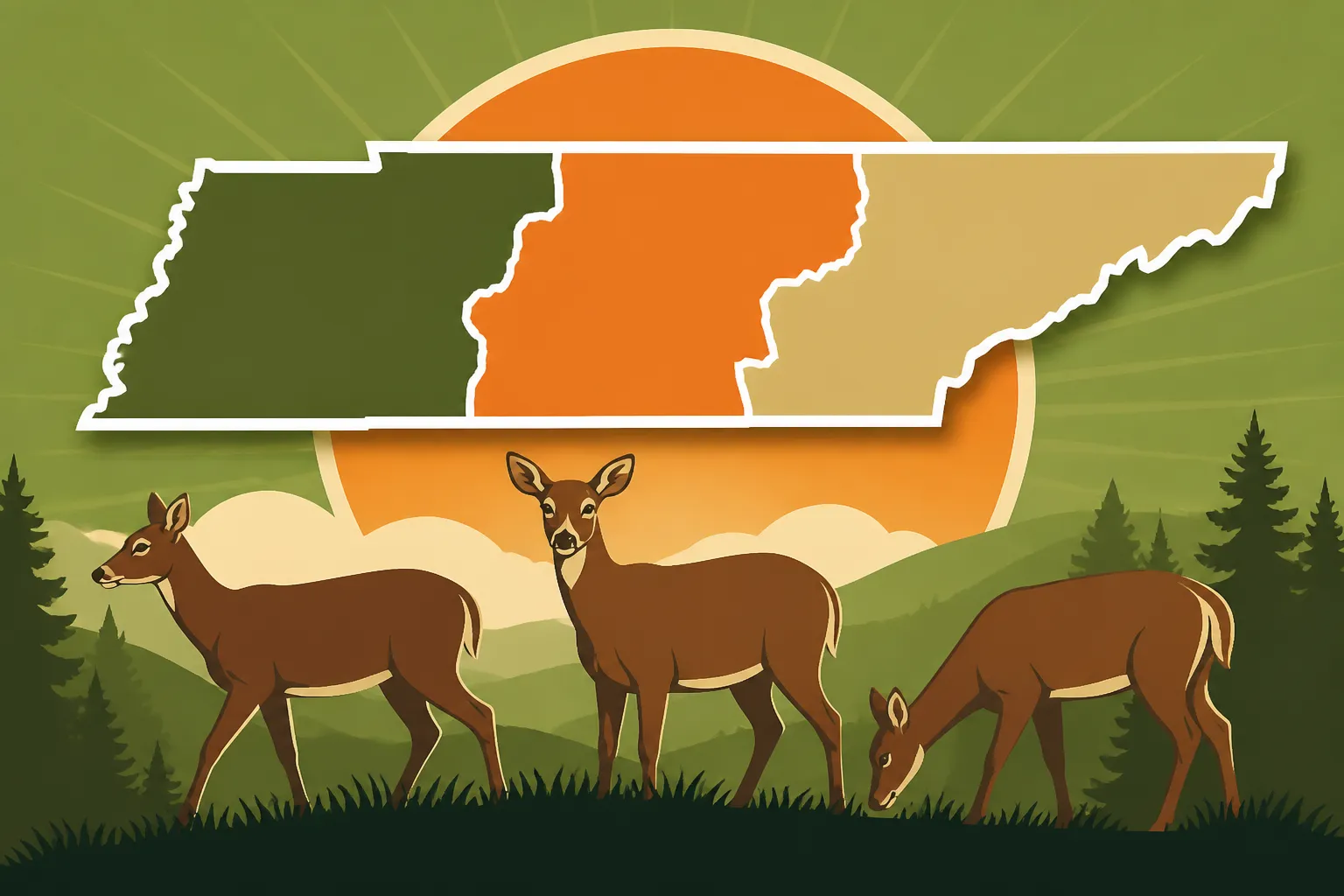
Tennessee's Deer Management Unit (DMU) system is designed to tailor hunting regulations to the specific ecological and population conditions of different areas across the state. It's not a one-size-fits-all approach, and for good reason—a deer herd thriving in the agricultural fields of West Tennessee faces different pressures and has different population dynamics than a herd in the rugged mountains of East Tennessee. This localized approach allows the Tennessee Wildlife Resources Agency (TWRA) to manage deer populations effectively, ensuring healthy herds and quality hunting opportunities for everyone.
The Logic Behind DMU Boundaries
The boundaries of Tennessee's DMUs are not drawn arbitrarily on a map; they're carefully determined by a host of factors, including habitat types, deer population densities, agricultural impact, human population density, and disease prevalence. For instance, areas with abundant food sources and mild winters can support higher deer numbers, often leading to more generous antlerless bag limits to help keep the population in check and reduce crop damage. Conversely, regions with tougher terrain, less prime habitat, or slower-growing herds might have more conservative limits.
These boundaries sometimes follow natural features like major rivers or mountain ranges, but often they're county lines for administrative ease. Knowing which county you're hunting in is usually the first step to figuring out your DMU. The goal is to prevent overharvest in one area while addressing overpopulation issues in another, all while attempting to balance hunter success with long-term herd health. It's a complex puzzle, but understanding the general reasoning helps make the rules feel less random.
Antlerless Limits: What They Mean for Herd Management
Antlerless limits, or the number of does you're allowed to harvest, are one of the most crucial tools in a wildlife agency's deer management toolbox. When you take an antlerless deer, you're directly impacting the reproductive potential of the herd. If a herd is overpopulated, leading to habitat degradation, increased disease risk, or excessive agricultural damage, increasing antlerless limits can help reduce those numbers. Conversely, if a herd needs to grow, or if there's a specific concern like Chronic Wasting Disease (CWD) impacting buck age structure, antlerless limits might be reduced or managed very carefully.
For hunters, these limits mean more than just a number on a tag; they reflect the overall health and density of the local deer population. A higher antlerless limit often suggests a robust herd that can sustain a significant harvest, providing more opportunities for hunters to fill their freezers. It's an important part of the bigger picture of wildlife conservation, allowing hunters to play an active role in maintaining ecological balance. When you're successful in Filling a Three-Antlerless DMU Limit or any other limit, you're contributing directly to the TWRA's management goals.
Where to Find Your DMU: Tools and Resources
Navigating the various DMU boundaries and their specific regulations can be a headache, especially for new hunters or those exploring new territories. Thankfully, the TWRA provides several resources to help. The official TWRA hunting guide is always your go-to source, with detailed maps and regulations. However, for a more dynamic and location-specific approach, digital tools are invaluable.
Many hunters swear by mapping applications like GoHunt, which can overlay DMU boundaries onto aerial photography and topo maps. This allows you to pinpoint exactly which unit you're in, even down to specific property lines. The Go Outdoors Tennessee app, developed by the TWRA, is another excellent resource, offering interactive maps and up-to-date regulations right on your phone. Checking these resources before you head out is crucial, as the wrong tag for the wrong DMU can lead to significant penalties. Always confirm your location against an official source, especially if you're hunting near a county line.
Deep Dive into DMU 4: The Central Highland Rim
DMU 4 encompasses a significant portion of Middle Tennessee, primarily covering the Central Highland Rim. This region is distinct from the flatter, often more agriculturally intensive West Tennessee and the rugged mountains of East Tennessee. Hunters in DMU 4 will encounter a mix of rolling hills, hardwood forests, pastures, and scattered agricultural fields. The deer populations here are generally healthy, often seeing moderate to high densities, which is reflected in the antlerless harvest regulations.
Key Characteristics and Geography of DMU 4
Geographically, DMU 4 is defined by the Central Basin and the surrounding Highland Rim. Counties like Maury, Giles, Marshall, Bedford, and parts of Williamson and Rutherford are typically included. The terrain is characterized by fertile valleys, often used for cattle grazing or hay production, interspersed with timbered ridges and hollows. Large tracts of mature hardwoods, particularly oak and hickory, provide essential mast crops for deer. This diverse landscape offers a variety of habitat types, from thick cover in creek bottoms to more open timber on ridgetops.
Water sources are typically abundant, with numerous creeks and small rivers winding through the landscape. This combination of food, water, and cover creates an ideal environment for deer to thrive. Hunters often find success by focusing on transitional zones between agricultural fields and dense timber, or by identifying major travel corridors along creek drainages.
Antlerless Bag Limits and Season Structure in DMU 4
In DMU 4, hunters generally have a more liberal antlerless bag limit compared to some other parts of the state. For most of the season, hunters can take two antlerless deer per day, totaling an annual bag limit of three antlerless deer that do not count towards any bonus deer tags. This limit is often consistent across the archery, muzzleloader, and gun seasons, providing ample opportunity to manage the herd.
The extended opportunities to harvest does reflect the TWRA's assessment of a robust and healthy deer population that can sustain a higher harvest. It's a great opportunity for hunters to fill their freezers and contribute to local herd management, especially in areas where landowners might be experiencing crop damage. Be sure to check the specific dates for Tennessee Archery Season Dates, Tennessee Muzzleloader Season Dates, and Tennessee Gun Season Dates to plan your antlerless harvest strategy effectively.
Hunting Strategies for Antlerless Deer in DMU 4
Successfully harvesting antlerless deer in DMU 4 often comes down to understanding deer movement patterns in this specific type of habitat. Early season archery hunters might focus on agricultural edges, particularly soybean or cornfields, where deer are actively feeding. Setting up a ground blind or a treestand on a field edge can be highly effective during these times.
As the season progresses and food sources shift, particularly when acorns start dropping, deer will move into the timber. Scouting for fresh sign like rubs, scrapes, and heavy trails leading to mast trees becomes crucial. During the gun season, especially if the rut is on, doe movement can be less predictable, but they'll often be found in the vicinity of bedding areas or escape cover. Consider still-hunting through creek bottoms or staging areas between bedding and feeding. Hunting Where the Antlerless Limit Drops to Two might require a different approach, so understanding the nuances of each DMU is key.
Navigating DMU 5: The Cumberland Mountains and Plateau
DMU 5 brings a completely different hunting experience, characterized by the rugged and expansive terrain of the Cumberland Mountains and Plateau. This region, including counties like Cumberland, Fentress, Morgan, and Van Buren, offers some of Tennessee's most challenging yet rewarding hunting. The deer populations here tend to be spread out more due to the vast public lands and less intensive agriculture, leading to more conservative antlerless limits.
Key Characteristics and Geography of DMU 5
The geography of DMU 5 is dominated by the Cumberland Plateau, a high, dissected plateau featuring steep-sided valleys, narrow ridges, and expansive mixed hardwood forests. Unlike the rolling hills of the Highland Rim, here you'll find significant elevation changes and vast, unbroken timber. Public land, including parts of the Catoosa Wildlife Management Area, Royal Blue Wildlife Management Area, and sections of the Cherokee National Forest Hunting, offers incredible opportunities for hunters willing to put in the effort.
Food sources are primarily natural mast crops, particularly acorns, hickory nuts, and beech nuts, with agricultural fields being much less common. Water is usually available in the numerous creeks and drainages, but can be sparse on higher ridges during dry spells. This environment favors deer that are tougher and more adapted to traversing steep terrain, and their densities often reflect the carrying capacity of such a wild landscape.
Antlerless Bag Limits and Season Structure in DMU 5
Given the more challenging terrain and typically lower deer densities compared to DMU 4, DMU 5 generally has a more conservative antlerless bag limit. Hunters are often limited to one antlerless deer per day, with an annual bag limit of three. This more restrictive approach is a strategic move by the TWRA to allow the deer herd to grow and maintain stability in an environment that naturally supports fewer animals per square mile.
While the overall annual limit of three antlerless deer might sound the same as DMU 4, the "one per day" rule impacts daily hunting strategy. This means you can't double up on does in a single outing, which many hunters find perfectly reasonable given the effort required to hunt these rugged mountains. Always double-check the current year's hunting guide, as these regulations can be adjusted annually based on population surveys and habitat conditions.
Hunting Strategies for Antlerless Deer in DMU 5
Hunting antlerless deer in DMU 5 requires a robust strategy centered on extensive scouting and physical endurance. Focus your efforts on identifying prime bedding areas on secluded benches and south-facing slopes where deer can catch warmth. Food sources will dictate movement, so locate mast-producing ridges and areas where soft mast (like wild grapes or persimmons) might be present. Learning to read a ridge for East Tennessee deer is crucial for success here.
Still-hunting is a highly effective tactic in this terrain, moving slowly and deliberately through timbered hollows and along ridgetops. Look for fresh tracks, droppings, and browsed vegetation. Setting up in natural funnels, such as saddles between ridges or narrow sections of hollows, can also be productive. Utilizing an app like GoHunt to mark potential travel corridors and water sources before you ever set foot in the woods can give you a significant advantage. Don't forget to account for elevation changes when considering wind and thermals on a ridge system, which can be unpredictable in the mountains.
Exploring DMU 6: The Northern Cumberland Mountains
DMU 6 represents the northernmost extreme of Tennessee's deer hunting landscape, encompassing the rugged peaks and vast wilderness of the Northern Cumberland Mountains. This unit is uniquely characterized by its connection to the expansive North Cumberland Wildlife Management Area and its history as part of the elk restoration zone. Hunting here is a true backcountry experience, and the antlerless limits reflect both the unique ecosystem and management goals for a diverse array of wildlife, including deer and elk.
Key Characteristics and Geography of DMU 6
Geographically, DMU 6 primarily covers counties like Claiborne, Campbell, and Scott, reaching into the most untamed parts of the Cumberland Mountains. This area is defined by its deep, forested valleys, steep ridges, and expansive tracts of unbroken timber. It's an important region for Tennessee's Restored Elk Herd, which influences deer management strategies. The habitat is predominantly mature hardwood and mixed pine forests, with occasional clear-cuts that provide early successional growth crucial for deer browse.
Due to the limited human presence and vast wilderness, deer densities here are generally lower than in other DMUs. Deer populations are robust but spread thinly across the landscape, making finding and consistently harvesting them a genuine challenge. Water sources are typically plentiful in the creek drainages, but finding pockets of rich food sources, especially mast, is paramount. This is wild country, demanding respect and preparation from every hunter.
Antlerless Bag Limits and Season Structure in DMU 6
Similar to DMU 5, DMU 6 typically imposes a more conservative antlerless bag limit due to the lower overall deer density and the vast, rugged terrain. Hunters are generally limited to one antlerless deer per day, with an annual bag limit of three. This careful management helps ensure the stability and growth of the deer herd in an area that supports a diverse range of large game, including elk and bear.
It's vital to remember that within DMU 6, specific Wildlife Management Areas (WMAs) like North Cumberland WMA might have additional or modified regulations, including quota hunts or special antlerless days. Always consult the WMA-specific regulations in the TWRA guide before hunting these areas. The general one-antlerless-per-day rule for the broader DMU is a guideline, but WMAs often have their own nuances to consider.
Hunting Strategies for Antlerless Deer in DMU 6
Hunting DMU 6 requires the most rigorous preparation and backcountry skills. Forget about easy field-edge sits; this is deep timber hunting. Scouting before the season is absolutely critical, focusing on finding secluded benches, hidden springheads, and areas with good mast crops that might be holding deer. Utilize digital maps like those offered by GoHunt or the TWRA's own app to identify potential bedding areas, escape routes, and terrain features that could funnel deer movement.
Spot-and-stalk hunting can be effective in more open timber or recent clear-cuts, but most of the time, it will involve slow, methodical still-hunting through thick cover. Remember that deer in this rugged environment are often less patterned by human activity than those in more populated areas, but they are also incredibly wary. Focus on covering ground quietly, stopping frequently to glass and listen. For more advanced strategies, consider applying for the limited elk tags, which would be an entirely different hunting experience in this same unique habitat.
Strategies for Maximizing Your Antlerless Harvest
Regardless of the specific DMU you're hunting, effectively harvesting antlerless deer requires a thoughtful approach. It’s not just about pulling the trigger; it's about understanding deer behavior, scouting effectively, and being prepared to capitalize on opportunities. A well-executed antlerless harvest contributes significantly to herd health and provides valuable venison for your family.
Effective Scouting Techniques for Does
Scouting for does isn't dramatically different from scouting for bucks, but the focus shifts slightly. You're less concerned with rub lines and massive scrapes and more interested in primary food sources, bedding areas, and travel corridors connecting the two. Pay close attention to fresh tracks, droppings, and browse lines near agricultural fields, recent clear-cuts, or mast-producing timber. In DMU 4, this might mean glassing bean fields at dusk. In DMU 5 and 6, it could mean hiking deep into a hollow to find a secluded area rich in acorns.
Utilize trail cameras to monitor feeding patterns and herd composition. A good scouting app like GoHunt can help you mark these observations and develop a plan. Look for areas with dense cover adjacent to food, as does with fawns will often seek out security cover nearby. Focus your efforts on identifying primary doe groups rather than chasing after lone bucks.
Timing Your Hunts for Success
The timing of your antlerless hunts can significantly impact your success. Early archery season, particularly the Hunting the August Antlerless-Only Archery Hunt, is often an excellent time to target does as they are still on predictable summer patterns, frequently feeding in open fields or orchards. The cooler temperatures of late muzzleloader and gun season can also be productive, as deer are often focused on caloric intake before winter. Hunting the Late-Season January Lull can be fantastic for antlerless opportunities, especially around consistent food sources.
During the rut, while bucks are on the move, does can be a bit more unpredictable. However, if you locate a hot doe, a buck will likely be close by, making it a good time to observe. Consider hunting during inclement weather like light rain or snow, which can often get deer on their feet earlier in the day and help muffle your approach.
Utilizing Different Stand Setups for Antlerless Deer
Varying your stand setups can greatly improve your chances of success. For field edges or food plots, a comfortable ladder stand or a well-brushed-in ground blind might be ideal. These allow you to sit for longer periods and offer good visibility. In denser timber or rugged terrain, a mobile setup like a climbing stand or a saddle hunting rig provides flexibility. Hanging a Stand on a Cumberland Ridge often requires a mobile approach, allowing you to quickly adapt to changing deer movement.
If hunting public land in areas like Cherokee National Forest, understanding Treestand Setups in Cherokee National Forest is crucial, as regulations might vary. Always prioritize safety, regardless of your setup. The key is to match your setup to the specific terrain and deer behavior you're observing. For instance, if you're targeting does moving from a bedding area to a feeding area, position your stand to intercept them along their most likely travel corridor.
The Impact of DMU Changes and CWD Considerations
Tennessee's deer management is a dynamic process, constantly adapting to new challenges and information. The DMU system, and specifically antlerless limits, are not set in stone; they can and do change based on scientific data, harvest results, and emergent issues like Chronic Wasting Disease (CWD). Understanding these factors is crucial for any responsible hunter.
How DMU Boundaries and Limits Evolve
The TWRA's biologists and wildlife managers continuously monitor deer populations through various methods, including harvest data, herd health assessments, and population modeling. If a DMU shows consistent overharvest, declining deer numbers, or significant habitat pressure, the antlerless limits might be reduced. Conversely, if a herd is thriving and causing agricultural damage, limits could be liberalized.
These changes are typically announced well in advance of the hunting season through the annual hunting guide and TWRA's official channels. It's why relying on outdated information can be so problematic. Always check the current year's regulations to ensure you're compliant. DMU boundaries can also shift, albeit less frequently, if new ecological data suggests a different management approach is needed for a specific region.
Chronic Wasting Disease and Antlerless Harvest
Chronic Wasting Disease (CWD) has emerged as a significant concern for deer management in Tennessee, particularly in the western and parts of middle Tennessee. While DMUs 4, 5, and 6 are generally outside the immediate CWD-Positive Zone, the threat of its spread is a constant consideration. CWD is a fatal neurological disease that affects deer, elk, and moose. To combat its spread, the TWRA implements special regulations in designated CWD Management Zones.
These CWD Zones might have very specific antlerless limits or even bonus tags to encourage higher harvest rates in an effort to reduce deer densities and slow the disease's transmission. While DMU 4, 5, and 6 might not currently be CWD-intensive, understanding the potential impact is important. Hunters in affected areas may be required to submit deer for Tennessee CWD Testing for Hunters or adhere to Tennessee Carcass Deboning Requirements before moving deer out of the zone. Staying informed about CWD is part of being a responsible hunter in Tennessee.
Contributing to Data and Conservation Efforts
Every hunter plays a vital role in Tennessee's wildlife conservation efforts. By accurately reporting your deer harvest, you provide crucial data to the TWRA that helps inform future management decisions, including antlerless limits. The Tennessee Deer Harvest Reporting Rules are designed to make this process straightforward, usually through the Go Outdoors Tennessee app or website.
Beyond reporting, consider participating in hunter surveys, providing feedback to the TWRA, and educating yourself and others about deer management principles. Your success in harvesting antlerless deer, especially in units like 4, 5, and 6 with specific management objectives, directly contributes to maintaining healthy, balanced deer populations for future generations of hunters.
| DMU | Primary Region | Typical Antlerless Limit (Daily/Annual) | Key Characteristics | Common Counties | Hunting Focus |
|---|---|---|---|---|---|
| DMU 4 | Central Highland Rim | 2 per day / 3 annual | Rolling hills, mixed hardwoods, pastures, agriculture | Maury, Giles, Marshall, Bedford, Williamson (part) | Field edges, creek bottoms, hardwood ridges |
| DMU 5 | Cumberland Mountains & Plateau | 1 per day / 3 annual | Rugged plateau, steep valleys, vast public timber, natural mast | Cumberland, Fentress, Morgan, Van Buren | Deep timber, saddles, ridgetops, natural funnels |
| DMU 6 | Northern Cumberland Mountains | 1 per day / 3 annual | Steep mountains, vast wilderness, elk restoration zone, dense timber | Claiborne, Campbell, Scott (part) | Backcountry, remote food sources, limited access areas |
Disclaimer
Please note: The information provided in this guide is for informational purposes only and is based on general Tennessee hunting regulations. Regulations can change annually. It is the hunter's responsibility to consult the most current Tennessee Wildlife Resources Agency (TWRA) Hunting and Trapping Guide and any specific WMA regulations before heading afield. Always verify season dates, bag limits, and legal requirements with official TWRA sources.