DMUs One Through Three Antlerless Limits
It can feel like you need a law degree just to understand Tennessee's deer hunting regulations, especially when it comes to those tricky antlerless limits. You're trying to plan your hunt, manage the herd on your land or public ground, and all you're met with are acronyms and changing numbers. This comprehensive guide is here to untangle the complexities of Deer Management Units (DMUs) One, Two, and Three, breaking down exactly what those antlerless limits mean for your hunt and how to navigate them successfully.
Understanding Tennessee's Deer Management Unit System
Tennessee's diverse landscape, from the rich agricultural fields of West Tennessee to the rugged mountains of the east, means that a one-size-fits-all approach to deer management just wouldn't work. The Tennessee Wildlife Resources Agency (TWRA) recognized this long ago, which is why they implemented the Deer Management Unit (DMU) system. It's designed to tailor hunting regulations to the specific ecological and population needs of different regions, ensuring sustainable deer populations and quality hunting opportunities for everyone.
The Purpose Behind DMUs
At its core, the DMU system serves several critical purposes. Firstly, it allows the TWRA to manage deer populations effectively based on local conditions. Some areas might have an overabundance of deer, leading to increased crop damage, vehicle collisions, and even a decline in herd health due to overbrowsing. In these regions, the DMUs often prescribe higher antlerless harvest quotas to help reduce the population to healthier levels. Conversely, areas with naturally lower deer densities or sensitive habitats might have more conservative antlerless limits to encourage growth.
Secondly, the DMUs are a crucial tool in managing and containing the spread of Chronic Wasting Disease (CWD). By identifying areas where CWD has been detected or is a high risk, the TWRA can implement specific regulations within those DMUs – often increasing antlerless harvest or requiring mandatory CWD testing – to help slow the spread and maintain herd health. It's a proactive approach to protecting Tennessee's deer for future generations.
Lastly, the DMU system aims to balance hunter opportunity with management goals. Hunters play a vital role in wildlife conservation, and these regulations ensure that hunters have ample opportunities while contributing to the overall health of the deer herd. Understanding the nuances of each DMU allows you to become a more informed and effective hunter, aligning your efforts with the TWRA's broader conservation objectives.
Navigating the Statewide Zones
Tennessee is broadly divided into several management zones, and within these, the DMUs further refine the regulations. It's absolutely crucial to know which DMU your hunting location falls into, as the rules can change significantly even between neighboring counties. What might be legal in one county could lead to a citation just across the county line. This is where tools like the TWRA's website or mapping applications like GoHunt become invaluable, as they often clearly delineate these boundaries. You can easily see your location in relation to the DMU lines, helping you plan your hunt with confidence. Remember, a quick check of your county on the official TWRA map, which can often be found on the Tennessee Deer Season Structure Explained page, is always your first step before heading afield.
Diving Deep into DMU 1 Antlerless Limits
DMU 1 is often considered Tennessee's deer hunting hotspot, known for its fertile agricultural lands and robust deer populations. These regulations are designed to help maintain a healthy balance in areas that can sustain a higher deer density.
Where is DMU 1 and What Does it Mean?
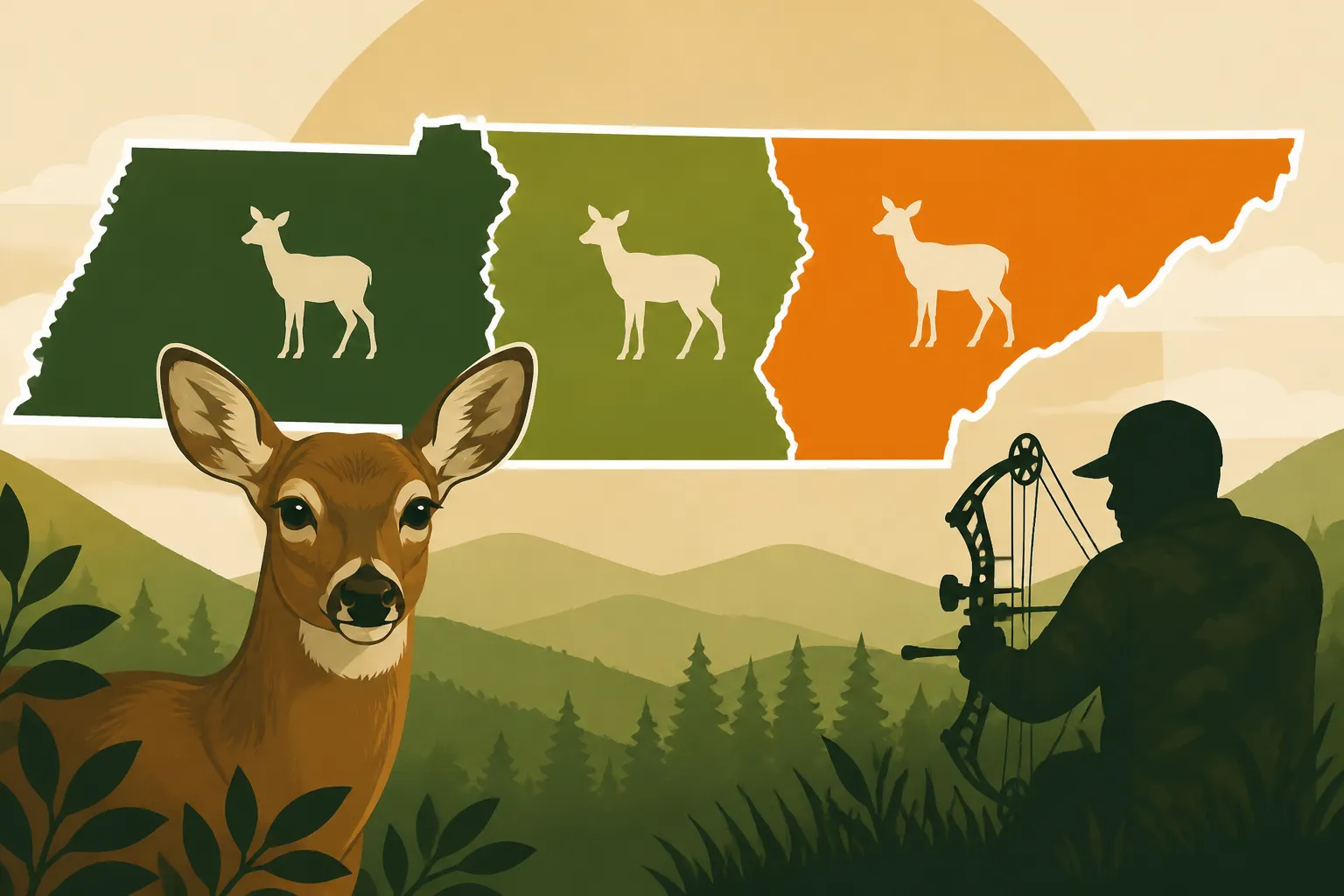
DMU 1 primarily encompasses many of the counties in West Tennessee. Think about the flat, rich bottomlands and expansive crop fields found in counties like Lauderdale, Crockett, Haywood, Fayette, Tipton, Obion, and Dyer. These areas typically have excellent habitat that provides abundant food sources, leading to thriving deer herds. Due to the high deer density, the TWRA often implements more liberal antlerless limits here to manage the population, reduce agricultural damage, and ensure the overall health of the herd. It's not uncommon to see deer literally everywhere you look in these parts, especially around major food sources.
Antlerless Tag Structure and Bag Limits
In DMU 1, hunters generally have the most liberal antlerless deer limits in the state. Historically, hunters in DMU 1 might be allowed to harvest up to three antlerless deer per day during the archery-only, muzzleloader, and gun seasons. This generous limit reflects the TWRA's goal of encouraging significant antlerless harvest to control populations. Hunters typically use their statewide antlerless tag, which comes with their hunting license, and can often purchase additional bonus antlerless tags. These bonus tags are a powerful tool for landowners and hunters alike to make a real impact on local deer numbers. It's essential to check the current year's regulations, as specific bonus tag availability and daily limits can vary slightly from season to season. For instance, the special August antlerless-only archery hunt, designed to kickstart the antlerless harvest, largely takes place in DMU 1 counties due to their high deer numbers. Always be meticulous in your harvest reporting, which you can learn more about on the Tennessee Deer Harvest Reporting Rules page, as this data helps the TWRA fine-tune these limits annually.
Strategic Considerations for Hunting DMU 1
Given the higher antlerless limits in DMU 1, your hunting strategy can lean heavily into herd management. If you're looking to fill your freezer, this is often the place to do it. Focus your efforts on areas with high deer traffic – field edges, pinch points between cover and crops, and bedding areas. Rather than solely chasing big bucks, consider dedicating time to harvesting does, which directly impacts the local population's growth rate.
For those hunting private land, working with the landowner to identify specific areas where doe harvest is most needed can be incredibly beneficial. For public land hunters, areas adjacent to private agricultural fields can be goldmines, as deer often travel between bedding cover on public land and feeding areas on private property. Utilizing a mapping tool like GoHunt can help you identify these transition zones and potential ambush points. Remember, effectively managing doe numbers helps ensure a healthier buck-to-doe ratio and better-quality deer in the long run.
Unpacking DMU 2 Antlerless Limits
Moving eastward from the Delta, DMU 2 presents a different set of challenges and opportunities, often characterized by rolling hills, mixed timber, and a blend of agriculture and development.
Identifying DMU 2 Regions
DMU 2 covers a significant portion of Middle Tennessee, extending from the Highland Rim to parts of the Cumberland Plateau foothills. Counties such as Houston, Humphreys, Dickson, Montgomery, Cheatham, Robertson, Sumner, Davidson, Maury, Giles, Marshall, Bedford, Rutherford, Wilson, Cannon, DeKalb, Coffee, Franklin, Lincoln, and more typically fall within DMU 2. Here, deer populations are generally moderate, though pockets can be quite dense, especially around urban fringes or particularly fertile river bottoms. The habitat is more varied, with larger tracts of timber interspersed with smaller agricultural fields and increasing residential development. These areas require a slightly more conservative approach to antlerless harvest than DMU 1, but still offer ample opportunity.
Antlerless Bag Limits and Special Regulations
In DMU 2, the antlerless limits are usually a bit tighter than in DMU 1. Typically, hunters are allowed to harvest two antlerless deer per day during the archery, muzzleloader, and gun seasons. This limit reflects a management goal of maintaining stable deer numbers, reducing localized impacts, and providing consistent hunting opportunities without over-harvesting. Similar to DMU 1, you'll use your general antlerless tag, and bonus tags might be available, though sometimes with fewer options than in DMU 1.
One critical aspect to be aware of in DMU 2, especially in its western reaches, is the presence of Chronic Wasting Disease (CWD). Several counties within DMU 2 are part of Tennessee's CWD management zone. This can introduce additional regulations, such as mandatory CWD testing for harvested deer in certain areas, or specific carcass movement restrictions. Always double-check if your hunting county is affected by CWD. You can find up-to-date information and specific county lists on the Tennessee's Chronic Wasting Disease Management Zone page on the TWRA website. Adapting to these regulations is not just about legality; it's about being a responsible hunter and helping the TWRA monitor and mitigate the disease.
Adapting Your Approach in DMU 2
Hunting in DMU 2 often requires a balanced approach. While you still have solid opportunities for antlerless harvest, you might find yourself navigating more fragmented habitat or areas with heavier hunting pressure, particularly around larger population centers. Your strategy should focus on efficient scouting and understanding deer movement between different cover types. For instance, deer in these areas might utilize smaller woodlots or fencerows as travel corridors between larger timber blocks and feeding areas.
When planning your hunt, consider the impact of localized pressure. Deer that are constantly bumped might become more nocturnal or seek refuge in thick, overlooked cover. Using an app like GoHunt to scout aerial imagery can help identify these hidden pockets or less-pressured access points. For private land, effective communication with landowners about their specific management goals is paramount. If you're seeing signs of an imbalance, taking a doe or two from a specific area can greatly benefit the overall herd health and reduce localized browse pressure, even if you’re primarily hunting for a buck.
Navigating DMU 3 Antlerless Limits
DMU 3 represents some of Tennessee's most challenging yet rewarding hunting grounds, characterized by rugged topography and generally lower deer densities.
The Landscape and Deer Population of DMU 3
DMU 3 covers the mountainous and heavily forested regions of East Tennessee, including much of the Cumberland Plateau, the Great Smoky Mountains foothills, and the Cherokee National Forest. Counties in DMU 3 include Bledsoe, Bradley, Campbell, Claiborne, Cocke, Cumberland, Fentress, Greene, Grundy, Hamilton, Jefferson, Johnson, Knox, Loudon, Marion, McMinn, Meigs, Monroe, Morgan, Overton, Pickett, Polk, Rhea, Roane, Scott, Sequatchie, Sevier, Sullivan, Unicoi, Union, Warren, Washington, and White. The habitat is dominated by mixed hardwood forests, steep slopes, and deep hollows.
Deer populations here are naturally lower than in the western parts of the state due to less abundant agricultural food sources and often more rugged terrain, which provides less optimal deer habitat. While deer densities might be lower, the challenge of hunting these areas often appeals to those seeking a more wilderness-like experience. For a deeper dive into hunting specific areas within this zone, checking out resources like Hunting the Cumberland Plateau can be incredibly helpful.
Antlerless Tag Allocation and Restrictions
Given the lower deer densities and challenging terrain of DMU 3, the antlerless limits are the most conservative in Tennessee. Typically, hunters are allowed to harvest only one antlerless deer per day during the open seasons. In some specific areas or during certain periods, antlerless harvest might be even more restricted or entirely closed, especially on certain Wildlife Management Areas (WMAs). This conservative approach is essential for supporting herd growth and ensuring that the population remains healthy and stable in these less productive habitats.
Bonus antlerless tags are usually very limited or non-existent in DMU 3, reflecting the management strategy to protect and build the herd. Hunters must be exceptionally diligent in checking the specific regulations for their chosen WMA or county. The focus here is less on high volume harvest and more on selective hunting, with a strong emphasis on fair chase and the pursuit of individual animals. Ethical considerations around shot placement and recovery become even more critical when every deer harvested represents a significant contribution to your season.
Hunting Strategies for DMU 3 Success
Hunting in DMU 3 is an exercise in patience, persistence, and physical stamina. Given the single antlerless deer limit, every opportunity counts. Your strategy should revolve around extensive scouting, understanding topographical features, and recognizing subtle deer sign. Deer in these mountainous areas often travel along ridge lines, use saddles as crossings, and gravitate towards specific benches or thermal hubs for bedding. They also rely heavily on natural food sources like acorns, persimmons, and browse.
Focus on finding these natural food sources and understanding how deer move between them and bedding areas. Scouting, as covered in topics like Scouting Tennessee Public Land Before Season, becomes even more vital here. Don't be afraid to put in the miles; often, the best hunting spots are found far from roads and trails, where hunting pressure is lighter. Utilize contour maps and aerial photography, perhaps with a premium GoHunt subscription, to identify potential travel corridors, sheltered hollows, and remote pockets of good habitat that other hunters might overlook. Patience is a virtue, and the reward of harvesting a deer in the challenging landscape of DMU 3 is truly something special.
Practical Tips for Maximizing Your Antlerless Harvest in DMUs 1-3
Regardless of which DMU you're hunting, a thoughtful and strategic approach will always increase your chances of success. When the goal is antlerless harvest, a few universal principles apply across Tennessee's varied terrain.
Utilizing Technology and Resources
In today's hunting world, technology is your best friend. The TWRA's official website is an indispensable resource, offering downloadable regulations, maps, and important updates regarding CWD or season changes. Their mobile app, which is a fantastic tool covered in Scouting With the Tennessee TWRA App, can provide real-time information about DMU boundaries, public land access points, and even harvest reporting features.
Beyond official resources, modern mapping applications have revolutionized how hunters scout and navigate. Services like GoHunt allow you to overlay private and public land boundaries, property ownership details, and topographical maps, making it easy to identify your precise location within a DMU. You can mark potential stand locations, scout access routes, and understand the terrain's nuances, all before setting foot in the woods. These tools are particularly helpful when hunting near DMU boundaries, ensuring you're always compliant with the correct antlerless limits. Investing in a reliable mapping app can literally put more deer in your freezer by helping you locate overlooked pockets of habitat and plan efficient hunting strategies.
Scouting and Understanding Local Pressure
Regardless of the DMU, consistent and thorough scouting is the cornerstone of a successful hunt. This isn't just about finding fresh deer tracks; it's about understanding the entire ecosystem. Identify primary food sources, whether it's standing crops in DMU 1, diverse mast crops in DMU 2, or remote acorn flats in DMU 3. Locate bedding areas, water sources, and the travel corridors that connect them. Trail cameras can be incredibly effective for monitoring deer movement patterns, helping you determine when and where does are most active.
Understanding local hunting pressure is equally important. On public lands, deer often adapt to pressure by becoming more nocturnal or seeking refuge in thick, hard-to-reach cover. Learn to identify areas that other hunters tend to overlook. Sometimes, walking an extra half-mile or navigating a particularly nasty piece of briar patch can put you in a prime, unpressured location, as detailed in Finding Ground Others Walk Past. On private lands, discuss hunting pressure with the landowner to develop a cohesive strategy that benefits both the deer herd and your hunting success.
| DMU | Primary Region | Typical Antlerless Limit (per day) | Primary Management Goal | GoHunt Utility |
|---|---|---|---|---|
| DMU 1 | West Tennessee, Agricultural | 3 | Population Control, Crop Damage Reduction | High-res satellite for field edges & cover |
| DMU 2 | Middle Tennessee, Mixed Habitat | 2 | Maintain Stable Population, CWD Management | Property lines, topo for transitions |
| DMU 3 | East Tennessee, Mountainous/Forest | 1 | Herd Growth, Sustainable Harvest | Topo for saddles & hollows, public land access |
Ethical and Responsible Harvest
Harvesting antlerless deer is a vital component of sound deer management, but it comes with the responsibility of ethical and humane hunting practices. Always prioritize a clean, ethical shot. Whether you're using a rifle, muzzleloader, or bow, take the time to practice and ensure you're proficient at various ranges. This becomes even more critical when pursuing multiple does in a single sit or from a single location.
Proper field dressing and meat care are also paramount, especially during warmer early seasons. If you're planning a multi-doe harvest, consider having extra help or a strategy for getting the animals out quickly and cooling the meat. Learning how to properly field dress a deer, especially in varying weather conditions, is a skill every hunter needs, and you can find excellent guidance on Field Dressing a Deer in Cold Weather. By being prepared and responsible, you not only honor the animal but also ensure that your harvest provides delicious, healthy food for your family. Ultimately, understanding and respecting the antlerless limits in DMUs 1, 2, and 3 is about being a knowledgeable and effective steward of Tennessee's incredible deer resource.
Disclaimer
Please note that hunting regulations, including DMU boundaries and antlerless limits, are subject to change by the Tennessee Wildlife Resources Agency (TWRA). This guide provides general information and historical context. Always consult the most current TWRA hunting guide and regulations before planning your hunt to ensure compliance.