Turkey Tactics for Farmland Field Edges
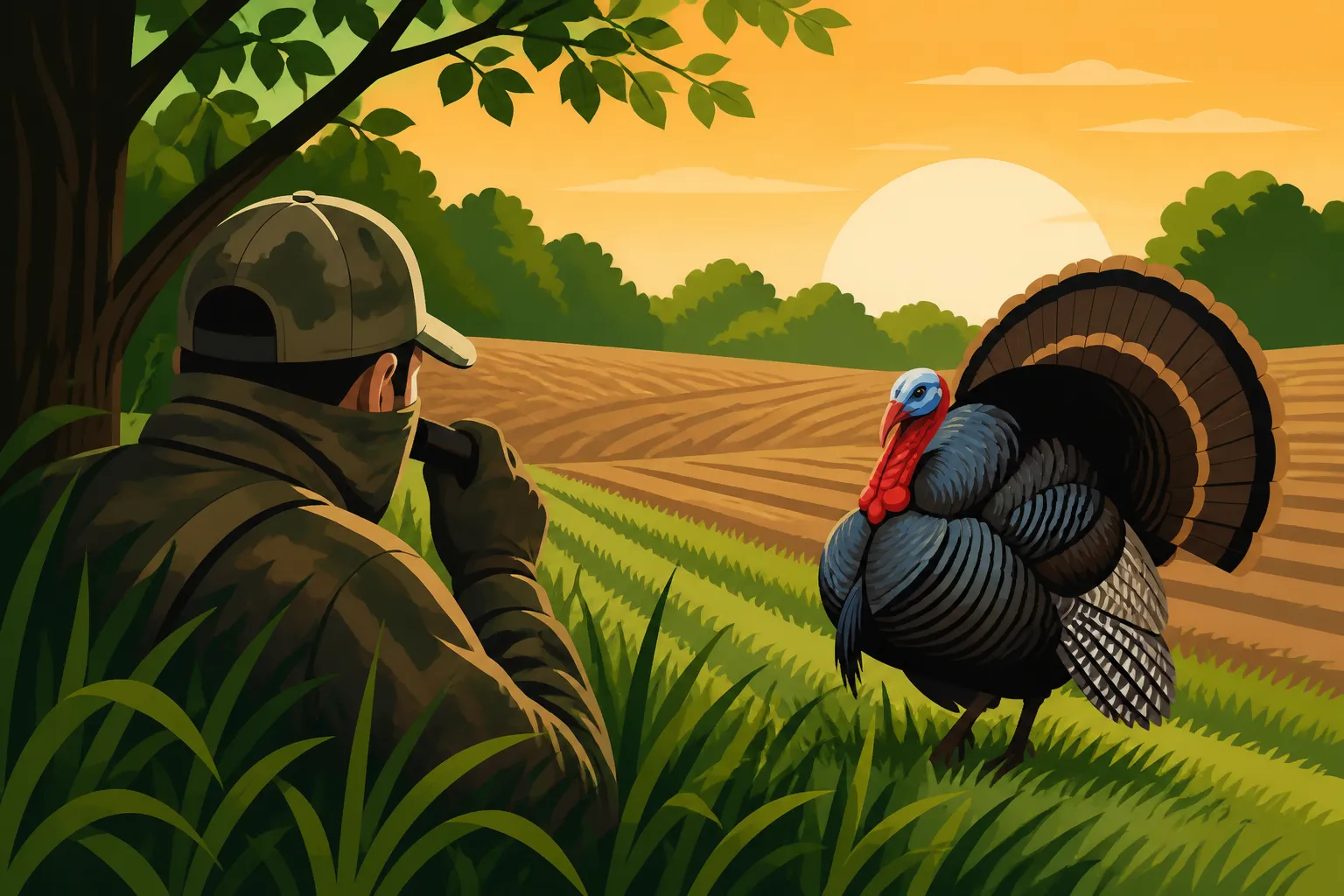
There’s nothing quite like the sight of a big tom strutting along a Tennessee field edge, his fan fully displayed, sunlight glinting off his iridescent feathers. It’s a breathtaking moment, but it can also be incredibly frustrating. These birds are often highly visible, yet they can be maddeningly difficult to close the distance on, especially when they’re henned up or just plain wary. This guide is dedicated to equipping you with the specialized turkey tactics for farmland field edges, helping you understand their behavior, master strategic setups, perfect your calling, and overcome the unique challenges these environments present.
Understanding Farmland Turkeys and Their Patterns
Hunting turkeys on farmland field edges requires a distinct approach compared to calling birds in vast timber. These fields, whether they're planted in corn, soybeans, wheat, or just lush with green growth, become prime real estate for turkeys, drawing them in with an irresistible buffet and ideal conditions for strutting and loafing.
Why Field Edges Are Turkey Magnets
Think of a field edge as a turkey's grocery store, dating club, and safe haven all rolled into one. First off, food is abundant. As crops like corn and soybeans are harvested, residual grain provides an easy meal. Early spring sees fresh green shoots emerging, rich in protein and irresistible to turkeys. Beyond cultivated crops, the edge itself, with its mix of grasses, weeds, and timber, is a haven for insects, spiders, and other invertebrates that turkeys love to gobble up. It’s an endless buffet.
Secondly, field edges offer unparalleled visibility for gobblers to strut and display for hens. A longbeard wants to be seen, and a wide-open field edge allows him to put on a show without dense timber obscuring his grandeur. Hens, in turn, are drawn to these areas for feeding and sunning, making them natural rendezvous points. This open environment also provides a sense of security; turkeys can spot approaching predators from a distance, giving them ample time to react. Finally, these edges often serve as crucial travel corridors, connecting roosting areas in the adjacent timber to feeding grounds and water sources deeper in the field or beyond.
Common Turkey Behaviors on Farmland
Turkeys operating on farmland tend to follow fairly predictable routines, dictated by the rising and setting sun, and of course, their stomachs. In the mornings, you’ll often find birds flying down from their roosts along the timber edge, landing directly in the field or just a few yards into the open. From there, gobblers will immediately begin their strutting rituals, gathering hens and making their presence known.
As the day progresses, birds typically move into the open fields to feed and loaf. They might slowly pick their way across a vast expanse, taking advantage of the abundant food sources. Hens will feed, dust bathe, and sometimes even begin nesting activities in the taller field cover. Gobblers will follow their harems, often strutting intermittently to keep their attention. During the midday lull, especially on warmer days, turkeys might seek shade along the timber line or find a cool, secluded dip in the field to rest. As evening approaches, their focus shifts back to securing a safe roost. You’ll observe them working their way back towards the timber edges, often gobbling on the ground before finally flying up into trees just before dark. Understanding this daily rhythm is key to timing your approach and setup.
Scouting for Success Before the Hunt
Effective turkey hunting on farmland field edges starts long before you ever step foot in the woods with your shotgun. Preseason scouting is paramount, and it often involves a lot of glassing and listening, sometimes from a distance to avoid spooking the birds. Start by identifying fields that show potential, looking for areas with good timber cover nearby for roosting, and diverse crops that offer a consistent food source.
Utilize digital mapping tools like GoHunt to analyze aerial photos. These platforms allow you to pinpoint subtle changes in elevation, fencerows, small drainage ditches, or isolated clumps of trees within or along the field that could serve as natural travel corridors, strutting zones, or ideal ambush points. Pay close attention to pinch points where birds might funnel, or corners where they often congregate. When you're physically in the area, look for visual cues like tracks in the mud or soft dirt, piles of droppings (which indicate a loafing or feeding area), and tell-tale wing drag marks left by strutting gobblers. Listening for gobblers on the roost from a distance during the early morning can also reveal their preferred fly-down points. Integrating these scouting methods will significantly increase your odds of success. For more general advice, consider exploring Scouting Tennessee Public Land Before Season.
Strategic Setup and Decoy Placement
Once you've done your homework and identified a promising field edge, the next critical step is your setup. Turkeys, especially those on farmland, have exceptional eyesight, and they've often been pressured, making them incredibly wary. Your concealment and the convincing nature of your decoy spread can make or break the hunt.
Concealment is King: Blinds and Natural Cover
When hunting turkeys that are accustomed to open spaces, hiding yourself effectively is non-negotiable. Whether you opt for a portable ground blind or decide to use natural cover, your goal is to break up your outline completely and blend seamlessly into the environment. A pop-up ground blind offers excellent concealment and allows for more movement, but it needs to be set up well in advance of the hunt to allow turkeys to get used to its presence, or deployed incredibly carefully in the dark. Be sure to brush it in thoroughly with local vegetation to make it look like a natural part of the landscape.
If you prefer to go lighter, utilize the existing natural cover along the field edge. A thick fencerow, a fallen tree, a dense clump of cedars, or even a subtle dip in the terrain can provide enough cover if you're patient and still. Always position yourself with a solid backdrop, like a large tree trunk or a dense thicket, to prevent your silhouette from being visible. Pay attention to the sun's position – trying to have the sun at your back will illuminate you, while facing into the sun can help obscure you from the turkey's view, though it might make your own visibility a bit challenging. The more effort you put into becoming invisible, the more forgiving the birds will be.
Decoy Spreads for Pressured Birds
Decoys can be incredibly effective on field edges, but for pressured Tennessee turkeys, less is often more. A simple, realistic setup can be far more convincing than an elaborate spread that might scream "hunter!" One common and highly effective strategy is a single hen decoy, perhaps in a receptive or feeding pose. This often appears natural and non-threatening. If you want to add a bit more allure, a jake decoy paired with a hen can often provoke a territorial response from a dominant gobbler without being overly aggressive. A full-strut gobbler decoy can work wonders on some birds, but it can also intimidate subordinate gobblers or make wary toms hang up out of range.
Placement is critical. Position your decoys where approaching turkeys will have a clear line of sight, usually 15-20 yards from your position, creating a perfect kill zone. Orient the hen decoy to face you, giving the gobbler a reason to strut and display broadside, presenting an ideal shot. For jake or gobbler decoys, place them so the approaching tom comes into range to confront them. Remember, turkeys will often circle or approach from unexpected angles, so have shooting lanes clear in multiple directions. For more detailed advice, check out Decoy Placement for Pressured Tennessee Birds.
Reading the Terrain for Optimal Angles
The subtle undulations and features of a field edge can be your best friends when it comes to setting up for success. Before you commit to a spot, take a moment to "read" the terrain. Look for a slight rise that might give you a better view, or, conversely, a gentle dip or ditch that allows you to approach undetected. These features can act as natural funnels, directing the turkey's approach right into your shooting lane.
Consider the angle of approach that a gobbler is likely to take based on where you expect him to appear. If he’s coming from the timber, where will he likely emerge? If he's already in the field, which route will he take to reach your calls and decoys? Set yourself up so that the turkey's final approach is natural and unobstructed, leading him broadside into your comfort zone. Also, always be mindful of your backdrop and what's beyond your intended target area. You need to ensure a safe shot, with nothing but open sky or a solid hillside behind the bird. Having a clear understanding of the ground, potentially enhanced by using tools like GoHunt to visualize contours, makes a huge difference.
Calling Strategies for Field Edge Gobblers
Calling is the art of turkey hunting, and on farmland field edges, it requires a nuanced touch. You're trying to mimic the natural sounds of a hen to draw in a lovesick gobbler, but the wide-open nature of these environments means your calls carry, and turkeys can pinpoint their origin with unnerving accuracy.
Aggressive Vs. Subdued Calling
Knowing when to be aggressive and when to be subtle is paramount when hunting field edge gobblers. Early in the morning, especially right off the roost, a loud, excited series of cuts and yelps can be incredibly effective. This mimics a hot hen ready to breed, and often, a gobbler will respond with enthusiasm, flying down and heading straight for your position. This is a classic tactic to get them fired up. The excitement of a morning fly-down can create a sense of urgency for the gobbler to find that vocal hen. More details on this can be found in Calling a Tennessee Gobbler Off the Roost.
However, as the morning progresses, or if a gobbler is hung up and wary, a more subdued approach is often necessary. Soft clucks, purrs, and quiet yelps can sound more natural and less intimidating to a bird that might be suspicious. Sometimes, letting a significant period of silence pass after a few soft calls can make a gobbler incredibly curious, often prompting him to sneak in silently. The key is to gauge the bird's mood; if he's gobbling aggressively, match his intensity. If he's quiet or just barely answering, back off and try to pique his interest subtly.
Locator Calls and When to Use Them
Locator calls aren't meant to sound like turkeys, but rather to provoke a shock gobble from a tom, revealing his position. On wide-open field edges, this can be an invaluable tool, especially when you're trying to locate a bird that might be out of sight in the timber or on the far side of a large field. Owl hoots, crow calls, and even coyote howls are common locator calls.
The best times to use locator calls are typically early in the morning, right before fly-down, when turkeys are still on the roost and eager to gobble at any loud sound. They can also be effective later in the morning or midday if you're trying to locate a bird that has gone quiet. Don't overdo it; a few well-placed calls are usually sufficient. Once you get a response, switch back to turkey vocalizations to try and seal the deal. Remember that a gobbler might also respond to natural sounds in the woods, so always be listening. If you're looking for more tips on this, read Locator Calls for Tennessee Gobblers.
Adapting to Their Mood
Turkeys are notoriously fickle, and their mood can change in an instant. The most successful field edge hunters are those who can quickly adapt their calling strategy to the bird's behavior. If a gobbler is hammering your calls and closing the distance quickly, you might not need to call much at all. Let him come. If he suddenly hangs up at 100 yards, drumming and strutting but not moving closer, it’s time to change tactics.
Sometimes, aggressive calling can work to challenge him into coming closer. Other times, going completely silent for 10-15 minutes can make him think the "hen" has moved off, prompting him to investigate. Pay attention to how the hens around him are acting too. If they're feeding away, he might follow them. If they're curious about your calls, try to pull them towards you, knowing the gobbler will often follow. Varying your calls, changing the rhythm, and experimenting with different calls from your vest – whether it's a slate, box, or mouth call – are all part of the game. For insights into different options, explore Turkey Calls Worth Carrying in Tennessee.
Overcoming Common Field Edge Challenges
Hunting turkeys on farmland field edges, for all its potential, also comes with its own unique set of frustrations and obstacles. From dealing with stubborn, hen-bound gobblers to navigating property boundaries, success often hinges on how well you adapt to these common challenges.
Dealing with Henned-Up Gobblers
Ah, the "henned-up" gobbler – the bane of every turkey hunter's existence. You hear him gobbling his head off, see him strutting majestically, but he's surrounded by a harem of real hens, and he has absolutely no intention of leaving them for your calls. This is arguably the most common frustration when hunting field edges, especially during the peak of the Hunting the Statewide Turkey Opener in April and later into the season.
There are a few strategies you can employ. First, try to call to the real hens. If you can convince them to move towards your position, the gobbler will often follow. Sometimes, aggressive cutting and yelping directed at the hens can irritate them or make them curious enough to investigate. Another tactic is patience and persistence. If the hens eventually move off to nest or feed elsewhere, the gobbler might become lonely and finally respond to your calls. You can also try to reposition, circling wide to get ahead of the birds and intercept them as they move. Be mindful, however, that sometimes a henned-up bird is simply uncallable that day, and it's best to mark his location and come back another time. You might find useful perspectives in When Tennessee Gobblers Go Quiet in May.
The Midday Lull and What to Do
Many hunters pack it in after the morning's flurry of gobbling subsides, assuming the action is over until evening. However, turkeys move and feed throughout the entire day, and the midday hours, often referred to as the "lull," can be surprisingly productive, especially on farmland field edges. Gobblers might be quieter, but they are still on the lookout for receptive hens.
Instead of retreating, use the midday to your advantage. This is a great time to move quietly, scout new areas, or change your setup entirely. Turkeys might retreat to shaded timber lines or low-lying areas in the field to escape the sun. Focus your efforts on these cooler, more secluded spots. Consider trying a "run-and-gun" approach, moving along different sections of the field edge, stopping to call every few hundred yards. You might just catch a tom cruising for hens. Just because they're not gobbling doesn't mean they're not there or not listening. Sometimes, a subtle cluck and purr during midday can be just enough to draw in a curious bird. For tactics on staying active, consider Run-and-Gun Turkey Tactics on Public Land.
Navigating Property Lines and Pressure
Hunting farmland field edges often means navigating a mosaic of private properties, and it's absolutely crucial to know and respect property boundaries. Unintended trespass is not only illegal but can also damage the reputation of hunters. This is where tools like GoHunt really shine, allowing you to clearly see property lines and landowner information right on your phone, even when you're in the field. Always obtain explicit permission before stepping onto private land, and carry proof of that permission.
Another significant challenge, especially on publicly accessible farmland edges or areas with multiple hunters, is dealing with hunting pressure. Turkeys become wary quickly when they're called to by multiple hunters or frequently pushed. If you notice signs of heavy pressure, like fresh boot tracks or other hunters in the area, consider moving to less-pressured spots. Sometimes, this means hiking a little further, or finding a neglected corner of a field that others overlook. These harder-to-reach spots often hold less-pressured birds. Learn to read Hunting Pressure on Tennessee Public Land to adapt your strategy accordingly. Building good relationships with landowners can also open doors to private land opportunities where pressure is much lower.
Calling Strategy Table
To help you quickly adapt your calling on Tennessee farmland field edges, here's a breakdown of common scenarios and recommended calling strategies:
| Turkey Behavior | Recommended Calling Strategy | Notes & Tips |
|---|---|---|
| Gobbler on Roost (Pre-Fly-Down) | Loud, excited series of cuts and yelps. Follow with a tree yelp. | Aim to sound like a hot hen; provoke a shock gobble. Position near potential fly-down zones. |
| Gobbler Fly-Down (Lands in Field) | Soft clucks and purrs, maybe a few subtle yelps. | Let him come. Don't overcall. Mimic a hen feeding calmly. Be ready; he might come in fast. |
| Gobbler Hung Up (Strutting 100+ yards out) | Try aggressive cuts/yelps (challenge) OR go silent for 10-15 mins. | If he's with hens, try to call the hens. If alone, challenge him or let him get curious. Reposition if possible. |
| Gobbler Silent (Midday) | Intermittent soft clucks, purrs. Use locator calls if needed. | He's listening. Try to pique curiosity. Move and try different locations along the edge. |
| Gobbler with Hens (Won't leave them) | Call to the hens with excited clucks/yelps to draw them in. | Gobbler will often follow his harem. Be patient. If hens move away, try to get ahead and intercept. |
| Gobbler Approaching (Within 50 yards) | Go silent or use minimal, very soft clucks/purrs. | Your goal is to keep him coming without making him suspicious. Be incredibly still and ready for the shot. |
Disclaimer
Hunting is an inherently dangerous activity. Always prioritize safety, follow all Tennessee Wildlife Resources Agency (TWRA) regulations, and obtain proper licenses and permits before heading into the field. This guide provides general information and tactics; conditions and regulations can change, so always consult the latest TWRA publications. Ethical hunting practices and respect for wildlife and landowners are paramount.