Two-Way Radios on a Deer Drive
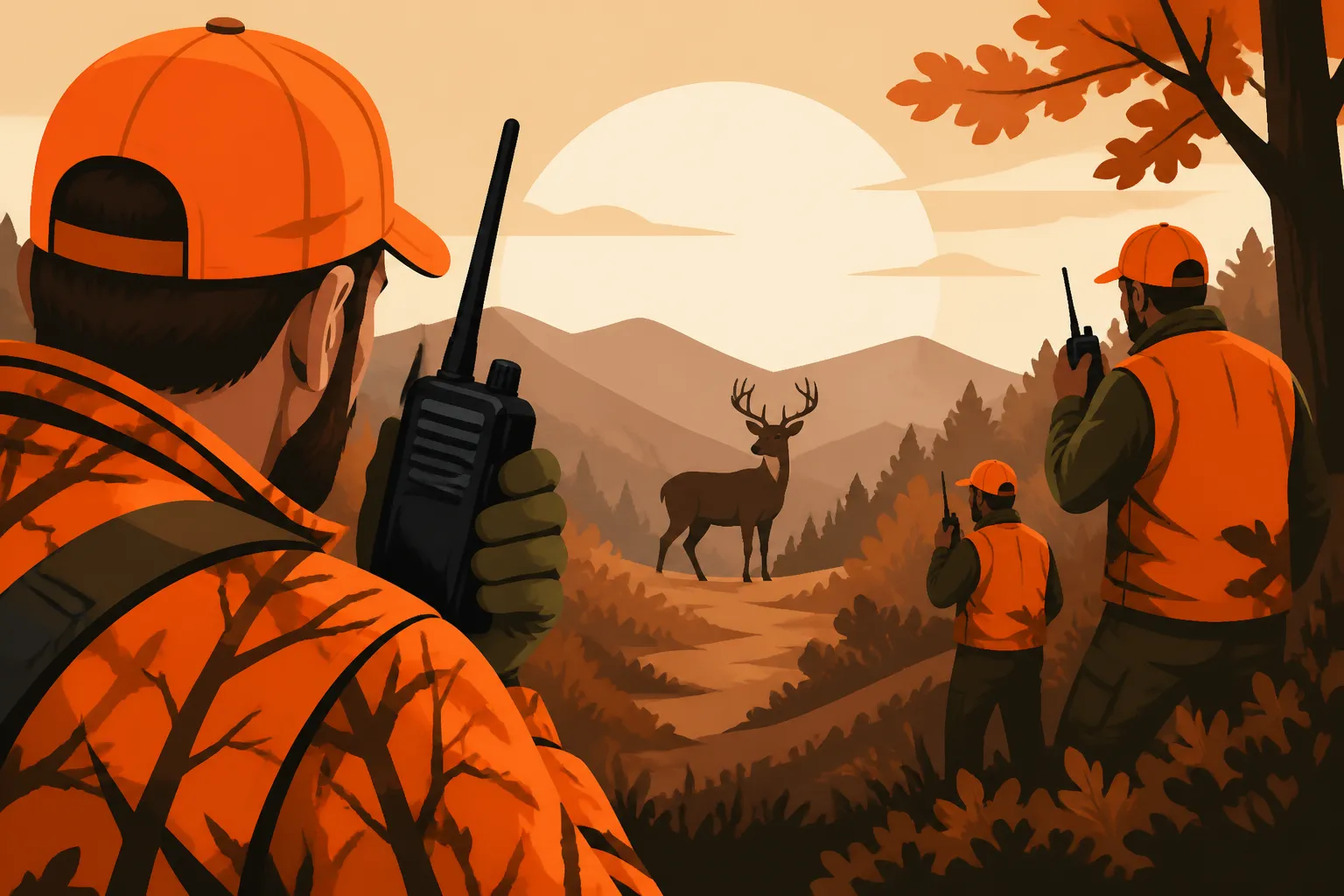
There's nothing quite like the camaraderie and strategic thrill of a well-executed deer drive in Tennessee. But let's be honest, the biggest hurdle often isn't the deer itself; it's the maddening struggle to communicate effectively when you're spread out across a thick bottomland or navigating steep, timbered ridges. Shouting across a hollow or relying on hand signals just doesn't cut it, leading to confusion, missed opportunities, and even safety concerns. This guide will walk you through how two-way radios can revolutionize your deer drive, ensuring everyone stays connected, safe, and on target.
The All-Too-Common Communication Breakdown on Deer Drives
You've planned your drive meticulously. Everyone knows their starting position, who's pushing, and where the standers are posted. You give the "go" signal, and then… silence. Or worse, a garbled shout from down the ridge that sounds like a foreign language. It's a scenario many Tennessee hunters know all too well, and it's precisely where traditional communication methods fall flat.
Why Traditional Methods Fall Short in Tennessee's Diverse Terrain
Tennessee's landscapes are breathtaking, but they're also incredibly challenging for direct vocal communication. Think about it:
- Thick Cover: Whether you're in the dense honeysuckle of a West Tennessee river bottom or the laurel thickets of the Cherokee National Forest, sound just doesn't travel. Voices are muffled, and visual contact is quickly lost.
- Rolling Hills and Deep Hollers: The Cumberland Plateau is a prime example. A hunter on one side of a deep hollow might as well be a mile away from another hunter just over the next ridge. Sound waves hit obstacles, and even shouting becomes futile. Hunting Cumberland Plateau Ridgelines often means navigating these complex auditory environments.
- Running Water and Wind: A bubbling creek or a stiff breeze rustling through the leaves can easily drown out voices. Add in the inherent noise of moving through the woods – crunching leaves, snapping twigs – and you're fighting an uphill battle. You might be focusing on Wind and Thermals on a Ridge System, but that same wind can carry your voice away from your hunting partners.
This communication void isn't just frustrating; it creates serious safety implications. Drivers might push too fast, or too slow, leaving gaps or overrunning standers. Standers might not know if a deer is truly coming their way or if a fellow hunter is moving into their shooting zone. Without clear, instant communication, every member of the party operates in a bubble, increasing the risk of an accident.
The Hidden Costs of Poor Coordination
Beyond the safety concerns, poor communication directly impacts the success of your hunt.
- Lost Opportunities: Imagine a monster buck breaking out of a thicket, only for the stander to miss it because the driver didn't communicate its exact direction and speed. Or perhaps a small group of deer slips through an undetected gap because two drivers couldn't coordinate their lines. These are deer that could have ended up in your freezer or on your wall.
- Wasted Effort and Time: Deer drives take significant effort. Everyone invests time, energy, and resources. When a drive fails due to a lack of coordination, it feels like all that effort was for nothing. You've spent hours trudging through tough terrain, setting up stands, and the result is a big fat goose egg, simply because a message didn't get through. This can be especially disheartening when you're part of Deer Drives With Three or Four Hunters, where every person's role is critical.
- Team Frustration: Repeated communication breakdowns can sour the entire experience. Hunting is about camaraderie, and when that bond is strained by constant confusion and near-misses, it takes the fun out of it. It can even lead to arguments or reluctance to participate in future drives, which is a shame when deer camp traditions are so important. Tennessee Deer Camp Traditions are built on shared experiences, not frustration.
Choosing the Right Two-Way Radios for Tennessee's Deer Woods
So, you're convinced. Radios are the way to go. But stepping into the world of two-way radios can feel a bit overwhelming with all the acronyms and specs. Let's break down what really matters for your Tennessee deer drives.
Understanding Range and Power: FRS, GMRS, and More
When you look at consumer-grade two-way radios, you'll primarily encounter two categories:
- FRS (Family Radio Service) Radios: These are typically what you find in most retail stores. They are low-power, generally limited to 0.5 watts, and operate on shared frequencies. The big advantage? No license is required. They're great for short-range communication in open terrain, but those "up to 30 miles" claims on the box are wildly optimistic in real-world hunting scenarios. Think more like half a mile to a mile in typical Tennessee woods, and that's on a good day.
- GMRS (General Mobile Radio Service) Radios: These are more powerful, often transmitting at 5 watts or more, which significantly extends their effective range. The trade-off is that GMRS radios require a license from the FCC. It's not a difficult process, usually a single fee for a license that covers your entire family for a set number of years, but it's a step you'll need to take. For serious deer drives, especially in larger, more rugged areas like those found when Hunting West Tennessee Bottomland Deer or in parts of the Cherokee National Forest Hunting, GMRS radios offer a much more reliable signal.
It's crucial to understand that terrain is king when it comes to radio range. Any hill, dense timber, or thick underbrush will significantly reduce your effective range. Those advertised maximums are usually measured line-of-sight in ideal, flat conditions, which is rarely what you get in the Tennessee woods. For those serious about their gear, online resources like GoHunt offer detailed reviews and comparisons of rugged outdoor communication devices, often including field tests that give a more realistic picture of performance in varied terrain.
Key Features for the Deer Hunter
Beyond just range, certain features make a radio truly useful for hunting:
- Hands-Free Operation (VOX): This is a game-changer. Imagine trying to hold a rifle, stay quiet, and simultaneously operate a push-to-talk button when a deer is approaching. VOX (Voice Activated Exchange) allows the radio to transmit when it detects your voice, freeing up your hands. Make sure to test it to find the right sensitivity level, so you're not transmitting every rustle of your jacket.
- Privacy Codes (Sub-channels): These don't encrypt your conversation, but they filter out chatter from other radio users on the same main frequency. This is invaluable on public land where other hunting parties or hikers might be using radios. Selecting a less common channel and a privacy code will help keep your conversations clear and private.
- Weather Resistance: Tennessee weather can be unpredictable. A sudden downpour can quickly ruin electronics. Look for radios with an IP (Ingress Protection) rating, which indicates their resistance to dust and water. An IPX4 rating means it can handle splashes from any direction, while higher ratings like IPX7 mean it can be submerged.
- Durability: You're going to drop it. It's going to get bumped, scraped, and sat on. A rubberized, rugged casing is a huge plus. When you're comparing models, check out what serious hunters on platforms like GoHunt are recommending for durability and ease of use in cold, wet conditions.
- Battery Life: A radio is useless if it dies halfway through the drive. Look for radios with long battery life or the ability to use standard AA/AAA batteries as a backup. Carrying extra batteries is always a smart move.
- Ease of Use with Gloves: Fumbling with tiny buttons with cold, gloved hands is incredibly frustrating. Look for radios with large, tactile buttons that are easy to operate even when you're bundled up for a late-season sit. Cold-Weather Sitting Strategy in Tennessee often involves bulky gloves, so this detail matters.
Here's a quick comparison of common radio types:
| Radio Type | Power Output | License Required | Typical Range (Wooded) | Key Advantage | Key Disadvantage |
|---|---|---|---|---|---|
| FRS | 0.5 Watts | No | 0.5 – 1 Mile | Easy to use, no license | Limited range, lower power |
| GMRS | Up to 50 Watts | Yes (FCC) | 1 – 3 Miles+ | Greater range and power | Requires license |
Note: Range estimates are highly dependent on specific terrain and conditions.
Mastering Communication for a Successful and Safe Drive
Having the right radios is only half the battle. Knowing how to use them effectively and integrating them into your drive strategy is what truly makes a difference. This involves careful planning and disciplined communication during the hunt.
Pre-Drive Planning: Setting the Ground Rules and Channels
Before you even step into the woods, a thorough planning session is crucial. This includes mapping out your drive, which many hunters find incredibly easy with the detailed mapping applications, some of which integrate with platforms like GoHunt, to mark hunter positions and anticipated deer movement.
- Assigning Roles: Clearly define who is a "driver" (the person pushing the deer) and who is a "stander" (the person waiting for the deer). Each role has different responsibilities and communication needs.
- Designating Channels and Codes: Choose a primary radio channel and a specific privacy code for your group. Have a backup channel ready in case of interference. Make sure everyone knows these settings by heart.
- Establishing Codewords and Brevity: Develop a simple set of codewords for common situations. For example, "Movement East" could mean deer sighted moving east, or "Hold Position" if a stander needs a driver to slow down. Emphasize brevity; don't chat unnecessarily over the air. Keep communication clear and to the point.
- Confirming Readiness with Radio Checks: Before the drive begins, do a full radio check. Have everyone confirm they can transmit and receive clearly from their starting positions. This also allows you to troubleshoot any issues before the action starts.
- Defining Zones and Boundaries: Use maps to show everyone the exact boundaries of the drive area, where standers will be positioned, and the general path of the drivers. This helps prevent hunters from getting disoriented and ensures everyone stays within safe shooting lanes. This kind of Scouting Tennessee Public Land Before Season is invaluable for planning.
Real-Time Coordination: What to Communicate and When
During the drive itself, disciplined communication is paramount.
- Movement Updates from Drivers: Drivers should periodically check in, especially if they are moving through particularly dense cover or making a significant change in direction. Simple updates like "Driver One moving steady, approaching thicket," or "Driver Two paused, waiting for movement" keep everyone informed.
- Sightings and Direction of Deer from Standers: This is where the magic happens. A stander who spots deer should immediately communicate: "Stander Three, I have three deer, does, moving west towards Driver Two." Or, "Stander One, buck sighted, big rack, moving fast across the saddle, heading towards Stander Four." This allows other standers to anticipate movement and drivers to adjust their push.
- Safety Calls: The most critical use of radios is for safety. If a driver needs to stop for any reason (e.g., another hunter unexpectedly appears, difficult terrain), they should announce it immediately: "All stations, Driver One stopped, hold position until further notice." Similarly, if a stander sees something unsafe, they can call it out. This is especially important when Deer Drives With Three or Four Hunters are pushing through dense areas.
- Battery Management: Encourage everyone to start with fully charged radios. If anyone notices their battery getting low, they should communicate it to the group so a backup plan can be made, or they can switch to backup batteries if carried.
Using two-way radios correctly during a drive transforms it from a chaotic guessing game into a coordinated team effort, dramatically increasing your chances of success and, more importantly, safety.
Safety First: Using Radios Responsibly in the Field
Two-way radios are powerful tools, but they are just that – tools. They enhance safety and coordination, but they do not replace fundamental hunting safety practices or situational awareness.
Maintaining Situational Awareness Beyond the Airwaves
Even with crystal clear communication, every hunter must remain constantly aware of their surroundings.
- Radios are a Tool, Not a Replacement for Vigilance: Don't let the radio become a distraction. Your primary focus should always be on your immediate environment: listening for deer, scanning your shooting lanes, and identifying potential hazards. The radio should be used for specific, concise updates, not continuous chatter.
- Knowing Your Shooting Lanes and Backstops: Before the drive starts, and as deer approach, always re-evaluate your shooting lanes. What's behind that deer? Is there a safe backstop? Never take a shot if you're not 100% certain of your target and what's beyond it. Radios can inform you of hunter locations, but they can't see the terrain from your perspective.
- Always Identifying Your Target: This is the golden rule of firearms safety. Even if your buddy on the radio says a buck is headed your way, you must visually confirm it's a deer and an ethical shot before pulling the trigger. Never shoot at sound or movement.
- Blaze Orange Requirements: In Tennessee, How Much Blaze Orange Tennessee Requires is clearly defined, and it's there for a reason. Radios improve communication, but high-visibility clothing remains essential for ensuring everyone in the party, and any other hunters in the area, can see each other.
Troubleshooting Common Radio Issues in the Woods
Even the best gear can encounter problems in the field. Knowing how to quickly troubleshoot common issues can save a hunt.
- Battery Drain: Cold weather can significantly reduce battery life. Always carry spare batteries or a portable charger. If your radio has a "battery saver" mode, enable it.
- Signal Interference: Sometimes, another group might be on your channel, or terrain might create dead zones. If communication becomes garbled, try switching to your pre-designated backup channel. If a certain area consistently has poor reception, make a note of it for future drives. This is where Finding Ground Others Walk Past comes into play; sometimes, the most remote areas also have the trickiest signals.
- Water Damage: Even weather-resistant radios can fail if fully submerged or exposed to prolonged, heavy rain without protection. Keep your radio inside your coat or a waterproof pouch when not in active use during inclement weather. Check seals and covers regularly.
- Microphone Issues: Dirt or moisture can get into the microphone or speaker, making communication unclear. Keep these areas clean. If you're using a headset or external mic, ensure those connections are secure. Often, resources like forums or product guides found through a quick search on sites like GoHunt can offer quick fixes for common issues.
By taking these proactive steps and remembering that radios are an enhancement to, not a replacement for, sound hunting judgment and safety practices, you can ensure your next Tennessee deer drive is both successful and safe.
Disclaimer
This article is for general informational purposes only and does not constitute professional advice. Laws, prices and regulations vary by location and change over time. Consult a qualified professional for guidance on your specific situation.