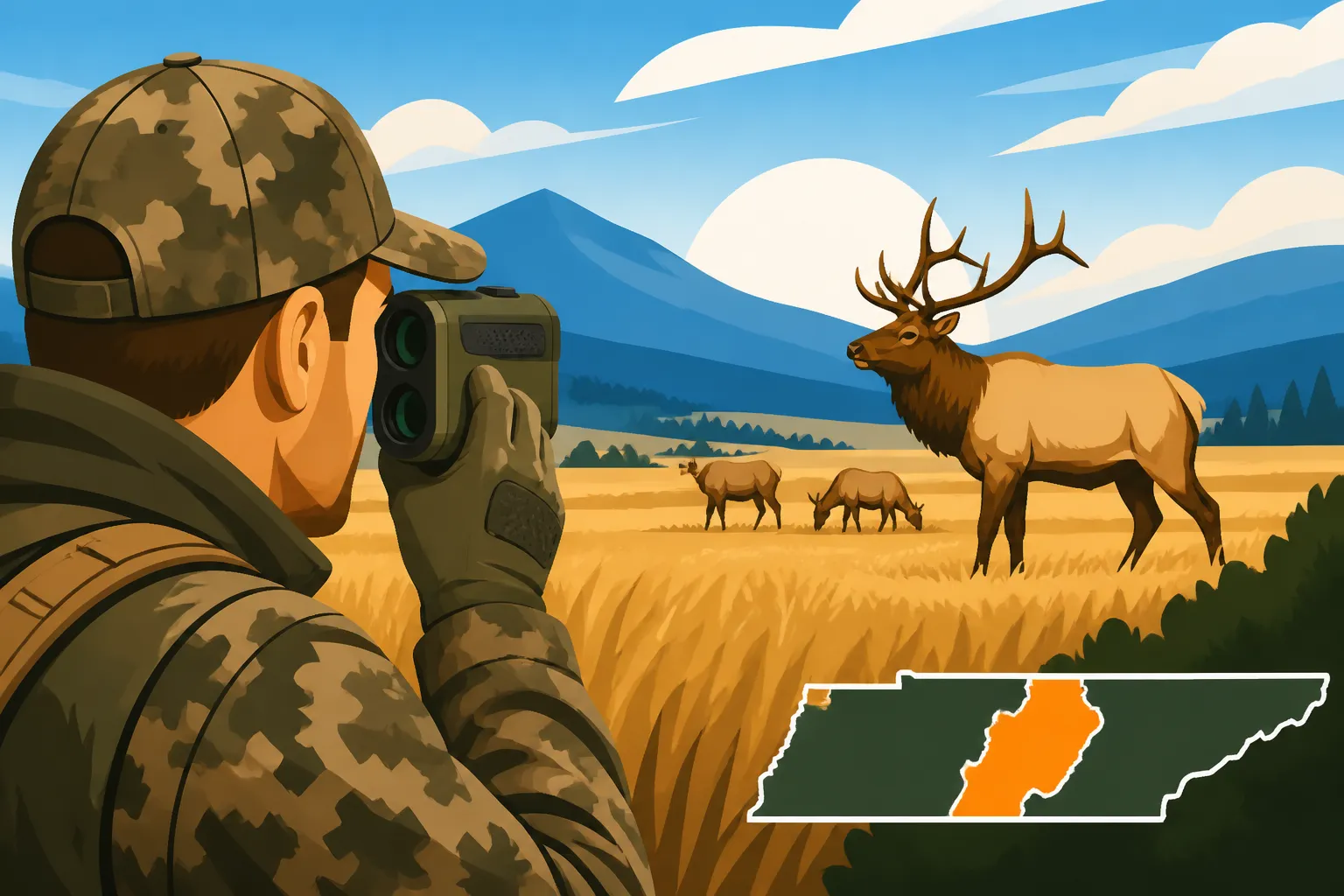
Rangefinders for Open Elk Meadows
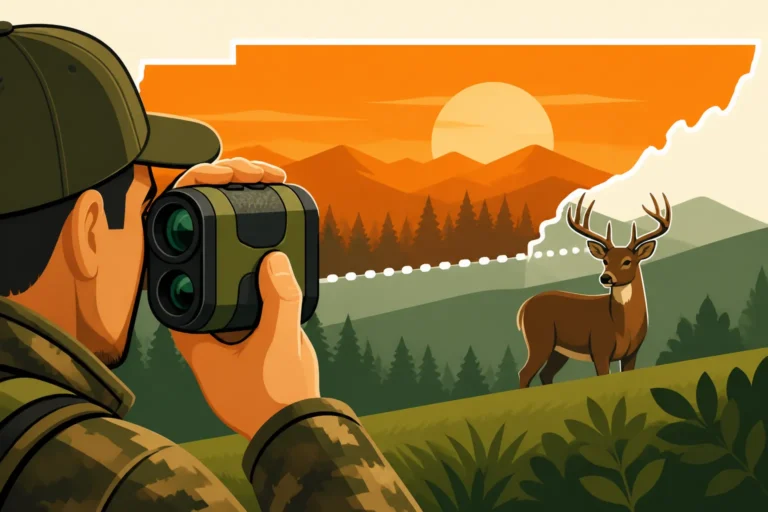
There's nothing quite like the rush of spotting a magnificent bull elk across a sprawling North Cumberland meadow, but that initial excitement can quickly turn to anxiety when you're trying to judge an ethical shooting distance. The rolling hills, the vastness of the openings, and even the size of the animal itself can play tricks on your eyes, leading to misjudged shots and potentially heartbreaking outcomes. This guide is dedicated to helping you understand why a quality rangefinder isn't just a nice-to-have, but an essential piece of gear for hunting Tennessee's wild elk, and how to use it to ensure you make the most of your hard-earned opportunity.
The Indispensable Tool for North Cumberland Elk
Hunting elk in Tennessee's North Cumberland Elk Restoration Zone is a truly unique experience, far different from pursuing whitetails in dense timber. Here, you'll encounter expansive reclaimed mining lands, long powerline cuts, and large clearings that offer breathtaking views – and often, very long shots. The terrain itself, with its deep hollows and steep ridges, means that even a seemingly close elk can be at a much greater distance, or on a severe angle, that dramatically impacts your bullet's trajectory. This is precisely why a reliable rangefinder moves from being a convenience to an absolute necessity.
Think about it: you've put in the countless hours scouting, practicing your calls, and maybe even been drawn for one of the coveted Tennessee Elk Quota Hunt Rules permits. When that moment comes, and a bull steps out into an open meadow, your adrenaline will be pumping. In that high-pressure situation, attempting to eyeball a distance, especially over 200 yards, is a recipe for disaster. What looks like 300 yards could easily be 400, or vice-versa, and with powerful elk rifles, even a small error in distance can mean the difference between a clean kill and a missed opportunity or, worse, a wounded animal. These animals are massive, and while they present a larger target than a deer, the vitals are still a relatively small area, demanding precision. The vastness of these landscapes also means elk can cover ground quickly, requiring rapid, accurate range estimation.
Decoding Rangefinder Features for Elk Success
Not all rangefinders are created equal, and for the specific demands of elk hunting in North Cumberland's open meadows, you'll want to prioritize certain features. This isn't just about getting a number; it's about getting the right number, quickly and reliably, under varying conditions. When you're making a significant investment in a hunt, the tools that enable success are paramount.
Ranging Capability and Speed
When you're glassing vast stretches of open country, an elk might appear at considerable distances. For effective elk hunting, your rangefinder needs to be able to accurately range an elk-sized target out to at least 800-1000 yards, and ideally even further for scouting or understanding the broader landscape. More importantly, it needs to do this fast. An elk isn't going to stand still waiting for your rangefinder to lock on. Look for models with quick acquisition times, often advertised as sub-second readings. A "scan mode" is also incredibly valuable, allowing you to continuously range multiple targets or move the crosshairs across an animal to get the most accurate reading, especially if it's moving or partially obscured by brush.
Furthermore, angle compensation is a non-negotiable feature for Tennessee's mountainous and hilly terrain. When shooting uphill or downhill, gravity affects the bullet differently, making the "horizontal equivalent distance" (or angle-compensated distance) the true ballistic distance you need for an accurate shot, not the line-of-sight distance. Many modern rangefinders now include this feature, automatically calculating and displaying the corrected range. Trust me, overlooking this feature could lead to high or low shots when that bull is standing on a steep hillside.
Optical Quality and Magnification
Just like your binoculars, the optical quality of your rangefinder matters, especially when you're trying to pick out an elk at long distances or in low light. Clear, bright glass with good light transmission makes it easier to spot your target and get a precise reading. Most hunting rangefinders offer 6x or 8x magnification, which is a good balance between helping you spot and steady the unit for an accurate range, without being so powerful that it makes it difficult to hold steady handheld.
Consider how well the display itself is designed. Is the reticle clear and easy to see against varying backgrounds? Does it have adjustable brightness settings for bright midday sun or fading evening light? Some rangefinders offer red LED displays, which are excellent in low-light conditions but can sometimes be a bit too bright at dawn or dusk. Conversely, black LCD displays can be hard to see against dark timber. The best models will offer options to adjust for these conditions. As you're looking for gear, a site like GoHunt can be a great resource for comparing optical specs and user reviews, helping you narrow down your choices based on real-world performance.
Durability and Ergonomics
Elk hunting in the North Cumberland often means tough conditions. You'll be hiking through rough terrain, sometimes in unpredictable weather. Your rangefinder needs to be built to withstand that. Look for a rugged, shockproof housing, ideally rubber-armored for a secure grip and extra protection. Waterproofing is essential – a sudden Tennessee downpour can ruin unprotected electronics. Fog-proof optics are also critical to ensure a clear view when temperatures fluctuate.
Ergonomics play a huge role in practical use. Can you comfortably hold the rangefinder with one hand and operate the buttons, even with gloves on? Is it lightweight enough to carry all day without becoming a burden, yet substantial enough to feel steady in your hand when you're ranging a distant animal? Some rangefinders are designed to be compact, fitting easily into a chest harness or bino pouch, which keeps them readily accessible when an opportunity arises. The last thing you want is a clunky device that's hard to deploy quickly.
Mastering Your Rangefinder in the Field
Having a great rangefinder is only half the battle; knowing how to use it effectively in the heat of the moment is just as important. It's about building a habit and integrating it seamlessly into your hunting routine. The more you practice with it, the more natural it will feel when that trophy bull steps into view. This critical skill is honed before you even set foot in the North Cumberland Wildlife Management Area.
Pre-Hunt Preparation
Your preparation for an elk hunt in Tennessee should extend far beyond physical conditioning and rifle practice. Before the season even begins, take your rangefinder out to an open area that mimics the terrain you'll encounter in North Cumberland. Practice ranging various objects at different distances and angles. Get a feel for how quickly you can acquire a target and get a reading. This is also the time to understand your rifle's ballistic performance. Don't just know your zeroes; know your bullet drop at 100, 200, 300, 400 yards, and beyond. Create a small ballistic card that you can attach to your rifle stock or carry with your rangefinder. Sites like GoHunt often have tools or articles that can help you generate these custom ballistic tables for your specific caliber and load.
Additionally, when you're scouting, use your rangefinder to mark known distances to prominent features like specific trees, rock formations, or saddles that might serve as natural funnels or bedding areas. This way, if an elk appears in one of those spots, you'll already have a good idea of the range. For example, if you're Reading a Ridge for East Tennessee Deer, apply that same principle to elk habitat, identifying key reference points and their distances. Knowing these ranges beforehand can reduce stress and speed up your decision-making when it truly counts.
In-the-Field Tactics
When you're actually on the hunt, the rangefinder should be an extension of your eyes. As soon as you spot an elk, the first thing you should do, after confirming it's an ethical shot opportunity, is range it. Don't assume. Even if you think it's a short shot, confirm it. If the elk is moving, use the scan mode to get continuous readings. If the animal is standing in open ground, range the ground immediately below or behind it to avoid ranging a distant tree. If the elk is partially obscured, try ranging nearby clear objects, like a tree trunk or a rock, that are clearly at the same distance as the animal.
Always range before you commit to a shot. If you're using shooting sticks or a bipod, range the target, then get into your shooting position, double-check your range if possible, and then make the shot. Keep your ballistic card handy. When a bull is bugling and coming in, you might have time to range specific trees or bushes between you and where you anticipate the elk will appear. This "pre-ranging" can shave precious seconds off your reaction time. Even when Calling a North Cumberland Bull Elk, knowing the distances to various patches of cover can help you anticipate their approach.
Integrating with Binoculars
Many elk hunters choose to carry a separate rangefinder alongside their primary binoculars. This setup offers flexibility, allowing you to use high-quality binoculars for long-distance Optics for Glassing Elk Meadows and a dedicated rangefinder for precise measurements. However, rangefinding binoculars have become incredibly popular, combining both functions into one unit. This can reduce bulk and the number of items you need to juggle, which is a real advantage when you're trying to move stealthily through rough terrain.
The downside to rangefinding binoculars is often the cost and sometimes a slight compromise in either optical quality or ranging performance compared to dedicated units. Before investing, try out both options if possible. Consider your personal hunting style: do you prefer separate units for maximum performance in each category, or the streamlined convenience of an all-in-one device? Whichever you choose, ensure the optics are clear, and the ranging function is fast and accurate for those crucial moments.
Choosing the Right Rangefinder for Your Elk Hunt
Making the final decision on a rangefinder involves weighing features against your budget and specific hunting needs. Don't fall into the trap of thinking "more expensive equals better" automatically, but also understand that a cheap rangefinder might fail you when it matters most. For such an important hunt, this is not an area to cut corners.
Feature-to-Value Assessment
Consider what features truly provide value for elk hunting. As discussed, long-range capability, angle compensation, fast acquisition, and durability are paramount. Beyond that, evaluate the display: some offer advanced ballistic calculators built-in, which can be fantastic for dialing in a precise shot, but might be overkill if you prefer to use a simple ballistic chart. You might see terms like "equivalent horizontal range" (EHR) or "true ballistic range" (TBR) – these all refer to angle-compensated distance, and it's what you want.
When researching, explore reputable brands that have a proven track record in the hunting industry. There are many excellent manufacturers producing rangefinders suitable for elk hunting. Look for detailed product specifications and read reviews from other hunters. Platforms like GoHunt can be invaluable here, providing unbiased gear reviews and comparisons, helping you understand the real-world performance of different models before you buy. They often highlight the strengths and weaknesses that are most relevant to big game hunters.
Budgeting for Success
Rangefinders vary wildly in price. You can find basic models for a relatively low cost, but these often lack the long-range capability, optical clarity, or durability required for serious elk hunting. On the other hand, top-tier rangefinding binoculars can command premium prices. Aim for a middle-to-high-tier dedicated rangefinder, or a mid-tier rangefinding binocular, if your budget allows. This segment typically offers a strong balance of performance, features, and reliability without breaking the bank.
Think of your rangefinder as an investment in ethical hunting and success. A missed shot due to an inaccurate range is far more costly than spending a bit more on quality optics and electronics. While specific prices change, understand that you'll likely want to allocate a decent portion of your gear budget to this crucial tool. It's often wiser to save on other less critical items if it means getting a rangefinder that you can truly rely on when that North Cumberland bull steps into your shooting lane.
Here's a quick comparison of common rangefinder features that are essential for elk hunting:
| Feature | Basic Rangefinder (Entry-Level) | Mid-Tier Rangefinder | High-End Rangefinder / Bino | Importance for Elk Hunting |
|---|---|---|---|---|
| Max Ranging (Elk-Sized) | 400-600 yards | 800-1200 yards | 1500+ yards | Critical: Elk in open meadows can be very distant. |
| Angle Compensation | Often absent | Standard | Standard, highly accurate | Critical: North Cumberland has steep terrain, affecting ballistics. |
| Optical Clarity | Fair | Good, clear | Excellent, HD glass | High: Spotting and ranging at long distances and low light. |
| Magnification | 4x-6x | 6x-8x | 8x-10x | High: Balancing target acquisition and steady hold. |
| Speed/Scan Mode | Slow, basic scan | Fast, reliable scan | Instantaneous, advanced scan | Critical: Elk move; quick reads prevent missed opportunities. |
| Durability/Waterproofing | Splash resistant | Weather-sealed, robust | Fully waterproof, armored | High: Demanding conditions in Tennessee. |
| Display Type | Black LCD | Red LED or selectable color | Advanced, user-adjustable | High: Visibility in varying light conditions. |
| Ballistic Calculator | None | Basic equivalent distance | Advanced, customizable profiles | Optional but useful: Helps with precise holdovers. |
Investing in a good rangefinder is an investment in your success and, more importantly, in making an ethical, clean shot. Do your homework, consider the specific challenges of Hunting Tennessee's Restored Elk Herd, and choose a tool that will serve you well when your moment arrives.
Disclaimer
This article is for general informational purposes only and does not constitute professional advice. Laws, prices and regulations vary by location and change over time. Consult a qualified professional for guidance on your specific situation.