Climbing Sticks for Rough Bark
Oh, the joy of finding that perfect oak, the one with the gnarly, deeply fissured bark that screams "deer highway!" only to wrestle with your climbing sticks, watching them slip, slide, and refuse to bite into the trunk. It's a frustration many Tennessee hunters know all too well, especially when you're trying to get set up quietly and securely before first light. This guide is all about tackling that common problem, helping you understand why some sticks just don't cut it on rough bark, and what features and techniques will make your ascent safer, quieter, and much less aggravating.
The Challenge of Rough Bark in Tennessee's Woods
Tennessee's diverse landscape means we're dealing with a wide variety of trees, each presenting its own unique challenge when it comes to treestand setups. From the ridges of the Cumberland Plateau to the river bottoms of West Tennessee, the bark can be your best friend or your worst enemy.
Understanding Tennessee's Timber Diversity
If you've spent any time in the woods here, you know we've got everything from stately hardwoods to sprawling pine plantations. Each species offers a different kind of "grip" for your climbing sticks. Take the mighty oaks, for instance – white oaks, red oaks, scarlet oaks – their bark is often deeply furrowed, almost like a miniature canyon system. While those furrows can offer some purchase, they can also be too wide for standard stand-offs to bridge, leaving your stick to rock and pivot. Then there are the hickories, with their shaggy, peeling plates that look like they're just waiting to shed under pressure. Or consider the pines and poplars, which might have smoother sections but often feature knots, scars, and peeling scales that create uneven contact points.
These varying textures mean that a climbing stick designed for relatively smooth, uniform trunks in a different region might struggle immensely here. Imagine trying to get a solid purchase on a massive old white oak, its bark like corrugated iron, with sticks that only have shallow, smooth contact points. It’s not just inefficient; it’s genuinely unnerving when you’re thirty feet up. Many hunters spend frustrating minutes trying to get a stick to feel truly locked in, wasting precious hunting time and often sacrificing a little bit of confidence in the process. You want to focus on the hunt, not whether your stick is going to shift.
Common Frustrations with Standard Climbing Sticks
It’s a tale as old as time for treestand hunters: you find your ideal tree, start setting up, and immediately realize your sticks aren't cooperating. Standard climbing sticks often come with stand-offs—those pieces that push against the tree—that are either too small, too smooth, or spaced incorrectly for irregular bark. The result? The stick doesn't sit flush. It might pivot side-to-side, or worse, try to slide down the trunk even after you've cinched the strap as tight as humanly possible. The cam buckle might grip the strap just fine, but if the stick itself isn't biting into the bark, you're left with a wobbly, insecure ladder.
Another huge frustration is the noise factor. Trying to adjust a slipping stick, or having one creak and groan as you put your weight on it, is a sure way to alert every deer within a hundred yards that you're in their bedroom. This can be especially problematic during the early archery season when the woods are dry and crunchy, or when you're trying to get a jump on that big buck you've been Reading a Ridge for East Tennessee Deer. The lack of confidence isn't just about noise; it's about safety. No one wants to feel precarious high up in a tree. Hunters want gear that inspires confidence, that allows them to ascend silently and efficiently, especially when those precious minutes before legal shooting light are ticking away.
Key Features of Climbing Sticks Designed for Rough Bark
Thankfully, gear manufacturers have heard our cries of frustration and started designing climbing sticks with challenging bark in mind. These aren't just aesthetic changes; they're functional innovations that make a real difference in the field.
Advanced Bark-Gripping Technology
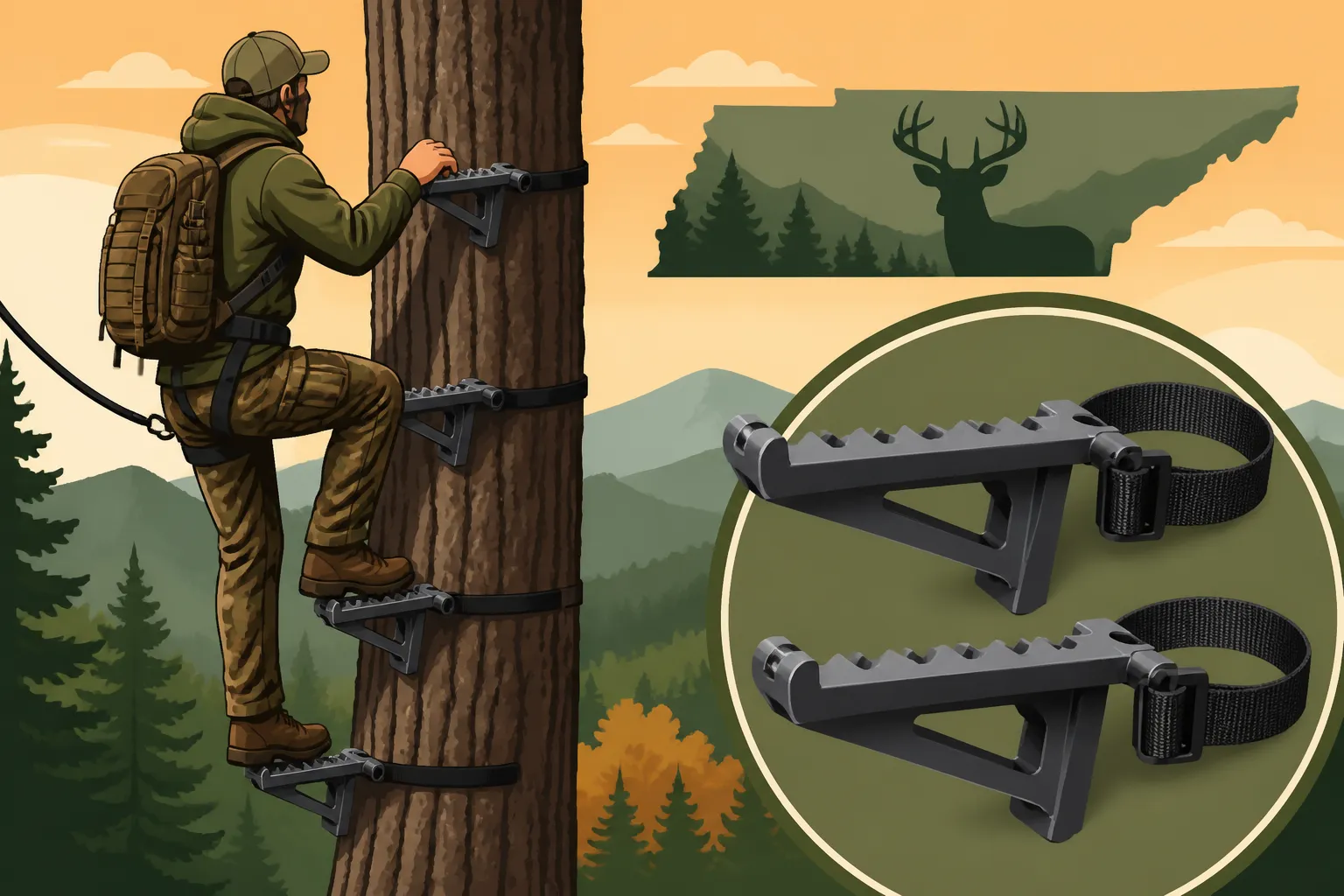
When you're looking for sticks that can handle Tennessee's gnarly trees, the first thing to inspect is the stand-offs and how they interact with the bark. Many advanced sticks now feature aggressive, serrated teeth or deep, V-shaped grooves on their stand-offs. These aren't just for show; they're designed to dig into those deep furrows and irregular surfaces, creating multiple bite points instead of relying on a single, potentially unstable contact. Some models even have oversized stand-offs, sometimes called "double-sided" or "wide-stance" designs, that spread the load and offer more contact area, making them less prone to pivoting on a lumpy trunk.
Beyond the stand-offs themselves, pay close attention to the strapping system. Innovative designs might incorporate a high-friction material on the strap itself or have small, integrated teeth on the strap buckle that really lock down when tension is applied. Wider straps can also distribute pressure more effectively, reducing the chance of slipping. For example, some systems found through a quick search on a site like GoHunt might show proprietary strap designs with textured surfaces or clever cam buckles that multiply the gripping power. This combination of aggressive stand-offs and a robust, non-slip strap system is what gives these sticks their superior purchase on even the roughest oak bark.
Enhanced Stability and Security
The primary benefit of these specialized features is a dramatic increase in stability and security. When your climbing stick has multiple points of contact that dig into the bark, it significantly reduces both vertical slippage and horizontal wobble. This means less creaking, less shifting, and less nerve-wracking movement as you climb. Instead of feeling like you're balancing on a greased pole, you get a solid, confident footing with each step. This enhanced security isn't just about comfort; it's a critical safety feature. A stable stick reduces the risk of an accidental slip or fall, which can have dire consequences.
Furthermore, this improved stability translates directly into quieter setups. When a stick locks firmly into place with minimal fuss, you don't have to fight it, re-adjust it, or make excessive noise tightening straps. This stealth factor is huge, especially when you're hunting deer in areas with high Hunting Pressure on Tennessee Public Land, where every little sound can give you away. Knowing your sticks are rock-solid allows you to focus on the task at hand – getting into your stand silently and safely – rather than constantly worrying about your equipment. It builds confidence from the ground up, letting you ascend with purpose and arrive at your stand ready to hunt.
Setting Up Your Sticks on Difficult Trees
Even with the best gear, a little strategy goes a long way. Setting up climbing sticks on rough bark requires careful tree selection and precise installation techniques to get the most out of your equipment.
Pre-Season Scouting and Tree Selection
Before you even think about hauling your sticks into the woods, take some time to scout. During the off-season, when leaves are down, it's the perfect opportunity to identify potential stand trees. While specialized climbing sticks can handle rough bark, you still want to pick the "easiest" challenging tree you can find. Look for sections of the trunk that are relatively straight and free of large knots, excessive shaggy bark, or other major irregularities that could prevent a solid, flush contact with your stick's stand-offs. You might be able to get by with a slightly rougher patch higher up, but the lower sticks, where you're putting a lot of initial weight and leverage, need to be as stable as possible.
Using a tool like the GoHunt app on your phone, you can mark potential stand trees on an aerial map and even take notes on their bark characteristics. This kind of pre-work can save you a ton of headache come hunting season. If you're hunting in areas like the Cumberland Plateau Ridgelines, where certain trees might dominate, it's wise to practice setting up on a variety of local species. Understand how your specific sticks interact with the bark of a shaggy hickory versus a deeply furrowed white oak. This proactive approach ensures that when opening day arrives, you're not fumbling in the dark, trying to force a bad fit.
Proper Installation Techniques for Maximum Grip
Installing your sticks correctly is paramount, especially on challenging bark. Start with the lowest stick, positioning it so that the stand-offs get the best possible bite into the bark. For deeply furrowed trees, try to nestle the stand-offs into the deepest grooves. For shaggy bark, ensure the stand-offs are pushing through the loose layers to the solid wood underneath. Once the stick is positioned, cinch down the cam strap as tightly as you possibly can. Don't be shy here – leverage your weight, and make sure that strap is truly taut.
After tightening, give the stick a good push and pull, testing it with your full weight before you even think about climbing. It should feel absolutely rock-solid, with no detectable wobble or slippage. If it moves, reposition and re-tighten. Continue this process for each subsequent stick, always ensuring the one below it is secure before you climb higher. Many hunters find it helpful to stagger their sticks slightly left and right, creating a more natural climbing path and allowing easier access to the tree with their non-dominant hand. This also lets you maintain better balance as you ascend. Remember, the goal is not just to get up the tree, but to do so safely, quietly, and with unwavering confidence in your gear.
Maintenance and Inspection for Longevity
Your climbing sticks, especially those with advanced gripping features, need regular attention to perform their best season after season. The aggressive teeth and specialized straps that excel on rough bark can also collect debris, and straps can wear over time. After each hunt, particularly if you've been in muddy or wet conditions, take a moment to wipe down your sticks. Remove any mud, dirt, or bark fragments from the stand-offs and strap mechanisms. Dirt can clog the teeth and reduce their effectiveness, while mud on straps can make them stiff and less pliable.
Periodically, inspect your cam straps for any signs of fraying, cuts, or excessive wear. The integrity of these straps is non-negotiable for safety. If a strap looks compromised, replace it immediately. It's a small investment compared to the risk of a fall. Also, check all connection points, bolts, and welds on the sticks themselves for any damage or loosening. Regular inspection ensures that your sticks remain reliable and safe. Proper storage during the off-season, such as hanging them in a dry place where straps aren't exposed to prolonged UV light or extreme temperatures, will also extend their life and ensure they're ready to perform on those tough Tennessee trees when the season rolls around again.
Choosing the Right Sticks: What to Look For
With so many options on the market, selecting the perfect climbing sticks for Tennessee's rough bark can feel overwhelming. Let's break down the critical factors to consider.
Material and Weight Considerations
Climbing sticks are typically made from either aluminum or steel. Each has its advantages and disadvantages, especially when you consider the terrain and hunting style common in Tennessee. Aluminum sticks are, generally speaking, much lighter. This is a huge benefit if you're frequently walking long distances into public land, such as through the Cherokee National Forest or into those remote corners of a WMA where Finding Ground Others Walk Past is the key to success. A lighter pack means less fatigue, allowing you to go further and stay longer. The trade-off is often a slightly higher price point and, in some cases, a perception that they might not be as durable as steel. However, modern aluminum alloys are incredibly strong.
Steel sticks, on the other hand, are renowned for their rugged durability and often come at a more budget-friendly price. They can handle a lot of abuse and might offer a more rigid feel during the climb. The downside, of course, is the weight. Hauling heavy steel sticks up and down the steep hollows and ridges of the Cumberland Plateau can be exhausting, especially if you're carrying a lot of other gear. Your choice here should really depend on how much you prioritize weight savings versus absolute strength and cost. Consider your average hike in and out, and how many sticks you typically carry.
Stand-Off Design and Strap System
This is arguably the most crucial factor when dealing with rough bark. Look for stand-offs that are specifically designed for maximum bite. This means aggressive, sharp teeth or deep, wide V-shaped grooves that can truly dig into irregular bark patterns. Some sticks feature a "double-post" or "dual" stand-off design, where two points of contact are spread further apart, offering enhanced stability and less pivot on uneven surfaces compared to a single, centered post. The more contact points that are actively gripping the bark, the more secure your ascent will be.
The strap system is the other half of this equation. Beyond just being strong, the strap and buckle need to facilitate a very tight, non-slip connection. Many hunters prefer cam buckle systems that are quick and easy to use, even with cold hands or gloves. Some premium sticks, which you might find featured on sites like GoHunt when researching gear, boast proprietary strap materials that enhance friction, or buckle designs that offer an unparalleled mechanical advantage for tightening. Make sure the strap is long enough to accommodate larger trees but can also be cinched down tightly on smaller ones without excess flapping that could make noise.
| Feature | Benefit for Rough Bark | Consideration |
|---|---|---|
| Aggressive Teeth | Digs into deep furrows and irregular surfaces | Can scratch bark, ensure proper material for durability |
| Oversized Stand-offs | Spreads contact, reduces pivot on lumpy trunks | May add slightly more bulk, ensure good spacing |
| High-Friction Straps | Minimizes slippage even when wet, locks down tight | Check for wear and tear, replacement cost |
| Cam Buckle Design | Provides strong mechanical advantage for tightening | Ease of use with gloves, potential for noise if cheap |
| Aluminum Material | Lightweight, ideal for long treks and steep terrain | Often higher cost |
| Steel Material | Extremely durable, generally more affordable | Heavier, more effort for packing in/out |
Portability and Ease of Use in the Field
Even the most robust climbing stick is useless if it's a nightmare to carry or deploy quietly. Portability is key, especially if you're navigating dense underbrush or traversing long distances. Look for sticks that nest together efficiently, forming a compact, easy-to-carry bundle. Many designs feature clever interlocking systems or integrated bungee cords that keep them from rattling or shifting in your pack, preventing that dreaded metallic clang that scares off game.
Ease of deployment and quiet operation go hand-in-hand. You want sticks that can be put up quickly and silently in the dark, without fumbling with awkward straps or noisy adjustments. This is where a simple, yet effective, strapping system shines. Some sticks incorporate magnetic connections or rubberized coatings that help reduce noise during transport and setup. Consider how the stick feels in your hands, how easily the strap feeds through the buckle, and whether you can operate it confidently with gloves on. The quicker and quieter you can get into your stand, the less impact you'll have on the woods around you, increasing your chances of a successful hunt. Whether you're hunting Deer Drives With Three or Four Hunters or trying a Cold-Weather Sitting Strategy in Tennessee, quiet setup is essential.
Disclaimer
This article is for general informational purposes only and does not constitute professional advice. Laws, prices and regulations vary by location and change over time. Consult a qualified professional for guidance on your specific situation.