Saddle Hunting in Tennessee Hardwoods
If you've spent any time chasing whitetails in the often-rugged, always-challenging landscape of Tennessee, you know the frustration of trying to get a traditional treestand into that perfect, elusive spot. Whether it's the steep, unforgiving inclines of the Cumberland Plateau, the dense thickets of the Cherokee National Forest, or the vast, sprawling bottomlands of West Tennessee, finding the right tree and quietly getting a bulky stand set up can feel like an impossible mission. This guide is all about embracing the future of mobile hunting: saddle hunting. We'll dive deep into why this method is gaining so much traction, what gear you absolutely need, and how to master the techniques that will make you a more versatile, stealthy, and ultimately, more successful hunter in Tennessee's diverse hardwoods.
Why Saddle Hunting Shines in Tennessee's Diverse Terrain
Saddle hunting isn't just a fad; it's a strategic shift that offers significant advantages, especially when you're navigating the varied and often challenging terrain found across Tennessee. From the rolling hills of Middle Tennessee to the steep mountain slopes, a saddle can be a game-changer for adaptability and stealth.
The Unmatched Mobility for Public Land Hunters
One of the biggest headaches for any hunter in Tennessee, particularly those relying on public land, is mobility. Traditional hang-on stands, ladder stands, and even climbers can be heavy, cumbersome, and loud to transport. You often find yourself limited to trails or easily accessible areas, which are usually where hunting pressure is highest.
With a saddle, you shed a significant amount of weight and bulk. Your entire setup – saddle, climbing sticks, and platform – can often be carried in a compact backpack, leaving your hands free for your bow or rifle. This lightweight, streamlined approach means you can push deeper into remote pockets of the Cherokee National Forest or explore those overlooked honey holes on a lesser-known Wildlife Management Area (WMA). If that monster buck suddenly shifts his pattern due to acorn crops failing or hunting pressure intensifying, you can literally pack up and move to a new location in minutes, rather than spending an hour or more relocating a traditional stand. This agility allows you to react to changing deer patterns, follow sign, and adapt to the wind, giving you an edge over stationary setups.
Stealth and Concealment in Hardwood Canopies
Tennessee's hardwoods, whether they're vast oak stands or dense mixed timber, offer incredible natural concealment if you know how to use them. Saddle hunting capitalizes on this in ways traditional stands simply can't. When you're in a saddle, you're not sitting on the tree; you're essentially part of the tree. You can move around the trunk, using it as a shield to hide your silhouette from approaching deer. This ability to subtly shift your position, rotating 360 degrees around the tree, allows you to get a shot off even if a deer approaches from an unexpected angle.
Your profile is significantly smaller than someone perched on a traditional stand, making you harder for wary deer to spot. This low-profile nature is particularly advantageous in areas with less undergrowth, where hunters in bulky stands often stick out like a sore thumb. Think about those bare October woods before the leaves fully drop, or the late season with minimal cover; the tree itself becomes your ultimate blind. It allows for quieter movements too, as you're not relying on noisy metal components for adjustments. This inherent stealth, combined with the natural camouflage of a tree trunk, can put you much closer to your target without being detected.
Comfort for Long Hours on the Ridge
Let's be honest: sitting still for hours on end, especially during those chilly November mornings or crisp January afternoons in Tennessee, can be brutally uncomfortable in a traditional stand. The small seat, the awkward angles – it takes a toll. Saddle hunting, however, redefines comfort in the tree. Instead of perching, you're essentially leaning back into a comfortable harness that distributes your weight across your hips and thighs. This natural, seated posture, often resembling a comfortable swing, can drastically reduce fatigue and the dreaded "stand butt."
Many saddle hunters find they can sit longer, more comfortably, and with less fidgeting. This means you can stay focused and alert for extended periods, increasing your chances of spotting movement or hearing that subtle crunch of leaves. When you're comfortable, you're not constantly shifting or stretching, which helps maintain your stealth. For those epic all-day sits during the rut, or when you're Hunting the Rut in Early November, a saddle can make the difference between packing it in early and staying until legal shooting light, waiting for that buck of a lifetime to finally show up.
| Feature | Saddle Hunting Benefits | Traditional Stand Benefits |
|---|---|---|
| Mobility | Ultra-light, packable, quick setup/takedown; allows frequent moves. | Heavier, bulkier; best for semi-permanent or established spots. |
| Stealth | Low profile, 360-degree shooting around tree for concealment. | Higher profile, limited shooting lanes, more exposed. |
| Comfort | Distributes weight evenly, allows leaning/sitting; reduces fatigue. | Small seat, can cause discomfort/fatigue over long sits. |
| Tree Choice | Adaptable to a wider range of trees (leaning, crooked). | Requires straighter, specific diameter trees. |
| Cost | Initial investment comparable to good hang-on, but often more versatile. | Varies widely, can be cheaper for basic models, expensive for advanced. |
| Safety | Always tethered to the tree; prevents falling. | Requires separate harness system, often less continuously connected. |
| Wind/Thermals | Easier to adjust position to accommodate changing conditions. | Fixed position, less adaptable to shifts. |
| Learning Curve | Higher initial learning curve for setup and movement. | Generally simpler setup, more intuitive for beginners. |
Essential Gear for Your Tennessee Saddle Setup
Getting into saddle hunting requires a specific set of gear that prioritizes safety, portability, and functionality. Don't worry, it's not as complex as it might seem, and many pieces of gear are designed to be multi-functional.
The Core Components: Saddle, Sticks, and Platform
Your saddle hunting system revolves around three primary pieces of equipment, each vital for a safe and effective hunt in Tennessee hardwoods.
First, of course, is the saddle itself. This isn't just a glorified climbing harness; it's a carefully designed piece of equipment that provides comfort and support. When choosing a saddle, consider its weight, padding, and the number and placement of attachment points. You'll be wearing this all day, so comfort is paramount. Look for models that allow for easy adjustment, as you'll want to fine-tune the fit for different layers of clothing throughout Tennessee's varied seasons. Brands like Tethrd, Cruzr, and Kestrel offer popular options known for their durability and thoughtful design. Pay attention to the material; quiet fabrics are a must to avoid spooking game.
Next, you'll need climbing sticks. These are the rungs that get you up the tree. Modern climbing sticks are incredibly lightweight and packable, often nesting together for easy transport. They come in various lengths, typically 20-30 inches per stick, and most hunters carry three to four sticks to reach an ideal height of 15-20 feet. When selecting sticks, consider how quietly they deploy and attach to the tree. No hunter wants to sound like a metal shop in the pre-dawn darkness! Look for systems that are quick and secure to attach, crucial for efficiency when you're hunting public land in Tennessee and need to move fast.
Finally, a platform provides a stable, comfortable place for your feet while you're in the saddle. Some hunters opt for an extra climbing stick or a set of aider straps, but a dedicated platform offers unmatched stability and comfort, especially for longer sits. These platforms are designed to be compact and lightweight, easily attaching to the tree once you've reached your desired height. They give you a solid base to push off from when moving around the tree, making shots from different angles much more fluid and controlled. You can even find platforms that double as mini-steps or have integrated features to hold your bow.
Ropes, Tethers, and Safety Lines
Safety is non-negotiable in saddle hunting, and it all comes down to your ropes and lines. You are always connected to the tree, which is a major advantage over traditional stands where there might be moments of disconnect.
The tree tether is your primary connection from your saddle to the tree. This adjustable rope or strap wraps around the tree trunk above your head, allowing you to lean back into the saddle. It’s critical for comfort and allows you to rotate around the tree. The length of your tether will dictate how far you can lean and maneuver. An adjustable friction hitch, like a prusik or blake's hitch, allows for easy height and tension adjustments.
The linesman's belt is your secondary, temporary connection as you ascend and descend the tree. This belt wraps around the tree trunk and attaches to both sides of your saddle, keeping you secure as you place climbing sticks and move upwards. It ensures you're always hands-free and tethered. Using your linesman's belt correctly is a fundamental skill for saddle hunting and provides continuous fall protection. Practice with it at ground level until it becomes second nature.
Always carry a pull rope for hauling up your bow, backpack, and other gear once your saddle and platform are set. Trying to climb with all your gear attached to your body is not only dangerous but incredibly noisy. A simple, strong cord with a clip or loop at the end will do the trick. Remember, in Tennessee, safety isn't just a suggestion; it's what ensures you get home to hunt another day. Learning the proper knots and safety checks is as important as the gear itself. Treestand Safety Gear for Steep Ground isn't just for stands, it's for any elevated hunting method.
Additional Gear for Optimal Performance
While the saddle, sticks, and platform form your core system, a few other pieces of gear can significantly enhance your saddle hunting experience in Tennessee.
- Knee Pads: These are invaluable, especially if you plan to brace your knees against the tree for stability or concealment. They add a layer of comfort and quiet, preventing rubs and scrapes against bark.
- Backpack System: Because your gear is more modular, a well-designed pack is crucial. Look for one that can securely hold your climbing sticks, platform, and saddle, with extra room for essentials like calls, water, and snacks. Many packs are designed specifically for saddle hunters, offering external attachment points and quiet materials. GoHunt, for instance, offers features that help you plan your pack weight and gear lists based on terrain and weather, ensuring you bring only what's necessary for a mobile hunt.
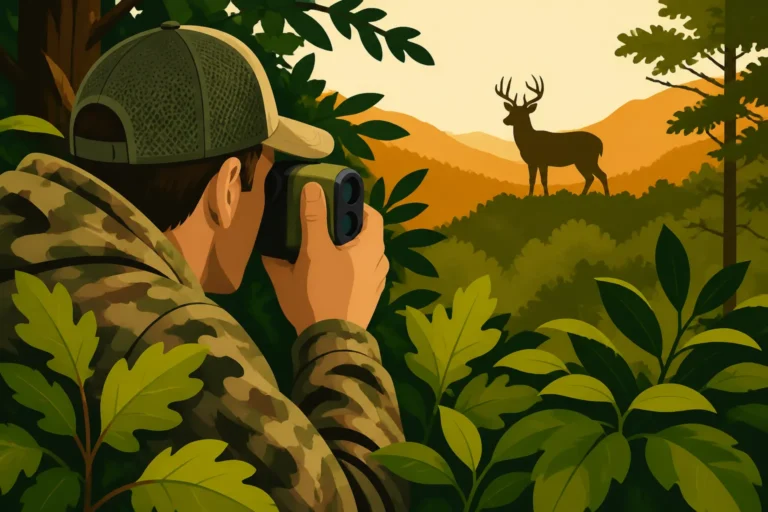
- Rangefinder: In the varied topography of Tennessee, shot distances can change quickly, especially when you're shooting from a slight angle down from a tree. A reliable rangefinder is critical for confirming your shot distance, ensuring ethical and clean kills.
- Headlamp: Essential for navigating in the dark before dawn and after dusk. Choose one with a red light setting to preserve your night vision and minimize disturbance.
- Wind Checker: Your best friend for understanding thermals and wind direction, especially important when Wind and Thermals on a Ridge System come into play. A small bottle of powder or a handheld anemometer is lightweight and indispensable.
- Communication Device: While hunting solo, especially in more remote areas of the Cumberland Plateau, having a way to communicate in an emergency, like a satellite messenger or fully charged phone, is a smart addition to your pack.
All these items should be chosen with weight and quietness in mind. The goal is to be as light and silent as possible, allowing you to move like a ghost through the Tennessee hardwoods.
Mastering Tree Selection and Setup Techniques
One of the biggest advantages of saddle hunting is the sheer variety of trees you can use. Gone are the days of needing a perfectly straight, limb-free trunk of a specific diameter. However, there's still an art to choosing the right tree and setting up efficiently and safely.
Reading the Hardwoods for the Perfect Saddle Tree
Tennessee's diverse forest ecosystems offer a wealth of choices, but some trees are better than others. When you're Scouting Tennessee Public Land Before Season or even on a spontaneous hunt, you'll want to quickly assess your options.
- Trunk Straightness: While saddles are more forgiving, a relatively straight section of trunk is still preferred for easier climbing and a more comfortable sit. You can work with some lean, but extreme angles can make setup difficult and uncomfortable.
- Cover: Look for trees that offer natural cover. Branches, clumps of leaves (especially evergreen varieties like pines mixed in with hardwoods), or even a larger trunk that breaks up your outline are ideal. Remember, you're trying to become "part of the tree." This is particularly important when you're perched on a ridge and need to disappear into the skyline, as discussed in Reading a Ridge for East Tennessee Deer.
- Strategic Locations: Think about deer movement. Are you on a funneled pinch point between two creek bottoms? Along a subtle bench on a ridge? Near a fresh scrape line along a logging road? Choose trees that are strategically placed where deer are likely to pass within ethical shooting range. A slight lean in a tree can actually be beneficial, as it can hide you from one direction while allowing a clear shot in another. Utilize GoHunt's mapping tools to identify terrain features like saddles, draws, and bedding areas before you even step foot in the woods, helping you pinpoint high-potential tree locations.
- Species Considerations: Different hardwoods have different bark textures and limb structures. Smooth-barked trees like beech can be slick when wet, requiring extra caution. Oak trees are often ideal due to their sturdy nature and the cover provided by their branching patterns. Just be mindful of older, hollow trees, which may not be stable enough for climbing.
The key is to visualize the deer approaching from various angles and how the chosen tree's features will help conceal you and allow for a shot.
Climbing and Securing Your Position Safely
Once you've picked your tree, the setup needs to be quick, quiet, and most importantly, safe.
- Clear the Base: First, clear any noisy leaves, sticks, or debris from around the base of your chosen tree. This reduces ground noise when you ascend and descend, and allows you to maneuver quietly if a deer approaches while you're still on the ground.
- Attach the First Stick: Secure your first climbing stick at a comfortable height – high enough so a deer can't easily bump it, but low enough for you to safely step onto. Ensure it's rock solid.
- Deploy Linesman's Belt: As soon as you step onto the first stick, attach your linesman's belt around the tree. This is your continuous connection. Adjust it for snugness, ensuring you're secure.
- Ascend and Place Sticks: While connected with your linesman's belt, place subsequent climbing sticks, working your way up the tree. Always have at least two points of contact (your feet on a stick, your hands on the next stick or the tree, and your linesman's belt). Take your time, focus on quiet placement, and double-check each stick's security. Climbing Sticks for Tennessee Hardwoods are designed for efficiency, so learn their specific attachment methods.
- Set Your Platform: Once you reach your desired height, typically 15-20 feet for good visibility and scent dispersion, install your platform. Ensure it's stable and level.
- Attach Tree Tether: This is the moment your saddle comes alive. Loop your tree tether around the trunk, above your head, and clip it into your saddle's bridge. Adjust its length so you can comfortably lean back and rotate around the tree. This becomes your primary connection for hunting.
- Haul Up Gear: Once you're securely in your saddle, use your pull rope to slowly and quietly bring up your bow, backpack, and any other gear. Never try to climb with these items attached to you directly.
Practicing this sequence repeatedly at home, even on a small backyard tree, is crucial. Confidence and efficiency in setup are paramount for hunting success.
Adapting to Tennessee's Varied Hunting Scenarios
The beauty of saddle hunting is its adaptability, allowing you to tailor your approach to the specific challenges of Tennessee's diverse hunting landscapes.
- Ridge Running on the Cumberland Plateau: When you're Still-Hunting Cumberland Plateau Ridges, thermals can be tricky. They rise in the morning and fall in the evening. With a saddle, you can quickly adjust your elevation or move to a slightly different tree to stay in clean wind, giving you an edge. You can use GoHunt's topographic maps to predict thermal flow and plan multiple potential tree setups along a ridge line.
- West Tennessee Bottomland Strategies: In the flat, often flooded, and heavily wooded Hunting West Tennessee Bottomland Deer country, finding a suitable, strong tree is key. You might need to climb higher to see over thick undergrowth or to escape the ground-level thermal inversions that can trap your scent. The ability to move silently through dense cover to these areas, which might be inaccessible with a bulky stand, is a huge advantage.
- Dealing with Pressure: Tennessee public lands can get busy, especially during gun season. Saddle hunting's mobility allows you to quickly relocate if you encounter unexpected pressure or if deer are pushed off their patterns. You can slip into tighter, overlooked cover that other hunters won't bother with. Having your gear consolidated into a Packs for a Day on Public Land helps facilitate these quick adjustments.
- Utilizing Leaning Trees: A leaning tree, often overlooked by traditional stand hunters, can be a fantastic saddle hunting spot. The lean provides natural concealment and can offer unique shot angles. With your tether, you can lean into the tree's natural angle, making it surprisingly comfortable and effective.
No matter where you're hunting in Tennessee, think about how the saddle's flexibility can solve problems that might hinder a traditional stand hunter. It's about being nimble, adaptable, and always having an answer for what the woods throw at you.
Practical Tips for Hunting Success in a Saddle
Beyond the gear and the basic setup, truly excelling at saddle hunting in Tennessee involves refining your technique and mindset. It's about becoming one with your environment and leveraging the unique advantages your saddle offers.
Staying Quiet and Concealed
Stealth is the saddle hunter's superpower. Every rustle, every clank, every unnecessary movement is amplified in the quiet woods, especially when deer are on high alert.
- Gear Management: Before you even leave your truck, organize your pack meticulously. Use quiet pouches for small items like calls, rangefinders, and wind checkers. Avoid anything that dangles or clanks. Wrap metal items in tape or cloth. When you climb, only bring up what you immediately need. Leave your backpack on the pull rope until you're settled in your saddle and ready to hang it on a gear hook.
- Clothing: Choose quiet fabrics like wool or fleece, especially for outer layers. Avoid anything stiff or crinkly. Layers are essential for adapting to Tennessee's unpredictable weather, but ensure each layer is silent when rubbed against itself or your saddle.
- Movement in the Saddle: The beauty of a saddle is the ability to move around the tree. However, this doesn't mean constant fidgeting. Make slow, deliberate movements. Use the tree trunk as a shield, peeking around it rather than swinging wildly. If you need to make a bigger adjustment, wait for a distraction like a rustling breeze or passing bird. Practice drawing your bow or shouldering your rifle from various positions around the tree at home so it feels natural and quiet in the field.
- Entry and Exit: Your approach and departure from your stand location are just as critical as your time in the tree. Plan your entry routes through standing beans to minimize noise, especially during the Hunting the Late-Season January Lull when the woods are particularly quiet. Use GoHunt to identify natural terrain features or dense cover that can help mask your movement.
Ethical Shots and Angles from a Saddle
Shooting from a saddle is different than shooting from a traditional stand. The angles, particularly when shooting behind the tree or from a leaning position, require practice and awareness.
- Practice, Practice, Practice: This cannot be stressed enough. Set up your saddle at home, at hunting height, and practice shooting from every conceivable angle – front, back, left, right, leaning, standing slightly. Use a 3D target or a bag target and really focus on shot placement from an elevated, angled perspective. You'll quickly discover your comfortable shooting lanes and your limitations.
- Understanding Shot Zones: From a saddle, depending on your position, you might be shooting a deer that's almost directly underneath you, or one that's off to your side at a sharper angle. Always aim for the vital organs, understanding that the angle of entry will be different. A slightly quartering-away shot might be even more accessible and ethical from a saddle, as you can rotate to open up the vitals.
- Clear Shooting Lanes: Even with 360-degree mobility, you still need to be mindful of branches and obstructions. Use a small hand saw or pruners (where permitted) to clear essential shooting lanes before the season, but always minimize your impact on the environment. Don't over-trim; instead, choose trees that naturally offer good lanes. The ability to shoot around the tree means you might only need a small window, rather than a wide-open arc.
- Range Before the Shot: Always range your targets before the shot, or at least mentally mark key distances around your tree. This is especially important in the varied terrain of Tennessee where distances can be deceiving from above.
Overcoming Common Saddle Hunting Challenges
Like any hunting method, saddle hunting comes with its own set of challenges, but with a bit of foresight and preparation, you can easily overcome them.
- Cold Weather Comfort: Tennessee winters can be brutal, and being exposed in a saddle might seem less appealing than a box blind. However, with proper layering of wool and synthetic clothing, and utilizing hand warmers, you can stay comfortable. The ability to shift your weight and subtly move in a saddle actually helps promote circulation, keeping you warmer than being static in a rigid stand. Consider insulated "skirts" or ponchos designed for saddle hunting for extra warmth.
- Finding the "Perfect" Tree: Not every tree is a saddle tree, but far more are than for traditional stands. Focus on stability, a relatively clear climbing path, and good concealment. Don't get hung up on perfection; sometimes a slightly less-than-ideal tree in a high-traffic area is better than a perfect tree in a dead zone.
- Gear Weight for Long Hauls: While saddles are lighter than traditional stands, adding sticks, platforms, and other essentials can still add up. Be diligent about shedding unnecessary weight. Every ounce counts when you're hiking into a remote area of the Cherokee National Forest. Use GoHunt to pre-scout routes and terrain, so you know exactly what kind of trek you're in for and can pack accordingly.
- Learning Curve: There's no denying that saddle hunting has a learning curve. It feels different, and the setup is unique. The best way to overcome this is through practice. Spend time in your backyard, setting up and sitting in your saddle, before taking it to the woods. Get comfortable with the feel, the movements, and the safety procedures. The more you practice, the more natural and efficient you'll become, transforming you into a more effective hunter in the varied and beautiful landscapes of Tennessee.
Disclaimer
This article is for general informational purposes only and does not constitute professional advice. Laws, prices and regulations vary by location and change over time. Consult a qualified professional for guidance on your specific situation.