Bow Cases for Travel to Tennessee
Bringing your bow to Tennessee for a hunting adventure is an exciting prospect, but the journey itself can be filled with anxieties. You've invested good money and countless hours into your archery setup, and the last thing you want is for it to arrive damaged, misaligned, or completely broken. Whether you're flying in from out of state or just bumping along back roads to a remote WMA on the Cumberland Plateau, protecting your precious bow during transit is absolutely paramount. This guide will walk you through everything you need to know about choosing and utilizing the best bow cases for travel, ensuring your gear is safe and sound for every hunt across the Volunteer State.
Why a Quality Bow Case is Non-Negotiable for Tennessee Travel
Imagine arriving at your hunting camp, unzipping your case, and finding your sight bent, your arrow rest askew, or worse, a cracked limb. It's a nightmare scenario that can instantly derail a long-planned trip. A quality bow case isn't just an accessory; it's a critical piece of insurance for your entire hunting season, especially when you consider the varied methods and locations available to hunters here. From the heavily timbered mountains of East Tennessee to the sprawling farm country of the west, your gear will face diverse challenges.
There's nothing quite like the feeling of anticipation as you head out for a hunt, knowing your equipment is dialed in. But that confidence can quickly evaporate if your bow takes a tumble in the truck bed or gets jostled too hard in an airplane's cargo hold. We've all seen the baggage handlers; they're not exactly known for their delicate touch! Investing in a robust bow case protects not just the physical components of your bow, but also your peace of mind. It allows you to focus on the hunt itself, rather than worrying if your 20-yard pin is still true.
Protecting Your Investment from the Road and Air
Let's be realistic: travel is rough on gear. From the moment you load your truck to the instant you retrieve your luggage from the carousel, your bow case is likely to be pushed, pulled, stacked, dropped, and squeezed. For hunters driving across the state, your bow case needs to withstand vibrations, sudden stops, and perhaps a rogue cooler sliding into it during a turn. A thin, flimsy soft case just won't cut it when you're navigating steep mountain roads or bouncing down a long gravel driveway to a remote cabin. It needs to absorb shock and resist puncture.
When it comes to air travel, the stakes are even higher. Airlines have specific requirements for firearms and archery equipment, and they mandate certain types of cases for a reason. These cases are designed to withstand significant impact and prevent unauthorized access. You're not just protecting your bow from damage; you're also ensuring compliance with federal regulations, which can save you a huge headache at the airport. Moreover, the environmental changes, like pressure and temperature fluctuations in a cargo hold, can be taxing on materials, making a well-sealed, sturdy case even more vital.
Navigating Tennessee's Diverse Terrains with Confidence
Tennessee hunting often involves covering some serious ground, whether on foot or in a vehicle. You might be Hunting the Cumberland Plateau Ridgelines, packing into a backcountry area of the Cherokee National Forest, or navigating the dense river bottoms of West Tennessee. Each of these environments presents its own set of challenges for your gear. Mud, dust, rain, and unexpected drops are all part of the experience. A quality bow case provides that crucial layer of defense, keeping your bow clean, dry, and free from dings.
Consider a scenario where you've spent hours hiking into a remote area for a Treestand Setups in Cherokee National Forest. You get to your spot, open your case, and find it's full of condensation or mud from a puddle you hit on the trail. That's a quick way to ruin a hunt. A good case not only protects against impacts but also seals out the elements. This becomes even more important if you're carrying sensitive electronics like a rangefinder or a GPS unit within the case, tools that are invaluable for Scouting Tennessee Public Land Before Season or using navigation apps like GoHunt. The integrity of your case directly impacts the reliability of your entire hunting system when you're far from the truck.
Types of Bow Cases: Hard Shell vs. Soft Shell
When you start looking at bow cases, you'll quickly notice two main categories: hard shell and soft shell. Each has its own distinct advantages and disadvantages, and the "best" choice really depends on your specific travel habits and hunting adventures. It's not a one-size-fits-all decision, and many dedicated hunters even own both types for different situations. Thinking about your typical Tennessee hunt—are you primarily driving locally, or do you fly to other states and bring your bow with you? Your answer will guide your choice.
Hard Cases: The Fortress for Air Travel and Rough Rides
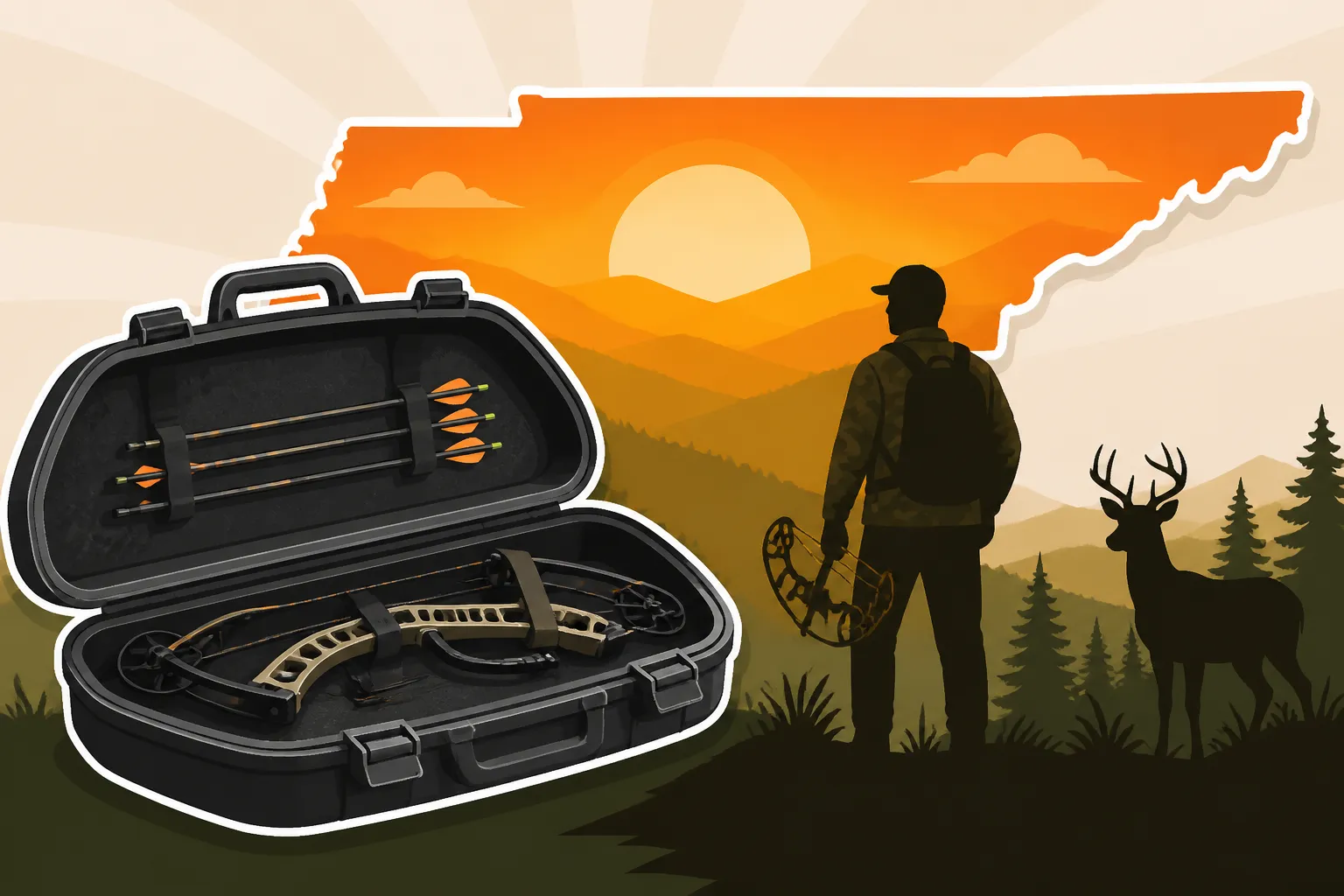
Hard cases are, as the name suggests, built tough. They typically feature a rigid exterior made from durable plastics or composites, designed to withstand significant impact, pressure, and even being stacked under heavy luggage. Inside, they're usually lined with dense foam that can be custom-cut to fit your bow precisely, or they come with layers of convoluted foam that compress around your gear, holding it securely in place. This level of protection is absolutely essential for anyone planning to check their bow on an airplane.
Think of a hard case as a portable vault for your bow. Many hard cases come with multiple latch points, often reinforced with metal, and provisions for padlocks. Some even have wheels for easier transport through airports or across parking lots, which is a blessing when you're also juggling luggage and maybe even other gear for a multi-day trip like Hunting Tennessee's Restored Elk Herd. While they are heavier and bulkier than soft cases, their unparalleled protection against crushing, impacts, and the elements makes them the gold standard for long-distance travel, especially when you can't personally supervise your gear.
Soft Cases: Portability and Protection for Local Journeys
Soft cases offer a more lightweight and flexible alternative to their rigid counterparts. These cases are typically made from durable fabrics like Cordura or ballistic nylon, often featuring thick foam padding stitched into the sides. They're designed for easier carrying, whether that's over your shoulder, by a handle, or slung across your back. For hunters who primarily drive to their hunting spots within Tennessee, a soft case often provides sufficient protection against minor bumps, scratches, and dust.
The main advantage of a soft case is its portability and ease of storage. It's much simpler to toss a soft case into the back seat or bed of a truck, and it takes up less space in a crowded vehicle than a bulky hard case. They're also usually lighter to carry when you're walking from your vehicle to a short hike-in spot. Many soft cases offer ample exterior pockets, which are fantastic for organizing smaller accessories like release aids, extra broadheads, Grunt Calls in Mature Tennessee Timber, or maps. However, it's crucial to understand their limitations: soft cases offer minimal protection against crushing forces and are generally not suitable for air travel unless explicitly approved for carry-on (which is rare for full-sized bows). They shine for day hunts or short road trips where your gear remains mostly within your control.
| Feature | Hard Case | Soft Case |
|---|---|---|
| Protection | Excellent (impact, crushing, weather) | Good (scratches, dust, minor bumps) |
| Durability | Very High | Moderate to High |
| Air Travel | Recommended/Required | Not Recommended/Allowed as checked baggage |
| Portability | Lower (heavier, bulkier, often with wheels) | High (lighter, flexible, easier to carry) |
| Storage | Secure interior, sometimes lid organizers | Often many exterior pockets |
| Cost | Generally Higher | Generally Lower |
| Best Use | Flights, long road trips, extreme conditions | Local driving, short walks, storage |
Key Features to Look for in a Travel Bow Case
Once you've decided between a hard or soft case, it's time to dive into the specifics. Not all cases are created equal, and paying attention to the details can make a huge difference in the longevity of your case and, more importantly, the safety of your bow. Think about the rigors your case will face, from the gravel roads leading to a public land access point to the potential jostling in a luggage compartment. You want a case that feels substantial and well-engineered, not something that feels like it's barely holding together.
Consider how much gear you typically carry. Are you minimalist, or do you bring every possible gadget for a multi-day backcountry excursion? Your answer will influence your need for internal and external storage options. Also, don't forget the importance of proper fit. A case that's too large allows your bow to shift around, potentially causing damage, while one that's too small might not protect vital accessories.
Essential Security and Padding Features
The primary job of any bow case is to protect your bow, and this comes down to two main components: robust construction and effective padding. For hard cases, look for thick, impact-resistant plastic or composite materials. High-quality latches are a must, ideally recessed and made from durable metal, with at least two or three on the main opening. Padlock points should be sturdy and integrated into the case structure, not just flimsy plastic loops that can be easily snapped off. Some advanced cases even feature integrated locking mechanisms for an extra layer of security.
Inside, the padding is king. Dense, closed-cell foam is ideal as it provides superior shock absorption and won't absorb moisture. Many hard cases offer a "pluck foam" or customizable foam inserts that allow you to create a perfect, snug fit around your bow, sight, and other delicate components. For soft cases, look for thick, continuous padding throughout, especially along the edges and critical areas like the cams. Straps or Velcro loops inside the case are also incredibly important for securing your bow so it doesn't shift, even if the case takes a tumble. This internal stabilization is key to preventing wear and tear on string and cables, and keeping delicate components like your sight and arrow rest perfectly aligned.
Organization and Extra Storage for Accessories
A bow case isn't just for your bow; it's often a mobile command center for all your archery essentials. Having dedicated storage for accessories can save you a ton of frustration and keep everything organized. Many cases, both hard and soft, come with arrow holders—either foam inserts or dedicated tubes—which are vital for keeping your expensive arrows straight and fletchings intact. There's nothing worse than pulling out a crumpled fletching right before a shot.
Beyond arrows, think about all the other small but critical items you carry: a release aid, an Allen wrench set, string wax, broadheads, perhaps a compact rangefinder or a small set of binoculars. Some hard cases feature lid organizers with zippered mesh pockets or elastic straps, perfect for securing these smaller items. Soft cases often excel here with multiple external zippered pockets, allowing for quick access to frequently used gear. If you're someone who carries extra items like a wind checker, a headlamp for those early morning walks to the stand, or even a compact first-aid kit, these storage options become invaluable. Before a trip, using an app like GoHunt to mark crucial waypoints or property lines makes you appreciate easy access to these tools, and having a designated spot in your case keeps them protected and ready.
Airline Travel Considerations and TSA Compliance
If flying with your bow is even a remote possibility, then selecting a case that meets Transportation Security Administration (TSA) requirements is absolutely non-negotiable. The general rule for archery equipment, treated similarly to firearms, is that it must be stored in a locked, hard-sided container. The case must be capable of being locked, and only the owner should have the keys or combination. This means no TSA-approved locks that TSA agents can open themselves; you need your own lock.
Before purchasing, double-check the dimensions of any case against common airline luggage size restrictions, though for checked baggage, bow cases are typically considered oversized sporting equipment and usually incur additional fees. Look for cases that are specifically advertised as "airline approved" or "TSA compliant," as these are generally designed with the necessary rigidity and locking points. Many experienced air travelers also recommend choosing a case in a less common color or adding unique stickers or markings to make it easily identifiable on the baggage carousel. Confirming these details before you head to the airport can prevent major delays and headaches, ensuring your bow makes it safely to your Tennessee hunting destination. For those big trips, like a special draw hunt for elk, you absolutely need your gear to arrive in one piece. Preparing for a North Cumberland Elk Hunt requires meticulous planning, and that includes your travel case.
Packing Your Bow Case for Optimal Protection
Getting the right case is only half the battle; knowing how to pack it properly is just as important. A top-of-the-line hard case won't do you much good if your bow is rattling around inside, or if delicate accessories are left unsecured. Proper packing isn't just about preventing damage; it's also about ensuring your bow is ready to shoot as soon as you arrive, minimizing the need for last-minute adjustments. After all, you want to spend your time hunting, not fiddling with bent pins.
Every time I pack my bow for a trip, whether it's for a weekend deer hunt in Hunting West Tennessee Bottomland Deer or a longer journey, I take a moment to consider what I'll need and how everything can be secured. It's a bit like a puzzle, but one where the stakes are high. Being methodical at home saves you stress in the field.
Securing Your Bow and Arrows
The bow itself is the star of the show, so its securement is paramount. In a hard case with custom foam, ensure your bow fits snugly into the cutouts without any play. If you have convoluted foam, make sure the lid presses down firmly, creating enough compression to hold the bow in place without excessive force. Use internal straps or Velcro loops to further immobilize the bow. I usually recommend removing your stabilizer to reduce leverage and stress on the riser, and if your quiver detaches, take it off and pack it separately or securely in an accessory compartment. While many hunters leave their sights on, if you have a particularly delicate multi-pin sight or a high-end target sight, consider removing it and packing it separately, wrapped in a soft cloth or in its own small protective pouch.
Arrows should always be stored in dedicated arrow tubes or secured within foam inserts. Never just toss loose arrows into the case, as they can bend, break, or damage your bow. If your case doesn't have internal arrow storage, consider a separate arrow tube that can be placed inside the case if space allows, or carried alongside it. Protect broadheads by storing them in a dedicated broadhead box, rather than leaving them exposed on the arrows. This not only prevents dulling the blades but also stops them from cutting into your case lining or other gear. Taking these few extra minutes can save you hours of frustration and potentially hundreds of dollars in repairs or replacements.
Safeguarding Optics and Electronics
Your bow case often becomes a mini-arsenal for your smaller, more delicate hunting gear, especially optics and electronics. These items, such as a rangefinder, GPS unit, or even a compact pair of Binocular Choice for Tennessee Whitetails, are vital for a successful hunt. The key is to treat them with the same care you give your bow. Each delicate item should have its own dedicated, snug spot within the case or be wrapped in a soft cloth to prevent rattling and scratches. Padded accessory pouches are also an excellent investment for these items.
When using a hard case, you can often cut specific foam pockets for your rangefinder, GPS, or even a small game camera. This provides unparalleled protection. In a soft case, utilize zippered internal or external pockets, making sure they are well-padded. Always remove batteries from electronic devices if you're storing them for an extended period or if they're subject to extreme temperature changes, as this prevents corrosion. If you rely on an app like GoHunt for mapping and scouting, remember to keep your phone protected as well, perhaps in a separate waterproof pouch within your case. A little extra care here can ensure your navigation and ranging tools are ready when you need them, whether you're Hunting a Ridge-Top Saddle for Rutting Bucks or trying to pinpoint a Scrape Lines Along a Logging Road.
Tips for General Maintenance and Longevity
Your bow case is an investment designed to protect another, larger investment. To ensure it continues to do its job effectively for years to come, a little routine maintenance goes a long way. After each trip, especially if you've been in dusty, muddy, or wet conditions, take the time to clean your case. Wipe down the exterior, remove any mud or debris, and let it air dry completely before zipping or latching it shut for storage. This prevents mildew growth and keeps latches and hinges from seizing up.
For hard cases, periodically check the latches, hinges, and wheels for any signs of wear or damage. A little silicone spray on hinges can keep them moving smoothly. Inspect the internal foam for compression or tears; if it's no longer providing adequate protection, consider replacing it. For soft cases, check zippers for smooth operation and repair any snags or broken teeth promptly. Wash the fabric if it gets particularly dirty, following the manufacturer's instructions, and always ensure it's thoroughly dry before storing. By keeping your bow case in top condition, you're not just maintaining the case itself; you're actively safeguarding your bow and ensuring you're always ready for your next adventure in the Tennessee woods.
Disclaimer
This article is for general informational purposes only and does not constitute professional advice. Laws, prices and regulations vary by location and change over time. Consult a qualified professional for guidance on your specific situation.