Illuminated Reticles for Dark Timber
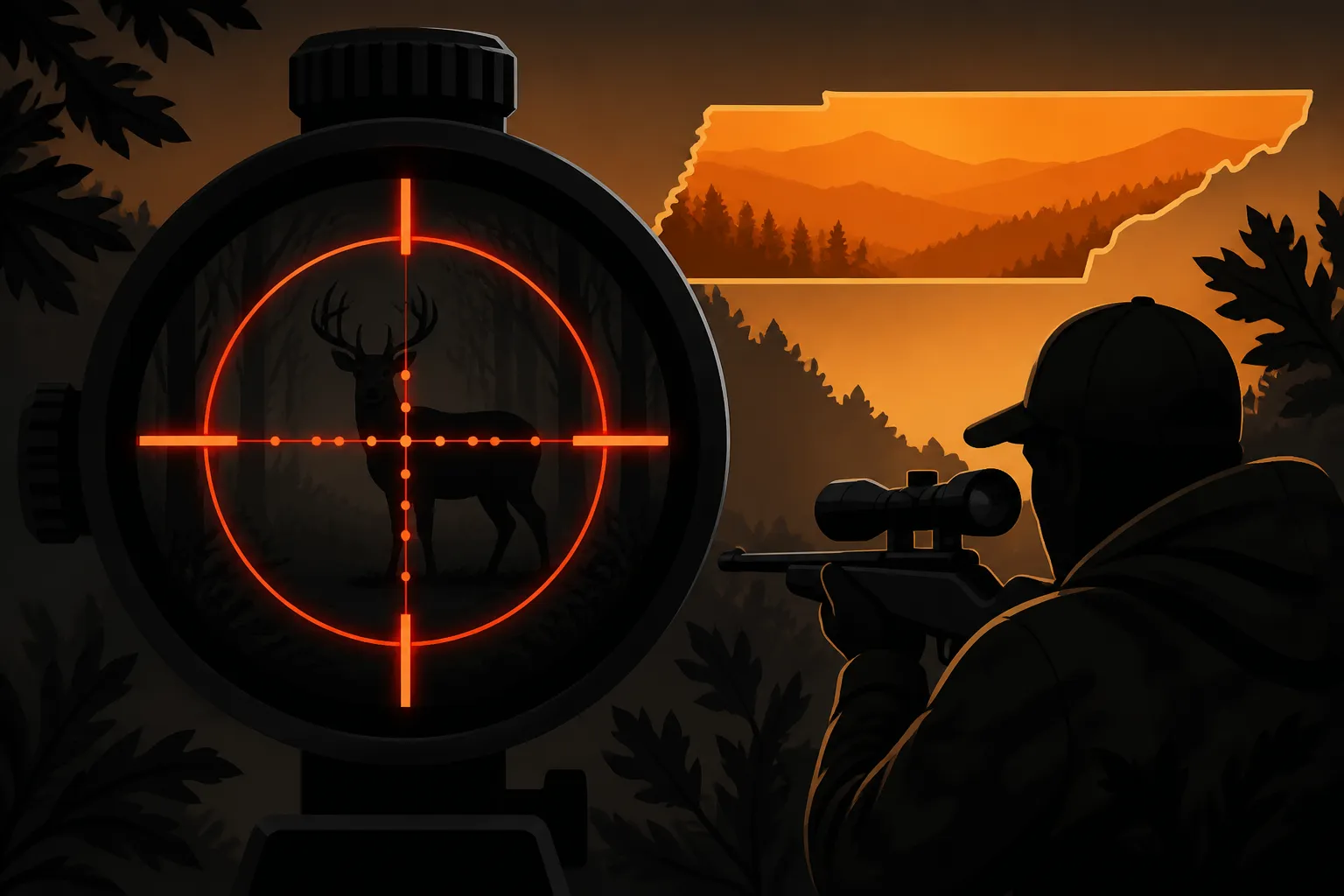
The sun barely cracks the horizon, or perhaps a thick, bruised cloud cover has rolled in, stealing what little light was there. You're deep in a Tennessee hollow, maybe tucked into a treestand on the Cumberland Plateau or navigating the dense timber of the Cherokee National Forest. A buck steps out of the shadows, and suddenly, your black reticle disappears against its dark hide. This frustrating moment, where precious seconds are lost trying to acquire a clear sight picture, is exactly what an illuminated reticle is designed to solve. This comprehensive guide will explore why illuminated reticles are invaluable for hunting in Tennessee's dark timber, how they work, and what to look for when choosing one.
Understanding the Challenge of Dark Timber Hunting in Tennessee
Tennessee's diverse topography, from the steep, rugged slopes of East Tennessee to the heavily wooded river bottoms of the west, presents unique challenges for hunters. Many of our most productive hunting spots—the places where mature deer often seek refuge—are characterized by dense canopy, thick undergrowth, and deep hollows that seem to swallow daylight.
Why Tennessee's Woods Get So Dark
Imagine sitting in a stand in the Cherokee National Forest. Towering oaks, maples, and hickories create a dense, interlocking canopy, especially when they're still holding leaves well into late fall. This canopy acts like a natural filter, allowing only dappled light to reach the forest floor. Add to that the steep terrain, where ridges and hollows cast long, deep shadows that persist for much of the day. Sunlight struggles to penetrate these areas, creating perpetually dim conditions. Even on a clear day, sections of the woods can remain surprisingly dark. This is especially true when you're deep in a creek bottom or tucked into a north-facing slope that rarely sees direct sunlight. The deep shade makes it incredibly difficult to distinguish deer from the background, and even more challenging to get a clear sight picture through your scope.
When you factor in the natural cover of thickets, laurel slicks, or dense pine stands, visibility can drop dramatically. A deer standing just 50 yards away can appear as little more than a dark blur against a busy, dark background. The challenge isn't just seeing the deer, but seeing your aiming point on the deer. This is where traditional black reticles often fail, simply vanishing into the gloom, leaving you guessing and hesitant.
The Critical Moments: Dawn, Dusk, and Overcast Days
Every hunter knows that the "magic hours" of dawn and dusk are often the most productive. This is when deer are most active, moving between bedding areas and food sources. However, these are precisely the times when natural light is at its absolute lowest. You might have a legal shooting light window, but the actual ambient light in your stand can be barely enough to pick out shapes, let alone a fine black crosshair.
Consider an early November morning, well before the sun crests the eastern ridges. You've walked in quietly, set up your stand, and now you're waiting. The woods are still, save for the rustle of leaves. A good buck slips through a thick stand of pines, heading towards an acorn flat. In a standard scope, your black reticle might melt into the dark trunk of a tree or the shadowy flank of the deer. The same scenario plays out at last light, when a deer might materialize just before legal shooting hours close. On top of that, overcast days, common during Tennessee's fall and winter hunting seasons, can plunge the woods into perpetual twilight, even at midday. These are the moments when an illuminated reticle isn't just a luxury, but a genuine asset, turning what might be a missed opportunity into a successful harvest.
What is an Illuminated Reticle and How Does It Work?
An illuminated reticle is a game-changer for hunters operating in challenging low-light conditions. It's essentially a standard riflescope reticle that has been enhanced with a controlled light source, allowing a portion or all of it to glow. This simple addition can make a world of difference when you're trying to make a precise shot in less-than-ideal lighting.
Basic Principles of Illumination
At its core, an illuminated reticle works by using a small, battery-powered LED (light-emitting diode) to project light onto the reticle, making it visible against any background, regardless of how dark it is. The light source is typically housed within the scope's main tube, and its intensity is controlled by a rheostat, usually a small dial or button on the side of the scope. This rheostat allows you to adjust the brightness of the illumination from a subtle glow, perfect for deep twilight, to a much brighter setting for daytime use or extremely heavy cover.
The light is usually directed through an internal system of prisms or fibers to illuminate specific parts of the reticle—often just the center dot, crosshairs, or a specific aiming point. This prevents the entire field of view from being flooded with light, which would be distracting and counterproductive. The goal is to provide a crisp, clear aiming point without compromising your natural night vision or overwhelming the target. Many modern scopes offer a wide range of brightness settings, allowing you to fine-tune the illumination to match the ambient light conditions precisely. For instance, on a very dark, cloudy day deep in a Reading a Ridge for East Tennessee Deer, you might need a medium setting, while at legal last light, just the faintest glow could be perfect.
Types of Reticles and Illumination Patterns
Illuminated reticles come in a wide variety of patterns, from simple dots to complex ballistic drop compensating (BDC) designs. The choice largely depends on your hunting style and the distances you typically shoot.
- Simple Dot: Often just a small, illuminated dot at the center of the crosshairs. This is fantastic for quick target acquisition, especially for close-to-medium range shots in heavy cover. It provides a clear, uncluttered aiming point.
- Illuminated Crosshairs: In some designs, the entire intersection of the crosshairs, or even the whole crosshair, will illuminate. This offers a more traditional sight picture but with the added benefit of visibility.
- BDC or Christmas Tree Reticles: More complex reticles, designed with multiple aiming points for different distances or windage adjustments, can also have illuminated portions. Typically, only the central aiming point or a few key hash marks will illuminate to avoid overwhelming the shooter with too much light and information. For a complex reticle like those found on some precision hunting scopes, a company like GoHunt might feature detailed reviews outlining which specific points illuminate and how effectively they function in low light. When you're Rifle Setups for Tennessee Deer Hunting for longer shots across a clear-cut or field edge, a BDC might be useful, but for dark timber, a simpler illuminated dot often reigns supreme.
The beauty of these different patterns is that you can choose one that best suits your needs, ensuring that your aiming point remains distinct, no matter how obscured the background might be. The ability to switch illumination on or off, and to adjust its intensity, offers incredible versatility for diverse hunting scenarios across Tennessee.
Benefits of Using an Illuminated Reticle in Tennessee's Timber
When you're perched in a stand in the dense, shadowy woods of Tennessee, facing conditions that can make a traditional black reticle disappear, an illuminated reticle becomes a powerful ally. Its advantages extend beyond just seeing your aiming point; they directly impact your confidence, precision, and ultimately, your success.
Enhanced Visibility and Target Acquisition
The most immediate and obvious benefit of an illuminated reticle is the sheer improvement in visibility. Imagine that buck emerging from the thick undergrowth, moving silently through the deep shadows of a creek bottom. Without illumination, your black crosshairs could blend seamlessly into the deer's dark hide, a tree trunk, or the chaotic backdrop of branches and leaves. You might find yourself frantically trying to move your head slightly, hoping to catch a sliver of light to define your reticle, losing precious seconds and potentially spooking the deer.
With an illuminated reticle, that problem vanishes. A crisp, glowing dot or crosshair immediately stands out against any background. This allows for lightning-fast target acquisition. Your eyes are naturally drawn to the illuminated point, enabling you to get on target quicker and more confidently. This speed can be crucial when a deer is quartering through a shooting lane or only presents itself for a brief window. Whether you're hunting Still-Hunting Cumberland Plateau Ridges or sitting over a food plot in a dark corner, the ability to see your aiming point instantly means less hesitation and more decisive action.
Reduced Eye Strain and Fatigue
Trying to discern a faint black reticle against a dark, busy background is incredibly taxing on your eyes. Your pupils are dilated in low light, trying to gather every photon, and then you're asking them to focus intently on a tiny, unlit point that's camouflaged by its surroundings. This constant struggle can lead to eye strain, fatigue, and even headaches after prolonged periods of scanning. It's not just uncomfortable; it can reduce your overall situational awareness and impact your ability to make an accurate shot when the moment arrives.
An illuminated reticle significantly reduces this strain. Your eye easily picks up the glowing reticle without having to strain. This allows you to maintain better focus on the target animal and its surroundings, keeping you more alert and less fatigued throughout your hunt. You can spend more time glassing for movement without the added stress of trying to find your aiming point prematurely. This subtle benefit contributes to a more enjoyable and ultimately more effective hunting experience, especially during long sits or extended periods of Hunting the Late-Season January Lull when light is at a premium.
Confidence in Shot Placement
Ultimately, hunting success hinges on confident, ethical shot placement. When your reticle disappears into the target, doubt creeps in. Am I truly centered? Is this going to be a clean shot? That moment of uncertainty can lead to flinching, a rushed shot, or worse, a missed opportunity or a poorly placed shot. In the dense timber, where follow-up shots are often difficult and tracking can be a nightmare in low light, confidence is paramount.
An illuminated reticle provides that undeniable assurance. When you can clearly see your aiming point superimposed directly on the vitals, you gain immediate confidence in your shot. You know precisely where your bullet is going. This eliminates the second-guessing and allows you to focus purely on executing a smooth, controlled trigger squeeze. Whether you're tracking a deer after the shot or making the initial ethical kill, having that bright, clear aiming point ensures you're doing everything possible to make a clean, humane harvest. This boost in confidence can be particularly important for hunters tackling challenging public lands like the Cherokee National Forest Hunting, where shot opportunities might be few and far between.
Choosing the Right Illuminated Reticle for Your Tennessee Hunt
Selecting the perfect illuminated reticle isn't just about picking one that glows. It's about finding the right balance of features that will serve you best in the specific conditions of Tennessee's diverse hunting landscapes. Considerations like brightness control, battery life, and the color of the illumination can make a significant difference in your field performance.
Brightness Settings and Adjustability
This is perhaps the most critical feature of any illuminated reticle. A scope with a single "on/off" setting, or one with only a few preset brightness levels, will quickly prove frustrating. What's perfect for a deep, cloudy hollow at dawn might be blinding in bright midday sun, or too dim for actual last legal light.
Look for a scope that offers a wide range of brightness settings, often controlled by a rheostat dial or digital push-buttons. Ideally, you want settings that go from extremely faint (barely perceptible, just enough to glow) to quite bright (visible even on a sunny day). This allows you to precisely match the reticle's intensity to the ambient light conditions. On a dark, drizzly afternoon in a thicket where you're Hunting West Tennessee Bottomland Deer, a moderate setting might be perfect. But if the sun breaks through, you'll want the ability to dial it up or down to prevent the reticle from blooming and obscuring your target. Some high-end scopes even include an "off" position between each brightness setting, preventing you from having to cycle through all settings to turn it off completely – a small but appreciated detail when you need to quickly adjust. Online resources and forums, perhaps even reviews on a site like GoHunt, often discuss the range and effectiveness of illumination on various models.
Battery Life and Durability
There's nothing worse than flipping on your illumination just as a deer steps out, only to find the battery dead. This is a common concern for hunters, as batteries can drain quickly, especially if you forget to turn the illumination off after a hunt.
When choosing a scope, pay attention to the manufacturer's claims regarding battery life. While these are often optimistic, they give you a baseline. Consider scopes that feature automatic shut-off functions, which will power down the illumination after a period of inactivity. This is a real battery saver. Equally important is the type of battery used; common coin-cell batteries (like CR2032) are often readily available, but some scopes use less common sizes. Always carry spare batteries in your pack!
Beyond battery life, durability is key. Your scope needs to withstand the bumps, scrapes, and unpredictable weather of Tennessee hunting. Look for scopes with robust construction, sealed battery compartments to prevent moisture ingress, and positive click adjustments for the rheostat. If you're Scouting Tennessee Public Land Before Season and hiking miles into remote areas, your gear needs to hold up.
Reticle Color and Pattern
While personal preference plays a big role, there are some practical considerations when it comes to reticle color and pattern. The most common colors are red and green.
| Feature | Red Illumination | Green Illumination |
|---|---|---|
| Visibility | Often perceived as very sharp, classic choice. | Can be less harsh on the eyes, good contrast. |
| Low Light | Excellent in dark conditions. | Very effective in low light, can enhance contrast. |
| Eye Fatigue | Some may find it slightly more fatiguing over time. | Generally considered less fatiguing for extended use. |
| Daytime | Can be harder to see against bright backgrounds. | Often performs better in bright conditions than red. |
| Night Vision | Less impactful on natural night vision adaptation. | Can be more disruptive to natural night vision. |
| Background Contrast | Great against green foliage, brown hides. | Excellent against brown hides, red dirt. |
Generally, red is often favored for its classic appearance and strong contrast in most natural environments. Green, however, can be less harsh on the eyes for some individuals and may offer better contrast against certain backgrounds, like dark brown fur or reddish soil. Try both if you can to see which your eyes prefer.
For the reticle pattern itself, consider your typical shooting distances and environment. For dark timber hunting where shots are often 100 yards or less, a simple illuminated dot or crosshair might be ideal. It's fast, uncluttered, and highly visible. If you anticipate longer shots across fields or food plots in addition to timber, a more complex reticle with illuminated holdover points might offer more versatility, but be mindful that too much illumination can be distracting in very low light. For the nuances of different reticle designs and their performance, many hunters rely on user reviews and expert breakdowns, which you might find on reputable hunting gear sites like GoHunt. Selecting wisely means you’ll be prepared for the fleeting opportunities that Tennessee’s dark timber often provides.
Conclusion
Navigating the shadowy depths of Tennessee's timber, whether it's the steep hollers of the Cumberland Plateau or the dense river bottoms, presents a unique set of challenges for hunters. Those critical moments at dawn and dusk, or under the persistent gloom of an overcast sky, are often when deer are most active, yet they are also when a traditional black reticle can vanish into the background. An illuminated reticle is not just a fancy gadget; it's a practical, confidence-boosting tool that dramatically improves visibility, reduces eye strain, and ensures precise shot placement when every second and every ounce of certainty counts. By understanding how these reticles work and thoughtfully selecting one with adjustable brightness, robust battery life, and a suitable color/pattern, you're not just buying a scope; you're investing in your ability to make the most of those precious, low-light opportunities that define successful hunting in the Volunteer State. So, the next time you're gearing up for a hunt, consider whether an illuminated reticle could be the missing piece in your setup, helping you clearly see your shot, even when the woods refuse to give up their light.
Disclaimer
This article is for general informational purposes only and does not constitute professional advice. Laws, prices and regulations vary by location and change over time. Consult a qualified professional for guidance on your specific situation.