Slings for a Long Cherokee Forest Walk
You've just spent a solid hour, maybe two, hiking deep into the Cherokee National Forest, pushing uphill through thick rhododendron thickets and over rocky, uneven ground. Your rifle, which felt light as a feather back at the truck, now feels like a lead pipe digging into your shoulder. That familiar ache starts to set in, and suddenly, the thought of turning around early crosses your mind. This is a common frustration for many hunters, but with the right rifle sling and proper technique, those long, demanding walks through Tennessee's rugged mountains can become significantly more manageable, allowing you to focus on the hunt, not the discomfort.
The Unique Challenge of Hunting in Cherokee National Forest
Hunting in the Cherokee National Forest isn't like walking a flat, manicured field edge in West Tennessee. This is a vast, wild, and incredibly beautiful landscape, but it demands respect and preparation. The terrain alone can be a serious workout, and carrying your gear, especially your rifle, efficiently is paramount to a successful and enjoyable trip.
Navigating Steep, Rugged Terrain
Imagine cresting a ridge, only to see another even steeper one beyond it, or picking your way down a rock-strewn creek bed. That's the reality of a day spent Cherokee National Forest Hunting. The elevation changes are constant and often dramatic. You're not just walking; you're climbing, descending, side-hilling, and navigating over blowdowns and through dense undergrowth. Your hands are often needed for balance, for pushing aside branches, or for using Climbing Sticks for Tennessee Hardwoods. A rifle clutched in one hand quickly becomes a hindrance, not a tool, and slung improperly, it can constantly shift, swing, or even snag on brush, throwing you off balance or making noise at the worst possible moment. The constant jostling and impact of a poorly secured rifle can also take a toll on your body, leading to fatigue and soreness that can impact your ability to hold a steady shot when the moment finally arrives.
The Importance of Preparedness for Long Walks
Success in mountain hunting often hinges on your willingness and ability to cover ground and get away from the easy access points where other hunters congregate. This means being prepared for long walks, often many miles from your vehicle, especially if you're looking for areas that see Finding Ground Others Walk Past. Being physically fit is a huge part of this, but so is having the right gear that supports rather than hinders your efforts. Beyond just your rifle, you're likely carrying a pack with essentials like water, snacks, extra layers, a first-aid kit, and perhaps even a game bag if you're lucky enough to punch your tag. Every ounce counts, and how that weight is distributed and carried significantly impacts your endurance. A well-chosen sling can transform your rifle from a burden into an extension of your body, allowing for comfort and quick access without monopolizing your hands. When you've spent months Scouting Tennessee Public Land Before Season and finally located that elusive buck sign, the last thing you want is to be too tired or uncomfortable to make the most of the opportunity.
Different Sling Types for the Mountain Hunter
When it comes to rifle slings, you might think they're all pretty much the same. But for the demanding conditions of the Cherokee National Forest, understanding the nuances between sling types can make a world of difference. Each has its strengths and weaknesses, and the best choice for you will depend on your personal preferences and hunting style.
The Classic Two-Point Sling
The two-point sling is probably what most hunters picture when they think of a rifle sling. It attaches to the rifle at two points, typically one near the buttstock and one near the front swivel. This design allows you to carry the rifle across your back, over one shoulder, or across your chest. For covering ground, especially in steep country, a two-point sling carried diagonally across your back is often the most stable and comfortable option, freeing up both hands for balance or negotiating obstacles. Many traditional leather or nylon slings fall into this category.
The main benefit of a good two-point sling for long treks is its ability to distribute weight. When you're hiking up a steep incline, you can shift the rifle from your shoulder to your back, allowing the weight to rest more evenly and reducing fatigue on one specific muscle group. However, a traditional, non-adjustable two-point sling can sometimes make quick transitions to a shooting position a little slower, especially if you have it cinched tight for stability during a difficult climb. This is where modern designs with quick-adjust features really shine, letting you rapidly loosen or tighten the sling as needed.
Specialized Hunting Slings and Their Advantages
Beyond the basic two-point, there are specialized hunting slings designed with specific features to enhance comfort and utility in the field. Some of these slings incorporate extra-wide neoprene or padded sections to cushion the weight on your shoulder, which is a blessing after miles of climbing. Others might feature thumb loops that allow you to keep the rifle securely in place on your shoulder without gripping it, or integrate non-slip backing to prevent the rifle from sliding down your jacket.
For a long walk through the mountains, slings with substantial padding, particularly those made from materials like neoprene or thick foam, are often worth the investment. They absorb shock and distribute pressure much better than a thin nylon strap. Brands like Vero Vellini or Butler Creek offer excellent options in this category, focusing heavily on comfort. Some slings even offer integrated bipod attachments or accessory loops, though you want to be mindful of adding too much bulk if you're already carrying a full Packs for a Cherokee Forest Day Hunt. The key is finding a balance between comfort features and maintaining a streamlined profile for navigating dense timber.
Considerations for Backpack Carry Systems
Many hunters, especially those venturing deep into the backcountry or on multi-day trips, will also use a large hunting pack. Some modern hunting packs, particularly those from companies like Kifaru or Mystery Ranch, incorporate their own rifle carry systems. These systems usually involve a scabbard or a secure strapping mechanism that allows the rifle to be carried vertically on the side or back of the pack, or even between the main pack bag and frame.
While this frees up your shoulders entirely and keeps the rifle secure during long, arduous hikes, it does mean the rifle is not immediately accessible. You typically have to remove your pack to get to your rifle, which isn't ideal for quick, unexpected encounters. However, for sheer comfort during a several-hour approach to your hunting area, especially if you're navigating really tough terrain, a good pack-integrated carry system is hard to beat. It's a trade-off: ultimate comfort versus instant access. You might use a traditional sling for shorter stalks once you're in your primary hunting zone, but rely on the pack system for the long haul.
Key Features to Prioritize in a Rifle Sling
Choosing the right sling isn't just about picking one that looks good. It's about selecting a tool that will perform reliably under the demanding conditions of mountain hunting. When you're facing miles of steep climbs, unpredictable weather, and the need for quick, silent movement, certain features become non-negotiable.
Padding and Comfort for Extended Periods
Let's be honest, even the lightest rifle feels heavy after a few hours of climbing. The single most important factor for comfort during a Long Cherokee Forest Walk is adequate padding. Look for slings with a wide, generously padded shoulder strap. Neoprene is a popular material because it offers good cushioning and a bit of stretch, which helps absorb shock and prevent the rifle from bouncing too much. Closed-cell foam padding, covered in a durable fabric, is another excellent option.
A thin, unpadded nylon strap might be inexpensive, but it will quickly become a source of pain, digging into your shoulder blade or collarbone. Think about how much gear you're wearing – a heavy hunting jacket, a backpack – and how the sling will interact with those layers. A wider pad distributes the weight over a larger area, reducing pressure points. This is especially critical if you plan on carrying your rifle slung for the majority of your hunt, rather than just short distances. Comfort here means less fatigue, which translates directly into better focus when it matters most.
Quick Adjustability and Secure Attachment
The ability to quickly adjust your sling's length is crucial. You'll want to cinch it tight when scrambling up a steep bank to keep your rifle from flopping around, and then rapidly loosen it when you need to transition to a shooting position. Many modern slings feature a quick-adjust buckle or cam system that allows for one-handed manipulation. This is far superior to traditional buckles that require two hands and more time, which you often don't have when an animal suddenly appears.
Secure attachment points are also vital. Look for heavy-duty swivel studs or robust quick-detach (QD) swivels. You don't want a sling that can accidentally detach, especially if you're crawling through thick cover or traversing a dangerous slope. Ensure the swivels are quiet and won't clink or squeak, betraying your position. For a more streamlined setup, some modern rifles and slings integrate directly with M-LOK or KeyMod systems, providing rock-solid attachment points without traditional swivels. A reliable sling attachment system is non-negotiable for safety and peace of mind.
Durable Materials That Withstand the Elements
The Cherokee National Forest can throw all kinds of weather at you: sudden downpours, biting winds, and even snow in the late season. Your sling needs to be able to handle it all without failing. Look for slings made from robust, weather-resistant materials. Nylon webbing is a common and durable choice, often paired with neoprene or synthetic leather for padding. Avoid materials that absorb water readily or become stiff and uncomfortable when wet.
Additionally, consider the hardware. Are the buckles, swivels, and adjusters made from strong, corrosion-resistant metals or heavy-duty polymers? Flimsy plastic buckles can snap in cold weather or under stress, leading to a dropped rifle. While you might use a powerful mapping tool like the GoHunt app to understand terrain and plan your route, it won't help if your gear fails. Durability ensures your sling will last not just a single season, but many seasons of hard use in the mountains.
Here’s a quick comparison of common sling features:
| Feature | Ideal for Cherokee National Forest | Less Ideal |
|---|---|---|
| Padding | Wide, thick neoprene or closed-cell foam | Thin, unpadded nylon or leather strap |
| Adjustability | Quick-adjust cam or buckle for one-handed operation | Traditional buckle requiring two hands |
| Attachment | Heavy-duty, quiet QD swivels or direct M-LOK/KeyMod integration | Flimsy plastic swivels, squeaky metal attachments |
| Material | Durable, weather-resistant nylon, synthetic leather, neoprene | Materials that absorb water (e.g., untreated canvas), easily frayed fabric |
| Non-slip Backing | Rubberized or textured backing to prevent slippage on clothing | Smooth backing that slides easily on wet jackets |
Mastering Sling Use for Efficiency and Safety
Having the right sling is only half the battle; knowing how to use it effectively is the other. The way you carry your rifle with a sling can dramatically impact your comfort, your ability to move silently, and your readiness to take a shot in the varied terrain of the Cherokee National Forest.
Carrying Techniques for Uphill and Downhill Travel
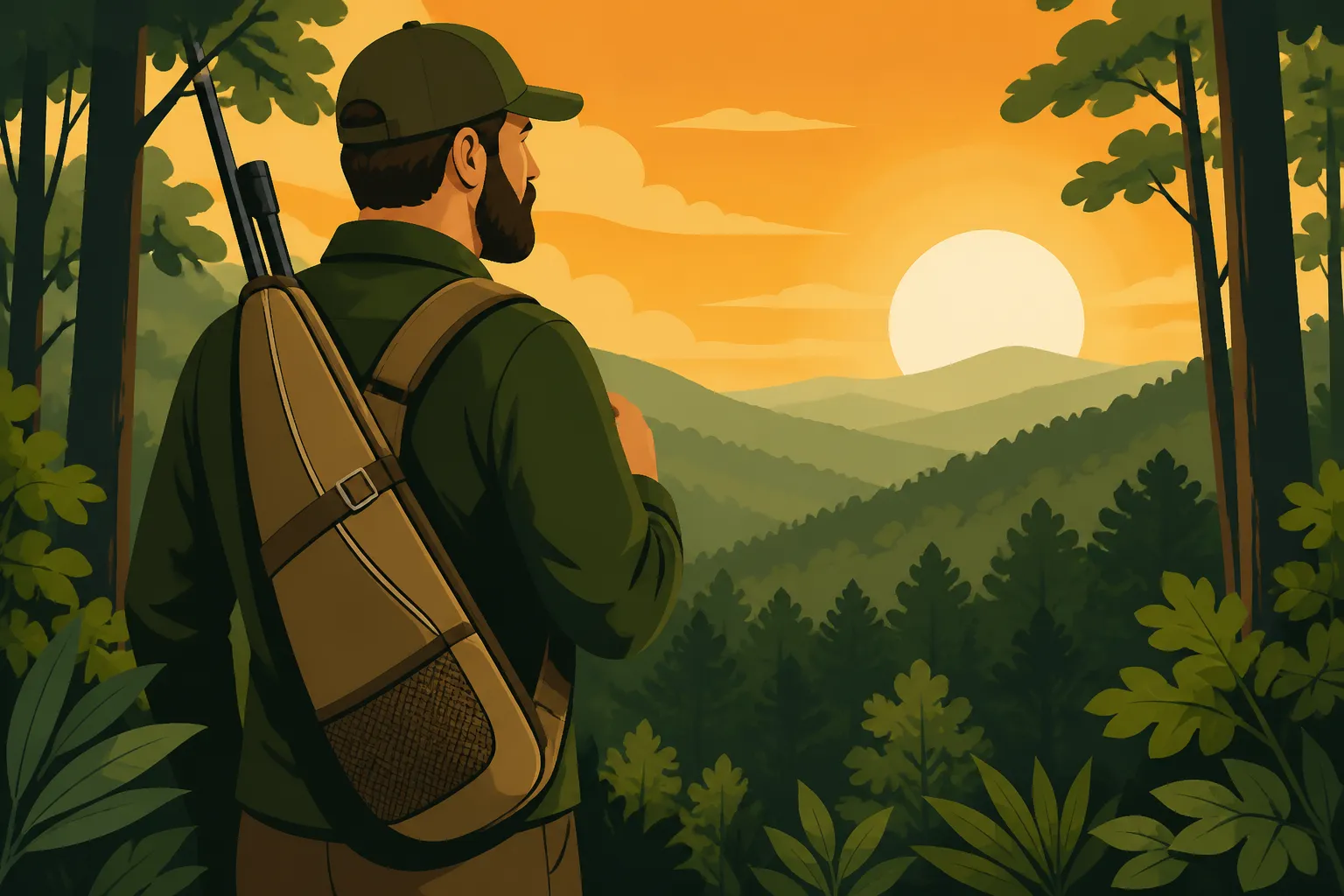
When you're climbing a steep ridge, carrying your rifle slung across your back, diagonally from your strong shoulder to your weak hip, often works best. This position keeps the rifle high and tight, preventing it from swinging and snagging on brush. It distributes the weight more evenly across your torso, freeing your hands for balance or to push through dense cover. You might even find yourself using the sling to help pull yourself up a particularly steep section, almost like a third point of contact. Just be sure to keep the muzzle pointed in a safe direction.
Conversely, when heading downhill, especially on rocky or slippery ground, you might want to switch to carrying the rifle slung over your weak shoulder, with the muzzle pointed down and slightly forward. This allows you to use your strong hand to brace yourself or control your descent. Some hunters prefer carrying it slung across the chest (often called a "ready" position) for quick shots, but this can be less comfortable for extended travel, especially if the rifle is prone to bouncing off your knees. Experiment with different carry methods to find what feels most secure and comfortable for your body and your rifle, both when Reading a Ridge for East Tennessee Deer and when picking your way through a treacherous hollow.
Combining Your Sling with a Hunting Pack
If you're wearing a substantial hunting pack, integrating your rifle sling requires a bit of thought. For the longest, toughest stretches, as mentioned, a pack-integrated rifle carry system might be ideal. However, if you're relying on a traditional sling, you'll need to adjust it to work with your pack's shoulder straps and hip belt. Often, carrying the rifle slung across your back, under the main shoulder straps of your pack, can feel the most secure and reduce interference. The pack's padding can even add another layer of comfort over your sling.
When the rifle is slung under your pack straps, ensure the sling is long enough to allow for drawing the rifle out easily. You might need to adjust the sling's length throughout the day as you add or shed layers, or as your fatigue levels change. It’s a bit of a dance, but finding that sweet spot where the rifle is secure but still accessible is key. Remember, your goal is to minimize snags and noise, especially when you're trying to move silently through Finding Sign in Big Cherokee Forest Timber.
Safety First: Slinging Your Rifle Responsibly
Beyond comfort and accessibility, safety is paramount. Always ensure your rifle is unloaded or has the action open when you're slinging it for extended travel, especially in thick cover. If you choose to carry a loaded firearm, always ensure the safety is engaged and the muzzle is pointed in a safe direction – typically up or down, away from yourself and others.
Be mindful of the muzzle direction when you're sitting down to rest or glass an area. It's easy for a slung rifle to shift and point in an unsafe direction without you realizing it. Developing muscle memory for safe gun handling, even when slung, is crucial. Regularly check your sling's attachment points and hardware for wear and tear, ensuring everything is secure. A little preventative maintenance can prevent a serious accident or a lost rifle in the rugged wilderness of the Cherokee.
Disclaimer
This article is for general informational purposes only and does not constitute professional advice. Laws, prices and regulations vary by location and change over time. Consult a qualified professional for guidance on your specific situation.