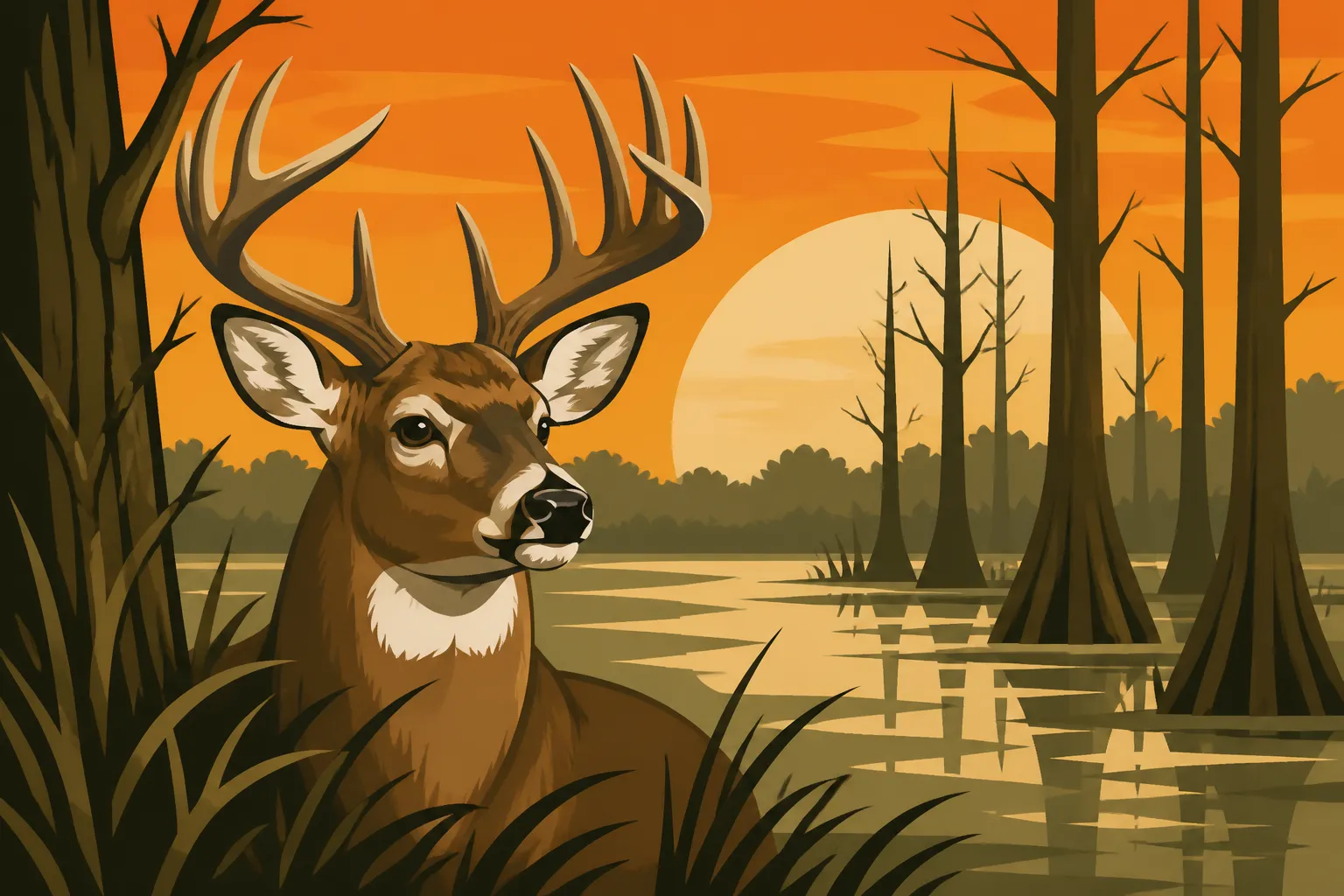
Hunting West Tennessee Bottomland Deer
Hunting deer in West Tennessee's bottomlands can be a truly humbling experience. The thick, often flooded timber, dense undergrowth, and maze of sloughs and oxbows can feel impenetrable, leading to a lot of frustration for hunters accustomed to more open terrain. But for those willing to put in the work and adapt their approach, these fertile river bottoms offer some of the best deer hunting opportunities in the state, holding some truly mature whitetails. This guide will walk you through everything you need to know to successfully navigate and hunt these challenging, yet incredibly rewarding, environments.
Understanding West Tennessee Bottomland Habitat
West Tennessee is synonymous with river bottoms. These aren't your typical rolling hills or steep Appalachian ridges; this is a landscape shaped by powerful rivers and countless tributaries, creating a unique ecosystem that deer absolutely thrive in. Getting a handle on these specific habitat features is the first step toward unlocking their secrets.
The Allure of River Bottoms and Floodplains
The major rivers that snake through West Tennessee, like the Mississippi, Obion, Forked Deer, Loosahatchie, and Hatchie, are the lifeblood of these bottomland ecosystems. They regularly flood, depositing nutrient-rich silt that creates incredibly fertile soil. This isn't just good for agriculture; it explodes with diverse vegetation that provides abundant food and unparalleled cover for deer. Think towering hardwoods like various oak species, pecans, sweetgum, hackberry, and cypress, mixed with an understory so thick it can feel like a green wall in the summer.
Deer in these areas benefit from a year-round buffet. The fertile ground produces a fantastic mast crop, meaning plenty of acorns and pecans in the fall. During other times, they browse on a wide variety of succulent plants, woody stems, and agricultural crops planted on the edges of these floodplains. The constant presence of water, whether it's in a slough, a creek, or a flooded timber block, means deer never have to travel far for a drink. This combination of abundant food, water, and incredibly dense cover allows deer to grow old and reach their genetic potential, which is a major reason Why West Tennessee Grows Big Bucks.
Identifying Key Habitat Features
Navigating these bottomlands effectively means recognizing the subtle, yet crucial, features that dictate deer movement. It's not about finding the tallest mountain or the widest field; it's about understanding the nuances of water, cover, and elevation.
Sloughs and oxbow lakes are essentially old river channels that have been cut off, leaving standing water bodies that can range from shallow wetlands to deep pools. These aren't just water sources; they act as natural barriers, funnels, and bedding areas. Deer will often travel along their edges, using the water as security. Cypress swamps are particularly dense pockets, often with standing water, providing impenetrable bedding cover where mature bucks can feel completely safe.
Then you have the hardwoods. Look for concentrations of oak and pecan trees, as these will be primary feeding zones during the early and mid-fall. In later seasons, deer might shift to areas with persistent food sources like green browse or agricultural fields. Interspersed within these timber blocks are often briar thickets and cane breaks, creating dense sanctuaries. Lastly, don't overlook the agricultural edges. Many bottomland tracts border fields of corn, soybeans, or winter wheat. These provide critical food sources, especially as natural mast becomes scarcer. Deer will often bed deep in the timber and make nocturnal movements to these field edges, creating predictable travel corridors that can be exploited.
Scouting Strategies for Bottomland Deer
Scouting in West Tennessee bottomlands is a completely different beast than glassing open country or hiking mountain ridges. You're often dealing with limited visibility, wet conditions, and dense cover that swallows sound and scent. It demands a systematic approach, both from the comfort of your home and with boots on the ground.
Pre-Season Aerial Reconnaissance and Map Study
Before you even think about setting foot in the mud, spend significant time studying aerial maps. This is where tools like GoHunt really shine. You'll want to identify areas with subtle elevation changes – even a slight rise of a few feet can be a major bedding area or travel route during high water. Look for old logging roads, often barely visible, that cut through the timber. These become highways for deer, providing easier travel through otherwise difficult terrain. Creek crossings and bottlenecks created by water features are also critical to pinpoint.
Pay close attention to changes in vegetation patterns visible from above. Dense, dark green areas might indicate thick briar patches or evergreen stands, perfect for bedding. Lighter green or more open canopy sections could be hardwood bottoms with good mast production. Identify pinch points where deer are forced into narrow strips of land due to water or dense cover on either side. These are prime ambush locations. With GoHunt, you can layer property lines, topographic maps, and satellite imagery to get a complete picture, helping you plan your approach, understand potential access issues, and predict deer movement before you even leave your driveway. This remote scouting is vital for Scouting Tennessee Public Land Before Season.
Boots-on-the-Ground Exploration in the Off-Season
Once you've marked up your maps, it's time for some serious boots-on-the-ground work, ideally in late winter or early spring when the foliage is down and visibility is at its best. This is your chance to verify what you saw on the map and discover new sign that aerial photos can't reveal. Focus on walking the edges of sloughs, creek banks, and any slight rises you identified. Look for old rubs and scrapes from the previous season – these indicate established travel corridors and buck activity. Heavy trails leading into and out of thick cover are gold.
Pay attention to natural food sources. Identify oak flats, pecan groves, and persimmon trees. Understanding where these food sources are and when they're likely to drop fruit will give you a major advantage during the season. It’s also important to check water levels. Many of these areas flood seasonally, and what might be a dry trail in July could be a foot of water in November. Understanding these patterns is key to planning your hunt strategy and selecting appropriate gear like rubber boots. Carry a GPS or use your mapping app to mark every piece of sign, every potential stand tree, and every access route. Don't be afraid to get a little wet and muddy; the information you gain from this direct observation is invaluable.
Effective Hunting Tactics in West Tennessee Bottomlands
Hunting bottomlands requires a blend of patience, stealth, and a keen understanding of how deer use this unique environment. Forget long-range shooting; this is often a close-quarters game where intimate knowledge of deer behavior and terrain is your best friend.
Still-Hunting and Stand Placement Around Water
Still-hunting can be incredibly effective in dense bottomland cover, but it's more about slow, deliberate movement than traditional spot-and-stalk. You're not looking to see deer from a distance; you're looking for the absence of deer until you're practically on top of them. Move at a snail's pace, stopping every few steps to scan, listen, and let the woods settle. Focus on moving quietly along the edges of sloughs, creek banks, or subtle elevation changes. These natural linear features concentrate deer movement. Use the wind to your advantage, always trying to keep it in your face or quartering.
When it comes to stand placement, think pinch points and travel corridors. Look for isolated clumps of trees, small rises, or narrow strips of dry ground between two water features where deer are forced to travel. Setting up along these routes can be incredibly effective. Consider open spots within dense thickets, or areas where trails converge. Remember, visibility is often limited, so shots will likely be close. Choose stand sites that allow for multiple shot angles within a small radius. The challenges of setting up a treestand in this environment are different from those encountered in the more rugged Treestand Setups in Cherokee National Forest, requiring a focus on stability in potentially softer ground and navigating low-hanging branches.
Utilizing Funnels and Choke Points
Funnels and choke points are the bread and butter of bottomland deer hunting. These are natural constrictions in the landscape that force deer into predictable travel patterns. Water features are the primary architects of these funnels. Imagine a long, winding slough with dense timber on either side, forcing deer to walk a narrow strip of dry ground. Or a small creek that snakes through a block of timber, with only a few viable crossing points. These are exactly the places you want to focus your efforts.
Deer also use subtle elevation changes as funnels, especially during high water. A slight rise that remains dry during a flood will become a major travel corridor and bedding area. Look for strips of mature timber that connect two larger blocks of cover, particularly if they run parallel to a major creek or river. These are prime ambush spots, as deer will often use the easiest path of travel, especially when moving between bedding and feeding areas. Understanding Hunting a Funnel Between Two Bottoms is critical for consistent success. Scouting these features with mapping tools and then confirming them on foot is paramount.
Aggressive Calling and Decoying Strategies
In the thick, broken terrain of West Tennessee bottomlands, deer often can't see very far. This makes calling and decoying incredibly effective, especially during the rut. If a buck can't see the deer he's hearing, he's far more likely to come investigate the source of the sound, especially if he thinks it's a rival buck or a receptive doe.
Don't be afraid to be aggressive with your calling. Loud grunts, snort-wheezes, and even rattling sequences can carry surprisingly well through the dense cover. Many hunters find that Rattling and Grunting in Tennessee works best when they create enough volume to get a buck's attention from a distance, then back off to more subtle calls as he approaches. During the peak of Hunting the Tennessee Rut in Early November, a combination of a doe bleat followed by a tending grunt can often draw out a curious buck.
Decoys can also be highly successful. A single doe decoy, or a doe-and-buck setup, placed in a small opening or along a travel corridor can be irresistible to a rutting buck. Position your decoy so that the approaching buck will naturally expose himself to your shot before he reaches the decoy. Just be mindful of visibility; if the cover is too thick, your decoy might not be seen until a buck is too close, potentially spooking him. Always consider shot distance and angles when deploying decoys in tight quarters.
Dealing with the Unique Challenges of Bottomland Hunting
West Tennessee bottomlands are beautiful, but they certainly aren't for the faint of heart. Hunters need to be prepared for conditions that can range from merely damp to outright swampy, and share the woods with more than just deer.
Navigating Wet Terrain and Rising Water
The biggest challenge in these areas is undoubtedly the water. Mud, standing water, and unpredictable flooding are constant companions. You can go into a hunt with a perfect plan, only to find your access road underwater or your favorite stand site submerged after a heavy rain. This can be incredibly frustrating, but it's part of the game. Always check local weather and river levels before heading out. The Tennessee Wildlife Resources Agency (TWRA) often provides real-time information on river stages that can impact public lands.
Investing in quality waterproof gear is non-negotiable. Tall rubber boots that go up to your knees or even hip waders are often essential for traversing flooded timber and muddy trails. Brands like Muck Boots or LaCrosse are popular choices among those who regularly hunt these wet environments. You'll want to choose Rubber Boots for Bottomland Walking that offer good traction in slippery mud. Plan your routes carefully, identifying potential high ground and escape routes in case water levels rise unexpectedly. Sometimes, what was once a deer trail becomes a canoe route! Understanding how water influences deer movement is crucial; often, high water will push deer to higher ground or concentrate them on narrow strips of land, making them more predictable.
Managing Mosquitos, Snakes, and Other Critters
Beyond the deer, the bottomlands are teeming with other wildlife, some of which can pose a nuisance or even a threat. Mosquitos, ticks, and gnats are ever-present, especially in warmer months and after rain. Generous applications of insect repellent containing DEET or picaridin are essential. Permethrin-treated clothing can also provide an excellent layer of protection against ticks and chiggers, which are abundant in the dense vegetation.
And then there are the snakes. West Tennessee is home to several venomous species, including cottonmouths (water moccasins) and various rattlesnakes. While they generally want to avoid you, encounters are possible, especially when walking through thick brush or near water. Always be aware of your surroundings, watch where you step, and consider wearing snake boots or gaiters for added protection. Beyond insects and reptiles, you might encounter wild hogs, which are prevalent in many bottomland areas, as well as bobcats, coyotes, and various waterfowl, offering a diverse wildlife experience.
Hauling Out Game in Difficult Conditions
Congratulate yourself if you've harvested a deer in the bottomlands – that's a huge accomplishment! Now comes the next challenge: getting it out. Dragging a deer through deep mud, over fallen timber, and across sloughs can be an exhausting, back-breaking endeavor. Traditional deer carts might struggle in truly boggy conditions, as their wheels can get mired.
One excellent strategy is to use a deer sled or drag. These low-profile sleds glide over mud and water more easily than wheels. If you're on public land or hunting alone, consider the gutless method for field dressing. This involves quartering the deer and placing the meat in game bags, significantly reducing the weight you need to transport. A sturdy frame pack can then be used to haul the quarters out. Companies like Stone Glacier or Kifaru make excellent packs for this purpose. Always carry plenty of water, a good field dressing knife, and a headlamp for any unexpected delays, especially if you're dealing with Blood Trailing After Dark in Tennessee or a long trek out.
Season-Specific Approaches for Bottomland Whitetails
The bottomlands change dramatically with the seasons, and so too should your hunting strategy. What works in September's heat and humidity will likely fail in January's cold. Understanding these shifts is key to consistent success. The full scope of How Tennessee's Deer Season Runs Archery to January provides context for these shifts.
| Season Phase | Typical Conditions | Key Deer Behavior | Recommended Tactics |
|---|---|---|---|
| Early Season | Hot, humid, dense foliage, abundant insects | Focused on natural food sources (mast, browse), water | Hunt trails to mast trees, water sources; morning/evening sits |
| Rut Peak | Cooler, falling leaves, increased activity | Bucks actively seeking does, traveling extensively | Focus on funnels, pinch points, aggressive calling/decoying |
| Late Season | Cold, often wet, sparse cover, limited food sources | Focused on remaining food sources, thermal cover | Hunt agricultural fields, persistent browse, thick bedding cover |
Early Season Strategies Archery Opener
When the Tennessee archery season opens in late September, the bottomlands are still often a sauna. Humidity is high, and the foliage is incredibly dense, making visibility a major challenge. Deer movement will typically be focused on food and water, often occurring primarily in the early mornings and late evenings to avoid the heat. Your best bet is to key in on natural food sources. Scout for dropping acorns, persimmon trees, and any early-dropping pecans. Set up stands along trails leading to these food sources, or near water holes that deer frequent.
The Hunting the August Antlerless-Only Archery Hunt is a unique early opportunity where understanding these food and water patterns is crucial. During these hot periods, deer will often bed in the thickest cover available, usually near water, and only move when temperatures drop. Consider shaded stand sites, and be prepared for mosquito armies. Scent control is also paramount, as your scent will hang heavy in the humid air. Focus your efforts during the cooler parts of the day, and be patient – deer won't be moving as much as they will later in the year.
Rut Hunting in the Bottomlands November Peak
Mid-to-late November is when the magic happens in West Tennessee, as the deer rut kicks into high gear. This is when bucks, usually nocturnal or reclusive, start throwing caution to the wind in search of does. The bottomlands, with their dense cover and abundant does, become a hotspot for rutting activity. Bucks will travel extensively, often using the same funnels and travel corridors you identified earlier, but with increased intensity. This is the absolute best time for Hunting the Tennessee Rut in Early November.
Focus your hunting efforts on pinch points created by water, strips of timber connecting larger blocks of cover, and any areas where you've seen fresh rub lines or scrape activity. Aggressive calling and decoying tactics, as discussed earlier, can be incredibly effective now. Don't be afraid to sit all day if you can manage it; a lovesick buck could pass by at any moment. The thick cover that normally makes hunting difficult can actually work to your advantage during the rut, as bucks are less likely to spot you from a distance and are more focused on the prospect of finding a doe.
Late Season Food Sources and Cold Fronts
As December rolls into January and Tennessee's Gun Deer Season Into January progresses, the bottomland landscape transforms again. Leaves have dropped, making visibility slightly better in some areas, but temperatures plummet, and natural food sources become scarcer. Deer will shift their focus to remaining high-energy foods and thermal cover. This is when you want to look for unpicked agricultural fields, such as standing corn or soybeans, which provide critical late-season nutrition. Areas with persistent green browse, like clover plots or winter wheat, will also be magnets for deer.
Cold fronts, especially after a period of mild weather, can trigger intense deer movement. Deer will often feed heavily before and after a significant drop in temperature. Look for thick bedding cover that offers protection from the wind and cold, such as dense cedar thickets or heavy briar patches. Deer will often bed on sun-exposed slopes or in thickets that block the prevailing wind to conserve energy. Hunting Deer After a January Cold Front requires patience and a willingness to brave the elements. These late-season hunts can be challenging, but they can also be incredibly rewarding for the dedicated hunter who understands how deer adapt to the harsh winter conditions.
Disclaimer
Please remember that hunting regulations, seasons, and licensing requirements can change. Always consult the latest Tennessee Wildlife Resources Agency (TWRA) regulations before planning any hunt. This guide is for informational purposes only and does not supersede official state regulations.