Big South Fork Backcountry Deer Hunting
Hunting the vast, wild expanses of the Big South Fork National River and Recreation Area can feel like trying to find a needle in a haystack—a very big, very steep haystack. Many hunters get overwhelmed by the sheer scale and ruggedness of the terrain, feeling lost before they even start. This guide is here to equip you with the knowledge and tactics to confidently pursue whitetail deer in the challenging yet rewarding backcountry of the Big South Fork.
Understanding the Big South Fork Backcountry Challenge
The Big South Fork is a gem, a sprawling wilderness that often intimidates hunters accustomed to smaller woodlots or neatly managed WMAs. Its sheer size and unforgiving topography present a unique set of challenges that, once understood, can be overcome with the right approach. It's not your typical Tennessee hunt, and acknowledging that is the first step to success.
Why Backcountry is Different Here
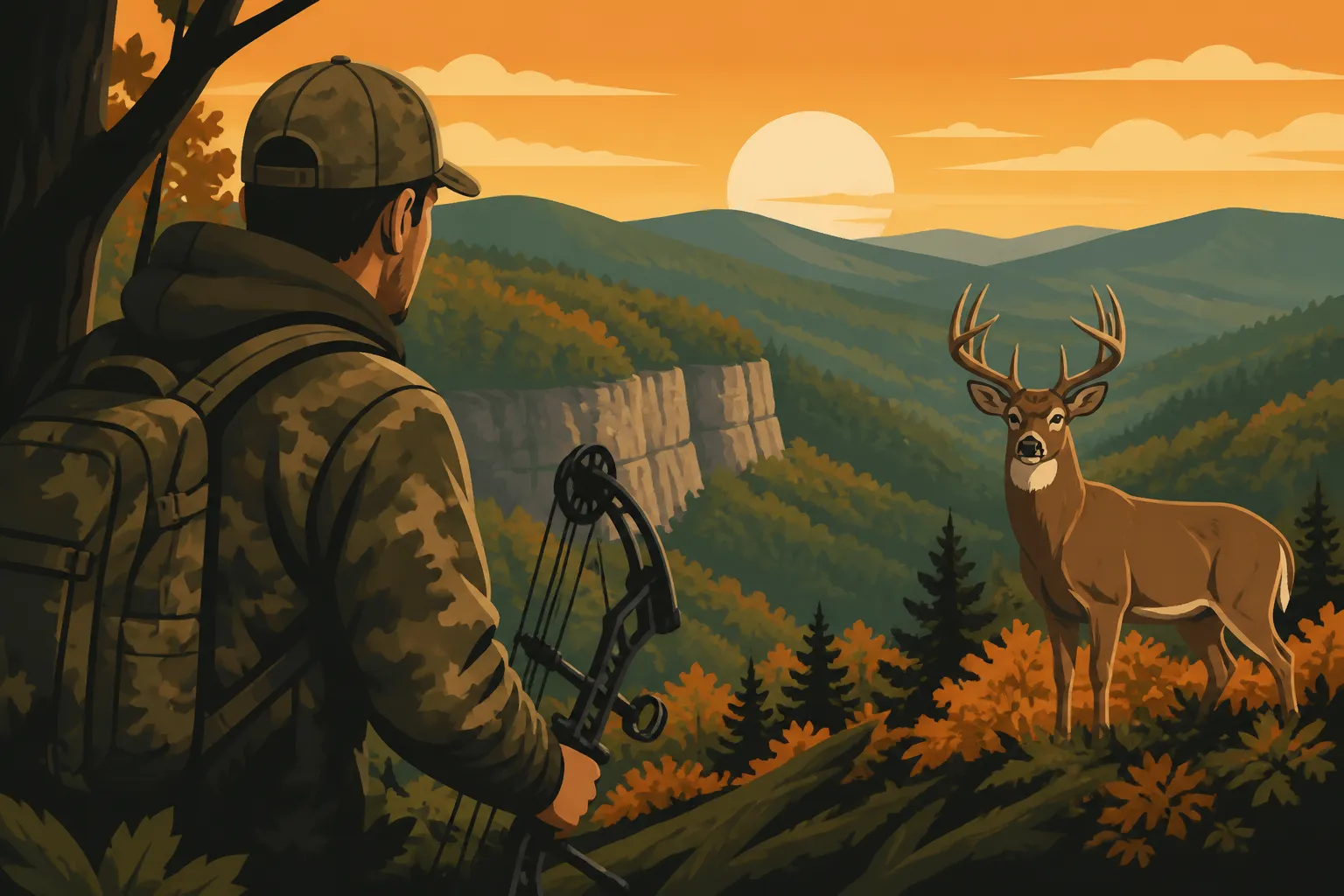
Unlike many other public lands in Tennessee, the Big South Fork offers a truly wild, backcountry experience. We're talking about deep gorges, towering sandstone bluffs, endless timbered ridges, and a maze of drainages that can swallow you whole if you're not prepared. The deer here aren't accustomed to constant human pressure in the same way deer in more accessible areas might be. This means they often behave more naturally, but it also means finding them requires more effort and a deeper understanding of their movements within this expansive habitat. You won't find many easily identifiable food plots or neatly trimmed shooting lanes out here; it’s raw, untamed nature at its finest.
The scale also means that while deer density might not feel as high as in some intensively managed units, there are definitely mature deer roaming these hills. It's about finding the pockets where they concentrate, which often means getting far away from roads and well-worn trails. Think about how much ground you can cover in a day, and then double it for Big South Fork. This isn't a place for casual strolls; it demands commitment and physical endurance. The remoteness also means you need to be self-sufficient and understand the rules for Big South Fork National River Hunting very well before you head out.
Common Frustrations of Hunting Big South Fork
One of the biggest frustrations hunters face is simply where to start. The vastness can be paralyzing. You might spend days covering ground that looks "deer-y" only to find very little sign, or you might find sign but no deer. This often leads to feeling like you're wasting time or, worse, hunting an area devoid of game. Another common issue is the physical toll. The constant up-and-down of the Cumberland Plateau ridges can wear you out quickly, especially when combined with navigating thick undergrowth or crossing tricky creek bottoms. Hunters sometimes push too hard, get tired, and then lose focus, making poor decisions.
Furthermore, getting a deer down in a remote hollow is one thing; getting it out is an entirely different beast. Many hunters underestimate the challenge of retrieving an animal from a deep gorge or off a steep bluff. The lack of cell service in many areas also adds to the anxiety, making navigation and emergency communication a real concern. It's easy to feel isolated, and that feeling can lead to mistakes or, at best, a less enjoyable hunt. Being aware of these frustrations upfront allows you to plan and mitigate them, turning potential pitfalls into manageable challenges.
Essential Scouting and Planning for Success
Success in the Big South Fork backcountry hinges heavily on meticulous planning and thorough scouting. You can't just show up and expect to stumble upon deer consistently. It requires homework long before you ever step foot in the woods, combined with diligent pre-season legwork.
Leveraging Digital Tools for Remote Areas
Before you even tie your boots, you should be glued to your computer or tablet, studying maps. Digital mapping applications are absolutely indispensable for Scouting Tennessee Public Land Before Season, especially in an area as vast and rugged as the Big South Fork. Tools like onX Hunt are game-changers. You can spend hours identifying key topographical features: sharp ridge lines, saddles, benches, creek convergences, and potential bluff lines that might create natural funnels or bedding areas. Look for subtle changes in elevation that might offer a deer a thermal advantage or a quick escape route. Pay close attention to south-facing slopes, which tend to warm up faster in cooler weather and might hold early season browse or bedding.
You can virtually "walk" the terrain, dropping pins on potential stand sites, water sources, and access points. This allows you to plan your entry and exit routes, minimizing disturbance and maximizing your hunting time. Reading Aerial Photos for Cumberland Plateau Deer can reveal hidden clearings, thicker timber stands, or even old logging roads that might not be visible on a topographic map alone. GoHunt also offers valuable resources and insights that can help inform your decision-making, providing data that might point you towards specific habitat types or historical harvest trends in the broader region. Use these tools to narrow down immense tracts of land into manageable, scoutable sections.
Pre-Season Footwork: What to Look For
Once you have your digital map saturated with potential spots, it's time to put boots on the ground. Pre-season scouting in the Big South Fork is critical. Your goal isn't just to confirm what you saw on the map, but to find fresh sign. Look for heavily used deer trails, especially those connecting bedding areas (often on steep, secluded benches or thickets) to feeding areas (like oak ridges with good mast crops or regenerating clear-cuts). Scrapes and rubs are invaluable indicators of buck activity. In such big country, finding a consistent scrape line or a concentration of fresh rubs can tell you you're in a travel corridor that mature bucks are using.
Don't overlook water sources. While the Big South Fork has plenty of creeks and streams, specific seeps or springs can be magnets for deer, especially during dry spells. Pay attention to bedding areas – often characterized by thick cover, a slight rise, and good escape routes. Try to approach these areas from downwind and observe them without disturbing them too much. Remember, the deeper you go, the less human pressure the deer experience, so finding fresh, undisturbed sign further from roads is a huge indicator that you're in a good spot where Hunting Pressure on Tennessee Public Land is low. Take notes, mark waypoints on your onX Hunt app, and be prepared for strenuous hiking.
On-the-Ground Tactics for Remote Deer
Actually hunting deer in the Big South Fork backcountry demands patience, stealth, and a keen understanding of how deer use the rugged landscape. This isn't a sit-and-wait game on a food plot; it's about active engagement with the environment.
Navigating the Rugged Terrain
The terrain itself is often your biggest obstacle and your biggest ally. Those deep hollows and steep ridges create natural funnels and pinch points that deer will consistently use. Learn to read the topography. Deer will often take the path of least resistance, especially when traveling long distances. Look for benches, saddles that connect ridges, and creek crossings. These are prime locations for intercepts. When Reading a Ridge for East Tennessee Deer, understand that deer will often skirt just below the ridge top on a bench, or use the downwind side, rather than silhouetting themselves on the very top.
Still-hunting is a highly effective tactic in this environment. Move slowly, taking one or two steps, then stopping to scan and listen for several minutes. Use your binoculars constantly to pick apart distant cover. Focus on areas of transition – where different timber types meet, where thickets give way to open woods, or where a deep ravine meets a shallower draw. These edge habitats are often preferred by deer. Pay close attention to wind and thermals. In this steep country, thermals will rise in the morning as the sun hits the slopes and fall in the evening. Understanding Wind and Thermals on a Ridge System is paramount to avoiding detection. Always try to hunt with the wind in your favor, anticipating how it might shift with the rising or setting sun.
Setting Up Smart in Big Country
When you find sign that suggests consistent deer movement, your setup needs to be strategic. Given the ruggedness, lightweight, portable setups are usually best. Saddle hunting or climbing stands are excellent options for adaptability, allowing you to quickly move and adjust based on new sign or wind shifts. Always prioritize safety, especially on steep or uneven terrain. Make sure to adhere to Treestand Rules on Tennessee Public Land and use a safety harness religiously.
Consider natural blinds if available. A fallen log, a dense thicket of rhododendron, or a cluster of rocks can provide excellent cover. If using a ground blind, brush it in thoroughly to break up its outline. In the vastness of Big South Fork, deer often feel secure, so you might be able to get away with a slightly less concealed setup than in highly pressured areas, but caution is always best. Think about your shot angles and lanes carefully, as thick timber can quickly swallow an arrow or a bullet. It's not about finding the perfect tree; it's about finding the perfect spot that gives you an ethical shot opportunity and allows you to remain undetected from approaching deer. Remember, deer are moving through, not necessarily lingering, so your window of opportunity might be brief.
Gear and Safety Considerations for Deep Woods
Hunting the Big South Fork backcountry isn't just physically demanding; it requires a specific mindset and an equally specific gear list. Being prepared for anything is not just good advice, it's essential for your safety and success.
Packing Smart for Extended Stays
Because you're likely to be miles from the nearest road, every item in your pack needs to justify its weight and purpose. Think lightweight and multi-functional. A good quality pack, similar to what you'd use for Packs for a Cherokee Forest Day Hunt, but perhaps a bit larger, is crucial. It needs to comfortably carry your gear, water, food, and then, hopefully, some venison out. Water purification is a must; don't rely solely on bottled water unless you're willing to carry an enormous amount. A water filter or purification tablets are non-negotiable.
Food should be high-calorie, lightweight, and easy to prepare. Dehydrated meals are excellent. Navigation is critical: don't just rely on your phone. While apps like onX Hunt are incredibly powerful, phone batteries die. Carry a physical map and compass, and know how to use them. A GPS unit is also a wise backup. For more on this, check out GPS Units Versus Phone Apps. Consider what you'll need if you're unexpectedly forced to spend a night in the woods – a lightweight tarp or emergency bivy, fire starting materials, and extra layers are smart additions.
| Category | Essential Items | Why It's Needed in BSF Backcountry |
|---|---|---|
| Navigation | onX Hunt app, physical topo map, compass, GPS unit | Phone battery concerns, rugged terrain, no cell service |
| Water | Water filter/purifier, 2L capacity | Streams are common but purification is key, heavy to carry |
| Food | High-calorie, lightweight, non-perishable | Sustenance for strenuous activity, potential for longer stays |
| Shelter/Warmth | Lightweight tarp/emergency bivy, fire starter, extra layers | Unexpected overnight, cold snaps, emergency |
| Lighting | Headlamp with extra batteries | Walking out after dark, camp chores |
| Safety | First-aid kit, whistle, signal mirror, personal locator beacon (PLB) | Remote location, injuries, lost, emergency communication |
| Hunting | Weapon, ammo/arrows, optics, calls, knife | Obvious hunting essentials |
| Game Care | Game bags, cordage, field dressing kit | Protecting meat quality, retrieval assistance |
Emergency Preparedness in the Backcountry
The remote nature of the Big South Fork means you're largely on your own if something goes wrong. A well-stocked First Aid Kits for Remote Cherokee Forest Ground is paramount. This isn't just for you; it's for anyone in your party. Include items for cuts, sprains, blisters, and allergic reactions. Consider a personal locator beacon (PLB) or satellite messenger device. While costly, these can be lifesavers, allowing you to summon help even without cell service.
Always tell someone your exact hunting plan: where you're going, your intended route, and when you expect to return. Stick to that plan. If you get turned around, stay calm. Use your compass and map to orient yourself. If truly lost, stay put and signal for help. Three shots, three whistles, or three flashes are universal distress signals. Dress in layers, avoiding cotton, which loses insulation when wet. Wool or synthetics are far better choices for the unpredictable weather swings in Tennessee. Having the right gear and the right mindset can turn a potentially dangerous situation into a manageable inconvenience, ensuring you make it home safely, hopefully with some wild Tennessee venison.
Disclaimer
This article is for general informational purposes only and does not constitute professional advice. Laws, prices and regulations vary by location and change over time. Consult a qualified professional for guidance on your specific situation.