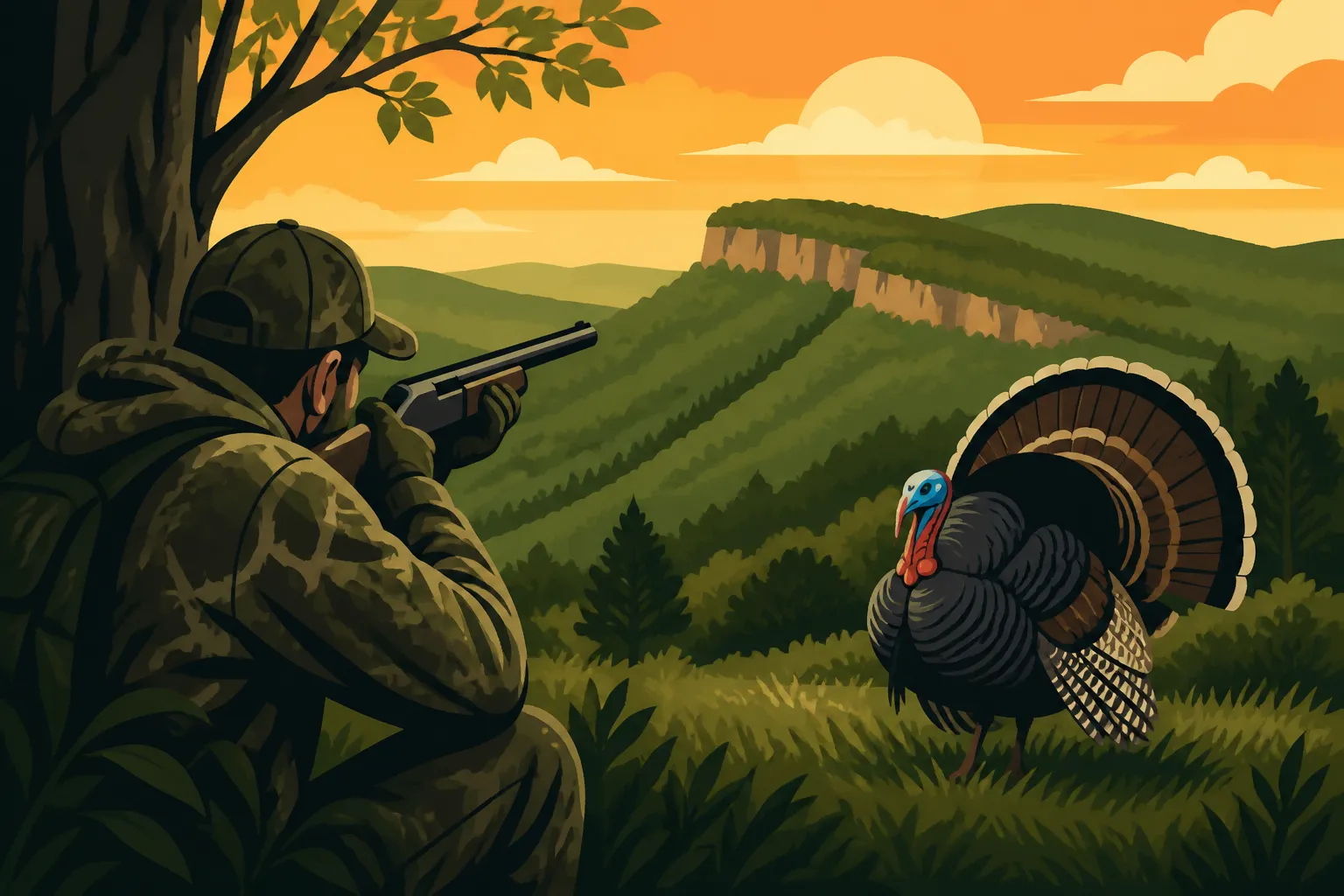
Highland Rim WMA Turkey Hunting
The pursuit of a spring gobbler on public land can feel like chasing a ghost, especially when you're navigating the sprawling, diverse terrain of a place like the Highland Rim Wildlife Management Area. It's easy to get frustrated when birds go silent or seem to vanish into thin air, and finding a productive spot away from the crowds can be a real headache. This guide is here to cut through that frustration, offering practical strategies and insights specifically tailored to hunting wild turkeys on the Highland Rim WMA, helping you transform those tough hunts into rewarding experiences.
Understanding the Highland Rim WMA Landscape for Turkeys
The Highland Rim WMA isn't your typical flat agricultural land where turkeys might be easy to pattern around open fields. Instead, it presents a unique blend of rolling hills, deep hollows, mixed hardwood forests, thick cedar groves, and scattered open areas that demand a different approach. This diverse topography means that turkeys here behave differently, and understanding their movement patterns in this specific environment is crucial for success. You’ll find yourself traversing ridges and dropping into creek bottoms, often with dense undergrowth that can make both seeing and hearing birds a challenge.
Topography and Habitat Challenges
The Highland Rim is characterized by its "rim" formation, a transitional zone between the flat plains and the more mountainous regions. This results in a landscape of undulating hills, steep ravines, and fertile creek bottoms. For turkey hunters, this means dealing with elevation changes that can significantly impact sound travel and visibility. A gobbler on a facing ridge might sound incredibly close, only to reveal itself to be hundreds of yards away, with a deep hollow separating you. Conversely, a bird in a bottomland might be completely inaudible until you're right on top of it.
The habitat itself is a mixed bag. You'll encounter mature hardwood stands, often on the higher elevations, providing excellent roosting trees. As you descend into the hollows and creek beds, the timber can become denser, with a mix of pine, cedar, and younger hardwoods creating thick cover. Scattered food plots or old logging decks might offer small openings. This patchy distribution of cover and food sources means turkeys are constantly moving, forcing hunters to adapt and cover a lot of ground. It's not uncommon to spend a morning walking miles, listening intently, only to find the birds are using a completely different section of the WMA that day.
Key Turkey Behaviors in This Terrain
Turkeys on the Highland Rim WMA often exhibit behaviors that are a direct response to their environment and the hunting pressure they receive. They are masters of using the terrain to their advantage, making them frustratingly elusive if you don't anticipate their moves. Gobblers, especially, tend to roost on prominent ridges or in large, mature trees overlooking hollows, giving them a commanding view and a good listening post for morning calls. They will often pitch down into nearby fields or along creek bottoms to feed, or simply stick to the dense timber.
Their travel routes are often dictated by the topography. Expect birds to use ridge lines for easy movement, logging roads or old farm paths as corridors, and the bottoms of drainages to navigate between feeding and roosting areas. They're adept at "slipping off the back side" of a ridge when approached, using the terrain to disappear silently. During the day, particularly after the morning gobbling subsides, they might become incredibly quiet, moving through thick cover, making them nearly impossible to locate without prior scouting or a bit of luck. Understanding Turkey Tactics for Farmland Field Edges might offer some crossover if you find smaller, open agricultural plots within the WMA, but generally, expect more timber-focused movement.
Scouting and Pre-Season Prep for Highland Rim Gobblers
You wouldn't head into a major sporting event without a game plan, and turkey hunting on the Highland Rim WMA is no different. Effective scouting and preparation before the season opens are paramount to success, especially on public land where you're competing with other hunters for prime spots and pressured birds. This isn't just about finding turkeys; it's about understanding how they use the land, where they're likely to be, and how to get to them without blowing your cover or bumping other hunters.
Utilizing Mapping Tools
In today's hunting world, digital mapping tools are an absolute game-changer, and they are especially valuable on a WMA with varied terrain like the Highland Rim. Platforms like onX Hunt and GoHunt can provide an incredible amount of information right at your fingertips, helping you scout virtually before ever setting foot in the woods. You can pour over satellite imagery, topo maps, and public land boundaries from the comfort of your home. Look for those dark green patches of mature timber on ridge tops – prime roosting locations. Identify open areas, old logging roads, and powerline cuts that turkeys might use for feeding or travel.
Mark potential access points, parking areas, and trails. More importantly, identify areas that are difficult to access, perhaps requiring a longer walk or traversing rougher terrain. These are often the spots that see less pressure, increasing your odds of finding a less wary gobbler. Using the topo lines, you can plan your approach routes, understanding the elevation changes you'll encounter and how they might affect sound or visibility. Don't just look for where the birds might be; strategize how you'll get there silently and set up effectively. Scouting With the Tennessee TWRA App can also complement these third-party tools by offering WMA-specific regulations and boundaries.
Identifying Roosting Areas and Travel Corridors
While digital maps give you a fantastic overview, nothing beats boots on the ground for confirming turkey activity. Before the season, ideally in late winter or early spring, make a few trips to the Highland Rim WMA. Focus your physical scouting efforts on those areas you've identified via your mapping apps as potential roost sites. Look for large, mature trees, especially hardwoods like oaks or hickories, on prominent ridge lines or overlooking hollows. Search for turkey droppings, shed feathers, and wing marks on branches, all signs of active roosts.
Pay close attention to travel corridors. Turkeys are creatures of habit, and they will often use the path of least resistance. This means old logging roads, faint deer trails along ridge lines, or the edges of creek bottoms can be hotspots for turkey traffic. Look for tracks in soft dirt or mud, dusting bowls where they take dirt baths, and scratchings in the leaf litter where they've been feeding. Walking these areas at dawn or dusk can also give you an idea of potential fly-down or fly-up routes, and more importantly, allows you to listen for gobbling and pinpoint exactly where birds are roosting. This pre-season intel is invaluable and will save you countless hours of wandering aimlessly once the season kicks off. Scouting Tennessee Public Land Before Season is a great resource for more general public land scouting tips.
Effective Calling and Setup Strategies on the Highland Rim
Calling a wary spring gobbler is an art form, and it becomes even more nuanced when you're hunting the rolling hills and dense timber of the Highland Rim WMA. The terrain itself can be your biggest ally or your fiercest foe, dictating how far your calls carry, where a bird might approach from, and the best place to set up for a shot. Generic calling sequences won't always cut it here; you need to adapt your vocalizations and your physical setup to the unique challenges of the landscape.
Adapting Calls to the Terrain
One of the biggest lessons you'll learn on the Highland Rim is how quickly sound can be absorbed or distorted by elevation changes and thick cover. A gobble or a yelp that sounds like it's just over the next knoll could actually be hundreds of yards away, on the other side of a deep hollow. For this reason, it's essential to have a range of calls and be ready to switch them up. When trying to locate distant birds, especially in the early morning when they're still on the roost, louder calls like a box call or a sharp, piercing diaphragm cut can help penetrate the timber and carry across valleys. These are excellent for getting a shock gobble.
However, once you've located a bird and are working to close the distance, subtlety becomes key. As the turkey gets closer, or if it's already in thick cover, switch to softer, more realistic clucks, purrs, and soft yelps using a slate call or a quiet diaphragm. Remember, you're trying to convince a wary bird to commit, not blast it with sound. If a bird is hung up, a soft tree yelp or a lost hen call might be the confidence boost it needs. Experiment with calling volume and cadence, letting the turkey dictate the conversation. Calling a Tennessee Gobbler Off the Roost provides further insights into initial vocalizations.
Setting Up for Success in Hilly Country
Your setup on the Highland Rim WMA is just as crucial as your calling. You can make the perfect call, but if you're in a bad position, that gobbler will likely bust you or hang up out of range. The primary goal is to choose a spot that offers you good visibility and a clear shot lane, while also providing concealment and dictating the turkey's approach. Avoid setting up on the very top of a ridge, as turkeys are notorious for cresting a hill just out of sight, searching for the hen they heard, and then spotting you. Instead, position yourself just below the crest, perhaps 15-20 yards down, so the bird has to come fully over the rise before seeing anything.
Look for a natural backrest like a large tree trunk or a rock outcrop to break up your silhouette and give you cover. Ideally, you want to be able to see a good distance in the direction you expect the turkey to approach from, but also have some decent shooting lanes. Consider using a ground blind if the cover is sparse or if you anticipate prolonged sits, as it offers excellent concealment and allows for slight movements. Using a Ground Blind on Tennessee Public Land can be a lifesaver in these situations. If you're using decoys, place them where the gobbler will see them from a distance, but also where it has to come into your shooting lane to investigate. Sometimes placing the decoy just over a small rise can work wonders, forcing the gobbler to come looking. Decoy Placement for Pressured Tennessee Birds is a useful guide for optimizing your spread.
Navigating Hunting Pressure and Public Land Etiquette
Hunting turkeys on public land, especially a popular WMA like the Highland Rim, often means dealing with hunting pressure. It's a reality that can be frustrating, but it doesn't have to ruin your hunt. Instead, seasoned hunters learn to anticipate and adapt to pressure, using strategies that allow them to find success even when other hunters are in the woods. Part of this involves actively seeking out less-traveled areas, and another part is understanding and practicing good public land etiquette to ensure a positive experience for everyone.
Strategies for Finding Unpressured Birds
When you pull into a WMA parking lot and see a dozen other trucks, it's easy to feel disheartened. But don't give up! The key to finding unpressured birds on the Highland Rim WMA often boils down to two things: effort and smart planning. Most hunters tend to stick close to easily accessible roads and trails. This means that if you're willing to walk further, often a mile or more into the woods, you can often leave the crowds behind. Use your mapping apps, like onX Hunt or GoHunt, to identify those deep pockets of habitat that are a significant distance from any road or obvious access point. These are the areas where birds are less likely to have been called at or bumped.
Another strategy is to hunt during weekdays rather than weekends, if your schedule allows. The pressure tends to be significantly lighter during the week. Additionally, consider hunting later in the morning or early afternoon. Many hunters head out at first light and are gone by 9 or 10 AM, leaving the woods quieter for the remainder of the day. Turkeys that have been bumped or called at unsuccessfully in the early hours might become more responsive later on. Finally, don't be afraid to hunt less "traditional" spots. Sometimes the thickest, nastiest cover that's a pain to navigate holds birds simply because other hunters avoid it. Finding Ground Others Walk Past is an excellent read for more ideas on this.
Respecting Fellow Hunters
While finding unpressured birds is a goal, it's equally important to foster a respectful environment on public lands. Remember, everyone is out there to enjoy nature and pursue game, and common courtesy goes a long way. If you arrive at a parking area and see other vehicles, particularly if you know the area well, consider moving to a different spot to give others space. If you encounter another hunter in the woods, a polite wave or a quiet acknowledgment is usually sufficient. Avoid setting up too close to another hunter, and if you hear a bird being worked by someone else, back out quietly and find another area.
Always be aware of your surroundings, especially when calling. It's not uncommon for hunters to "run and gun," moving quickly to locate birds, but always know what's beyond your line of sight. Safety should be paramount. While turkey hunting doesn't require blaze orange in Tennessee, wearing a bit of visible color when walking in and out can't hurt, especially if deer season overlaps or you're hunting during Tennessee's Gun Deer Season Into January (though not for turkeys!). Lastly, always pack out everything you pack in, and leave no trace. Public land is a shared resource, and by treating it with respect, we ensure it remains a great place to hunt for years to come.
Highland Rim WMA Turkey Hunting Summary
Hunting wild turkeys on the Highland Rim WMA offers a unique challenge and a rewarding experience for those willing to learn its nuances. The varied terrain, from rolling hills and deep hollows to mixed forests and scattered openings, requires hunters to think critically about turkey behavior and adapt their strategies. Success hinges on a combination of thorough pre-season scouting, leveraging modern mapping tools, and implementing intelligent calling and setup techniques tailored to the landscape.
Remember that hunting pressure is a reality on public land, but it can be managed by seeking out less accessible areas and understanding when and where other hunters might be. By respecting your fellow hunters and practicing ethical hunting habits, you contribute to a positive experience for everyone. With careful planning, persistent effort, and a keen understanding of the Highland Rim's unique environment, you can significantly increase your odds of calling in a Tennessee gobbler and enjoying a successful spring season.
| Strategy Component | Key Considerations for Highland Rim WMA | Why It Matters |
|---|---|---|
| Mapping Tools | Utilize onX Hunt/GoHunt for topo, satellite, boundaries, access points. | Identify roosts, travel corridors, low-pressure zones. |
| Physical Scouting | Look for droppings, tracks, dusting bowls; listen for gobbling on ridges/hollows. | Confirms digital intel, identifies fresh sign, actual roost sites. |
| Calling | Louder calls for distance (box/diaphragm) across valleys; soft calls (slate/diaphragm) for close-in work. | Terrain absorbs sound; adapt to bird's distance and cover. |
| Setup | Position below ridge crests, use natural backrests; clear shooting lanes. | Prevents gobbler from spotting you, dictates approach for a shot. |
| Pressure Management | Walk further, hunt weekdays/later mornings; explore thick, less-accessible areas. | Increases chances of finding less wary birds; avoids crowded spots. |
| Ethical Hunting | Give other hunters space; practice quiet entry/exit; pack out all trash. | Ensures a positive experience for all and preserves the resource. |
Disclaimer
This article is for general informational purposes only and does not constitute professional advice. Laws, prices and regulations vary by location and change over time. Consult a qualified professional for guidance on your specific situation.