Wilson County Public Land for Deer
Finding deer hunting opportunities in rapidly developing areas like Wilson County, especially on public land, can feel like an impossible puzzle. With urban sprawl from Nashville pushing outwards, accessible hunting spots seem to shrink every year, leaving many hunters frustrated and wondering if they'll ever get a chance close to home. This guide is here to help you navigate those challenges, uncover what public land options do exist in Wilson County, and equip you with the strategies and tools to make the most of these often overlooked spots for deer hunting.
Understanding the Wilson County Landscape for Deer Hunters
Wilson County, nestled just east of Nashville, is a unique beast when it comes to deer hunting. Unlike the vast tracts of national forest in East Tennessee or the expansive river bottomlands out West, Wilson County's landscape is a mosaic of suburban development, rolling farmlands, and increasingly fragmented timber blocks. This means that while deer certainly thrive here – often in surprising numbers right alongside human activity – finding public access to them is a much different ballgame.
The Challenge of Suburban Pressure
The proximity to Nashville brings a significant amount of human activity and pressure to the area. Residential developments, new commercial zones, and increased traffic all contribute to less contiguous habitat for deer. This fragmentation means deer often exist in smaller pockets, using creek bottoms, utility easements, and small woodlots as corridors. For the public land hunter, this translates into smaller, often isolated parcels that require more intense scouting and a different approach than hunting sprawling wilderness areas. You're not looking for miles of untouched forest; you're looking for overlooked sanctuaries and travel routes within a more developed context. It's a tough pill to swallow when you dream of big woods hunting, but it's the reality here.
Scattered and Limited Public Land Options
Let's be upfront: Wilson County isn't teeming with massive public hunting areas. You won't find a sprawling Wildlife Management Area (WMA) covering thousands of acres dedicated solely to hunting within its borders in the same way you might in other parts of the state. Instead, public land here comes in smaller, often less obvious packages. These typically include smaller state-managed areas, Corps of Engineers land around reservoirs, and sometimes even municipal properties that allow limited hunting. The key is knowing where these smaller pieces of the pie are and, more importantly, understanding the specific rules that govern them, which can vary wildly from one tract to another. Many hunters just give up at this point, assuming nothing exists, but with a bit of legwork, opportunities can be found.
Identifying Public Deer Hunting Opportunities in Wilson County
While large-scale public hunting areas are scarce, there are indeed pockets of public land in and around Wilson County that offer deer hunting. These spots are often smaller, require careful scouting, and might be subject to special regulations or quota hunts. Patience and persistence are absolutely essential here.
Percy Priest Lake Corps of Engineers Lands
One of the most significant public land opportunities around Wilson County comes in the form of U.S. Army Corps of Engineers (USACE) lands bordering Percy Priest Lake. While not entirely within Wilson County, portions of these lands are easily accessible to residents and fall under similar hunting pressure dynamics. These tracts are often narrow strips of timber along the lake shore, or small, disconnected patches further inland, managed for public recreation.
Hunting these areas means dealing with other users – hikers, anglers, and boaters – especially on weekends. It also means understanding the specific USACE regulations, which can sometimes differ from standard statewide Tennessee Wildlife Resources Agency (TWRA) rules regarding things like access points, specific weapon types, or even dates. These areas are fantastic places to scout for deer sign along water edges and in overlooked thickets that get less foot traffic. The deer here often use the water itself as a sanctuary, moving between islands or across narrow channels.
State Natural Areas and WMAs (Limited)
While a large WMA isn't characteristic of Wilson County, some smaller state natural areas or designated public lands might offer limited deer hunting opportunities, sometimes via draw or special permit. It’s crucial to check the current TWRA annual hunting guide and the specific regulations for any such area each year, as rules can change. These might be small, isolated woodlots or riparian corridors managed for conservation that have an archery-only season or very limited firearms opportunities.
For instance, some smaller state properties might participate in Tennessee Deer Season Structure Explained or have specific youth hunts. These are the kinds of spots where using a tool like onX Hunt becomes invaluable. You can zoom in and identify these smaller green-shaded public parcels, even those you might otherwise drive right past without realizing they're huntable. It saves hours of driving around hoping to spot a public land sign.
Understanding Special Hunt Rules and Regulations
Given the fragmented nature of public land in Wilson County, you'll often encounter specific rules that dictate how and when you can hunt. Many smaller tracts will be archery-only zones due to their proximity to residential areas or high recreational use. Others might have antler restrictions or specific bag limits that differ from the general statewide rules. It's not uncommon to find areas designated for Hunting the Rut in Early November that are archery-only, for example.
You also need to be acutely aware of safety zones around dwellings and public roads. The general rule of thumb is a 150-yard setback from occupied buildings when discharging a firearm, but always verify the specific local ordinances and TWRA regulations for the parcel you intend to hunt. This hyper-local focus on rules can be cumbersome, but it's non-negotiable for a successful and legal hunt. It's a big reason why many hunters simply give up, but for those who persist, it can lead to less pressured animals.
Scouting and Strategy for Small Public Tracts
Hunting these smaller, often pressured public parcels in Wilson County demands a different approach than hunting expansive wilderness. Your success will hinge on meticulous scouting, understanding deer behavior in a fragmented landscape, and being adaptable.
Leveraging Digital Tools for Pre-Season Scouting
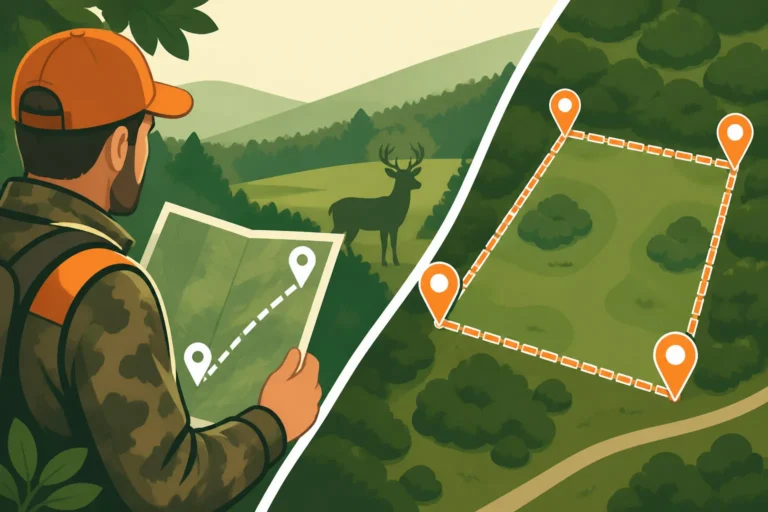
Before you ever set foot in the woods, the best strategy is to spend time scouting digitally. This is where modern apps like onX Hunt shine. You can zoom in on Wilson County and identify every parcel of public land, differentiating between WMAs, Corps of Engineers land, state forests, or other accessible areas. More importantly, onX Hunt allows you to see property lines, landowner names (on private parcels, which helps for asking permission), and aerial imagery that reveals crucial details like creek beds, old logging roads, clear-cuts, and subtle elevation changes.
You can virtually walk the land, identifying potential pinch points, bedding areas, and food sources that might be hidden from a road view. For example, you can spot a small, overgrown thicket that serves as a bedding area, or a narrow strip of timber connecting two larger woodlots—a perfect funnel for deer movement. Scouting Tennessee Public Land Before Season becomes much more efficient when you can eliminate unproductive ground from your living room. Likewise, GoHunt provides excellent resources for understanding regulations, drawing odds (for specific quota hunts), and sometimes even harvest data specific to counties, giving you an edge in determining where to focus your limited time.
On-the-Ground Reconnaissance and Reading Sign
Once you've identified promising areas digitally, it's time for boots-on-the-ground scouting. Even in smaller public parcels, deer will seek out seclusion and security. Look for the thickest cover, even if it's just a dense briar patch or a small stand of pines. These are often their bedding areas. Pay close attention to transition zones—where different types of cover meet, or where a woodline meets a field edge. These are natural travel corridors.
Deer sign will tell you a lot. Fresh tracks, droppings, rubs, and scrapes indicate recent activity. In these smaller, pressured areas, deer often become more nocturnal, moving heavily after dark. Focus your attention on morning and evening hunts, setting up close to bedding areas or key travel routes. Think about how deer will move through this specific parcel to get from a bedding area to a food source, or simply to evade human activity. You might find success with a mobile setup, like a Hanging a Stand on a Cumberland Ridge or a saddle, rather than a fixed stand, allowing you to adapt to fresh sign.
Adapting to Hunting Pressure
These public lands, being limited, will inevitably see hunting pressure. This is a reality, and you need to plan for it. Deer will quickly learn where the pressure is coming from and adjust their patterns. This often means they will utilize the thickest, nastiest cover available, or become more active during low-light hours. Don't be afraid to walk a little further, push into areas others avoid, or hunt mid-week when pressure is lighter.
Consider your entry and exit routes carefully to minimize disturbance. If you're hunting an area near a popular hiking trail, plan your approach to avoid disturbing deer or other users. A ground blind brushed into a field edge can be very effective in these settings, as it provides concealment and a less intrusive presence than a treestand in some situations. Using a Ground Blind on Tennessee Public Land offers excellent advice on this. The deer in these areas are often incredibly smart, and your ability to be stealthy and unpredictable will directly impact your success.
Effective Hunting Tactics for Wilson County Deer
With limited public land and often pressured deer, hunters in Wilson County need to be particularly strategic about their tactics. Forget the wide-open calling sequences; think stealth, precision, and understanding subtle deer behavior.
Still-Hunting and Stand Placement in Small Woodlots
In smaller woodlots and fragmented timber, traditional still-hunting can be incredibly effective, especially if you move slowly and deliberately, pausing frequently to observe. The key is to blend in and use the terrain to your advantage. Focus on creek bottoms, natural funnels, and dense cover where deer feel secure. If you're setting a stand, consider its location not just for current sign, but for how deer will react to pressure. Often, the best stand is tucked into the thickest, least inviting spot, just off a main trail, catching deer that are trying to slip by undetected.
For example, if you've identified a narrow strip of woods between a subdivision and a small agricultural field, that strip becomes a major travel corridor. Your stand should be placed on the downwind side, ideally where the strip bottlenecks, to catch deer moving between bedding and feeding areas. Don't overlook the opportunity to hunt during Hunting the Late-Season January Lull, as colder temperatures often push deer to food sources, and pressure may have dwindled.
Utilizing Terrain and Cover for Ambush Points
Even in relatively flat Wilson County, subtle changes in terrain can create ambush points. A small rise, a drain, or a slight depression can hide your approach and give you an advantage. Deer will use these features for cover and to avoid being seen. Look for natural funnels created by fences, water bodies, or even thick brush lines. These are places deer have to pass through, making them prime ambush locations.
Consider the example of a small patch of timber surrounded by fields. The deer will likely bed in the timber and move out to the fields to feed, especially at night. Your best bet is to set up along the edge of the timber, where it meets the field, preferably where a small dip or a line of thick brush allows you to approach undetected. Pay close attention to wind direction, as deer will always try to use the wind to their advantage, especially when traversing open areas. Wind and Thermals on a Ridge System is relevant even in flatter terrain, as thermals can still create swirling winds in creek bottoms or around small topographical features.
Table: Wilson County Public Land Hunting Checklist
To help you stay organized and maximize your chances on these tricky public lands, here's a quick checklist of essential considerations:
| Checklist Item | Importance | Notes & Considerations |
|---|---|---|
| Verify Regulations Annually | Critical | Check TWRA and USACE specific rules for your chosen parcel. |
| Digital Map Scouting (onX) | High | Identify property lines, access points, cover, and funnels. |
| Boots-on-the-Ground Scouting | High | Confirm digital findings, locate fresh sign, assess pressure. |
| Wind & Thermal Awareness | Critical | Plan entry/exit and stand placement for optimal scent control. |
| Stealthy Entry/Exit | High | Minimize disturbance to avoid educating deer. |
| Mobile Stand Options | Medium (High for archery) | Saddle or lightweight climber/hang-on for adapting to fresh sign. |
| Ground Blind Option | Medium (High for field edges/pressure) | Good for concealment, especially where treestands are visible. |
| Blaze Orange/Pink Compliance | Mandatory | Always wear required hunter orange/pink during applicable seasons. |
| Backup Food/Water | Medium | Even short hunts can require sustenance. |
| Harvest Reporting Plan | Critical (Post-harvest) | Know how to report your deer promptly if successful. |
The Importance of Ethical Hunting Practices
Hunting on public land, especially in more populated areas, means you are an ambassador for all hunters. Always respect property boundaries, retrieve your game quickly and efficiently, and leave no trace of your presence behind. Be courteous to other outdoor users, even if they aren't hunters. Following Tennessee Hunter Education Requirements and practicing responsible hunting helps maintain public access and ensures the future of hunting opportunities in places like Wilson County. It's not just about getting a deer; it's about being a good steward of the land and the sport.
Disclaimer
This article is for general informational purposes only and does not constitute professional advice. Laws, prices and regulations vary by location and change over time. Consult a qualified professional for guidance on your specific situation.