Best Tennessee Counties for Wild Quail
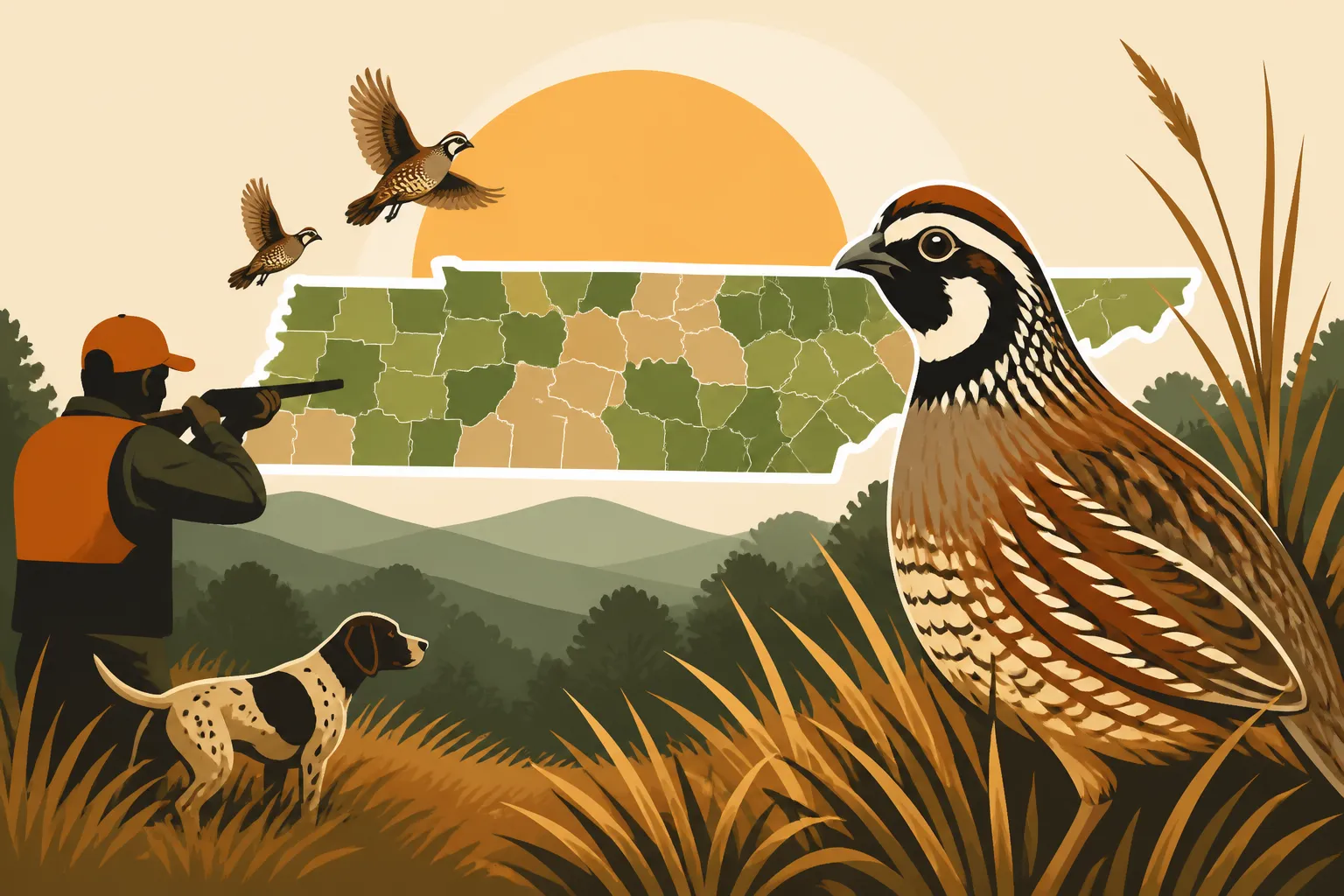
Oh, the elusive whistle of a bobwhite quail! For many of us who grew up hearing those calls echo across Tennessee fields, the current reality of wild quail hunting can feel like a punch to the gut. It's tough, often frustrating, and can leave you wondering if you're chasing ghosts. This guide isn't here to promise you limits, but it will equip you with realistic expectations and point you towards the counties where that iconic covey rise might still be a possibility, helping you understand where to focus your precious scouting time.
The Vanishing Whistle: Understanding Tennessee's Quail Decline
Let's not sugarcoat it: wild quail populations in Tennessee, like in much of the Southeast, have faced significant challenges over the past several decades. What was once a common sound, the "bob-white!" call, is now a treasured rarity for many. Understanding why this has happened is crucial before you even think about where to look.
Historical Abundance and Modern Challenges
Back in the mid-20th century, Tennessee was a bobwhite mecca. Small farms with diverse crops, hedgerows, and mixed timber provided an incredible mosaic of habitat that quail absolutely thrived in. You could walk almost any field edge and expect to flush a covey or two. Fast forward to today, and that landscape has fundamentally changed.
Modern agricultural practices, while efficient for food production, have largely eliminated the "messy" habitat quail depend on. Gone are many of the brushy fencerows, fallow fields, and small woodlots that once offered both food and escape cover. Fields are larger, monocultures dominate, and clean farming leaves little room for the native weeds and insects that make up a quail's diet. Urbanization and sprawling development further eat away at the remaining wild spaces. On top of that, increased predator populations, often thriving in fragmented landscapes, exert additional pressure on already struggling quail numbers. It's a complex web of factors that has unfortunately led to a severe decline. If you want a deeper dive into this issue, check out Tennessee Quail Decline Since the 1960s.
Conservation Efforts and Slow Comeback
Despite the grim picture, it's not all doom and gloom. The Tennessee Wildlife Resources Agency (TWRA) and various conservation organizations are actively working to restore quail habitat. These efforts often focus on land management techniques like prescribed burning, planting native warm-season grasses (NWSG), and creating early successional habitat. Private landowners, too, are increasingly getting involved, realizing the value of managing their property for quail and other small game.
These efforts are often localized and require significant investment, which means the comeback is slow and geographically patchy. You might find incredible quail habitat on one well-managed private parcel, only to find barren fields right across the road. This makes finding birds a true challenge and highlights why focusing on areas with these specific types of habitat management is so important.
Prime Real Estate for Bobwhites: Identifying Quail Habitat
You can't just pick a county and expect quail to be everywhere. Instead, you need to understand what makes a particular piece of ground "quail country." It's all about habitat, and quail are incredibly specific in their needs.
The Ideal Cover and Food Sources
Imagine a quail. It's a ground-dwelling bird, relatively small, and its primary defense is concealment and explosive flight. This means they need dense, low-growing cover for nesting, roosting, and protection from predators. Think of native warm-season grasses like switchgrass, indiangrass, and big bluestem. These grasses grow in clumps, providing overhead cover while remaining open at ground level, allowing the quail to move freely. They also need thicker, brushy cover – think briar patches, plum thickets, and small cedars – to escape hawks and other aerial predators.
When it comes to food, quail are insectivores as chicks and switch to seeds and berries as adults. They need a diverse array of native forb and weed seeds, which grow in disturbed ground or within native grass stands. Think of ragweed, partridge pea, lespedeza, and various smartweeds. These aren't "crop" fields; these are often what some might call "weedy" areas. If you're looking at a property, and it's nothing but fescue, tall timber, or perfectly clean agricultural fields, you can pretty much walk on by.
The Importance of Edge Habitat
Quail are often referred to as "edge species" for a reason. They thrive where different habitat types meet. A perfect quail landscape isn't one monolithic block of native grass; it's a patchwork. You want to see the intersection of good nesting cover (NWSG), escape cover (brushy thickets), and food sources (weedy areas or small agricultural plots).
Think about a fencerow loaded with briars and saplings, bordering a field of native grasses, which in turn borders a small patch of milo or soybeans. That fencerow offers a travel corridor and immediate escape, the grasses provide nesting and bugging grounds, and the cultivated field provides seasonal food. These transitions, or "edges," are where you'll most often find a covey. It's why places with diverse land use, even small, less intensely farmed parcels, often hold the most promise. When you're Rabbit Hunting Tennessee Fencerows, you're often in similar territory where quail might also thrive.
Counties Holding onto Hope: Where to Search for Wild Quail
Given the habitat requirements, the best counties for wild quail in Tennessee aren't necessarily about the overall county size, but about the prevalence of suitable habitat within them. You're looking for pockets, not widespread populations.
West Tennessee's Agricultural Lands
Historically, and even today, West Tennessee holds the most promise for wild quail. This region is characterized by flatter topography and extensive agricultural operations. While monoculture has hurt, there are still areas where specific factors might combine to create quail habitat.
Counties like Fayette, Haywood, Hardeman, and McNairy are often mentioned when discussing remaining quail populations. Why these?
- Diverse Agriculture: While large-scale farming is prevalent, there are still areas with smaller, more diversified farms. These might include fields enrolled in conservation programs like the Conservation Reserve Program (CRP), which often involves planting native grasses.
- Bottomland Hardwoods and River Systems: The extensive river bottom systems, like those along the Mississippi and Hatchie, offer some pockets of natural cover, especially where timber is managed with an eye towards wildlife. These areas might still have open, grassy spots or recent timber cuts that regenerate into prime early successional habitat.
- Private Land Initiatives: Many private landowners in West Tennessee are actively engaged in habitat restoration. Finding these landowners and securing permission is often the key to successful quail hunting in this region. You might be surprised at the difference a dedicated landowner can make, even on smaller tracts. Don't be afraid to try Getting Private Land Permission in Tennessee.
Remember, even in these counties, you're looking for specific parcels, not entire swaths of land. It requires a lot of legwork, or as we like to call it, "boot leather scouting," to locate these precious spots.
Highland Rim and Cumberland Plateau Pockets
While not as historically known for quail as West Tennessee, the Highland Rim and certain parts of the Cumberland Plateau can offer isolated pockets of opportunity. These areas tend to be more rugged, with a mix of timber and smaller agricultural clearings.
- Highland Rim Counties: Counties like Giles, Lawrence, and Wayne can have some decent habitat, particularly where there's a mix of pasture, small fields, and managed timberland. These areas might have small, family-owned farms that haven't fully transitioned to intensive agriculture, leaving behind valuable field edges and brushy draws. Again, it's often private land, so knocking on doors or looking for leases is key.
- Cumberland Plateau: While generally more forested, certain parts of the Cumberland Plateau can have quail. Think specifically about areas with recent timber harvests that have led to early successional growth, or old clearings being allowed to revert to native grasses and brush. These are less common but can be very productive if found. Public lands, particularly certain WMAs, might implement habitat projects that benefit quail, though this is less common for quail than for deer or turkeys. Grouse Hunting the Cumberland Plateau might put you in similar cover types, but grouse prefer older, denser growth than quail.
Here's a quick, general comparison of the regions and their quail potential:
| Region | Typical Habitat Characteristics | Quail Potential (Relative) | Key Challenges |
|---|---|---|---|
| West Tennessee | Diverse agriculture, CRP fields, river bottoms, private land efforts | Higher (localized) | Monoculture, access to private land |
| Highland Rim | Mixed pasture/timber, smaller farms, less intensive agriculture | Medium (patchy) | Habitat fragmentation, private land access |
| Cumberland Plateau | Regenerating clear-cuts, old fields, forest management efforts | Lower (very localized) | Heavy timber cover, rugged terrain |
| East Tennessee | Largely mountainous, heavily forested, limited agriculture | Very Low | Lack of suitable open, early successional habitat |
Using Technology for Habitat Scouting
In this day and age, you don't have to drive every backroad to start your search. Satellite imagery and mapping tools can be invaluable. Platforms like GoHunt, or even publicly available satellite maps, allow you to zoom in on potential areas from your couch.
What are you looking for?
- Field Edges and Irregular Fields: Look for fields that aren't perfectly rectangular or have brushy borders.
- Native Grass Plantings: These often show up as distinct patterns or textures on satellite imagery compared to traditional agricultural crops or fescue pastures.
- Recent Clear-cuts: Identify areas where timber has been harvested, and observe how the regeneration looks. Young, brushy clear-cuts can hold birds for a few years before growing too dense.
- Riparian Buffers/Stream Zones: Often these areas are left less disturbed and can provide linear strips of cover and food.
- CRP Enrollment: While you can't see specific CRP fields on satellite, knowing which counties have high CRP enrollment can guide your physical scouting.
Utilizing a mapping app with different layers, like those often available with a GoHunt membership or the Scouting With the Tennessee TWRA App, can give you a significant advantage. You can mark potential covey headquarters, plan your entry and exit routes, and even Reading Aerial Photos for Cumberland Plateau Deer can translate to quail scouting if you're looking for different habitat features. This allows you to narrow down your focus and make the most of your time in the field.
The Reality of the Quail Hunt: Effort and Expectation
Let's be real: hunting wild quail in Tennessee is a passion project, often more about the experience of finding a covey than about filling a bag. It takes dedication, good bird dogs if you have them, and a realistic understanding of the effort involved.
More Than Just a Walk in the Woods
If you're heading out for quail, you need to commit to covering ground. Unlike deer hunting, where you might sit patiently, quail hunting is an active sport. You'll be walking miles, pushing through thick cover, and relying on your keen eyes and ears (or those of your trusty dog) to pinpoint a covey. This kind of hunting isn't for the faint of heart or those seeking instant gratification.
Being prepared for the conditions is essential. Good boots, tough brush pants to navigate the briars, and a light shotgun are prerequisites. Also, ensure you're familiar with Tennessee Small Game Season Rules and all other regulations before heading afield.
Managing Expectations and Celebrating Small Victories
Gone are the days when you could consistently flush multiple coveys in a morning. Today, finding even one wild covey is a success worth celebrating. It's a testament to good habitat, diligent scouting, and a little bit of luck. The sport is now largely about habitat appreciation, the thrill of the chase, and the sheer joy of seeing a bird dog work.
If you head out with the mindset of enjoying the process, appreciating the hard work of conservationists and landowners, and savoring any bird contact you get, you'll find much more satisfaction. It's about preserving a tradition and witnessing the resilience of these incredible little birds. Finding Ground That Sees Fewer Hunters can also increase your odds, as less pressured birds might hold tighter or be more predictable.
Disclaimer
This article is for general informational purposes only and does not constitute professional advice. Laws, prices and regulations vary by location and change over time. Consult a qualified professional for guidance on your specific situation.