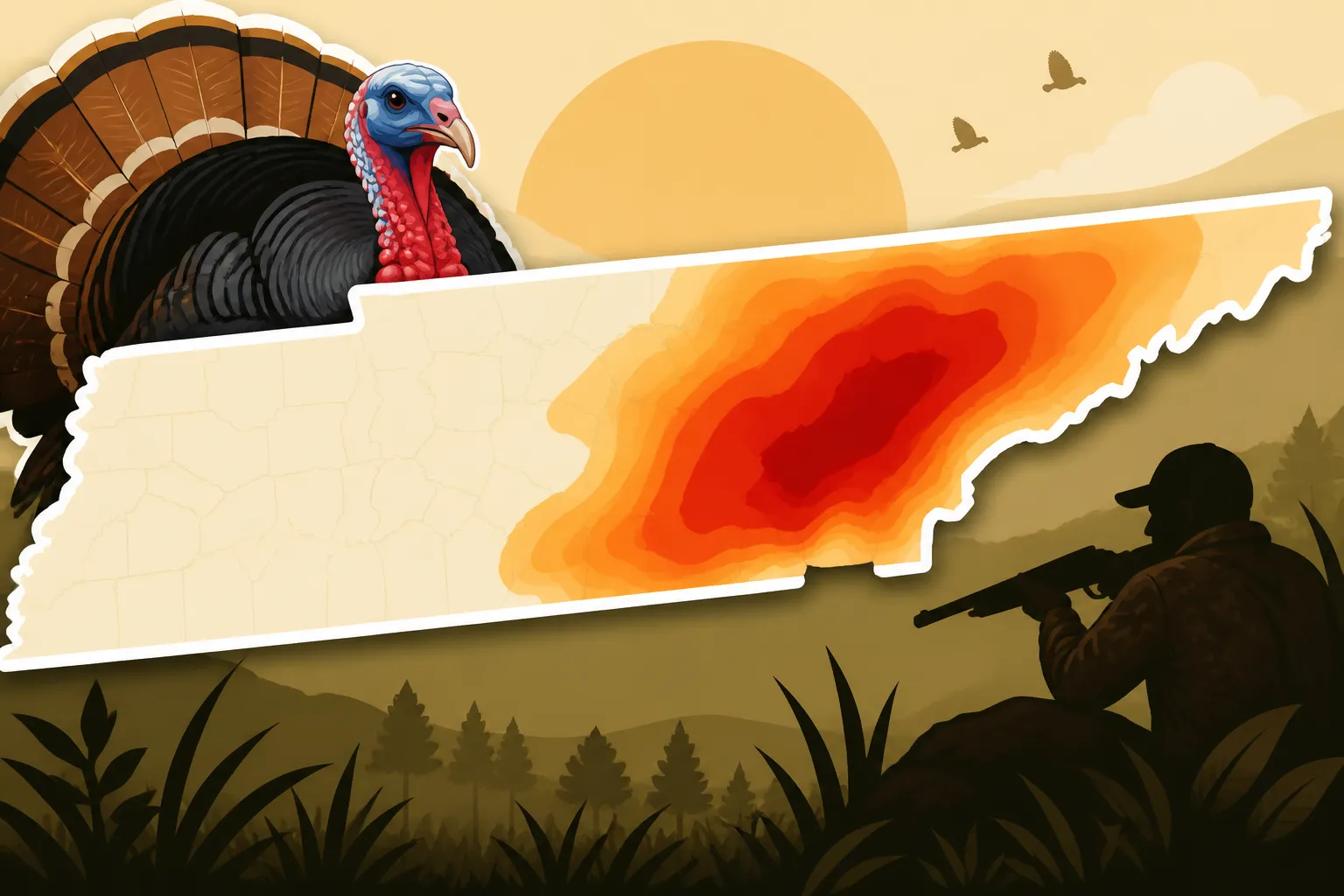
Where Tennessee Turkeys Are Densest
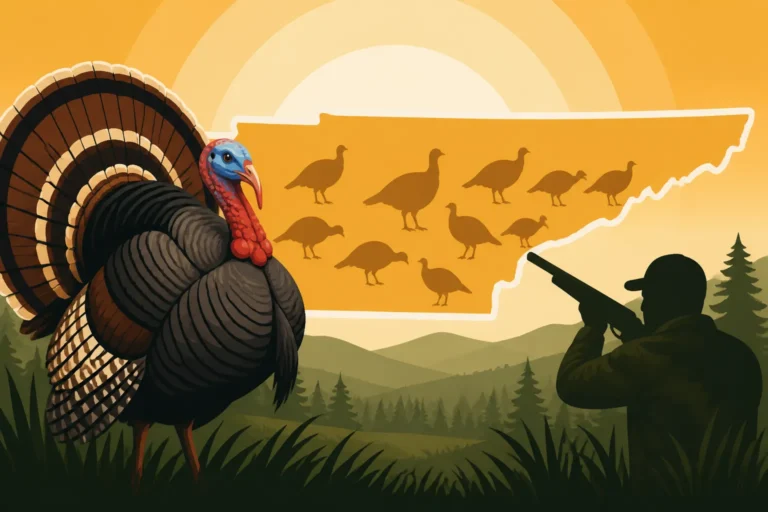
For many Tennessee turkey hunters, the dream isn't just to bag a gobbler, it's to immerse themselves in areas where the woods are alive with the sounds of spring. There's nothing quite like walking into a new area, letting out a soft tree yelp, and having an entire chorus erupt around you. But finding those sweet spots, those pockets of high turkey density where the birds truly thrive, can feel like searching for a needle in a haystack if you don't know what to look for. This guide is all about helping you uncover where Tennessee's wild turkeys are densest, breaking down the habitats and regions that consistently hold the most birds, and giving you the tools to find them yourself.
Understanding What Makes an Area a Turkey Hotspot in Tennessee
When we talk about "turkey density," we're really talking about habitat. Wild turkeys, particularly our Eastern gobblers here in Tennessee, have pretty specific needs. They aren't going to set up shop just anywhere; they need a perfect blend of food, water, cover, and safe roosting sites to truly flourish and reproduce in large numbers. Understanding these fundamental requirements is the first step in identifying where you'll find the most birds.
First and foremost, food is king. Turkeys are omnivores, and their diet shifts throughout the year. In spring, they're gobbling up insects, tender greens, and any leftover mast from the previous fall. Later in the year, acorns, beechnuts, and wild berries become crucial. This means an area with a diverse hardwood forest, particularly one with a healthy population of oaks, hickories, and other mast-producing trees, is going to naturally attract and hold more turkeys. Look for areas with a mix of mature timber and younger, regenerating forest; the mature trees provide the mast and roosts, while the younger growth offers dense cover for nesting hens and poults. Agricultural fields, especially those planted with corn, soybeans, or wheat, can also be huge draws, providing a reliable food source and often overlooked bugging opportunities.
Water is another often-underestimated factor. While turkeys don't need standing water like waterfowl, they do need consistent access to it. Creek bottoms, spring heads, and small ponds are vital components of prime turkey habitat. These areas also tend to hold a higher concentration of insects and other small critters that turkeys love to forage on. Combine excellent food sources with reliable water, and you're already narrowing down the best places.
Finally, cover and roosting sites are non-negotiable. Turkeys, especially at night, seek out tall, sturdy trees with strong horizontal limbs to roost in. Large pines, mature hardwoods, and cypress trees (in West Tennessee bottoms) are common choices. During the day, they need varying levels of cover – dense undergrowth for hens to nest and hide their poults from predators, open woods for foraging, and brushy edges to escape danger. A mosaic of these habitat types, rather than a monolithic block of one kind of timber, is what truly creates a high-density turkey population. When you're scouting, keep an eye out for these key indicators, and you'll be well on your way to locating those prime areas.
Key Regions for Dense Turkey Populations Across Tennessee
Tennessee is a big state, and turkey populations aren't evenly distributed. While you can find turkeys in all 95 counties, some regions consistently boast higher densities due to their unique blend of habitat, land use, and historical management. Understanding these regional strengths can help you focus your efforts and increase your odds of hearing multiple gobblers on a spring morning.
In East Tennessee, particularly along the Cumberland Plateau and its foothills, you'll find extensive tracts of mixed hardwood and pine forests. This varied terrain offers excellent mast production, diverse undergrowth, and plenty of tall trees for roosting. Areas like the eastern portions of the Cumberland Plateau, encompassing counties such as Morgan, Scott, and Fentress, are renowned for their robust turkey populations. These counties often have significant public land holdings, including portions of the Cherokee National Forest and several large Wildlife Management Areas (WMAs), which provide consistent habitat. Hunters here often find success by focusing on ridge systems that connect different elevation changes and food sources. You'll want to explore the specific characteristics of Tennessee Wildlife Management Areas to identify areas that align with good turkey habitat. The rugged topography means birds might be spread out, but where conditions are right, they can be plentiful.
Moving into Middle Tennessee, you'll find a different but equally productive landscape. The Highland Rim and the Central Basin offer a mix of agricultural fields, cedar glades, and hardwood forests. Counties like Maury, Giles, and Lawrence frequently report high turkey harvests, indicating healthy populations. The patchwork of private farmlands combined with smaller public tracts provides turkeys with abundant food sources from crops, while the woodlots and creek drains offer critical roosting and nesting cover. This region often sees turkeys adapting to a more fragmented landscape, utilizing fencerows, small woodlots, and creek corridors to move between feeding and roosting sites. For those interested in the bigger picture, delving into the Tennessee Turkey Population Estimate can offer insights into these regional strengths. It's in these areas that tools like GoHunt become invaluable for private land scouting, helping you identify overlooked pockets of habitat adjacent to agricultural fields or within smaller hardwood blocks.
West Tennessee presents another prime turkey hunting opportunity, often characterized by its expansive bottomland hardwoods, agricultural fields, and river corridors like the Mississippi River. Counties such as Hardeman, McNairy, and Fayette consistently rank among the top for turkey harvests. The fertile river bottoms provide incredibly rich soils for mast production, particularly large oaks, and the vast tracts of timber offer ideal roosting and nesting cover. Turkeys in West Tennessee often have access to huge food sources from the massive agricultural operations, then retreat to the safety of the bottomland forests. The challenge here can be access, as much of the land is privately owned, but where public access exists, such as along river systems or on WMAs like those found near the Tennessee River bottoms, the turkey hunting can be phenomenal. Hunters here often describe a different experience than in the mountains, with birds being found in more predictable patterns around water and timber edges.
No matter the region, the general consensus is that areas with diverse, mature timber, good mast crops, ample water, and sufficient cover tend to hold the densest turkey populations. Using resources like the TWRA's own harvest reports, which often break down harvest by county, can give you a clear indication of historically strong areas.
Here's a generalized look at habitat characteristics and what they typically mean for turkey density in Tennessee:
| Habitat Type | Typical Location | Key Features for Turkeys | Expected Turkey Density |
|---|---|---|---|
| Mature Hardwood Forest | East & Middle TN, Cumberland Plateau | Abundant mast (acorns, hickory), tall roost trees, diverse understory | High |
| Bottomland Hardwoods | West TN, major river systems | Large mast producers, dense canopy for roosting, water access, insect abundance | Very High |
| Mixed Pine/Hardwood | East & Middle TN, transitional zones | Roosting pines, varied food sources, good nesting cover | Medium to High |
| Agricultural Lands | Middle & West TN, interspersed throughout | Abundant food (grains, bugs), typically adjacent to woodlots | High (if adjacent to cover) |
| Cedar Glades/Open Pasture | Middle TN, Central Basin | Limited cover/roosting, some insect forage | Low to Medium (transient) |
| Young Forest/Clear-cuts | Throughout, especially public lands | Excellent nesting/brooding cover, some food sources (berries) | Medium (depends on age) |
Habitat Clues and Scouting for High-Density Turkey Zones
Even with general knowledge of regions, the real work begins on the ground (or from above with maps). Finding those truly dense turkey pockets requires diligent scouting and knowing what specific signs to look for. It's not just about broad landscapes; it's about the micro-habitats within them.
One of the most obvious signs of high turkey density is, of course, turkey sign. We're talking about droppings (both gobbler "J" shaped and hen clumpy), scratchings in the leaves where they've been foraging for insects and nuts, and wingtip drag marks on dusty roads or trails. Fresh tracks in mud or soft dirt are another dead giveaway. The more of this sign you find, especially fresh sign, the more confident you can be that you're in an area holding a good number of birds. Pay particular attention to areas around mature mast trees, creek bottoms, and field edges.
Roosting areas are paramount. Turkeys will often use the same roost trees or general roosting area night after night, as long as they feel safe and food sources are nearby. Look for large, mature trees, often pines or oaks, with strong horizontal limbs. You'll typically find an accumulation of droppings underneath these trees. Identifying a reliable roosting area is like finding gold; it gives you a starting point for your morning hunt and helps you understand general turkey movement patterns. Using an app like GoHunt can really help here, allowing you to mark potential roosting areas on your map and analyze the surrounding terrain. Being able to visualize elevation changes, water sources, and different timber types is crucial. Checking out Where Tennessee Gobblers Roost can give you even more specific tips for identifying these vital locations.
Consider the "edge" habitat. Turkeys love edges – where a field meets a woodline, where a clear-cut meets mature timber, or where a creek bottom meets a ridge. These transition zones offer a variety of food sources and cover types within a short distance, making them highly attractive to turkeys. A mature oak stand might provide mast, while the adjacent field offers bugs and green shoots. The thicker cover along the edge provides safety. Scouting these edges, especially in the late afternoon, can often reveal birds moving from feeding to roosting areas.
Don't forget the importance of listening. While not strictly "scouting" in the visual sense, listening for gobblers, especially during the pre-season or on early morning scouting trips, is the ultimate confirmation of density. If you can hear multiple birds gobbling from different directions before the season even opens, you know you're in a high-density area. This also helps you understand the Tennessee Turkey Population Estimate on a very local level. Pay attention to how turkeys use the landscape, how they travel from roost to feeding, and where they tend to gather. Every piece of information helps paint a clearer picture of where the densest populations reside.
Maximizing Your Hunt in Dense Areas and Handling Pressure
Finding a high-density turkey area is a fantastic start, but it doesn't automatically guarantee a successful hunt. Often, these areas, especially on public land, can also experience significant hunting pressure. Learning to adapt your tactics to these conditions is key to actually filling your tag.
Firstly, recognize that density doesn't always mean easy hunting. When there are a lot of birds, there are often a lot of hunters too. Public lands with known high turkey populations, such as popular Wildlife Management Areas or sections of the Cherokee National Forest, can see considerable pressure, particularly on opening day and during the Tennessee Spring Turkey Opening Day. These birds quickly become "call-shy" or "hunter-shy." This is where strategy comes into play, and you might need to adjust your approach from simply setting up and calling.
One effective strategy is to get further away from easy access points. Most hunters won't walk more than a half-mile or so from a road or parking area. By being willing to put in the extra legwork, you can often find birds that haven't been as heavily pressured. Use a mapping app, like GoHunt, to identify remote corners of public land, deep hollows, or ridge systems that are a good distance from common entry points. These longer treks often lead to birds that are more responsive to calling. This might mean practicing Run-and-Gun Turkey Tactics on Public Land to cover more ground quietly.
Another tactic in high-density, high-pressure areas is to be extremely patient and observe more than you call. Instead of aggressively calling, try softer, more infrequent calls. Sometimes, just letting out a soft tree yelp or cluck and then waiting patiently is all it takes to pique a gobbler's interest without alerting him to your presence as a potential hunter. Understanding When Tennessee Gobblers Go Quiet in May can help you recognize when this approach is most effective, as birds become less vocal later in the season. Consider setting up near known roosting sites well before daylight and just listening. When birds fly down, they may move quickly to feed, and you can intercept them with minimal calling.
Finally, managing your expectations is important. While finding a dense area increases your odds, turkey hunting still involves skill, patience, and a bit of luck. The excitement of hearing multiple gobblers is a reward in itself. Enjoy the challenge, learn from each outing, and remember that even in the densest areas, turkeys are still wild animals that require respect and smart hunting strategies. After a successful hunt, make sure you understand Tennessee Turkey Checking Requirements to ensure your harvest is properly reported.
Disclaimer
This article is for general informational purposes only and does not constitute professional advice. Laws, prices and regulations vary by location and change over time. Consult a qualified professional for guidance on your specific situation.