Why Red Wolves Vanished From Tennessee
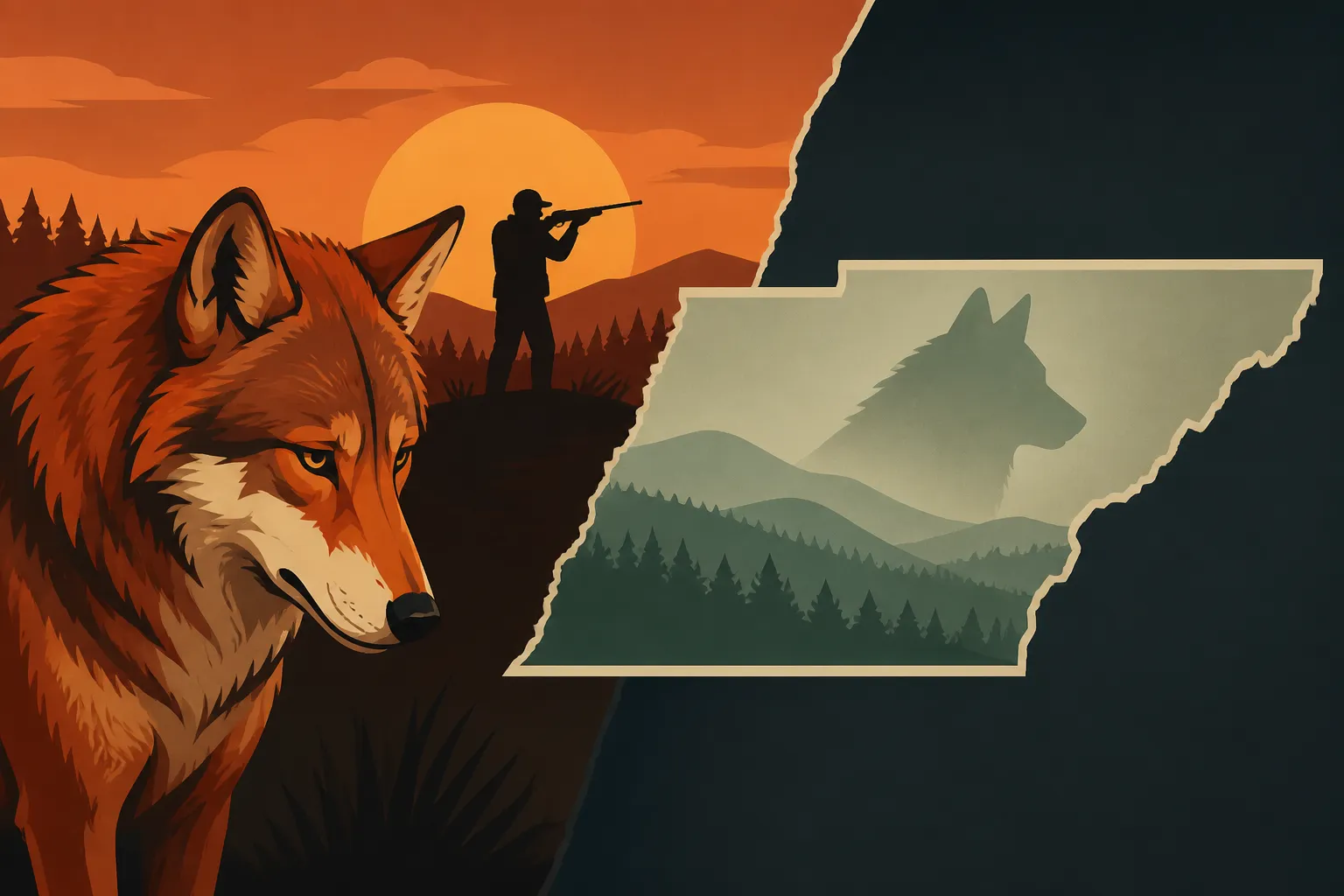
It's a bittersweet thought to realize that Tennessee, with its rich tapestry of wild landscapes from the Cumberland Plateau to the Mississippi River bottomlands, was once home to an iconic predator that no longer roams our woods: the red wolf. For many of us, the idea of wolves in Tennessee feels like something out of a history book, an echo from a bygone era. We often wonder why such a magnificent creature vanished from our state, leaving behind only historical records and conservation efforts far from our borders. This guide delves into the fascinating and ultimately tragic story of the red wolf in Tennessee, exploring the multifaceted reasons behind its disappearance and the legacy it leaves for wildlife management today.
A History of Red Wolves in Tennessee
To truly understand why the red wolf vanished from Tennessee, we first have to appreciate its place in the historical ecosystem of our state and the broader southeastern United States. These aren't creatures that simply passed through; they were integral to the balance of nature here for thousands of years. Their story is deeply intertwined with the very landscape many of us hunt and enjoy today.
The Red Wolf's Original Range
Historically, the red wolf (Canis rufus) was a resident of a vast territory stretching across the southeastern United States. Imagine a map, and you’d see their paw prints from the Atlantic and Gulf coasts of Texas, Louisiana, Mississippi, Alabama, and Florida, all the way north through Georgia, the Carolinas, and yes, deep into Tennessee, Arkansas, and even southern Illinois and Indiana. Tennessee sat right in the heart of this ancient range. Red wolves were particularly at home in the varied habitats offered by our state—the dense forests of East Tennessee, the rolling hills and agricultural areas of Middle Tennessee, and the cypress swamps and river bottomlands of West Tennessee. Unlike their larger cousins, the gray wolves, who preferred more open, colder territories, red wolves were adapted to the warmer, more humid, and often densely vegetated landscapes of the Southeast. They were built for these environments, smaller and more slender than a gray wolf, making them agile predators in thick cover. Their reddish-brown fur often blended seamlessly with the autumnal colors of our hardwoods, a testament to their long adaptation to this unique corner of the world.
Ecological Role of Red Wolves
Before their numbers plummeted, red wolves played a vital role in maintaining the health and balance of Tennessee’s ecosystems. As apex predators, they sat at the top of the food chain, primarily preying on deer, rabbits, raccoons, and other small to medium-sized mammals. This wasn't just about survival for the wolves; it was about natural regulation for the prey species. By hunting, they helped control deer populations, preventing overgrazing that could degrade forests and impact other wildlife. They often targeted the weak, old, or sick animals, which, in turn, strengthened the overall health and genetics of the prey herds. This natural culling meant healthier deer, a more vibrant forest understory, and a more robust ecosystem all around. They acted as environmental engineers, shaping the landscape through their predation and ensuring a dynamic equilibrium. Imagine walking through a mature oak stand on the Cumberland Plateau; historically, the presence of red wolves would have influenced everything from the browsing habits of deer to the population dynamics of smaller furbearers. This ecological pressure kept the system resilient and diverse. White-Tailed Deer Across Tennessee were certainly part of their natural diet, much like today's coyotes.
The Pressures Leading to Extirpation
The disappearance of the red wolf from Tennessee wasn't a sudden event but a slow, grinding process fueled by a combination of human activity and an encroaching new predator. It's a sobering lesson in how quickly even well-established species can be pushed to the brink when multiple pressures converge.
Habitat Loss and Fragmentation
As European settlers moved westward and southward into Tennessee, their presence brought profound changes to the landscape. What were once vast, interconnected forests and wetlands began to be fragmented by agriculture, logging, and the development of towns and cities. The red wolf, which requires substantial territories to thrive and hunt, found its habitat shrinking and becoming increasingly isolated. Think about the rich Hunting West Tennessee River Bottoms or the extensive forests of the Cherokee National Forest Hunting; while some areas remained wild, the corridors connecting them were rapidly disappearing. Farmers cleared land for crops like corn and cotton, timber companies harvested massive tracts of ancient forests, and human settlements expanded. This loss of contiguous habitat directly impacted the red wolf's ability to find food, establish dens, and disperse to find mates, leading to smaller, more vulnerable populations. Each new road, farm, or town carved away a piece of their home, making it harder for them to survive and maintain a healthy genetic diversity.
Predator Control Programs and Misidentification
During the 19th and early 20th centuries, large predators like wolves were often viewed as threats to livestock and game animals. Across the United States, including Tennessee, government-backed predator control programs were initiated to eradicate them. These programs often included bounties for wolf pelts, encouraging widespread hunting and trapping. Red wolves were targeted indiscriminately, often without understanding their specific ecological role. Adding to their plight was a significant challenge: misidentification. Red wolves occupy a unique niche, being smaller than gray wolves but larger than coyotes. As coyotes began to expand their range eastward into Tennessee, hunters and trappers often misidentified red wolves as coyotes, or even as gray wolves, leading to their continued persecution. The distinction between a "pest" coyote and a protected red wolf was often blurred, making it nearly impossible for small populations of red wolves to escape the relentless pressure. Hunters, encouraged by bounties and a general fear of predators, simply sought to eliminate anything that looked like a wolf or large wild canine. This systemic eradication effort, alongside the habitat destruction, was a devastating one-two punch for the species.
Hybridization with Coyotes
Perhaps the most insidious and ultimately fatal blow to the red wolf population in Tennessee, and indeed across much of its range, was hybridization with coyotes. As red wolf numbers dwindled due to habitat loss and predator control, and as their social structures broke down, they faced an entirely new threat: a wave of coyotes moving eastward into territories they had previously not inhabited. Coyotes are adaptable, opportunistic, and prolific breeders. When red wolf populations became sparse and isolated, individual wolves struggled to find suitable mates of their own kind. In a desperate attempt to reproduce, they began to interbreed with the expanding coyote population. The offspring of these pairings, known as hybrids, diluted the pure red wolf gene pool. Over generations, this genetic introgression became so widespread that genetically pure red wolves became incredibly rare. Instead, what remained were canids that were predominantly coyote with some red wolf ancestry. This wasn't a malicious act by the animals, but a biological inevitability when two closely related species meet under extreme population pressure. It effectively erased the distinct genetic identity of the red wolf from the landscape, a silent and irreversible extinction in the wild.
The Last Stand and Conservation Efforts
The red wolf's struggle was a long one, marked by increasing isolation and a desperate fight for survival that eventually led to their extirpation from Tennessee. While their wild presence is gone from our state, their story has fueled significant conservation lessons.
The Final Years in Tennessee
By the mid-20th century, the red wolf population in Tennessee was a mere shadow of its former self. Isolated pockets of pure red wolves likely clung to existence in the most remote and untouched areas, particularly in the deep swamps of West Tennessee or perhaps the least accessible corners of our eastern mountains. These were truly the last stands, where a few individuals still roamed territories that had once supported thriving packs. However, the pressures of hybridization were relentless, and the genetic distinctiveness of the red wolf was rapidly fading. The last confirmed wild red wolves in Tennessee, exhibiting pure genetic markers, are generally believed to have disappeared from the landscape by the 1970s. It was a quiet exit, without fanfare, leaving behind a void in the natural world that few even realized was being created at the time. The knowledge and tools available today, like advanced genetic testing that GoHunt might reference in modern conservation discussions, simply weren't around to confirm the purity of those last individuals. The species had simply faded into the genetic background of the more dominant coyote.
Attempts at Reintroduction and Current Status
While Tennessee itself hasn't seen a successful reintroduction of wild red wolves, the species did become the focus of intense conservation efforts by the U.S. Fish and Wildlife Service. By the late 1970s, realizing the species was on the brink of complete extinction, a massive effort was launched to capture the last remaining wild red wolves from their final stronghold along the Texas and Louisiana Gulf Coasts. From a mere 14 individuals captured, a captive breeding program was established. This program proved successful, and in 1987, red wolves were reintroduced to the wild on Alligator River National Wildlife Refuge in eastern North Carolina. This was a monumental undertaking, and for a time, it showed great promise, with populations growing and spreading.
Today, the red wolf remains one of the most critically endangered canids in the world. The reintroduction efforts have faced significant challenges, including continued hybridization with coyotes, conflicts with landowners, and management hurdles. While the hope for a widespread wild population persists, the genetic integrity of the red wolf is under constant threat. Learning from past mistakes and utilizing modern tracking and genetic analysis (the kind of data you might find on an advanced hunting and wildlife management platform like GoHunt), conservationists continue to fight for the survival of this unique American predator. The tale of the red wolf is a poignant reminder of our responsibility to understand and protect Game You Cannot Hunt in Tennessee, and indeed all species.
Comparing Tennessee's Wild Canids: Past and Present
To truly grasp the unique position and eventual fate of the red wolf in Tennessee, it's helpful to see how it compares to its canid relatives, particularly the coyote, which played a major role in its demise, and the gray wolf, which occupied different ecological niches.
| Feature | Red Wolf (Historical Tennessee) | Coyote (Present Tennessee) | Gray Wolf (Absent Tennessee) |
|---|---|---|---|
| Size | Medium (45-80 lbs, 26" at shoulder) | Small-Medium (20-45 lbs, 20" at shoulder) | Large (70-120 lbs, 30" at shoulder) |
| Historical Range | Southeastern US, including TN | Western/Midwestern US, expanding East | Northern US, Canada, Alaska, Rockies |
| Habitat Preference | Forest, swamp, wetlands, coastal prairie | Highly adaptable (urban, rural, forest) | Wilderness, forest, tundra, mountains |
| Social Structure | Pack-oriented, territorial | Family groups, pair bonds, less territorial | Large, complex packs, highly territorial |
| Primary Diet | Deer, small mammals (rabbits, raccoons) | Rabbits, rodents, deer, fruit, garbage | Large ungulates (elk, moose, bison) |
| Vocalization | Howls, yips, barks | Howls, yips, often more varied & frantic | Long, drawn-out howls |
| Conservation Status | Critically Endangered (Wild in NC only) | Thriving, expanding | Recovering in parts of historical range |
This table illustrates why the red wolf was so vulnerable. Its specific niche, size, and social structure, combined with its range overlap with an expanding and adaptable coyote population, created a perfect storm for its demise. The Tennessee Coyote Range and Density today is a direct result of the ecological vacuum left by the red wolf and the coyote's incredible ability to adapt.
The Legacy of the Red Wolf's Disappearance
Even though the red wolf no longer hunts the ridges and hollows of Tennessee, its story carries a profound legacy that continues to influence wildlife management and conservation efforts in our state and beyond. For those of us who care deeply about our wild places, understanding this history is essential.
The void left by the red wolf's absence is not merely symbolic; it’s an ecological reality. When an apex predator vanishes, the ecosystem shifts. We've seen how the rapid expansion of coyotes filled a similar niche, but the dynamics are different. The red wolf was a native, integral part of the southern forest, contributing to the health of White-Tailed Deer Across Tennessee and other species in a way that invasive species simply cannot replicate. Learning about the factors that led to the red wolf's extirpation—habitat loss, indiscriminate predator control, and the insidious threat of hybridization—provides invaluable lessons for current challenges. For instance, understanding the spread of Chronic Wasting Disease in Tennessee Deer or managing Wild Hogs Across Tennessee today often draws on a similar need to balance human interests with wildlife health and genetic integrity.
The red wolf’s story serves as a stark reminder of the delicate balance of nature and the long-term consequences of human actions. It underscores the importance of careful land management, responsible hunting practices, and the continuous monitoring of wildlife populations. While the red wolf's howl may no longer echo through the Tennessee night, its ghost reminds us of what we’ve lost and what we must strive to protect for future generations.
Disclaimer
This article is for general informational purposes only and does not constitute professional advice. Laws, prices and regulations vary by location and change over time. Consult a qualified professional for guidance on your specific situation.