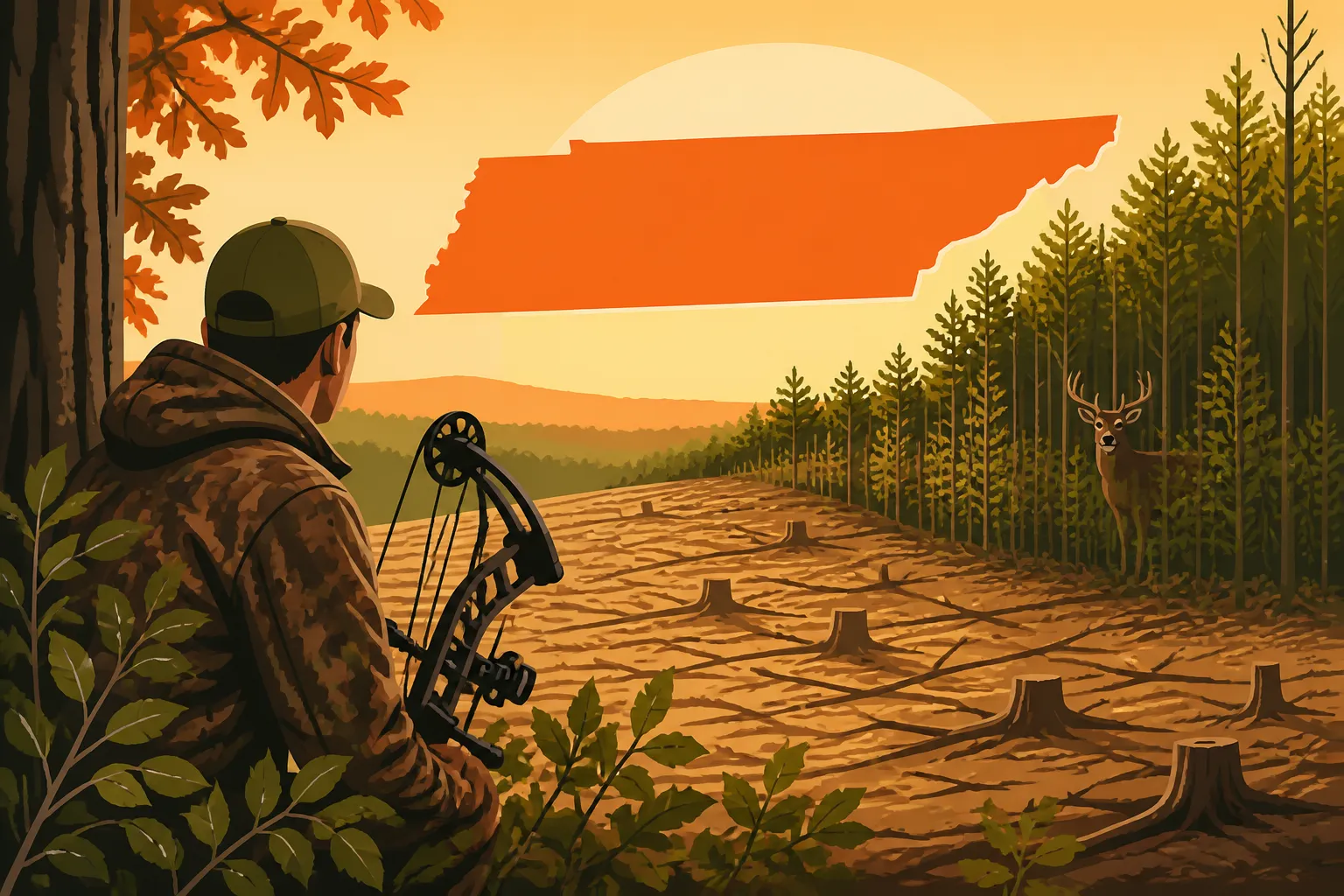
Hunting Standing Cover Left After Harvest
When the combines roll through Tennessee fields, it often feels like the deer vanish into thin air. One day they're feeding out in the wide open, and the next, after the crops are down, it's like they've evaporated, leaving hunters scratching their heads and wondering where all the whitetails went. But the truth is, they haven't disappeared; they've simply shifted their patterns, seeking out the crucial standing cover that remains. This guide is all about finding and effectively hunting those pockets of refuge, turning what feels like a late-season drought into an opportunity.
The Critical Role of Standing Cover After Harvest
Once the primary food sources like corn and soybeans are gone, deer don't just pack up and leave the area. They adapt, and that adaptation heavily relies on finding security and residual sustenance in any standing cover left behind. Understanding what constitutes standing cover and why it's so vital to deer behavior at this time of year is the first step to continued hunting success.
Defining Standing Cover Beyond the Crop Field
When we talk about standing cover after harvest, we're not just limited to the occasional patch of uncut corn that the farmer missed. It encompasses a broader range of habitat types that provide deer with a sense of security, thermal protection, and often, overlooked food sources.
- Residual Crop Fields: Even after a corn or bean field has been "harvested," there's almost always residual stalks, leaves, and often, dropped grain or beans that are still edible. While it might look bare to us, this can still offer surprisingly good concealment, especially when combined with natural terrain features. Deer will often bed right in these fields, particularly during mild weather, feeling secure within the maze of stalks.
- Thick Brush and Fencerows: These natural elements become absolute magnets for deer once the agricultural fields are opened up. A dense fencerow, a neglected hedgerow, or a thicket of briars and young trees that runs along a field edge offers unparalleled bedding cover and travel corridors. These spots are often overlooked by hunters who focus solely on timber, but they can hold multiple deer in a surprisingly small area.
- CRP (Conservation Reserve Program) Fields: These government-managed fields are intentionally left fallow and planted with native grasses, wildflowers, or legumes. They are designed to provide wildlife habitat and prevent soil erosion. After row crops are harvested, CRP fields become prime sanctuaries, offering thick, impenetrable cover and often a buffet of late-season forbs and seeds. Hunters often assume these are just "open fields," but a mature CRP field can be as thick as any timber block.
- Abandoned Pastures and Clear-Cuts: Old pastures that have grown up in saplings, multiflora rose, and cedars, or recent clear-cuts where young trees are rapidly regrowing, provide incredible security cover. These areas are tough to walk through, making them less appealing to casual hunters, which only increases their value to deer seeking refuge. They offer dense bedding options and often hold residual browse that deer will munch on throughout the day.
Why Deer Gravitate Towards These Pockets
Deer aren't just looking for a place to hide; they're looking for efficiency in their survival. Standing cover provides several critical advantages that draw deer in like a magnet.
- Security Blanket: The primary draw is security. With open fields all around, deer become incredibly vulnerable. Dense standing cover acts as a visual and physical barrier, making them feel safe from predators, including human hunters. They can move within these areas, often unseen, even in daylight hours.
- Thermal Regulation: As the colder months set in, standing cover, especially dense evergreens like cedars or thick brush, provides crucial thermal cover. It breaks the wind and can trap warmer air, helping deer conserve energy. You'll often find deer bedded on the downwind side of these thickets, soaking up any available warmth.
- Residual Food Source: Don't underestimate the leftover food. Even seemingly "clean" fields will have dropped grains or beans. More importantly, the thickets, fencerows, and CRP fields often contain a variety of forbs, briars, and browse that deer continue to feed on. While it might not be a primary food plot, it's enough to sustain them, especially when combined with nearby mast crops or green fields.
- Travel Corridors: These linear patches of cover, like fencerows and creek bottoms, become essential travel corridors between bedding areas and remaining food sources. Deer will utilize these pathways religiously, minimizing their exposure in the open. Understanding these travel routes is key to intercepting deer movement.
Pinpointing Prime Standing Cover Locations
Finding the right standing cover isn't just about looking for the thickest patch of woods. It requires a thoughtful approach to scouting, utilizing modern tools, and understanding how deer will interact with these specific environments. You're looking for the sweet spots, the subtle nuances that make one patch of cover more appealing than another.
Leveraging Technology for Remote Scouting
Before you ever set foot in the field, modern mapping applications can be your best friend. Tools like GoHunt, onX Hunt, or even Google Earth allow you to pour over aerial images and topographical maps, identifying potential hotspots from the comfort of your home.
- Scanning for Irregularities: Look for anything that breaks up the landscape. Irregular-shaped timber blocks, overgrown drainage ditches, fencerows that expand into thicker pockets, or fields that have clearly been left uncultivated. Pay close attention to the edges of large agricultural fields; these are often transition zones where deer will stage before entering open areas or bed down for the day.
- Identifying Funnels and Pinch Points: Standing cover often creates natural funnels where deer movement is concentrated. A narrow strip of woods between two large fields, a thick creek bottom bisecting open land, or a small block of dense timber surrounded by cleared ground—these are all classic pinch points. Deer will almost always choose the path of least resistance that still offers the most security. Check out Hunting a Funnel Between Two Bottoms for more on this.
- Analyzing Historical Data: If you've been using a mapping app for a while, look back at previous seasons. Did you mark any buck sightings near specific cover types? Did you find old rubs or scrapes along a particular fencerow? Deer are creatures of habit, and successful spots often remain successful year after year, especially when it comes to preferred bedding and travel routes.
Boots-on-the-Ground Verification
Remote scouting gets you in the ballpark, but nothing beats physical scouting. This is where you confirm your hypotheses and find the fresh sign that tells you deer are actively using the cover.
- Walking the Edges (and Sometimes Through): When scouting these areas, try to walk the edges first. Look for tracks entering and exiting the cover, fresh rubs, and droppings. Pay close attention to where deer are "slipping out" to feed or moving into timber. If the cover isn't too dense, make a quiet pass through it, looking for bedding areas—flattened grass or leaves, often with residual droppings.
- Focusing on Transition Zones: The most productive spots are rarely in the middle of a wide-open field or deep in the thickest part of the cover. Instead, focus on the transition zones—where the thick cover meets a food source, where a fencerow meets a timber edge, or where an overgrown ditch becomes a travel corridor. These are the places where deer movement is most predictable and where you have the best chance of intercepting them.
- Reading the Sign: What kind of sign are you seeing? Fresh tracks indicate recent activity. Heavy browsing on certain plants within the cover shows they're feeding there. Rubs and scrapes, even if older, indicate historical buck activity, and new ones mean a buck is still using the area. Fresh droppings are perhaps the most definitive proof of recent presence. The more fresh sign you find, the higher the likelihood of deer being present.
Effective Hunting Tactics for Standing Cover
Hunting standing cover requires a slightly different mindset and approach compared to hunting open timber or traditional food plots. The dense nature of the cover means closer encounters, limited visibility, and a strong emphasis on wind and silent movement.
Strategic Stand Placement and Entry/Exit
Your approach and stand setup are paramount when hunting these tight, often linear, pockets of cover.
- Ground Blinds are Your Friend: In many dense standing cover situations, a traditional treestand might offer limited visibility. This is where a well-placed ground blind truly shines. It allows you to become part of the habitat, concealing your movement and providing an excellent shooting rest. Just make sure to brush it in effectively, giving it time to blend in before you hunt it. You can learn more about Using a Ground Blind on Tennessee Public Land.
- Treestands for Overlooking Edges: If the standing cover is adjacent to a food source or a more open travel corridor, a treestand can still be highly effective. The key is to position yourself on the edge of the cover, where you can see into it but also have shots at deer moving along its perimeter or slipping out into the open. Think about how deer will travel along that edge, and place your stand where you can intercept them without being silhouetted.
- Stealthy Entry and Exit: Deer in these areas are often high-strung due to increased pressure and less expansive cover. Plan your entry and exit routes meticulously. Always approach and leave with the wind in your favor, avoiding walking through potential bedding areas. Use natural terrain features or other cover to shield your approach. Your goal is to be in your stand before legal light and to exit well after dark, or at a time when deer are least likely to be moving.
Mastering Wind, Scent, and Movement
These three factors dictate success or failure in tight-quarters hunting, perhaps more than anywhere else.
- The Unforgiving Wind: In dense cover, deer are relying heavily on their noses. A swirling wind or an unfavorable wind direction will bust you every time. Always hunt with the wind in your favor, blowing your scent away from where you expect deer to approach or bed. Be mindful of thermals, especially in the morning and evening, which can carry your scent uphill or downhill. Tools like GoHunt often have wind direction overlays that can help you plan your sits.
- Scent Control is Crucial: Go beyond just spraying down. Wash your hunting clothes in scent-free detergent, store them in airtight containers, and dress at your vehicle. Avoid strong-smelling foods or drinks. The closer you are to deer, the more critical your scent discipline becomes.
- Patient, Minimal Movement: When deer are literally feet away in thick cover, even small movements can give you away. Remain as still as possible. Only move when a deer's head is down or when it's looking away. Practice drawing your bow or raising your gun slowly and silently. If still-hunting, take one or two steps, then pause for several minutes, scanning thoroughly before moving again.
Aggressive and Passive Tactics
Depending on the size and nature of the standing cover, you can employ different strategies.
- Still-Hunting and Stalking: For large, expansive CRP fields or dense clear-cuts, still-hunting can be incredibly effective. Move slowly, take a few steps, then stop and glass, looking for flicking ears, a horizontal backline, or any unnatural shape. This method works best on windy days when your movement is masked, and deer are more likely to be bedded tight.
- Small, Controlled Drives: If you have permission on private land and a couple of hunting buddies, small, controlled drives can be excellent for pushing deer out of smaller, dense pockets of standing cover. Place standers at pinch points or likely escape routes, and have one or two drivers slowly walk through the cover. Remember, safety is paramount, and blaze orange is essential for all participants. For more on coordinating, see Deer Drives With Three or Four Hunters.
- Rattling and Grunting: While often associated with the peak rut, light rattling and grunting can sometimes entice a curious buck out of dense cover, especially in the late season when they might be establishing new dominance hierarchies. Keep the volume low and the sequences short; you're trying to simulate a small skirmish, not a full-blown brawl. More info can be found in Rattling Volume in Thick Cover.
Overcoming Challenges and Key Considerations
Hunting standing cover isn't without its unique set of challenges. From intense hunting pressure to unpredictable weather and specific regulations, being prepared for these factors will increase your chances of success and ensure a safe, ethical hunt.
Navigating Hunting Pressure and Deer Behavior
One of the biggest hurdles when hunting standing cover, especially on public land, is dealing with other hunters.
- Public Land Strategies: On Wildlife Management Areas (WMAs) or other public lands in Tennessee, standing cover can be heavily targeted. To counter this, go deeper than most hunters are willing to walk. Use mapping tools like GoHunt to identify small, isolated pockets of cover away from roads and trails. Consider hunting mid-week when pressure is lower. Deer that are constantly pressured will bed extremely tight and only move under the cover of darkness.
- Private Land Considerations: If you're hunting private land, you might have less pressure, but still, consider how much you're disturbing the area. Overhunting a small patch of standing cover can quickly make deer nocturnal. Sometimes, it's better to hunt a spot sparingly, letting it "rest" for a few days between sits.
- Adaptable Deer: Deer are incredibly adaptable. If they're being pushed out of one standing cover area, they'll quickly find another. Stay observant, look for new sign, and be willing to move your setup. Sometimes a clear-cut that was ignored for a week suddenly becomes a hotspot after a few hunters pushed through a nearby timber block.
Weather's Impact on Cover Use
Tennessee weather can be fickle, and changes in temperature or precipitation will directly influence how deer utilize standing cover.
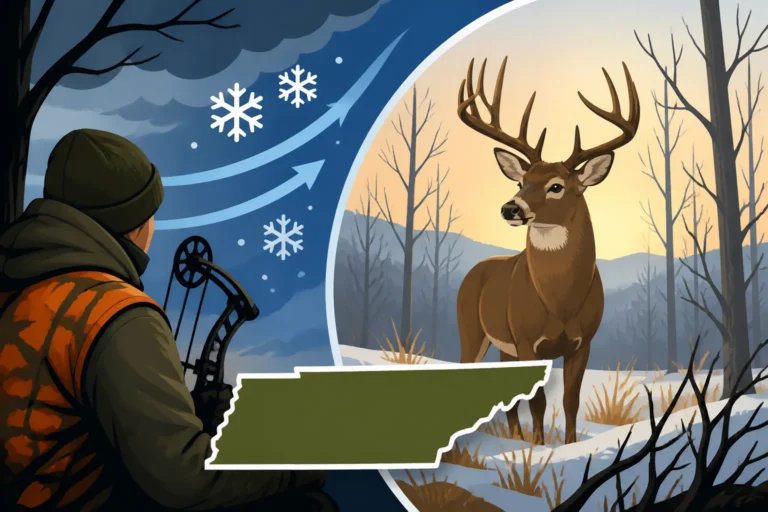
- Cold Fronts and Snow: A sharp cold front or a snowfall can make standing cover even more attractive. Deer will seek out the thermal protection offered by dense thickets, especially evergreens. After a snow, tracks become highly visible, making scouting much easier. Focus on the thickest, most sheltered areas.
- Rainy Days: Light rain can be an excellent time to still-hunt or hunt from a blind, as it dampens sound and washes away some of your scent. Deer are often more active during light rain, but during heavy downpours, they'll typically hunker down in the densest cover available, waiting it out.
- Windy Conditions: High winds make deer extremely nervous in open areas. They will often move into the thickest standing cover to escape the wind and feel more secure. This can be a great time for an aggressive still-hunt or a strategic sit on the downwind side of a large thicket.
Important Regulations and Safety
Always be aware of Tennessee's hunting regulations and prioritize safety, especially when hunting dense cover.
- Blaze Orange Requirements: During gun season, Tennessee mandates specific blaze orange requirements. Make sure you and everyone in your hunting party are wearing the appropriate amount of blaze orange, especially if you're participating in a deer drive or still-hunting through thick brush. Understanding How Much Blaze Orange Tennessee Requires is critical.
- CWD Zone Awareness: If you're hunting in or near Tennessee's Chronic Wasting Disease (CWD) Management Zone, be aware of carcass movement restrictions and testing requirements. Hunters in counties like Fayette, Hardeman, or Madison, among others, must follow specific rules. Familiarize yourself with Which Counties Sit Inside Tennessee's CWD Zone and know how to report a harvest.
- Landowner Permission: Always ensure you have proper permission when hunting private land. Even if it looks like an abandoned field, it still belongs to someone. Carrying written permission is always a good idea.
- Always Carry a Compass/GPS: In dense standing cover, it's incredibly easy to get disoriented. Always carry a reliable GPS unit or use a mapping app on your phone (like GoHunt, with downloaded offline maps) to ensure you can navigate safely. Let someone know where you're going and when you expect to return.
| Type of Standing Cover | Primary Benefit for Deer | Recommended Hunting Tactic | Best Time to Hunt |
|---|---|---|---|
| Residual Crop Field | Security, leftover food | Still-hunt edges, ground blind | Early morning, late evening |
| Thick Fencerow | Travel corridor, bedding | Treestand on edge, ground blind | All day (travel) |
| CRP Field | Dense bedding, forage | Still-hunt, stand on downwind | Mid-day, after cold front |
| Clear-cut/Thicket | Security, thermal, browse | Still-hunt, ground blind | Mid-day, windy day |
| Overgrown Pasture | Bedding, escape routes | Strategic drives, still-hunt | After pressure, mid-day |
Hunting standing cover after the harvest can be some of the most challenging, yet rewarding, hunting you'll do in Tennessee. It forces you to think differently, to get creative with your scouting and tactics, and to truly understand deer behavior. By focusing on these overlooked pockets of refuge, you'll uncover opportunities that many other hunters simply walk past, extending your season and filling your tag. You can scout effectively using tools like Scouting With the Tennessee TWRA App to find these hidden gems.
Disclaimer
Hunting is an inherently dangerous activity. Always prioritize safety, understand and follow all local, state, and federal hunting regulations, and obtain proper landowner permission when hunting on private property. This guide is for informational purposes only and does not replace professional instruction or official regulations.