Hunting the Muzzleloader-Only Two Weeks
That short, sometimes frustrating, two-week window for muzzleloader hunting in Tennessee can feel like a brief, intense scramble, sandwiched between the extensive archery and full rifle seasons. It's a unique challenge where deer behavior shifts, the weather can turn on a dime, and your blackpowder setup demands a certain level of commitment and understanding. This guide is here to walk you through making the absolute most of those precious weeks, offering tactical advice, gear insights, and practical strategies to help you fill your tag when the smoke clears.
Understanding the Muzzleloader-Only Window
The Tennessee muzzleloader season is a distinct period, typically lasting about two weeks in November, following the conclusion of the statewide archery season and leading directly into the main gun season. This timing is absolutely critical to understand, as it places you in a unique position regarding deer behavior and hunting pressure. You're past the frantic early-season bowhunting and just on the cusp of the widespread rifle action, which often means deer are starting to feel a bit more pressure but haven't been completely blown out of their patterns yet.
Season Dates and DMU Specifics
If you're planning to hunt the Volunteer State, knowing the exact dates for the muzzleloader season is your first priority. These dates are set by the Tennessee Wildlife Resources Agency (TWRA) each year, and while they tend to fall in a predictable window, it's always best to check the current regulations. Generally, you'll find the muzzleloader-only portion of the deer season commencing in early to mid-November, providing a crucial bridge between the long archery season and the beginning of gun season. This timing often places you right around, or just past, the peak of the rut in many areas, meaning you might still catch some bucks cruising.
It's also essential to remember that Tennessee has six different Deer Management Units (DMUs), and while the statewide muzzleloader season dates are usually consistent, antlerless harvest limits can vary significantly by DMU. For instance, in DMU 1, located primarily in West Tennessee, antlerless limits are often more liberal, sometimes allowing three antlerless deer per day during the muzzleloader season. However, if you're hunting in a more conservative unit like DMU 6 in parts of East Tennessee, your antlerless limit might drop to two, or even one, for the entire season. This means you need to know exactly which DMU your hunting county falls into to avoid any missteps. Always consult the official TWRA regulations for specific dates and bag limits before you head to the woods. You can find more specific information on Tennessee Muzzleloader Season Dates.
Transitioning from an Archery and Pre-Rut Mindset
By the time muzzleloader season rolls around, the deer woods are a different place than they were during the early archery hunts. The leaves are typically off the trees, offering better visibility but also making deer more alert. Crucially, the peak of the rut, if not already winding down, is often either in full swing or just past its most intense phase in many parts of Tennessee. This means the frantic, chasing activity you might have seen during late October and early November bowhunting is starting to calm. Bucks might still be searching for does, but they're often doing so with less urgency and more caution, particularly on public land where they've already encountered hunters.
Your strategy needs to shift from aggressively calling or sitting over scrape lines hoping for a cruising buck to focusing more on food sources and bedding areas as deer transition back to replenishing their energy. They’ve been burning serious calories during the rut, and as does start to settle down and estrus phases pass, bucks will start hitting reliable food sources harder. This transition means you might need to leave those rattling antlers at home or use them sparingly, instead concentrating on stealthy approaches and well-placed stands near where deer will be feeding or moving between food and cover.
Tactics for Success in Muzzleloader Season
Hunting with a muzzleloader requires a distinct set of tactics compared to both archery and modern firearms. The limited range, slower loading time, and unique ballistic characteristics mean you have to get closer and be more deliberate with your shot selection. Success during this specific two-week window often hinges on understanding post-rut deer behavior, identifying key food sources, and adapting to the fickle November weather.
Capitalizing on Post-Rut Movement
If you're hunting during the early part of the muzzleloader season, you might still catch the tail end of the primary rut, especially in certain areas or if the breeding activity started a bit later. Bucks will still be on their feet, albeit often more cautiously, searching for any last receptive does. However, as the season progresses, expect to see a shift towards a "recovery" phase. Bucks are exhausted, often having lost a significant amount of body weight. Their primary focus will pivot from breeding to bedding and feeding to regain energy. This means those daytime cruising patterns you saw during the peak rut will likely diminish.
Instead of looking for frantic chase scenes, start looking for more subtle signs of movement between bedding thickets and reliable food sources. Creek bottoms, sheltered hollows, and dense cedar or pine thickets become prime bedding spots as deer seek refuge from increased hunting pressure and colder temperatures. A good strategy is to set up along travel corridors connecting these bedding areas to feeding grounds, especially during the morning and late afternoon hours. Patience is key, as deer might move later in the morning or earlier in the evening to avoid human activity. Understanding Hunting the Rut in Early November can give you a baseline, but remember to adjust for the winding down phase.
Food Source Focus in Late Fall
As the rut winds down and temperatures drop, food becomes the undisputed king. Deer need to pack on calories to survive the upcoming winter months, and they will gravitate towards the most palatable and accessible food sources. This is where your scouting intelligence really pays off. If you've got access to private land with planted food plots, you're in an excellent position. Cool-season plots like brassicas, clover, or winter wheat can be absolute magnets this time of year, especially if natural forage is dwindling.
On public lands or private tracts without dedicated plots, you'll need to identify natural food sources. Hard mast, particularly acorns, is a primary draw. If it's been a good acorn year, deer might still be hitting white oaks or, more commonly this late, red oaks. However, if the acorns have largely been consumed or were scarce, deer will shift to other browse, leftover agricultural crops (like standing beans or corn if allowed to hunt), or even green briar and honeysuckle patches. Using a scouting app like GoHunt can help you overlay satellite imagery with topo maps to identify potential transition zones or overlooked pockets of cover near agricultural fields or promising hardwood bottoms. Focus on areas where you can identify fresh sign like tracks, droppings, and browsed vegetation. Late-Season Food Sources for Tennessee Whitetails is a great resource to explore further.
Weather Considerations
November in Tennessee can bring a wildly diverse range of weather, from unseasonably warm Indian summer days to bitter cold snaps and even early snow. The weather can drastically impact deer movement and your hunting strategy. A sudden cold front, especially one following a period of warmer weather, often triggers increased deer activity as they feel the urge to feed heavily. These are prime days to be in your stand. Deer will need to eat more to maintain their body temperature, so focus on those food sources.
On the flip side, extremely windy days can make deer skittish and prone to bedding down in thick cover, making them harder to locate. Rain, especially a steady drizzle, can sometimes mask your scent and movement, making for excellent still-hunting conditions, but it also makes keeping your muzzleloader dry a top priority. Understanding how Cold-Weather Sitting Strategy in Tennessee can make or break your hunt is vital. Always check the forecast and dress in layers appropriate for the conditions, remembering that a muzzleloader hunt requires you to be warm and comfortable for potentially long, still sits.
Key Gear and Preparation for Blackpowder Hunting
Muzzleloader hunting isn't just about the unique season dates; it's about the unique equipment and the preparation it demands. Unlike a modern rifle, a muzzleloader isn't always "ready to go" right out of the case. It requires careful cleaning, loading, and practice to ensure reliability and accuracy in the field.
Muzzleloader Choice and Maintenance
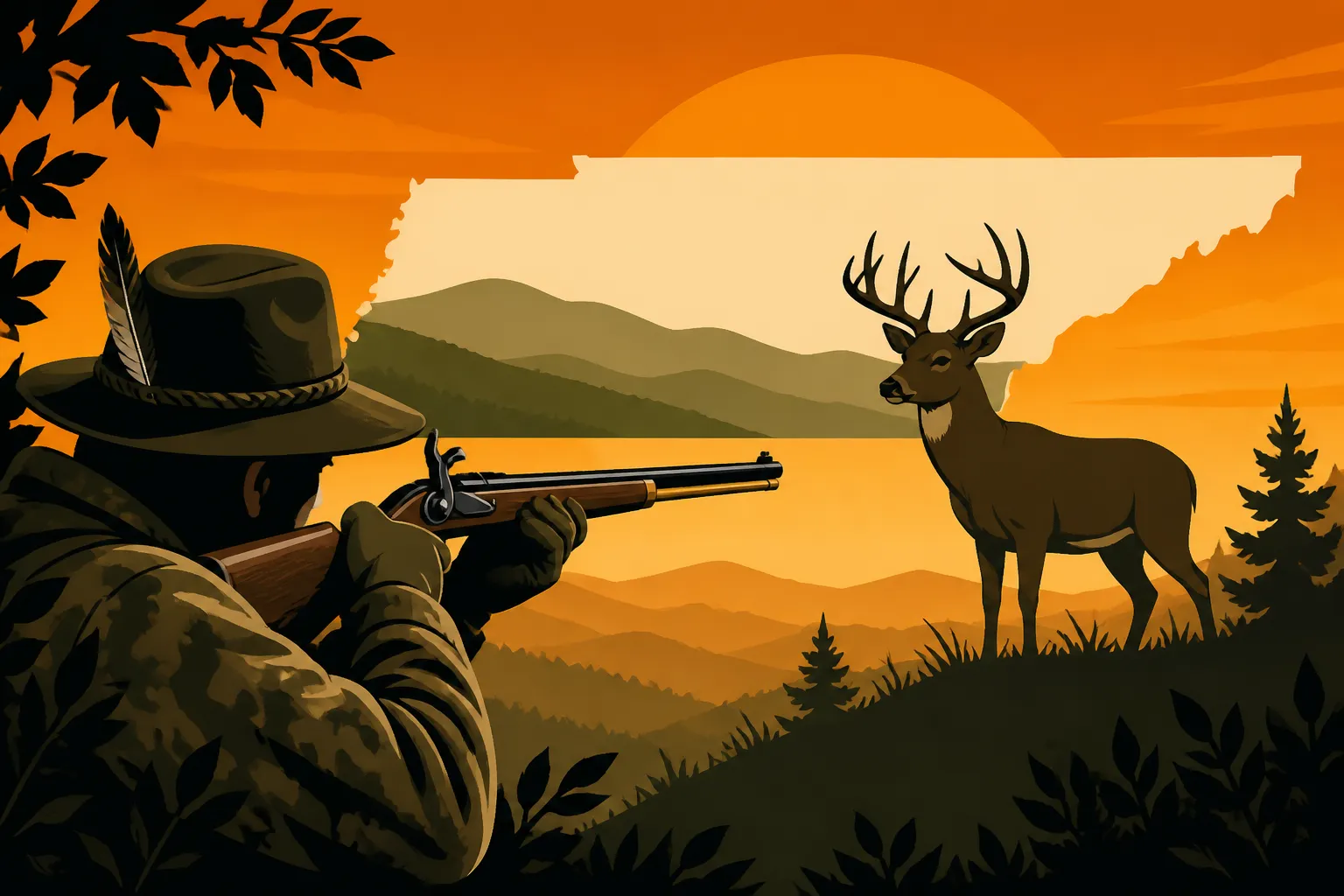
Tennessee allows both traditional flintlock and percussion cap muzzleloaders, as well as modern inline muzzleloaders, during this season. For most hunters, an inline muzzleloader is the weapon of choice due to its greater accuracy, ease of loading, and weather resistance compared to traditional designs. Brands like Thompson/Center, CVA, and Traditions offer excellent inline options. When choosing, consider barrel length for maneuverability in thick timber, and whether you prefer a 209 primer or another ignition system. The .50 caliber is by far the most popular and versatile for deer.
Crucially, you absolutely must spend time at the range with your chosen load. Experiment with different powder charges (within manufacturer recommendations) and bullet types (sabots, conicals) to find what your gun shoots most accurately. A consistent 100-yard group is a must. Remember that muzzleloaders can be notoriously finicky, so always practice shooting your hunting load, not just a casual plinking load. After each shot and especially after each hunting day, thorough cleaning is paramount. Blackpowder and its substitutes are corrosive, and neglecting cleaning can quickly ruin a barrel. A good cleaning kit and the habit of immediate post-shot cleaning will extend the life of your firearm and ensure reliability. More detailed information on Muzzleloaders for a Tennessee November can help you refine your setup.
| Muzzleloader Type | Ignition System | Pros | Cons |
|---|---|---|---|
| Traditional (Flintlock/Percussion) | Flint/Friction or Percussion Cap | Classic feel, historical appeal | Slower loading, more weather sensitive, lower accuracy |
| Inline Muzzleloader | 209 Primer (most common) | Higher accuracy, easier loading, better weather resistance | Less "traditional" feel |
Optics and Ancillary Gear
While muzzleloaders might have a limited effective range compared to high-powered rifles, good optics are still incredibly valuable. A quality scope on your inline muzzleloader can drastically improve your accuracy at typical muzzleloader distances (50-150 yards). Look for a scope with good light-gathering capabilities and a clear, simple reticle. Many hunters prefer a fixed low power (like 4x) or a variable power scope set at a lower magnification (e.g., 2-7x or 3-9x) for quick target acquisition in dense cover. Just ensure it can hold up to the recoil.
Beyond your primary sighting system, a good pair of binoculars is essential for scanning the woods and identifying deer in low light or thick cover, especially on the Cumberland Plateau Ridges. An 8×42 or 10×42 pair is versatile for most Tennessee terrain. A rangefinder is also non-negotiable for muzzleloader hunting. Knowing the exact distance to your target is crucial for accurate shot placement within your firearm's limited effective range. Before you even shoulder your gun, you need to know if that deer is 75 yards or 175 yards away – a difference that can mean success or a missed shot with a muzzleloader.
Cold Weather Clothing and Comfort
As mentioned earlier, November weather can be unpredictable. Being prepared for cold, wet conditions is vital for both safety and comfort, which directly impacts your ability to remain still and focused. Layering is always the best approach. Start with a moisture-wicking base layer, add insulating mid-layers (fleece or wool are excellent), and top it off with a waterproof and windproof outer shell. Wool is a fantastic material because it retains its insulating properties even when wet, making it perfect for the often-damp Tennessee woods.
Don't forget extremities: a warm hat, insulated gloves (consider fingerless options for better trigger feel, with a full mitten overlay for sitting), and waterproof, insulated boots are critical. Sitting for extended periods in a cold stand can lead to chilled feet and hands, quickly ending a hunt. Hand warmers and a small, insulated seat cushion can also make a huge difference in your comfort and willingness to stay put when that trophy buck finally steps out. Remember, you can't shoot straight if you're shivering uncontrollably.
Navigating Public vs. Private Land During This Time
Hunting during the muzzleloader-only season brings different considerations depending on whether you're on public or private land. Pressure can ramp up, and deer behavior will often reflect the amount of human activity they've encountered.
Public Land Pressure and Strategy
By mid-November, deer on heavily hunted public lands like the Cherokee National Forest or many state Wildlife Management Areas (WMAs) have likely encountered hunters for weeks during the archery season. The start of muzzleloader season, though limited to blackpowder, still signals an increase in hunter numbers before the general gun season. This means deer are often more nocturnal or have retreated to the thickest, nastiest cover they can find.
To succeed on public land, you need to be willing to go where others aren't. That often means deeper into the woods, farther from easy access points, or into steep, broken terrain that most hunters avoid. Using mapping tools, such as those offered by GoHunt, to identify remote saddles, hidden benches, or overlooked creek drainages can be incredibly effective. Focus on finding untouched bedding areas that offer deer security. Your strategy might involve hiking in well before daylight, moving slowly and deliberately (still-hunting), or setting up a stand overlooking a natural funnel that connects a dense bedding area to a less-pressured food source. Be prepared for a long haul if you get a deer down in these remote areas. For more tips on finding success where others don't, check out Finding Ground Others Walk Past.
Private Land Access and Strategy
If you're fortunate enough to have access to private land, the muzzleloader season can be an excellent opportunity. Private land often sees less pressure overall, and deer patterns might be more consistent. However, that doesn't mean you can just waltz in. You still need to adapt your strategy to the season and current deer behavior. If the private land borders public land, expect deer to seek refuge on the private side, especially during daylight hours, as pressure builds on the public grounds. This creates fantastic opportunities for ambush points along property lines.
On private land, you might have the advantage of scouting more thoroughly, setting up food plots, or even using trail cameras (where legal and ethical) to monitor deer movement. If you're managing the land, consider creating specific sanctuaries where deer can feel safe from pressure, then hunt the edges of those sanctuaries or the travel corridors leading out of them. As discussed earlier, focusing on planted food plots or prime natural food sources will be your bread and butter. Ensure you have clear, established entry and exit routes to your stand sites that won't spook deer, especially when approaching or leaving in the dark. For information on securing access, see Getting Private Land Permission in Tennessee.
Disclaimer
Hunting is an inherently dangerous activity. Always prioritize safety, understand and follow all Tennessee Wildlife Resources Agency (TWRA) regulations, and ensure you have the appropriate licenses and permits. This guide is for informational purposes only and does not substitute for official regulations or professional instruction. Be prepared for any emergency, inform others of your hunting plans, and exercise ethical hunting practices at all times.