Blind Bags and Cold-Weather Gear
There’s nothing quite like the crisp air of a Tennessee autumn turning into the biting chill of winter, especially when you’re waiting in a duck blind or perched silently in a deer stand. The last thing any hunter wants is to be shivering uncontrollably or fumbling for essential gear, ruining a potentially perfect shot opportunity or worse, making the whole experience miserable. This guide is all about setting you up for success and comfort, delving deep into the world of blind bags and cold-weather gear to ensure your Tennessee hunting adventures are warm, organized, and effective, no matter what Mother Nature throws your way.
The Blind Bag: Your Mobile Command Center for the Field
Let's face it, hunting involves a lot of "stuff." Calls, shells, snacks, headlamps, knives, licenses, and the list goes on. Without a dedicated system, you're constantly digging through pockets or scattered gear, making noise, wasting time, and potentially missing out on critical moments. That's where a good blind bag comes in. It's not just a carry-all; it's your portable organization system, protecting your vital equipment and ensuring everything you need is right where you expect it, even in the dark or with numb fingers.
What to Look for in a Quality Blind Bag
Choosing the right blind bag isn't just about picking one that looks cool. It's about functionality, durability, and how well it suits the often harsh, wet, and muddy environments we find ourselves in across Tennessee. You need something that can take a beating, keep its contents dry, and offer quick, intuitive access.
First and foremost, consider the material. Many top-tier blind bags are made from heavy-duty, waterproof or highly water-resistant fabrics like rugged nylon or even PVC-coated tarpaulin. This is absolutely critical, especially if you're Hunting West Tennessee River Bottoms or in a duck blind where splashes and condensation are a given. Look for bags with reinforced stitching and heavy-duty zippers, ideally with storm flaps or water-resistant coatings, because a cheap zipper failing in the middle of a cold, wet morning is a frustration you don't need. Next, think about size. It needs to be large enough to hold all your essentials without being so bulky that it's a hindrance to carry or fit in tight spaces like a duck blind or the bottom of a treestand. Many companies offer various sizes, so consider your typical hunting setup and how much gear you realistically carry. A smaller, more compact bag might be ideal for a quick deer hunt, while a larger one is indispensable for a full day of waterfowl.
Compartmentalization is key to organization. A truly effective blind bag will have a variety of pockets, pouches, and dividers, both inside and out. Internal dividers help keep items from shifting and getting jumbled, while external pockets provide quick access to frequently used items like calls, shells, or your rangefinder. Some bags even feature specialized pockets for thermos bottles, waterproof phone sleeves, or even small first-aid kits. Pay attention to how these compartments are designed – are they easily accessible with gloved hands? Are they secure enough to prevent items from falling out when the bag is jostled? A comfortable, adjustable shoulder strap is also a must, especially if you're packing your bag in over long distances to reach a secluded spot. Some bags also include backpack straps or handles for versatile carrying options.
Essential Blind Bag Contents for Tennessee Hunters
Packing your blind bag effectively is an art form. You want to be prepared for anything without overpacking and weighing yourself down. The exact contents will vary depending on your target species and the specific hunt, but there are some universal items that every Tennessee hunter should consider.
Let's start with the obvious: ammunition and calls. For waterfowl, this means plenty of shells, often in different shot sizes, and a selection of duck and goose calls. For deer hunting, extra rifle rounds or crossbow bolts/broadheads, and perhaps a grunt tube or rattle bag. But beyond the essentials, think about comfort and safety. A small, compact first-aid kit is non-negotiable; minor cuts, scrapes, or blisters can quickly become major issues in cold, wet conditions. A good headlamp or small flashlight with extra batteries is crucial for walking in before dawn or out after dark, especially when navigating uneven terrain. A multi-tool or a sharp fixed-blade knife is always a good idea, as is a fire starter, just in case. Don't forget snacks and water. Hydration is vital even in cold weather, and a good protein bar can keep your energy up during a long sit.
Beyond physical items, think about digital resources. Your smartphone can be an invaluable tool, especially with apps that provide detailed maps and satellite imagery. Many hunters use applications like GoHunt to scout locations, mark waypoints, and navigate public land. Make sure you have a portable power bank and charging cable in your blind bag to keep your phone alive; there's nothing worse than needing to check your location on the Go Outdoors Tennessee Map Tool and finding a dead battery. Another often-overlooked item is a small, waterproof bag or container for important documents like your hunting license, permits, and vehicle keys. This keeps them dry and secure, preventing a frantic search when you need them most. Finally, a roll of toilet paper or wet wipes, a small towel for drying gear, and some hand warmers can make a huge difference in overall comfort during those frigid mornings.
Conquering Tennessee's Cold Weather with Smart Layering
Tennessee's weather can be notoriously fickle, especially during hunting season. A mild morning can quickly turn into a blustery, bone-chilling afternoon, or a sunny day can surprise you with a sudden cold rain. The key to staying comfortable and safe in these unpredictable conditions isn't just wearing one big, bulky coat; it's about mastering the art of layering.
The Art of Layering: Base, Mid, and Outer
Layering works by trapping insulating air between each layer, while also allowing you to adapt to changing temperatures and exertion levels. You can add or shed layers as needed, regulating your body temperature to avoid overheating (which leads to sweating and then becoming dangerously cold) or getting chilled.
Your base layer is the one closest to your skin, and its primary job is to wick moisture away from your body. Sweat is your enemy in cold weather; once your skin gets wet, it loses heat much faster, leading to hypothermia. Forget cotton for this layer – it absorbs moisture and holds it against your skin. Instead, opt for synthetic materials like polyester or natural fibers like merino wool. These materials excel at drawing sweat away, helping it evaporate and keeping you dry. For example, when you're making a long walk into your stand before dawn, you're going to build up some heat. A good base layer will manage that sweat so you don't start your sit already damp and prone to chilling. You can choose different weights of base layers depending on the expected cold and your activity level.
The mid-layer is your insulation layer. Its job is to trap warm air and provide the bulk of your warmth. Common materials for mid-layers include fleece, synthetic insulation (like PrimaLoft or Thinsulate), or down. The thickness and type of your mid-layer will depend on how cold it is. For a mild late-season deer hunt, a thin fleece might suffice. For a truly frigid January morning, you might stack a heavier fleece over a lighter one, or opt for a synthetic puff jacket. The beauty of the mid-layer is its versatility. If you get too warm during the hike in, you can easily remove it. If the temperature drops unexpectedly, you can quickly put it back on. Many hunters swear by merino wool mid-layers, as they offer excellent warmth-to-weight ratio and perform well even if they get a little damp.
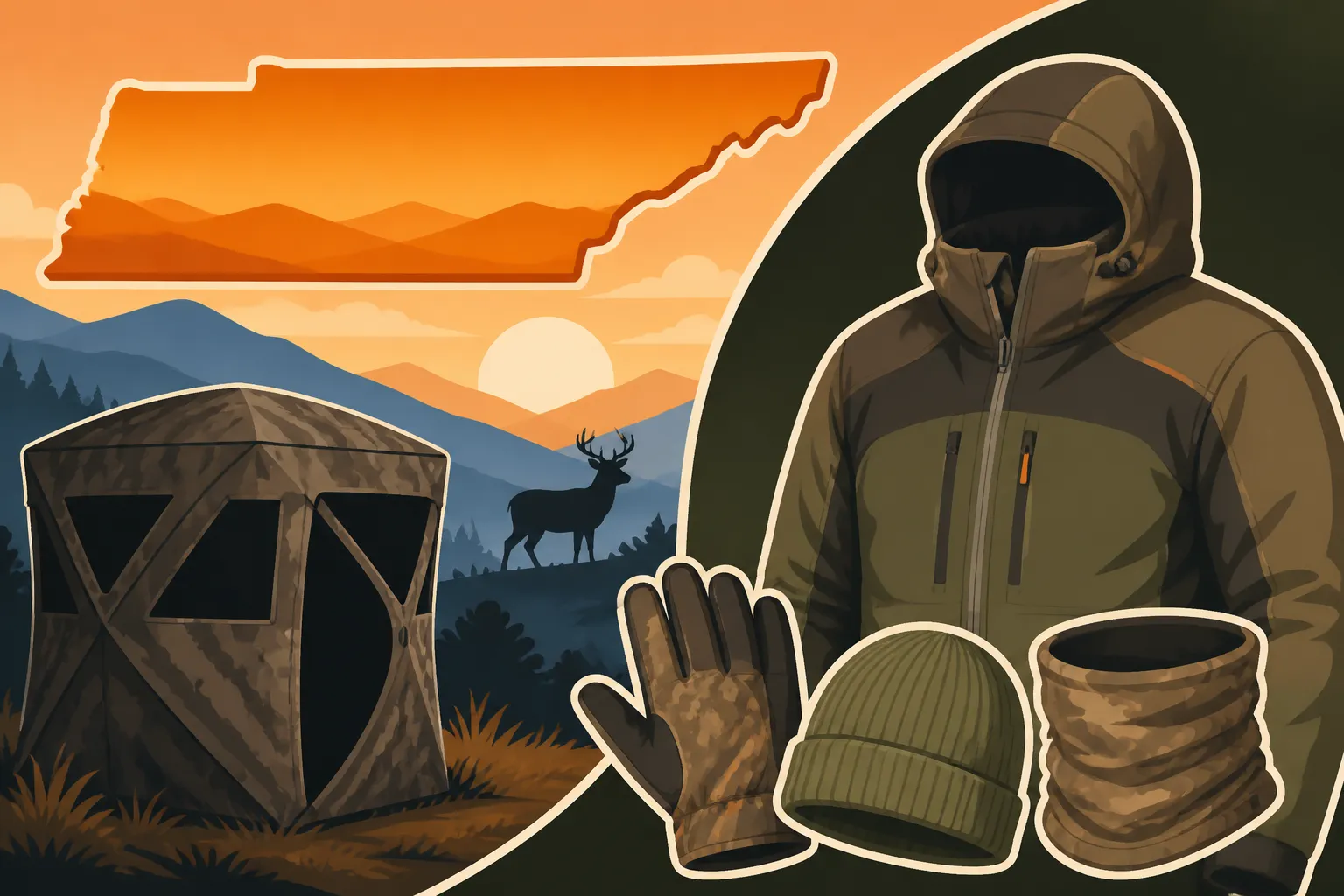
Finally, the outer layer, often called a shell, is your protection against the elements: wind, rain, and snow. This layer needs to be windproof and waterproof or highly water-resistant, but ideally still breathable to allow any remaining moisture vapor to escape. Without a good outer layer, even the best insulating layers will be compromised by wind chill or saturation. Look for jackets and pants made with membrane technologies like Gore-Tex or similar proprietary waterproof-breathable fabrics. The color and pattern of your outer layer will, of course, depend on your hunting style – blaze orange or pink for gun season, camouflage for bowhunting or waterfowl. Remember that for gun seasons in Tennessee, specific Blaze Orange Requirements are in place, so ensure your outer layer complies.
Material Matters: Wool, Synthetics, and Down in Tennessee's Climate
When it comes to cold-weather gear, the materials you choose are just as important as the layering system itself. Each material has its strengths and weaknesses, and understanding them will help you make the best choices for Tennessee's unique hunting conditions.
Merino Wool has made a massive comeback in the hunting world, and for good reason. It's an incredible natural fiber that offers excellent warmth, even when wet. This is a huge advantage in Tennessee, where dampness, fog, and light rain are common, especially in the bottomlands or along the Cumberland Plateau. Wool is also naturally odor-resistant, meaning you can wear it for multiple days without it smelling like a locker room, a definite plus on multi-day hunts or for hunters concerned about scent control. Furthermore, wool is incredibly quiet, which is critical for still-hunting or drawing a bow without alerting wary deer. Its main downsides can be cost and drying time compared to some synthetics, but many hunters find the benefits far outweigh these considerations. When you're trying to stay warm during Cold-Weather Sitting Strategy in Tennessee, wool is a game-changer.
Synthetics, like fleece, polyester, and various insulated materials (PrimaLoft, Thinsulate, etc.), offer a wide range of benefits. They are generally more affordable than wool, dry very quickly, and are often lightweight and packable. Many synthetic insulation materials are designed to retain warmth even when wet, making them a good choice for unpredictable weather. Fleece mid-layers are ubiquitous for their comfort and warmth-to-weight ratio. The breathability of synthetics has also improved significantly over the years, making them better at wicking moisture than older generations. However, some synthetics can be prone to holding odors over time, and some can be noisier than wool, which might be a factor if you're stalking game in very quiet conditions.
Down insulation, typically goose or duck feathers, offers the absolute best warmth-to-weight ratio. A down jacket can be incredibly warm yet compress into a tiny package, making it ideal for packing into your blind bag. However, down's major Achilles' heel is moisture. Once down gets wet, it loses almost all its insulating properties and takes a very long time to dry. In the often damp and rainy conditions that can characterize a Tennessee winter, especially if you're around water for Waterfowl Hunting Reelfoot Lake and Beyond, relying solely on down for your primary insulation can be risky. Some down products feature hydrophobic treatments to make them more water-resistant, but they are rarely fully waterproof. For this reason, many Tennessee hunters prefer synthetic insulation or wool for their primary cold-weather insulation, saving down for very dry, extremely cold conditions, or as an emergency layer protected by a robust waterproof shell.
Here's a quick comparison of these popular cold-weather materials:
| Feature | Merino Wool | Synthetics (Fleece, Polyester, etc.) | Down |
|---|---|---|---|
| Warmth (Dry) | Excellent | Good to Excellent (depending on insulation type) | Excellent (best warmth-to-weight) |
| Warmth (Wet) | Very Good (retains significant warmth) | Good (many retain some warmth when wet) | Poor (loses almost all insulating power) |
| Drying Time | Moderate | Fast | Very Slow |
| Odor Resistance | Excellent (naturally antimicrobial) | Poor to Moderate (can hold odors) | Good (if kept dry) |
| Noise Level | Very Quiet | Varies (some can be noisy, some quiet) | Quiet (soft fabric exteriors) |
| Weight/Bulk | Moderate | Lightweight to Moderate | Very Lightweight/Compressible |
| Cost | Higher | Moderate | Higher |
| Best Use | Active hunting, damp conditions, scent control | Versatile, fast-paced, wet conditions | Dry, extremely cold conditions, static sits |
Protecting Extremities: Hands, Feet, and Head
It doesn't matter how good your core layering system is; if your hands, feet, or head are cold, you're going to be miserable. These extremities lose heat rapidly and are crucial for comfort, safety, and performance in the field. Ignoring them is a surefire way to cut your hunt short.
Keeping Your Hands Operational in the Cold
Cold hands are not just uncomfortable; they can severely impair your ability to shoot, call, and handle gear effectively. You need protection that offers both warmth and dexterity, which can be a tricky balance.
The most common approach for hands is often a two-part system: a thin, form-fitting glove for dexterity and a warmer outer layer for insulation. Your inner glove might be a thin merino wool or synthetic liner. This allows you to perform fine motor tasks, like tying knots, adjusting scope settings, or manipulating calls, without exposing your bare skin to the freezing air. When you need more warmth, you can slip on a heavier outer glove, a mitten, or even a hand muff. Mittens generally offer more warmth than gloves because your fingers share body heat, but they sacrifice dexterity. Many hunters find a compromise in flip-mittens, which allow you to quickly expose your fingers when needed. A hand muff, often worn around the waist and sometimes heated with chemical warmers, is an excellent option for static hunting, offering a warm haven for your hands without restricting movement when you need to grab your weapon. Remember, if you're using a Crossbow Versus Vertical Bow in Tennessee, finger dexterity for drawing and releasing can be critical, so plan accordingly. Tools like GoHunt maps on your phone also require some finger mobility, so quick-access solutions are vital.
Warm, Dry Feet for Long Days in the Field
Cold, wet feet are arguably the quickest way to ruin any hunt. Once your feet get cold and damp, it's incredibly difficult to warm them back up, and the discomfort can be all-consuming. Investing in quality footwear is non-negotiable for cold-weather hunting in Tennessee.
Start with your socks. Again, cotton is out. Opt for merino wool or synthetic socks that wick moisture away from your feet. Many hunters prefer a layering system here too: a thin liner sock made of synthetic material, covered by a thicker, insulated wool sock. This helps manage moisture and provides extra cushioning and warmth. Ensure your socks aren't too tight, as this can restrict blood flow and actually make your feet colder. The most critical component, however, is your boots. For Tennessee's varied terrain – from the damp Hunting West Tennessee Bottomland Deer areas to the rocky Reading a Ridge for East Tennessee Deer country – you need insulated, waterproof boots. Look for boots with a waterproof membrane (like Gore-Tex or similar) and a sufficient amount of insulation (measured in grams, e.g., 400g, 800g, 1200g). The amount of insulation you need will depend on your activity level and the expected temperatures. For static stand hunting in deep winter, you'll need more insulation than if you're actively still-hunting. Ensure your boots fit well, allowing for thick socks without being too snug, which can also cut off circulation. Gaiters can be an excellent addition, especially when walking through snow or tall, wet grass, preventing moisture from entering the top of your boots.
Head and Neck Coverage: Retaining Precious Heat
It's an old adage, but a true one: you lose a significant amount of body heat through your head. Keeping your head and neck covered is essential for overall warmth and comfort. Plus, a warm head means better concentration and less shivering.
A good insulated hat is a must. Wool beanies are popular for their warmth and ability to stay warm even when damp. Synthetic insulated hats also work well, often offering windproof features. For colder, windier days, consider a balaclava or a neck gaiter. A balaclava covers your entire head and neck, with openings for your eyes and sometimes your mouth, providing comprehensive protection from bitter winds. Neck gaiters are versatile tubes of fabric that can be pulled up over your nose and mouth or simply worn around your neck to seal off any gaps where heat might escape. These are particularly useful if you're wearing a hooded jacket, as they offer an extra layer of protection when the hood is down. They also provide crucial camouflage for your face if you choose a patterned one. Staying warm and comfortable, especially when you're waiting for that perfect shot or relying on your GoHunt app for navigation in freezing temperatures, means paying attention to every detail, from your blind bag's organization to the very tips of your fingers and toes.
Disclaimer
This article is for general informational purposes only and does not constitute professional advice. Laws, prices and regulations vary by location and change over time. Consult a qualified professional for guidance on your specific situation.