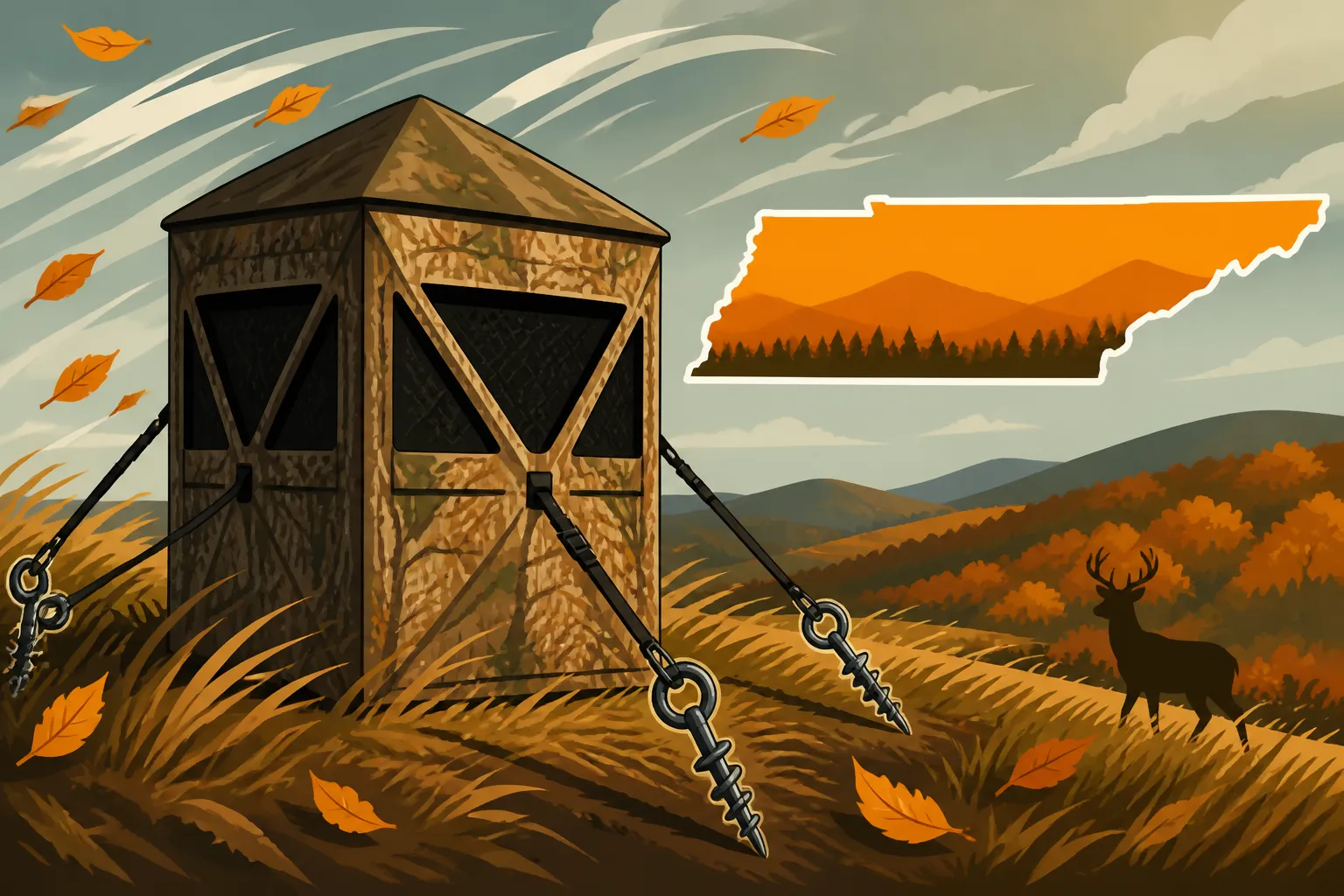
Ground Blind Anchoring in Wind
There's nothing quite as frustrating as showing up to your hunting spot, full of anticipation, only to find your carefully placed ground blind has become a crumpled, wind-battered mess, maybe even blown clear across the field. Tennessee weather, with its sudden gusty winds, especially in open fields or on exposed ridge tops, can be incredibly unforgiving. This guide is all about equipping you with the knowledge and practical steps to ensure your ground blind stays right where you put it, sturdy and ready for your next sit, no matter what Mother Nature throws its way.
The Tennessee Wind Challenge: Why Anchoring Your Ground Blind Matters
Hunting in Tennessee offers a diverse range of terrain, from the sprawling river bottoms of West Tennessee to the rugged ridges of the Cumberland Plateau and the foothills of the Great Smoky Mountains. What all these areas share, though, is the potential for unpredictable and sometimes brutal wind. A calm morning can quickly turn into a blustery afternoon, and if your ground blind isn't properly secured, you're looking at a lot more than just an inconvenience.
The Cost of a Blown-Away Blind
Let's be real, ground blinds aren't cheap. You invest your hard-earned money in a quality blind, hoping it will last you multiple seasons. Finding it mangled or, worse, completely gone after a strong gust can feel like a punch to the gut. It's not just the monetary loss; it's the lost hunting opportunity, the time spent setting it up, and the frustration of having to scramble for a solution when you should be focused on the hunt. A blind that's been thrashed by the wind can suffer bent poles, torn fabric, and damaged zippers, often making it unusable or requiring costly repairs. Imagine pulling your truck up to a promising field edge near Union City or walking into a clearing deep in the Cherokee National Forest, only to see your blind upside down or wrapped around a sapling. It's a disheartening sight that could have been avoided with a bit more attention to anchoring.
Unpredictable Weather and Your Hunt
Tennessee's weather patterns can shift dramatically. One day it's calm and warm, the next a cold front sweeps through, bringing rain and heavy winds. These aren't just minor breezes; we're talking about gusts that can exceed 30 or 40 miles per hour, easily picking up a lightweight ground blind and sending it tumbling. Beyond the risk of structural damage, a flapping, noisy blind is a dead giveaway to any deer or turkey in the vicinity. You've worked hard to Scouting Tennessee Public Land Before Season and find the perfect spot, only to have a loose blind announce your presence to every wary animal within earshot. A properly anchored blind eliminates this noise, keeps your silhouette concealed, and helps you maintain your scent cone effectively. Nobody wants their hunting success to be compromised because their blind sounds like a sail in a hurricane.
Basic Anchoring: Getting Your Blind Secured
Before we dive into advanced tactics, let's cover the foundational methods for anchoring your ground blind. Many blinds come with some basic anchoring components, but often, these aren't nearly enough for the winds we experience here in Tennessee.
Standard Stakes and Their Limitations
Most ground blinds include a set of small metal stakes, typically J-hook or straight stakes, designed to hold the blind's skirt or corner loops to the ground. These are a good start, but they are often the weakest link in the anchoring system. In soft soil, sandy creek bottoms, or after a good rain, these stakes can pull out with surprising ease. They offer minimal resistance against lateral forces, meaning a strong side wind can simply lift the blind and pop the stakes right out of the ground.
Consider a scenario where you've got your blind set up along a cut bean field in West Tennessee, a prime spot for Hunting West Tennessee Bottomland Deer. The soil there can be rich and loamy. If a strong storm rolls through, those small stakes will give way almost instantly. For minimal wind conditions, they might be sufficient, but for anything more than a gentle breeze, you'll need to upgrade. Think of them as a starting point, not the complete solution, especially if you're leaving your blind out for more than a day or two or anticipating any significant weather.
Guy Ropes and Reinforced Tie-Downs
This is where you start getting serious about wind resistance. Guy ropes, often made of durable paracord or similar synthetic rope, are critical. Many blinds have external loops specifically designed for attaching these ropes. The key is to run a rope from each corner (and ideally from midway points on longer walls if your blind allows) out at a 45-degree angle to the ground. Instead of the small stakes, use longer, more robust stakes—think rebar stakes, heavy-duty tent stakes, or even concrete form stakes—driven deeply into the ground.
The longer stake, combined with the angled pull of the guy rope, creates a much stronger anchor point. The 45-degree angle is crucial because it distributes the force of the wind more effectively, resisting both upward lift and lateral movement. Imagine the difference between trying to pull a nail straight up versus pulling it out at an angle; the latter is much harder. Ensure your ropes are taut but not so tight they distort the blind's frame. A little bit of flex is good, but slack ropes are useless. If you're setting up on public land, remember to check Ground Blind Rules on Tennessee WMAs regarding how long you can leave a blind unattended and any restrictions on staking or modifications.
Weighting Down for Extra Security
Sometimes, stakes alone aren't enough, or the ground is too hard (like on rocky Cumberland Plateau Ridgelines) to get good penetration. This is where added weight comes into play. There are a few ways to add weight:
- Sandbags or Water Jugs: These are simple and effective. You can fill sandbags on-site if you're near a sandy area or carry them in. Water jugs can be filled from a nearby creek or stream, just be sure they're sealed tight. Place these inside each corner of the blind, or even along the base of the walls. The added mass significantly increases the blind's resistance to being lifted or slid by wind.
- Rocks or Logs: Nature's free weights! If you're hunting in a rocky area like parts of East Tennessee or near the Tennessee River, large rocks can be placed inside the blind's corners. For wooded areas, heavy logs or sections of fallen timber work just as well. Just be mindful not to damage the blind's fabric by dragging sharp objects.
- Specific Blind Weight Systems: Some manufacturers offer weighted bags designed to integrate with your blind's frame. These are often slim and designed to fit snugly inside, providing a clean, effective weighting solution.
Combining guy ropes with internal weighting creates a formidable defense against even the strongest Tennessee winds. It's like having a deep foundation and strong walls for your hunting fort.
| Anchoring Method | Pros | Cons | Ideal Conditions |
|---|---|---|---|
| Standard Stakes | Lightweight, easy to pack, included with most blinds. | Pull out easily in soft soil, minimal wind resistance. | Very light wind, short-term use, hard packed soil. |
| Heavy-Duty Stakes | Much stronger hold, resist uplift and lateral forces. | Heavier to pack, may require a mallet, harder to remove. | Moderate to high wind, leaving blind for extended periods. |
| Guy Ropes | Distributes force, excellent wind resistance, stabilizes frame. | Requires additional setup time, can be a trip hazard. | All wind conditions, provides structural integrity. |
| Sandbags/Weights | Adds significant mass, very wind resistant, easy to deploy. | Can be heavy to transport, takes up interior space. | High wind, rocky or very soft ground, semi-permanent setups. |
| Natural Weights (Rocks/Logs) | Free, readily available, eco-friendly. | May not always be available, can be bulky/dirty. | Wooded or rocky terrain, emergency anchoring. |
Advanced Anchoring Techniques for High Winds
Sometimes, the basics just aren't enough, especially when you're anticipating severe weather or leaving a blind out for an extended period. These advanced techniques offer extra layers of security and peace of mind.
Strategic Placement and Natural Windbreaks
The best defense against wind isn't always about the anchor itself; it's about avoiding the wind's full force in the first place. Before you even unpack your blind, use a detailed mapping tool like GoHunt to scout your location. Look for natural windbreaks such as dense hedgerows, thick stands of evergreens, the backside of a hill, or the downwind side of a mature timber line. Positioning your blind behind these features significantly reduces the direct impact of the wind.
For instance, if you're hunting a sprawling agricultural field, don't just plop your blind in the middle. Instead, tuck it tight against a fencerow with mature trees, or perhaps just inside the edge of a woodline. Even a slight dip in the terrain can offer surprising protection. Pay attention to the prevailing wind direction for your hunting season. While wind can shift, a smart initial placement can mitigate a lot of stress. Learning to read the land, and anticipating Wind and Thermals on a Ridge System, will help you choose the most sheltered spot, even on public land where options might be limited.
Reinforcing the Blind's Structure
Beyond just anchoring the blind to the ground, consider reinforcing the blind itself. Many pop-up blinds rely on fiberglass poles for their structure. In high winds, these poles can flex, bend, and even snap.
- Internal Support Poles: Carry a few lightweight, collapsible poles (like tent poles or even sturdy trekking poles) to brace the interior corners or walls of your blind. This acts like a skeletal system, giving the fabric and existing poles extra rigidity against inward pressure from the wind.
- Tie-Downs to Overhanging Branches: If you're set up under a sturdy tree, consider running additional ropes from the top corners of your blind directly to strong, overhanging branches. This pulls the blind down and stabilizes the entire structure from above, preventing it from twisting or collapsing inwards. This is especially effective if you’re Brushing In a Blind on a Field Edge and have access to nearby trees.
- Extra Guylines: Don't be shy about adding more guylines. If your blind has additional loops or strong seams, add a few more ropes, especially on the side facing the prevailing wind. More anchor points mean the force is distributed over a wider area, reducing stress on any single point.
These reinforcements essentially make your blind a more robust, integrated structure rather than just a piece of fabric held down by a few stakes.
DIY Solutions and Emergency Anchoring
Sometimes you're out in the field, the wind picks up unexpectedly, and you realize your anchoring isn't quite up to snuff. Being resourceful is key for Tennessee hunters.
- Rebar and Conduit: For semi-permanent setups, drive sections of rebar or electrical conduit into the ground at each corner, leaving a few inches exposed. Then, use heavy-duty zip ties or baling wire to secure the blind's corner loops directly to the rebar. This creates an incredibly strong, low-profile anchor point.
- Earth Anchors: These are screw-in anchors, similar to those used for dog tie-outs or small boat mooring, that you twist deep into the ground. They offer superior holding power compared to standard stakes and are excellent for long-term deployments.
- Rocks and Debris Piling: In a pinch, if you don't have enough stakes or weights, gather any large rocks, logs, or even heavy brush you can find and pile them inside and around the base of your blind. While not as elegant, the sheer weight can keep your blind from blowing away until you can implement a more permanent solution. Remember, sometimes "good enough" in an emergency is better than "perfect" too late.
Beyond the Anchor: Maintaining Your Blind and Staying Stealthy
Anchoring is paramount, but a truly wind-resistant ground blind strategy involves more than just stakes and ropes. It's about careful planning, regular checks, and integrating your blind into the environment.
Pre-Season Setup and Scouting with Tools like GoHunt
The time to think about wind protection isn't when the storm hits; it's during your pre-season scouting. Take the time to Scouting Tennessee Public Land Before Season with potential blind sites in mind. Use mapping apps like GoHunt to study topographical features, identify potential windbreaks, and mark areas prone to heavy winds. If you can, set your blind up a few weeks before the season starts. This "seasoning" period allows the blind to air out, become part of the landscape, and most importantly, gives you a chance to see how it holds up to a variety of weather conditions before you're relying on it for a hunt.
When you're first setting it up, don't just pop it open and walk away. Spend some time on Brushing In a Blind on a Field Edge or integrating it into the natural cover. This isn't just for concealment; it also helps to break up the wind's force, making your anchoring even more effective. A blind that's well-brushed in with local vegetation will experience less direct wind pressure than one standing naked in an open field. Pay attention to how the wind flows around the natural features you're using for cover.
Checking and Adjusting During the Season
Just because your blind was securely anchored in September doesn't mean it will be in January. Over time, stakes can work loose, ropes can stretch, and the ground can soften or harden. Make it a habit to check your blind's anchoring every time you visit, especially after strong winds or heavy rain.
- Rope Tension: Feel the guy ropes. Are they still taut? If not, adjust them. A loose rope means a compromised anchor.
- Stakes: Give each stake a tug. Is it wobbly? Push it deeper or re-angle it if necessary. If the ground has become too soft, add more weight.
- Blind Condition: Check the fabric and poles for any signs of stress, rips, or bent sections. Early detection can prevent a minor issue from becoming a catastrophic failure.
These quick checks are essential for keeping your setup reliable throughout Tennessee's varied hunting seasons, from the mild days of early archery to the frigid Cold-Weather Sitting Strategy in Tennessee in late deer season.
Keeping Your Scent Contained in the Wind
While anchoring is mostly about physical stability, wind also plays a huge role in scent control. A flapping blind creates turbulence and can swirl your scent, spreading it in unpredictable directions. A securely anchored blind, especially one that's well-brushed in, presents a more stable barrier against the wind, helping to direct your scent downstream more predictably.
Even with a perfectly anchored blind, always be mindful of wind direction and thermals, particularly if you're Hunting Where the Antlerless Limit Drops to Two or targeting mature bucks. A stable blind means your scent control efforts (like clean clothing, scent elimination sprays, and careful entry/exit routes) have a better chance of working as intended. Without the stability, all your efforts can be literally blown away. A stable blind is a stealthy blind, and in the world of Tennessee hunting, stealth is golden.
Disclaimer
This article is for general informational purposes only and does not constitute professional advice. Laws, prices and regulations vary by location and change over time. Consult a qualified professional for guidance on your specific situation.