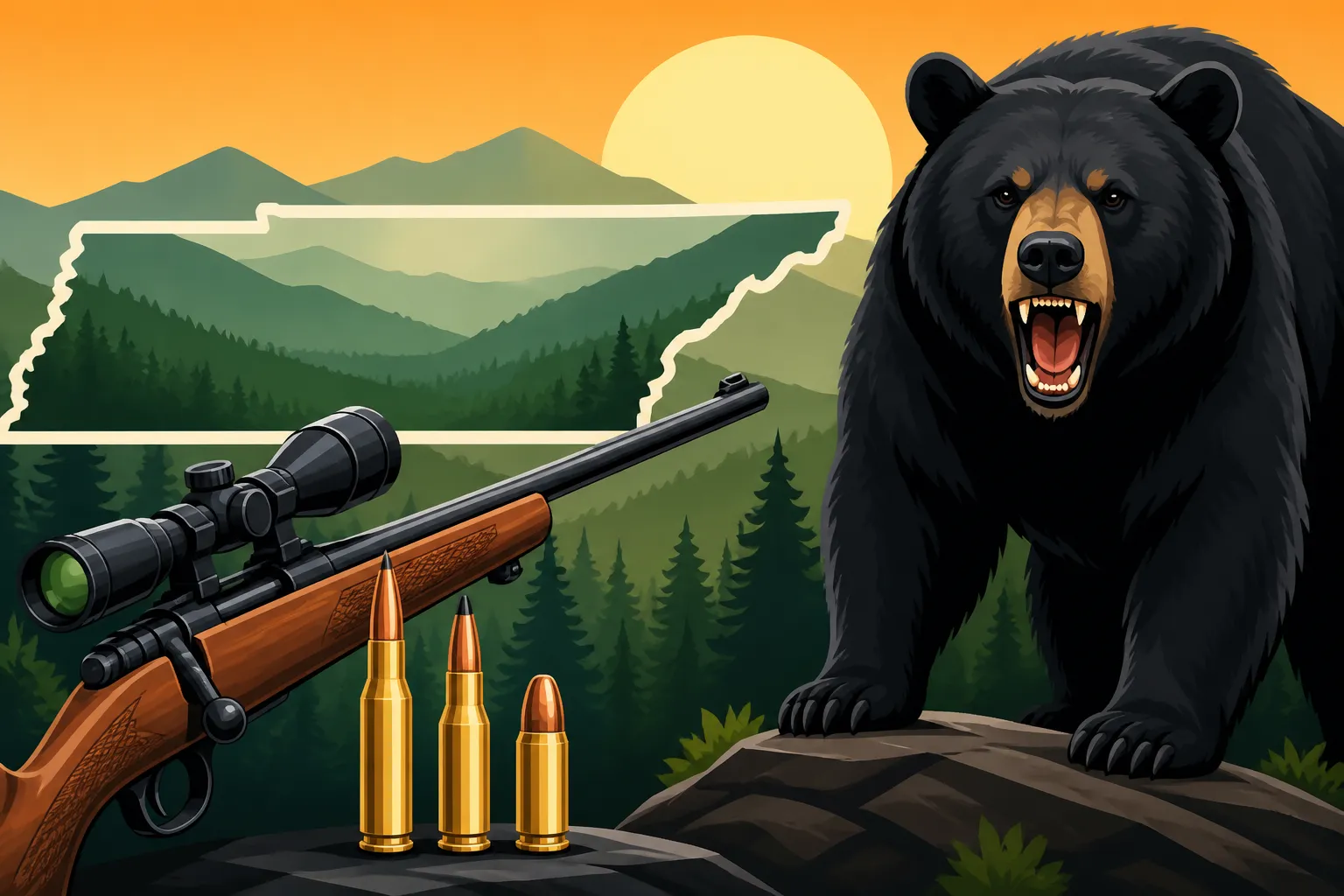
Rifle Calibers for Tennessee Bear
Heading out for a bear hunt in Tennessee is an incredible adventure, but one of the biggest questions on every hunter's mind revolves around what caliber rifle to bring along. With black bears being powerful, resilient animals, choosing the right rifle caliber is absolutely critical for an ethical, clean harvest and a successful hunt. This guide aims to demystify the options, helping you select a rifle caliber that's up to the task of bringing down a Tennessee black bear safely and effectively.
Understanding Tennessee Bear Hunting Regulations and Ethics
Before you even think about specific calibers, it's crucial to understand the foundation of ethical bear hunting in Tennessee, which often dictates your equipment choices and how you approach your hunt.
Legal Requirements for Bear Calibers
Tennessee's hunting regulations, set by the Tennessee Wildlife Resources Agency (TWRA), are pretty straightforward regarding centerfire rifles for big game. Unlike some states that might specify minimum energy or bullet diameter for certain species, Tennessee typically doesn't have a rigid minimum caliber requirement for bear hunting. This can sometimes lead to confusion, with hunters debating what is "enough." However, the lack of a strict minimum doesn't mean anything goes. It means the responsibility falls on you, the hunter, to choose a caliber that is undeniably capable of humanely harvesting a black bear.
The spirit of the law and ethical hunting demands that we use equipment powerful enough to achieve a quick, clean kill. A wounded bear is not only a suffering animal but also a potentially dangerous one, especially if it leads to a prolonged tracking job through dense undergrowth. When you're considering hunting in areas like the Cherokee National Forest, where bears are often found in rugged, remote terrain, you want to be absolutely sure your rifle and caliber are up to the challenge. While there aren't specific rules on paper for bear calibers, know that officials and fellow hunters expect you to make a responsible choice. Always familiarize yourself with all the specific regulations for the area you plan to hunt, whether it's Tennessee Bear Zone One Rules, Tennessee Bear Zone Two Rules, or Tennessee Bear Zone Three Rules, as some specific WMA rules might have nuances.
The Importance of Shot Placement
Let's be real: no matter how powerful your rifle is, if you don't put the bullet where it needs to go, it's not going to be effective. This is perhaps the most critical lesson in all of big game hunting, and it's especially true for black bears. A perfectly placed shot from a moderately powered rifle will always be more lethal than a poorly placed shot from a magnum. Bears have thick hide, dense muscle, and often a layer of fat that can make penetration challenging. Their bone structure, particularly the shoulder, is stout.
Understanding bear anatomy is paramount. The vital organs – heart and lungs – are tucked behind the shoulder. A shot slightly too far back can result in a gut shot, leading to immense suffering and a very difficult, if not impossible, recovery. A shot too far forward or high could hit non-vital muscle or bone, again leading to a wounded animal. Therefore, practicing your shooting from various positions, especially those you might encounter in the field (like leaning against a tree or shooting offhand), is more important than chasing the biggest caliber. Your ability to calmly and precisely deliver a shot under pressure will dictate your success and adherence to ethical hunting principles more than the head stamp on your cartridge.
Popular and Effective Rifle Calibers for Tennessee Bears
When it comes to selecting a rifle caliber for black bears in Tennessee, many options have proven their worth over the years. We're looking for calibers that offer a good balance of power, trajectory, and manageable recoil.
Proven Medium-Bore Options
For most black bear hunting scenarios in Tennessee, particularly in the timbered hills and hollers of the state, medium-bore calibers are often more than sufficient and are incredibly popular for a reason. These calibers offer a fantastic blend of kinetic energy and manageable recoil, allowing hunters to place shots accurately.
- The .30-06 Springfield: Ah, the grand old .30-06. It's a classic for a reason, and it's an excellent choice for Tennessee black bears. It can launch a variety of bullet weights, typically from 150 to 180 grains, with plenty of authority. For bears, a well-constructed 165-grain or 180-grain bullet will offer deep penetration and significant energy transfer. The .30-06 is versatile, ammunition is readily available, and most hunters can shoot it accurately without being overly intimidated by recoil. Whether you're still-hunting through thick underbrush or sitting over a bait site (where legal, which it isn't in TN for bears), the .30-06 is a reliable performer.
- The .308 Winchester: Often seen as the modern, short-action equivalent to the .30-06, the .308 Winchester is another stellar choice. It performs very similarly to the .30-06 with slightly less powder, making for a lighter, handier rifle. A 165-grain or 180-grain bullet out of a .308 will also provide ample power for black bears. It's accurate, has less recoil than the .30-06, and is highly effective. For hunters who appreciate a compact rifle for navigating dense woods, the .308 is a top contender.
- The .270 Winchester: Don't let anyone tell you the .270 isn't a bear caliber. While often touted as a flat-shooting deer cartridge, a .270 launching a premium 150-grain bullet (like a bonded or monolithic design) has more than enough punch for black bears. The key here is bullet construction for penetration. If you're confident in your shot placement and choose the right bullet, the .270's mild recoil and excellent accuracy make it a fine choice. It's particularly good for longer shots that might present themselves in more open terrain, though most bear encounters in Tennessee happen at closer ranges.
- 7mm Remington Magnum: For those who like a bit more horsepower without jumping to the truly heavy magnums, the 7mm Rem Mag is a fantastic all-around cartridge. It offers flatter trajectories than the .30-06 or .308 and hits harder, especially with heavier 160-grain or 175-grain bullets. This caliber shines if you anticipate potential longer shots or simply prefer the extra insurance of more energy. It does come with a noticeable increase in recoil, so ensure you can shoot it proficiently. When you're researching rifles and bullet performance, remember that platforms like GoHunt can be invaluable for cross-referencing user reviews and ballistic data to help solidify your choice.
Stepping Up to Larger Calibers
While the medium-bore options will handle the vast majority of Tennessee black bear hunting situations with flying colors, some hunters prefer or feel more comfortable with something even more substantial.
- The .300 Winchester Magnum: This is where we start getting into the serious thump. The .300 Win Mag is an incredibly powerful cartridge, often used for larger game or longer ranges. For black bears, especially with 180-grain or 200-grain premium bullets, it provides immense energy and deep penetration. While it might be considered overkill by some for a typical black bear, it certainly leaves no doubt about terminal performance. If you're hunting particularly large bears, in very dense cover where you want to anchor an animal quickly, or simply prefer a magnum, the .300 Win Mag will do the job with authority. Just be prepared for the increased recoil, which requires more practice to maintain accuracy.
- The .338 Winchester Magnum: Now we're talking big-bore. The .338 Win Mag is typically reserved for genuinely large and dangerous game, like Alaskan brown bears or moose. For a black bear in Tennessee, it is indeed significant overkill. However, if it's the rifle you own, are most proficient with, and can handle the substantial recoil, it will absolutely put a black bear down. The heavy, large-diameter bullets (often 200-250 grains) deliver incredible energy and penetration. Most Tennessee bear hunters won't need this much power, but it's an option for those seeking maximum stopping power. Remember that hunting in areas such as Hunting Bears Over Natural Mast in the Mountains might present close-quarter encounters where quick, definitive action is needed, and a big caliber can certainly offer confidence.
Here's a quick comparison of some popular bear calibers:
| Caliber | Typical Bullet Weights (grains) | Pros | Cons | Best Use Case in TN |
|---|---|---|---|---|
| .270 Winchester | 130-150 | Mild recoil, flat trajectory, accurate | Requires premium bullets for best bear performance | Open hardwoods, longer shots if they present |
| .308 Winchester | 150-180 | Moderate recoil, good power, compact rifles | Slightly less reach than .30-06 | Dense woods, stand hunting, general purpose |
| .30-06 Springfield | 150-180 | Excellent power, versatile, widely available | More recoil than .308 | All-around, dependable, good for varied terrain |
| 7mm Rem Magnum | 150-175 | Flat trajectory, high energy, good for range | More recoil, louder report | Longer shots, hunters desiring extra power/range |
| .300 Win Magnum | 180-200 | Extreme power, deep penetration | Heavy recoil, often heavier rifles | Very large bears, dense cover, maximum confidence |
Factors Influencing Your Caliber Choice in Tennessee
Beyond the raw power of a cartridge, several practical considerations will influence which rifle caliber makes the most sense for your Tennessee bear hunt. It's about matching your gear to the environment and your personal hunting style.
Terrain, Shot Distance, and Cover
Tennessee's bear country is varied. The Cherokee National Forest Hunting grounds, for example, are known for steep ridges, dense rhododendron thickets, and deep hollers. Other areas might feature more open hardwood forests or even agricultural edges where bears might feed. Each of these environments dictates potential shot distances and visibility.
- Dense Cover: In thick laurel patches or dense timber, shot distances are almost always short, often 50 yards or less. Here, a flat-shooting magnum offers little advantage. Instead, you want a caliber that delivers substantial energy and penetration at close range, with good bullet stability even if it clips a small branch. A .30-06 or .308 with a heavy-for-caliber, tough bullet is excellent for this. The ability to quickly shoulder and acquire a target in tight quarters is also crucial, favoring a rifle that isn't excessively long or heavy.
- Open Hardwoods/Ridgelines: While not as common for bear, if you find yourself on a more open ridgetop or through sparser hardwoods, you might encounter a bear at 100-200 yards. Here, the slightly flatter trajectory of a .270 or 7mm Rem Mag might offer a slight edge, though a .30-06 is certainly capable. The key is knowing your rifle and its ballistics at these distances. Remember, Spot-and-Stalk Tactics for Cherokee Forest Bears often means adapting to whatever shot presents itself.
Consider how you'll be hunting. Are you planning to still-hunt through the woods, or will you be sitting in a treestand overlooking a natural food source, as described in Hunting Bears Over Natural Mast in the Mountains? Still-hunting often results in quick, close-range encounters, while stand hunting might offer more time for a steady shot at a slightly longer distance.
Bullet Construction and Terminal Performance
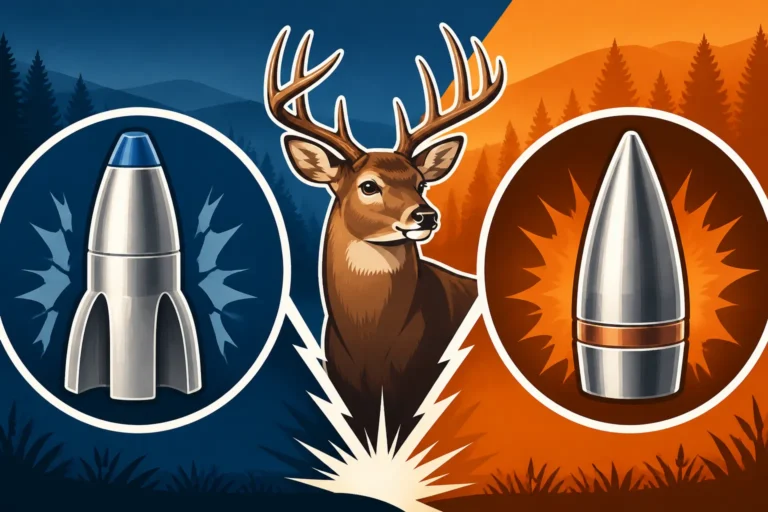
This is arguably as important as the caliber itself, if not more so. A black bear is a tough animal, and you need a bullet that will perform reliably upon impact. Forget about thin-jacketed, rapidly expanding deer bullets. For bears, you need controlled expansion and deep penetration to reach those vital organs.
- Bonded Bullets: Bullets like Hornady InterBond, Nosler AccuBond, or Winchester AccuBond CT are excellent choices. They feature a lead core bonded to the copper jacket, which prevents core-jacket separation and ensures the bullet retains most of its weight as it penetrates. This leads to a deep wound channel and good energy transfer.
- Monolithic (Solid Copper) Bullets: Barnes TSX, TTSX, or Hornady GMX are fantastic for bears. These bullets are made entirely of copper or gilding metal, meaning they retain almost 100% of their weight. They expand reliably into a mushroom shape, creating sharp petals that cut tissue and bone, while penetrating incredibly deeply. They are often a top choice for their consistent performance on heavy-boned animals.
- Heavy-for-Caliber: Regardless of the type, opt for the heavier end of the bullet weight spectrum for your chosen caliber. For example, in a .30-06, a 180-grain bullet is generally preferred over a 150-grain for bear. This additional mass helps drive the bullet deeper, especially if it encounters shoulder bone. Understanding Shot Placement on a Tennessee Black Bear and pairing it with the right bullet construction significantly increases your chances of a quick, ethical harvest.
Hunter Comfort and Recoil Management
Let's face it: if you can't shoot your rifle accurately because you're flinching from recoil, even the most powerful caliber in the world won't do you any good. Bear hunting can be an adrenaline-fueled experience, and recoil anticipation can severely impact shot placement.
- Practice, Practice, Practice: No matter what caliber you choose, you must practice extensively with it. Become intimately familiar with its feel, its trigger, and how it handles recoil. Shoot from different positions, mimicking what you might encounter in the field. Using an app or platform like GoHunt to track your shooting sessions and rifle data can actually help you hone your skills and gain confidence with your chosen firearm.
- Recoil Mitigation: If you're sensitive to recoil but still want a more powerful caliber, consider rifles with good recoil pads, muzzle brakes, or even a suppressor (where legal and applicable, with proper NFA tax stamps). These can significantly reduce felt recoil, allowing you to focus on the target rather than the kick.
- "Enough Gun" vs. "Too Much Gun": There's a balance. While you want "enough gun" for a bear, using "too much gun" that you can't shoot accurately is detrimental. A hunter who consistently places shots from a .308 is far more effective than one who flinches and misses with a .338 Win Mag. Choose a caliber you are genuinely comfortable and confident shooting.
Ethical Considerations and Practice
Hunting bears in Tennessee is a privilege, and with that privilege comes a significant responsibility to execute a clean, ethical harvest. This isn't just about following the law; it's about respecting the animal and upholding the traditions of responsible hunting.
Practice Makes Perfect
This cannot be stressed enough. Choosing the right caliber is only half the battle; the other half is your proficiency with that caliber and rifle. Take your chosen rifle to the range regularly. Don't just shoot from a bench rest. Practice shooting from positions you might actually use in the woods: offhand, kneeling, sitting, or using a shooting stick. Simulating real-world hunting scenarios will build muscle memory and confidence. If you plan to hunt from a treestand, practice shooting from an elevated position. Understanding how your rifle and bullet perform at various ranges, from across a small clearing to a quick snap shot in thick cover, is crucial. The more comfortable you are with your firearm, the more likely you are to make a precise shot when a bear presents itself.
Consider joining a local rifle club or seeking professional instruction if you feel your shooting skills need improvement. Investment in training is just as important as the investment in your rifle and optics. Remember, a responsible hunter ensures they can make the shot before they ever step foot in the woods.
Tracking and Recovery
Despite your best efforts and the perfect caliber, things can sometimes go sideways. A bear might react differently than expected, or a shot might be slightly off. This is where your commitment to a responsible hunt truly comes into play. If you shoot a bear, you are ethically obligated to track it thoroughly.
Even with a powerful caliber and a good hit, bears can sometimes cover surprising distances. Understanding how to blood trail effectively, even in challenging terrain like thick leaves or through a creek bottom, is a vital skill. Always mark the spot of the shot, pay attention to the bear's reaction, and immediately start looking for blood, hair, or disturbed ground. Having good tracking tools, like a bright headlamp for low light or a First Aid Kits for Remote Cherokee Forest Ground, can be invaluable. If night falls, it’s often best to back out and return at first light, especially for a gut-shot animal, to allow the animal to expire and stiffen up, making recovery safer and more likely. Be prepared for the physical demands of Handling a Bear After the Shot, which might involve quartering the animal or a long, difficult pack out of rugged terrain. Your chosen caliber is meant to prevent extended tracking, but always be prepared for it.
Disclaimer
This article is for general informational purposes only and does not constitute professional advice. Laws, prices and regulations vary by location and change over time. Consult a qualified professional for guidance on your specific situation.