Is a .243 Enough for Tennessee Whitetails?
It’s a question that echoes through deer camps and sporting goods stores across Tennessee every hunting season: Is my .243 Winchester truly enough gun for a whitetail deer? Many hunters, especially those just starting out or those looking for less recoil, gravitate towards the .243, but then they hear the whispers, the doubts, the insistence that you need a bigger hammer. This guide will cut through the noise, exploring the capabilities and limitations of the .243, and helping you understand what it truly takes to ethically and effectively harvest a Tennessee whitetail with this popular cartridge.
Understanding the .243 Winchester Cartridge
The .243 Winchester has earned its place in many hunters' gun safes, and for good reason. It’s a versatile cartridge, often lauded for its mild recoil and flat trajectory, making it a joy to shoot and highly accurate. But what exactly makes it "tick," and how does that translate to deer hunting here in the Volunteer State?
The Ballistics and Design of the .243
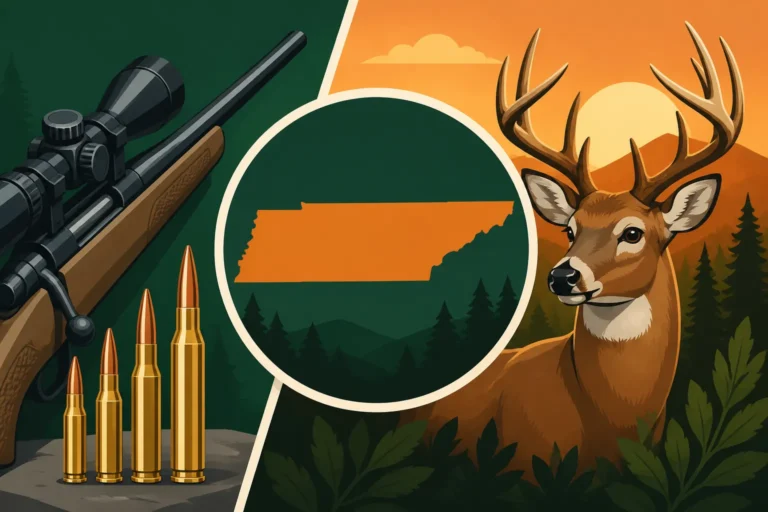
At its core, the .243 Winchester is a necked-down .308 Winchester case, designed to fire lighter, smaller diameter bullets at very high velocities. Typically, you'll find bullets ranging from 80 grains to 100 grains for deer hunting. These lighter bullets, when launched at speeds often exceeding 3,000 feet per second, result in a remarkably flat trajectory. This flat shooting characteristic means less bullet drop over common hunting distances, simplifying aiming for many hunters. Imagine a clear cut in the Cherokee National Forest, or a long shot across a bean field in West Tennessee – a flat-shooting cartridge like the .243 reduces the guesswork. It also boasts significantly less recoil than many larger deer cartridges, which is a huge plus for new hunters, younger shooters, or anyone who simply prefers a more comfortable shooting experience. Reduced recoil often translates to better accuracy because shooters aren't anticipating a heavy kick, leading to more consistent shot placement.
Advantages for Tennessee Hunters
For hunters navigating the diverse landscapes of Tennessee, the .243 offers several distinct advantages. First and foremost, its light recoil makes it an excellent choice for a wide range of shooters. If you’re introducing a youngster to deer hunting during the Tennessee Youth Deer Hunt Rules weekend, or if you yourself are sensitive to heavier recoil, the .243 is a fantastic option that won't leave you flinching. Secondly, its inherent accuracy and flat trajectory are perfect for the varied shot opportunities Tennessee presents. Whether you're trying to thread a bullet through a tight lane in the dense woods of the Cumberland Plateau, or you're presented with a longer shot on a Setting Up on a West Tennessee Field Edge, the .243's precision can be a real asset. Many hunters appreciate how easy it is to practice with, leading to greater confidence in the field. When you can consistently hit where you aim at the range, that confidence carries directly into your hunt, improving your chances of a clean harvest.
Factors Beyond Caliber: Shot Placement and Bullet Choice
While the cartridge itself is important, simply owning a .243 isn't enough. The success of your hunt, and the ethical harvesting of a deer, depends far more on how you use that cartridge than on its mere presence in your rifle.
The Critical Role of Shot Placement
Let's be brutally honest: even the most powerful magnum rifle is useless if you can't put the bullet where it needs to go. With any deer cartridge, but especially with one on the lighter side like the .243, shot placement is absolutely paramount. A well-placed shot with a .243, aiming for the vitals (heart and lungs), will drop a whitetail cleanly and quickly. The high velocity of the .243 causes significant hydrostatic shock and tissue damage within the chest cavity, typically resulting in a quick, ethical kill. Conversely, a poorly placed shot with a larger caliber, say a .30-06, can still wound a deer and lead to a long, frustrating, and often unsuccessful Tracking a Deer Through Tennessee Leaf Litter.
Understanding deer anatomy is crucial. A double-lung shot or a heart shot will disrupt the deer's circulatory and respiratory systems, leading to rapid blood loss and incapacitation. Aiming for the shoulder or a "Texas heart shot" are poor choices, regardless of caliber, as they can cause immense suffering and difficult recovery. Spend time studying anatomy charts and visualizing the placement on a live deer. When you’re out Scouting Tennessee Public Land Before Season, visualize those shot angles.
Matching Bullet to Game
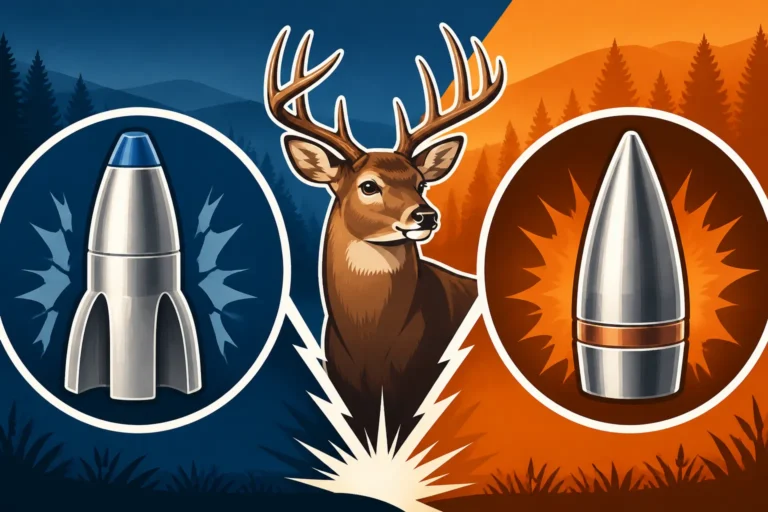
This is where many hunters make their biggest mistake with a .243. Not all .243 bullets are created equal, and choosing the right one for deer hunting is vital. You want a bullet designed for controlled expansion and good penetration, not one that blows up on impact or passes through without expending its energy. For Tennessee whitetails, stick with bullets in the 90-100 grain range. Look for reputable brands that offer hunting-specific bullets, often labeled as "bonded," "partition," or "monolithic." These designs are engineered to retain their weight, penetrate deeply, and expand reliably, creating a larger wound channel and increasing the likelihood of a through-and-through shot, which is excellent for a blood trail.
For example, a standard 80-grain varmint bullet might be fantastic for coyotes but completely inadequate for deer. It's designed to fragment violently, which doesn't provide the necessary penetration for a deer's vitals. On the other hand, a 95-grain bonded bullet will hold together, drive deep, and create a lethal wound. Don't skimp on bullet quality; it's a small investment that makes a huge difference in the field. GoHunt's forums often have great discussions on specific bullet performance for various calibers and game.
Practicing with Your .243
You wouldn't head into the woods without knowing your rifle is sighted in, right? But "sighted in" means more than just hitting a paper plate at 100 yards. It means knowing exactly where your bullet will hit at various distances. The .243's mild recoil makes it perfect for extended practice sessions. Spend time at the range, not just shooting from a bench, but practicing from various field positions: kneeling, standing, leaning against a tree. Practice quickly acquiring your target and making a clean shot.
Understand your rifle's capabilities. Know its Practical Range in Cherokee Forest Timber, its trajectory, and how environmental factors like wind might affect your shot. If you plan to hunt an area with longer shot potential, you might consider Zeroing a Rifle for Mixed Distances so you know your holdovers. The more comfortable and proficient you are with your rifle, the more confident you'll be when that buck steps out, and the more ethical your hunt will be.
Real-World Scenarios and Limitations
While the .243 is perfectly capable, it's not a magical cartridge for every situation. Understanding its practical limitations in Tennessee's diverse hunting environments is key to using it effectively and ethically.
Typical Tennessee Hunting Distances
Tennessee offers a mix of hunting opportunities, from wide-open agricultural fields in West Tennessee to the dense, rolling hills of the Cumberland Plateau and the steep, rugged terrain of the Cherokee National Forest.
For most hunters in Tennessee, a typical shot on a whitetail deer will occur between 50 and 150 yards. In the thick timber and overgrown clear-cuts common across much of the state, shots are often much closer, sometimes under 75 yards. At these ranges, the .243 is exceptionally effective. Its high velocity ensures minimal bullet drop, and its energy delivery is more than sufficient for a deer.
However, if you find yourself hunting larger fields, power line cuts, or even longer bottomland stretches, shots out to 200 or even 250 yards are possible. The .243 can still perform admirably at these distances, especially with a quality bullet and a practiced shooter. Beyond 250 yards, however, the energy of the .243 begins to drop off more significantly, and factors like wind become more pronounced. This isn't to say it can't kill a deer farther out, but it requires an even higher degree of precision and understanding of external ballistics. For planning these longer shots, using a reliable mapping and ballistics tool, perhaps even through your GoHunt subscription, can be a game-changer.
When a .243 Might Feel Undergunned
There are specific situations where a hunter might feel the .243 is not the ideal choice.
- Marginal Shot Angles: If a deer presents a less-than-ideal quartering-away shot, or if you misjudge the angle, a larger, heavier bullet from a cartridge like a .308 Versus .270 for Whitetails might offer a bit more forgiveness in terms of penetration and bone-breaking capability. While the .243 can penetrate, it demands a truer path to the vitals.
- Bone Impacts: Hitting a large bone, like the shoulder blade, with a .243 requires a tough, well-constructed bullet to break through and still reach the vitals. A lighter, less robust bullet might fragment prematurely, leading to a superficial wound. While you should always aim for the vitals behind the shoulder, unforeseen circumstances can occur.
- Larger-Bodied Deer: While Tennessee deer typically aren't enormous, you do encounter mature, heavy-bodied bucks, especially in certain areas known for growing big deer. While a .243 is still lethal on these animals with proper shot placement, some hunters prefer the psychological comfort (and added kinetic energy) of a larger caliber for such impressive animals.
- Cold Weather Toughness: In colder weather, deer can sometimes be a bit tougher. While this is more anecdotal than scientific, the added energy of a heavier bullet can sometimes contribute to a quicker collapse, especially if a shot isn't perfectly placed. Don't underestimate the challenge of Hunting Deer After a January Cold Front.
Ultimately, these scenarios highlight that the .243 demands a higher degree of precision and bullet selection. If you question your ability to make a perfect shot, or if you are hunting in conditions where longer, less-than-ideal shots are unavoidable, a heavier caliber might offer a greater margin of error.
Ethical Hunting Considerations
The overarching principle in hunting is ethical harvest. This means making every reasonable effort to ensure a quick, humane kill and recover the animal. If you choose to hunt with a .243, you take on the responsibility of ensuring you can meet this standard.
This includes:
- Knowing your rifle: Be intimately familiar with your rifle's accuracy and your own shooting abilities. Don't attempt shots beyond your comfortable and proven range.
- Choosing the right ammunition: As discussed, use premium, deer-specific hunting bullets.
- Patience and discipline: Wait for the ideal shot presentation. Don't rush a shot. It's better to let a deer walk away and hunt another day than to take a risky shot that leads to a wounded animal.
- Follow-up: Always assume the deer is wounded until proven otherwise. Watch for reactions, listen for crashes, and give the deer time before you start tracking, especially if the shot wasn't immediately apparent.
The .243 is recognized under Tennessee Legal Firearms for Deer Hunting and meets the Tennessee Minimum Rifle Caliber Rules for deer. It is a legal and capable deer cartridge, but its ethical use rests entirely on the hunter's skill and preparation.
Comparing the .243 to Other Popular Deer Cartridges in Tennessee
To truly understand where the .243 sits, it's helpful to see it in context with other common choices for deer hunting in Tennessee. There's a reason so many different calibers exist, and each has its own strengths and weaknesses.
A Quick Look at Common Alternatives
Tennessee hunters have a wide array of options when it comes to deer rifles. Beyond the .243, you'll commonly see hunters carrying calibers that represent different approaches to deer hunting. The .30-30 Winchester, for example, is a classic lever-action cartridge, incredibly popular for its compact rifles and effectiveness in dense woods at closer ranges. The .270 Winchester and .30-06 Springfield are often considered all-around workhorses, offering more power and flatter trajectories for longer shots than a .30-30, with a bit more recoil. Then there are the newer cartridges like the 6.5 Creedmoor, which has gained immense popularity for its exceptional accuracy and mild recoil for its bullet weight.
| Cartridge | Typical Bullet Weight (gr) | Recoil (Relative) | Trajectory | Effective Deer Range (yards) | Common Use Case |
|---|---|---|---|---|---|
| .243 Winchester | 80-100 | Low | Very Flat | 250+ | Lighter recoil, youth, long-range accuracy |
| 6.5 Creedmoor | 120-140 | Moderate | Very Flat | 350+ | Long-range precision, good energy retention |
| .270 Winchester | 130-150 | Moderate-High | Flat | 300+ | All-around, balance of speed and power |
| .308 Winchester | 150-180 | Moderate-High | Flat | 300+ | All-around, short-action, military heritage |
| .30-06 Springfield | 150-180 | High | Flat | 350+ | All-around, power, versatility for larger game |
| .30-30 Winchester | 150-170 | Moderate | Arched | 150-200 | Close-range, brush hunting, classic lever gun |
This table provides a generalized comparison. Factors like barrel length, specific load, and rifle weight can influence these characteristics.
What Hunters Often Choose (and Why)
Many hunters in Tennessee choose a .243 because they appreciate its manageability. For hunters who want to carry a lighter rifle, perhaps while Still-Hunting Cumberland Plateau Ridges all day, the .243 offers a comfortable package. It’s also a frequent choice for those wanting to teach a new generation, creating positive experiences that build a lifelong love for hunting without the intimidation of heavy recoil.
However, others prefer the confidence that comes with a heavier bullet and more kinetic energy, even if it means more recoil. You'll find many advocates for the .308 Versus .270 for Whitetails debate, often citing the .308's short-action efficiency and the .270's reputation for being flat-shooting. Hunters who frequent thick bottomland or dense forests often favor a .30-30 in Thick Bottomland Cover for its quick handling and proven knockdown power at shorter ranges.
Ultimately, the "best" caliber, or whether the .243 is "enough," comes down to personal preference, individual shooting ability, and the specific hunting conditions you expect to encounter. The .243 is an excellent tool for harvesting whitetail deer in Tennessee, provided you respect its capabilities and limitations through diligent practice and responsible bullet selection. It certainly holds its own against the Best Rifle Caliber for Tennessee Deer contenders, especially when a hunter puts in the work. It’s a cartridge that rewards precision, and for the prepared hunter, it is absolutely enough.
Disclaimer
This article is for general informational purposes only and does not constitute professional advice. Laws, prices and regulations vary by location and change over time. Consult a qualified professional for guidance on your specific situation.