Tennessee Whitetail Color Phase Rarities
Most hunters in Tennessee are accustomed to seeing our whitetails adorned in various shades of brown and gray, the perfect camouflage for our timber and fields. But every so often, Mother Nature throws a curveball, presenting deer with truly unique and rare coat colors that can stop you dead in your tracks. This guide dives deep into those fascinating genetic anomalies, exploring the ghostly white, the strikingly dark, and the uniquely piebald whitetails you might encounter across our beautiful state, helping you understand what causes them and what it means for these special animals.
Beyond the Common Brown: Understanding Whitetail Coat Variations
For most of us, a whitetail deer is, well, brown. Or maybe a bit grayish in the winter, with that signature white tail and belly. This is the norm, and it's what decades of evolution have fine-tuned for survival in Tennessee's diverse habitats. Our deer populations are robust, as you can read more about in White-Tailed Deer Across Tennessee, and their typical coloration is a testament to their success. But just like humans, deer can exhibit genetic variations that affect their pigmentation, leading to some truly breathtaking and unusual appearances.
These variations aren't just random; they're rooted in genetics, often recessive genes that only express themselves when inherited from both parents. Because these genes are rare, seeing a deer with one of these unusual color phases is a truly special event, often the highlight of a lifetime in the woods. It's a vivid reminder that even in nature's most familiar creatures, there's always an element of surprise and wonder waiting to be discovered if you pay close enough attention. Understanding these natural deviations helps us appreciate the complexity of wildlife genetics and the sheer diversity present even within a single species.
The Genetic Palette: Why Deer Aren't Always Brown
Imagine a painter's palette, but instead of colors, it's genes dictating the hue. In whitetails, the primary pigments are melanins, specifically eumelanin (which creates black and brown) and pheomelanin (which creates red and yellow). The combination and concentration of these, along with how light reflects off the hairs, determine the deer's coat color. When certain genes mutate or are absent, the normal production or distribution of these pigments goes awry, resulting in a different shade altogether.
Think about the classic brown deer you glass while Scouting Tennessee Public Land Before Season. Its coat is a masterful blend, allowing it to disappear against the bark of an oak or the shadows of a cedar thicket. Now, imagine if the genetic instructions for that blend were incomplete or swapped. The result isn't always detrimental; sometimes, it's just strikingly different. These aren't separate species, just individuals within the whitetail population expressing a less common genetic blueprint.
Rarity in the Landscape: Why You Don't See Them Often
The reason these color phases are rare boils down to basic Mendelian genetics. Recessive genes, which often cause these variations, must be inherited from both parents for the trait to appear. If a deer carries one copy of the recessive gene, it's a "carrier" but appears normal. Only when two carriers mate, or a carrier mates with a deer that expresses the trait, do you get a chance for an offspring to display the unusual color. Given the vastness of our deer herd and the random nature of breeding, the odds of this specific genetic lottery hitting are quite low.
Furthermore, some of these conditions, particularly albinism, can come with other genetic drawbacks, like poor eyesight, which might make survival tougher in the wild. A deer that stands out visually is also more susceptible to predators. While we don't often think of predators being a major factor for mature whitetails in Tennessee, especially in agricultural areas, a highly visible fawn or yearling could face increased risk. This natural selection process also helps keep these traits rare in the population.
The Ghostly Whitetail: Albinism and Leucism in Tennessee Deer
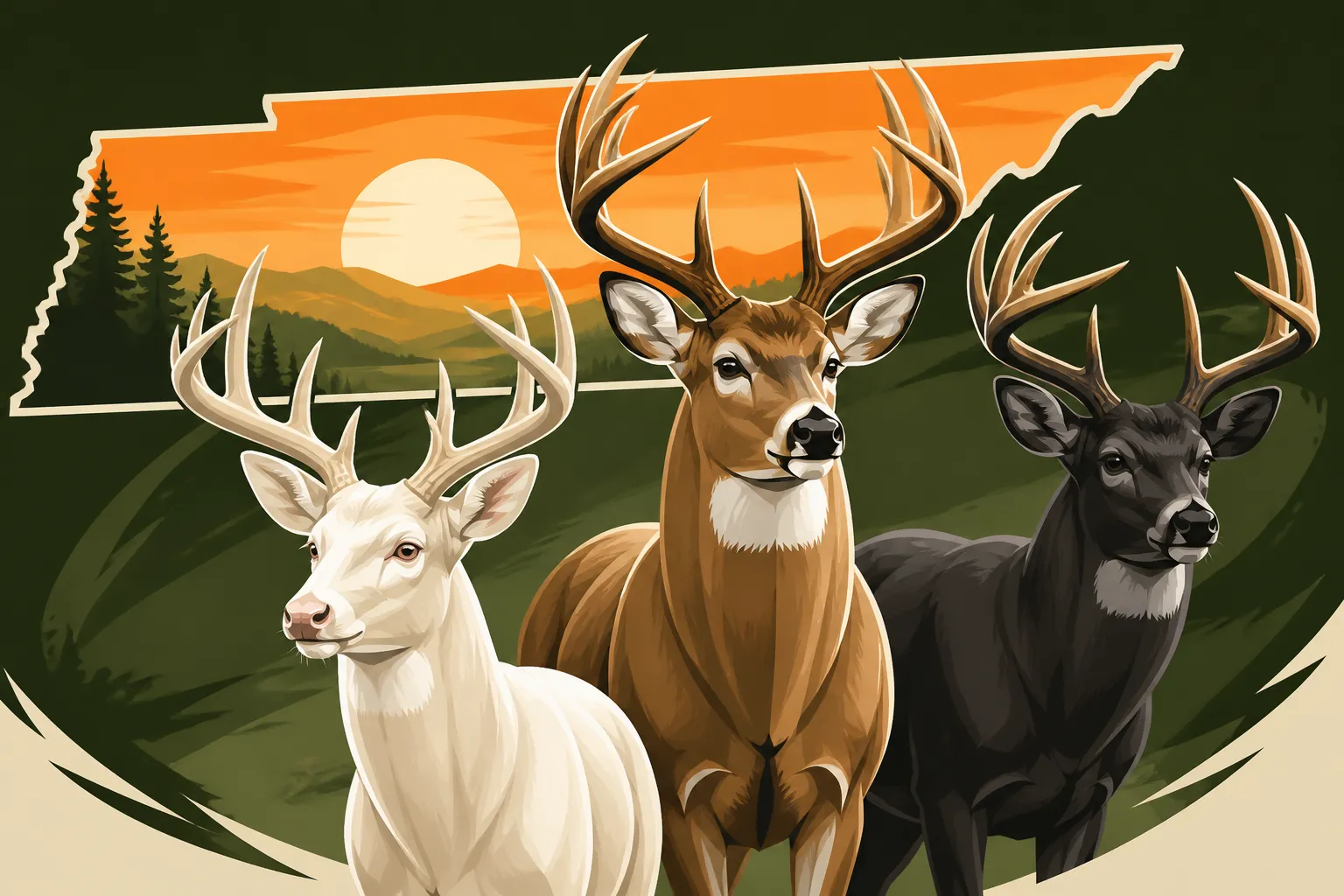
Perhaps the most talked-about and recognized rare color phases are those that involve white coats. It’s truly an awe-inspiring sight to witness a pure white deer against the backdrop of our green forests or even a snow-dusted ridge. Many people confuse the terms "albino" and "leucistic," but there's a clear, crucial difference that defines these ghostly whitetails.
Both types of deer can be stunning, almost ethereal, to behold. They stand out dramatically from their brown counterparts, creating unforgettable encounters for hunters and wildlife enthusiasts alike. While they share a similar visual effect—a predominantly white coat—their underlying genetic mechanisms and associated physical traits are quite distinct, as we'll explore. It's not just a shade of white; it's a window into different genetic pathways.
True Albinos: Pink Eyes and Genetic Absences
A truly albino whitetail is a deer that completely lacks melanin production in its body. This isn't just a lack of color in its hair; it's an absence across the board. The defining characteristic of a true albino, beyond its pure white fur, is its pink or reddish eyes. This eye color is due to the blood vessels in the retina showing through because there's no pigment in the iris. You'll also notice pink skin on its nose, hooves, and any exposed areas.
This complete lack of pigment is caused by a recessive gene that essentially switches off the cellular machinery responsible for producing melanin. While incredibly rare, true albino deer have been spotted in various parts of Tennessee, though it's certainly not something you'd expect to see every season. Their lack of natural camouflage, coupled with potential vision issues (melanin plays a role in eye development), can make life harder for them in the wild, though many do survive to maturity. It's a striking reminder of nature's endless variations.
Leucistic Deer: White but Not Quite Albino
Leucism is often mistaken for albinism because these deer also appear white. However, the genetic cause is different. Leucistic deer have a partial loss of pigmentation, or a reduction in multiple types of pigment, not a complete absence of melanin. The key difference you'll observe is their eye color: leucistic deer will have normal eye color, typically brown, or sometimes blue. Their nose and hooves will also usually be dark, unlike the pink of a true albino.
The degree of whiteness in leucistic deer can vary. Some might be pure white, while others might have patches of their normal brown coloration mixed in, though these heavily white variations are quite rare. This condition is also caused by recessive genes, but they affect pigment distribution or reduction, rather than total absence. They often have normal vision, which can give them a slight edge over true albinos in terms of survival. Witnessing a leucistic deer, especially a predominantly white one, is an equally rare and unforgettable experience in the Tennessee woods, perhaps even more so when Hunting the Tennessee Rut in Early November and they stand out against the fall foliage.
| Color Phase | Coat Color | Eye Color | Skin/Hoof Color | Genetic Cause | Rarity in TN | Key Difference |
|---|---|---|---|---|---|---|
| Normal | Brown/Gray | Brown | Dark | Dominant Pigment Genes | Common | Standard coloration |
| Albino | Pure White | Pink/Red | Pink | Total Melanin Absence | Extremely Rare | Complete lack of pigment, pink eyes |
| Leucistic | White (or mostly white) | Normal (Brown/Blue) | Normal (Dark) | Partial Pigment Reduction | Very Rare | Pigment loss, but normal eye color |
| Melanistic | Jet Black | Normal | Normal | Excess Melanin Production | Extremely Rare | Opposite of albinism; excess dark pigment |
| Piebald | White & Brown Patches | Normal | Mixed | Incomplete Pigment Development | Rare | Irregular patches of white and normal color |
The Darker Shades: Melanism and Piebald Deer in Tennessee
While white deer often capture the most attention, the opposite end of the color spectrum also produces some incredibly rare and striking whitetail variations in Tennessee: the melanistic, or black, deer, and the piebald, or spotted, deer. Each of these represents a unique genetic anomaly that challenges our perception of what a "normal" whitetail looks like.
These darker and patterned deer are just as, if not more, uncommon than their white counterparts in many areas. Their distinct appearances can make them challenging to spot in deep shadows or, conversely, highlight them against a snowy backdrop. Understanding these variations adds another layer to our appreciation for the rich biodiversity present even in our most familiar game species.
Melanistic Marvels: The Black Whitetail
If an albino deer represents the complete absence of pigment, a melanistic deer is its exact opposite: an abundance of it. Melanism is a genetic condition characterized by an overproduction of melanin, resulting in a deer with an unusually dark, often jet-black, coat. Their eyes, nose, and hooves will be their normal dark color, contrasting starkly with their dark fur.
Melanistic whitetails are exceedingly rare across their range, and sightings in Tennessee are truly exceptional. They blend into the deepest shadows of dense timber like no other. While some theories suggest melanism might offer a camouflage advantage in certain low-light or heavily shaded environments, its extreme rarity suggests it doesn't convey a widespread evolutionary benefit, or perhaps it's linked to other genetic traits that are less favorable. Seeing one of these magnificent, shadowy deer would certainly be a story to tell for years at Tennessee Deer Camp Traditions.
Piebald Patterns: The Spotted Whitetail
Piebaldism is another genetic anomaly that results in a deer with irregular patches of white and normal brown fur. These aren't just small white spots; the white areas can be quite extensive, covering significant portions of the body, often symmetrical or asymmetrical. Unlike leucism, which tends to be more uniformly distributed, piebald deer have distinct, often stark, borders between their pigmented and unpigmented areas. Their eyes, nose, and hooves are typically normal colored, though some may have patches of pink skin or white hooves within their white areas.
Piebald deer are considered rare, but perhaps slightly more common than true albinos or melanistic deer in certain localized populations. The condition can sometimes be accompanied by other genetic defects, such as short or twisted legs, bowed noses, or abnormal internal organs, which can impact their survival. However, many piebald deer are perfectly healthy and lead normal lives. Encountering a piebald deer while still-hunting through Still-Hunting Cumberland Plateau Ridges could easily make you do a double-take, as their unique pattern creates a striking image.
Observing and Appreciating Tennessee's Rare Whitetail Colors
For hunters and wildlife enthusiasts alike, encountering a deer with one of these rare color phases is an experience that often transcends the normal pursuit of game. It's a moment of connection with nature's unpredictable beauty, a glimpse into the genetic lottery that plays out in our wild places. While the instinct to harvest a truly unique animal might be strong for some, others find themselves simply observing, taking in the rare sight.
Our understanding of Tennessee Deer Population Estimate and general herd health helps us appreciate that these rarities are just that—individual expressions within a healthy, diverse population. Their presence doesn't indicate an issue with the overall deer herd but rather the incredible genetic potential within it.
Ethical Considerations and Conservation
When you encounter one of these magnificent, rare-colored deer, ethical considerations often come to mind. Is it right to harvest such a unique animal? The answer often varies by individual, but from a biological standpoint, harvesting a rare color phase deer typically has no significant impact on the overall deer population or the prevalence of the rare gene. These are natural occurrences, not endangered traits.
However, many hunters choose to pass on such deer out of respect for their rarity, or simply because they enjoy the unique spectacle. Others might consider it a once-in-a-lifetime trophy. There are no specific Tennessee regulations that protect deer based solely on their color phase, so they fall under the same rules as any other whitetail. It's a personal decision, often weighed against the desire to preserve such a rare sight for others to potentially enjoy. For those who track deer movement and plan their hunts meticulously, using tools like GoHunt can help you observe patterns and potentially even confirm sightings of these rare animals in your hunting area, though you'd be incredibly lucky to pinpoint one!
Documenting and Learning from Rarities
If you are fortunate enough to encounter an albino, leucistic, melanistic, or piebald whitetail in Tennessee, take the time to observe it. Take photos or videos if possible. These sightings are valuable for wildlife biologists and can contribute to our collective understanding of deer genetics and distribution of these rare traits. While you can't submit a tissue sample for genetic analysis every time you see one, simply reporting a detailed sighting to the Tennessee Wildlife Resources Agency (TWRA) can be helpful data for their ongoing monitoring efforts, especially if you also share details like location or Reading Aerial Photos for Cumberland Plateau Deer features that might explain why it was sighted there.
It's a testament to the wildness of our state that such genetic marvels can not only exist but thrive within our bustling landscape. Whether you hunt them, study them, or simply admire them from afar, these rare-colored whitetails serve as a powerful reminder of the beauty and mystery that still resides in Tennessee's fields and forests. Keep your eyes peeled and your camera ready—you never know what kind of incredible deer might step out of the shadows on your next adventure, perhaps even while Hunting West Tennessee Bottomland Deer where dense cover might hide such a gem.
Disclaimer
This article is for general informational purposes only and does not constitute professional advice. Laws, prices and regulations vary by location and change over time. Consult a qualified professional for guidance on your specific situation.