When Tennessee’s Muzzleloader Week Starts
Trying to figure out the exact start date for Tennessee's muzzleloader deer season can feel like a guessing game sometimes, especially with all the different zones and changing regulations. It's frustrating to plan your precious hunting days only to realize you might have misread the calendar. This guide is here to clear up that confusion, giving you the definitive scoop on when you can break out your trusty smoke pole and what you need to know to be fully prepared for this exciting part of the Tennessee deer season.
Understanding Tennessee's Deer Season Framework
Before we dive into the specific dates for muzzleloader season, it's really helpful to understand how the Tennessee Wildlife Resources Agency (TWRA) structures the entire deer hunting calendar. It's not just one long season; it's a carefully crafted series of phases designed to manage the deer herd effectively while providing ample opportunity for hunters across the state. This phased approach can feel a little complicated at first, but once you grasp the rhythm, it makes a lot more sense.
The Phased Approach to Deer Hunting
Tennessee's deer season is typically divided into three primary weapon segments: archery, muzzleloader, and gun. Each of these segments has its own specific opening and closing dates, and sometimes even different bag limits or rules, depending on the Deer Management Unit (DMU) you're hunting in. The season usually kicks off with archery season, often in late September, offering hunters a chance to pursue deer during a quieter time of year. Following the initial archery period, muzzleloader season steps in, providing a transition before the general gun season opens up. This staggered approach helps distribute hunting pressure and allows various types of hunters to enjoy their preferred method during optimal times. For a complete picture of the entire deer hunting calendar, you might want to check out our comprehensive guide on Tennessee Deer Season Structure Explained.
Why Muzzleloader Season is Unique
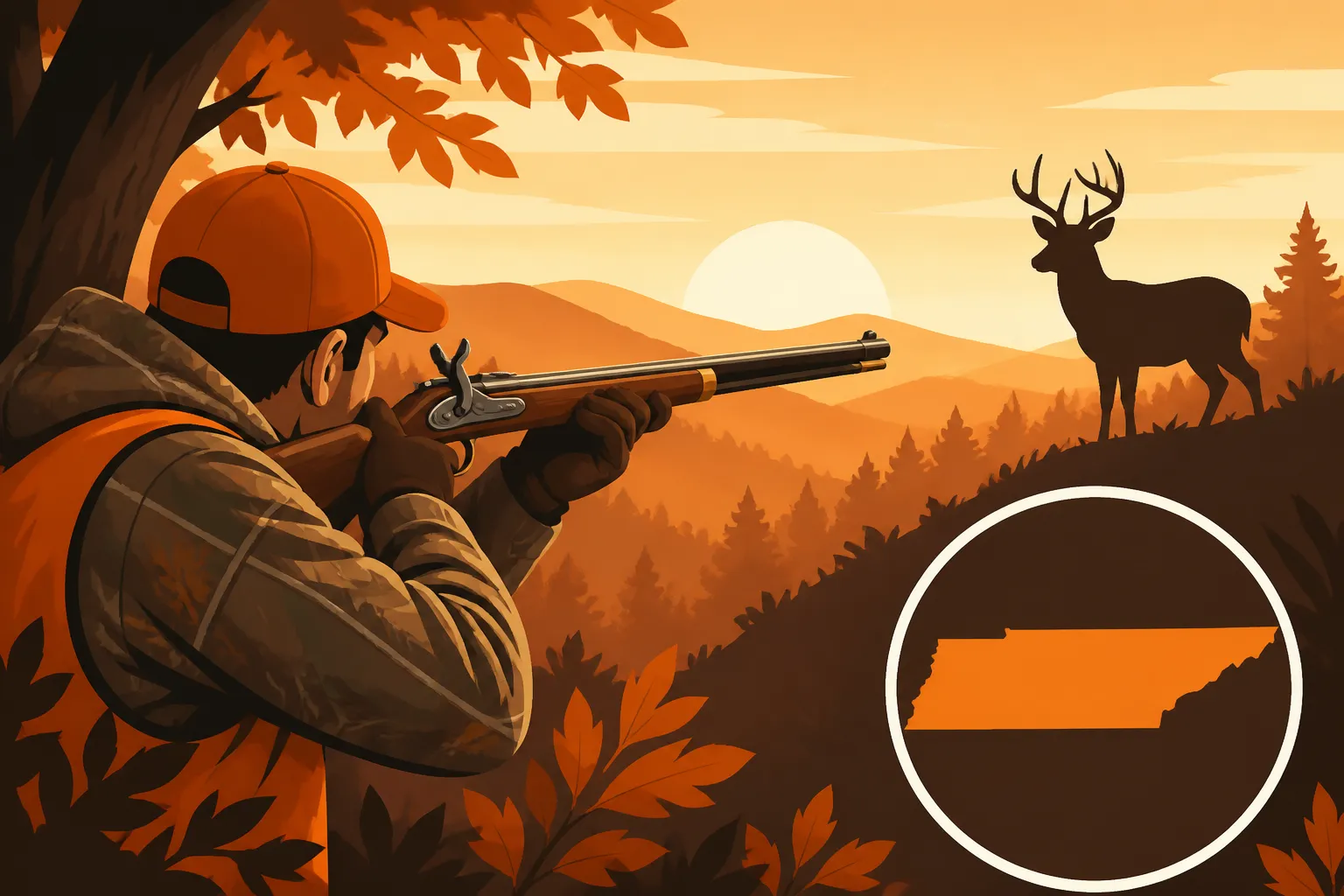
Muzzleloader season holds a special place in the hearts of many Tennessee hunters. It bridges the gap between the silent stealth of archery and the more widespread participation of modern firearms. For many, it's a chance to experience a more traditional form of hunting, requiring careful preparation, intimate knowledge of your firearm, and often closer-range shots. The rules for muzzleloaders under Tennessee law allow for both traditional flintlock and percussion caps, as well as more modern in-line muzzleloaders, as long as they are .40 caliber or larger. This period often coincides with prime deer activity as the rut approaches or begins in earnest, offering excellent opportunities to harvest a deer. It's a challenging yet incredibly rewarding hunt that emphasizes skill and patience. Understanding the nuances of Muzzleloader Deer Hunting in Tennessee can really elevate your experience during this unique time of year.
Official Dates for Muzzleloader Week in Tennessee
Alright, let's get to the brass tacks: when does muzzleloader week actually start in Tennessee? It's the question on every traditional hunter's mind as autumn leaves begin to fall. While the exact dates can shift slightly year to year based on the calendar, there's a predictable pattern that the TWRA follows.
Pinpointing the General Statewide Dates
Historically, Tennessee's statewide muzzleloader deer season typically opens in early to mid-November, usually lasting for about two weeks, sometimes less depending on the specific zone. This timing is critical because it often coincides with the peak of the deer rut in many parts of the state, making it an incredibly exciting and productive time to be in the woods. While the general gun season often opens in the second half of November, the muzzleloader period gives hunters a dedicated window before the woods get more crowded with modern firearm hunters.
For the most precise and up-to-the-minute dates, always refer to the official TWRA Hunting & Trapping Guide. You can usually find the current year's dates clearly laid out in a convenient table. For example, in a typical year, you might see the statewide muzzleloader season running from the first Saturday in November for a couple of weeks. These dates are crucial for planning your hunts, applying for time off work, and making sure your gear is ready. To get the specific dates for this season, a quick look at the Tennessee Muzzleloader Season Dates can confirm your plans.
Here's a generalized look at the typical statewide season progression, keeping in mind exact dates shift annually:
| Season Type | Typical Start Date | Typical End Date | Notes |
|---|---|---|---|
| Archery Season | Late September (e.g., last Saturday) | Early November | Often precedes muzzleloader, sometimes with overlap or a brief closure before muzzleloader opens. |
| Muzzleloader Season | Early-Mid November (e.g., first Saturday) | Mid-Late November | This is the "Muzzleloader Week" most hunters refer to. It's a dedicated period for black powder firearms. |
| Gun Season | Mid-Late November | Early January | General firearms season, following or overlapping with muzzleloader. Continues through the late season. |
| Youth Deer Weekend | Late October / Early November | Late October / Early November | Dedicated youth hunts often occur before the general muzzleloader and gun seasons. |
Regional Variations and DMU Considerations
It's absolutely vital to remember that Tennessee isn't a "one-size-fits-all" state when it comes to hunting regulations. What applies in the mountains of East Tennessee might be entirely different from the rolling hills of Middle Tennessee or the flat farmlands of West Tennessee. The TWRA divides the state into six distinct Deer Management Units (DMUs), each with its own specific bag limits, antler restrictions, and sometimes even slightly altered season dates. While the statewide muzzleloader season generally applies across these units, there can be nuances, especially regarding antlerless deer opportunities.
For instance, DMU 1 and 2, often found in West and Middle Tennessee, might have higher antlerless bag limits during the muzzleloader season compared to DMU 6 in parts of East Tennessee. Always double-check the current hunting guide for the specific county or WMA you plan to hunt. Using a detailed mapping tool like GoHunt can be invaluable here, as it often integrates TWRA regulations directly onto property maps, helping you visualize these zone boundaries and understand the rules instantly. You can find more detailed information about these zones in our guide on Tennessee's Six Deer Management Units. Don't just assume; confirm the regulations for your specific hunting spot!
Checking Specific WMA Regulations
On top of statewide and DMU rules, if you're planning to hunt on a Wildlife Management Area (WMA), you have yet another layer of regulations to consider. Many WMAs have their own unique season dates, weapon restrictions, and sometimes even quota hunts or permit requirements that supersede the general statewide rules. It's not uncommon for a WMA to have a delayed opening for muzzleloader season, or perhaps even an archery-only period that extends through what would normally be muzzleloader week statewide.
Always consult the individual WMA section of the TWRA Hunting & Trapping Guide or visit the TWRA website for specific WMA regulations. Ignoring WMA rules can quickly lead to a citation, so diligence is key. Tools like GoHunt often include WMA boundaries and regulations, which can be a lifesaver when you're scouting new public ground. Make it a habit to look up the WMA you intend to hunt well in advance of the season.
Preparing for Muzzleloader Season
Once you've got those dates locked down, it's time to shift gears and ensure you're fully prepared for the muzzleloader action. This isn't just about having the right gun; it's about understanding how to use it effectively, setting up your stand, and adapting your hunting strategy for this unique season.
Essential Gear and Muzzleloader Setup
Preparing for muzzleloader season goes beyond just pulling your rifle out of the gun safe. You'll want to ensure your firearm is sighted in and that you're comfortable with its loading and firing process, especially if you're using loose powder and sabots. Accuracy is paramount, and unlike a modern rifle, you typically only get one shot, so make it count. Practice shooting from various positions you might encounter in the field, like offhand, kneeling, or leaning against a tree. Pay close attention to your powder charge, bullet choice, and primer type, as these can dramatically affect accuracy. Ensure you have plenty of spare primers, cleaning patches, bore solvent, and a ramrod extension if needed. A good shooting rest or bipod can also be invaluable for stability in the field. For more detailed insights into what to expect from your firearm, check out our guide on Muzzleloaders Under Tennessee Rules.
Beyond the firearm itself, consider your optics. A good low-light scope is crucial, as muzzleloader season often involves hunting at dawn and dusk. A rangefinder is also highly recommended to know your exact distances, as muzzleloaders typically have a shorter effective range than modern rifles. Don't forget a sturdy sling for carrying your heavy muzzleloader through the woods. Given that muzzleloader season often coincides with cooler, potentially damp weather, ensure your hunting clothing layers are appropriate. Think waterproof outers and warm, moisture-wicking base layers to stay comfortable during those long sits.
Tactics for the Muzzleloader Period
The muzzleloader season's timing, often aligning with the early stages of the rut, means your tactics should reflect increased deer movement. Bucks are starting to cruise, looking for does, and scrapes and rubs become more active. Instead of relying solely on food sources, start focusing on travel corridors, pinch points, and natural funnels between bedding and feeding areas. Ridgelines, creek bottoms, and saddles can be excellent places to intercept moving deer. During this time, rattling and grunting can also be highly effective, as bucks are more responsive to challenging rivals or investigating potential mates.
Early morning and late afternoon are typically the most productive times, but don't discount midday activity during the rut. If you're hunting public land, be mindful of other hunters, especially as the season progresses towards gun season. Scouting heavily before the season is absolutely essential to locate fresh sign and understand deer movement patterns. Tools like GoHunt can help you identify potential bottlenecks and hidden food sources on aerial maps, allowing you to formulate a solid plan. For more in-depth strategies specific to this period, take a look at our article on Tennessee Muzzleloader Season Tactics.
Licensing, Tags, and CWD Compliance
Even with the right gear and knowledge, you can't hunt without the proper legal documentation and an understanding of key regulations, especially regarding Chronic Wasting Disease (CWD) which continues to be a major management concern in Tennessee.
Necessary Licenses and Permits
Before you even step foot in the woods with your muzzleloader, make sure your licensing is completely in order. In Tennessee, all resident and non-resident hunters are required to possess a valid hunting license. If you're planning to hunt deer with a muzzleloader, you'll also need the appropriate big game permit, which is often bundled with a general hunting license if you purchase a "Sportsman" package. Non-residents have several options, including a 7-day or annual big game license. It's always a good idea to buy your licenses online through the TWRA's Go Outdoors Tennessee portal well in advance of the season, or visit a licensed vendor. Always carry proof of your license while hunting, whether it's a physical copy or an electronic version on your phone. To avoid any last-minute scramble, familiarize yourself with Tennessee Hunting Licenses and What They Cost to ensure you have everything you need.
Navigating CWD Zone Rules
Chronic Wasting Disease (CWD) is a serious concern for Tennessee's deer herd, and the TWRA has implemented specific regulations to help manage its spread. If you're hunting in a county designated as part of the CWD Management Zone, there are additional rules you must follow. These often include restrictions on the movement of deer carcasses, mandatory CWD testing in certain areas or during specific timeframes, and special harvest reporting requirements. Some zones might even have an "Earn-a-Buck" program, where harvesting antlerless deer earns you additional antlered tags.
It's crucial to know if your hunting area falls within one of these zones. The TWRA publishes updated maps of the CWD Management Zone annually. If you harvest a deer in a CWD-positive county, you might be required to debone the animal before leaving the zone, leaving the skull plate and brain matter behind. There are often designated CWD sampling stations where you can bring your harvest for testing. Ignorance of these rules is not an excuse, and violations can carry significant penalties. Always check the latest CWD regulations before you hunt, especially for the specific counties within Tennessee's Chronic Wasting Disease Management Zone. Your responsible actions are a key part of protecting Tennessee's deer for future generations.
Disclaimer
Please note that hunting regulations, season dates, and license requirements are subject to change. While every effort has been made to provide accurate and up-to-date information, it is the hunter's responsibility to consult the official Tennessee Wildlife Resources Agency (TWRA) Hunting & Trapping Guide and website for the most current and legally binding regulations before engaging in any hunting activities.