Tennessee Turkey Roost Tree Preferences
One of the most elusive and frustrating aspects of hunting wild turkeys in Tennessee is figuring out where they'll spend the night. You've been scouting, listening, and trying to pattern birds, only to have them disappear into thin air each evening. It feels like they have some secret club where only certain trees are allowed for slumber. This guide is dedicated to pulling back the curtain on that secret, helping you understand the specific tree preferences Tennessee gobblers and hens exhibit when choosing their nighttime perches, and how you can use this knowledge to increase your success afield.
The "Why" Behind Roost Tree Choices in Tennessee
Understanding why turkeys choose particular trees for roosting is just as important as knowing which trees they prefer. Turkeys, for all their intelligence and keen senses, are vulnerable on the ground at night. Predators like coyotes, bobcats, and even owls pose a significant threat. Their roost tree isn't just a place to sleep; it's a fortress, a lookout, and a launching pad.
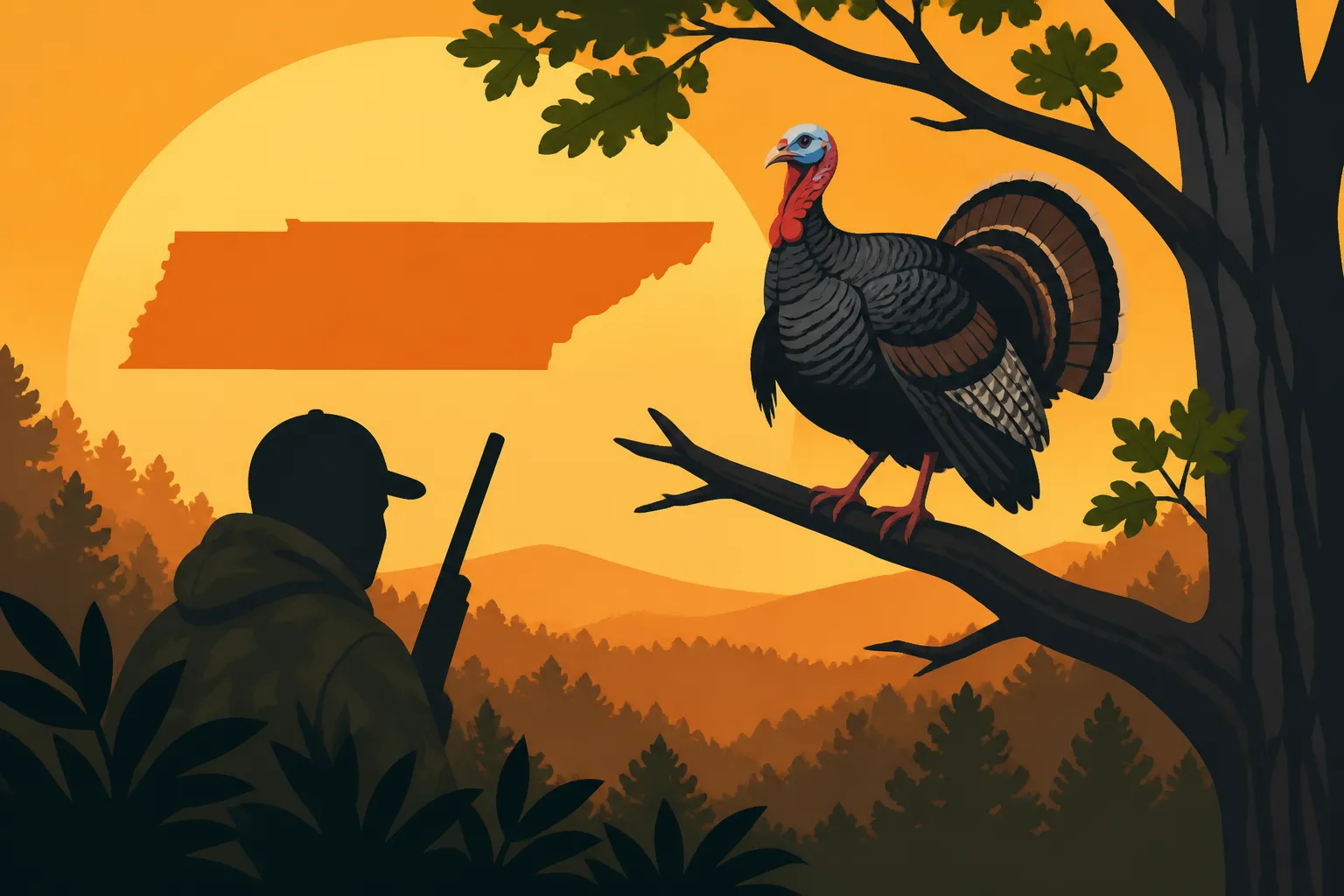
Safety is paramount for a roosting turkey. They ascend to the highest available branches, seeking elevation for two main reasons: predator avoidance and visibility. A turkey perched 40 or 50 feet up in a mature oak is far less accessible to ground predators than one sleeping on a low limb or, worse, on the forest floor. From their elevated position, they can also scan the landscape for threats as dawn approaches, before committing to fly down. They want to see what's below them, and they want to be seen as little as possible by anything looking up.
Beyond safety, comfort and convenience play a role. Turkeys don't want to fly further than necessary to reach a suitable roost, especially after a long day of feeding and strutting. They often pick trees that are within a reasonable distance of their evening feeding areas or along a travel corridor. Wind protection is another factor; while they might choose a tall tree, they’ll often favor the leeward side of a ridge or a tree that offers some buffer from strong gusts. Think about how exposed you'd feel in a gale-force wind high up in a tree – turkeys feel it too.
Common Roost Tree Species Across Tennessee's Diverse Landscape
Tennessee's topography is incredibly varied, from the flat river bottoms of West Tennessee to the rolling hills of the Highland Rim and the rugged peaks of the Appalachian Mountains. This diversity means that while some tree types are universally preferred, specific local favorites emerge depending on what's available and dominant in the habitat. A gobbler in a Reelfoot Lake cypress swamp isn't looking for the same tree as one on a Cumberland Plateau ridge.
In the eastern mountainous regions, including the Cherokee National Forest, you'll often find turkeys favoring large, mature hardwoods like oaks (especially white and red oak species), hickories, and sometimes even tall pines or hemlocks. These trees often grow to impressive heights, offering the critical elevation and strong, horizontal limbs turkeys desire. The sheer size of these trees means stout branches that can support multiple birds, which is crucial for hens roosting together or for a gobbler with his harem. Looking at aerial maps, especially with detailed topo overlays, can help identify these prime timber stands, a feature many hunters find invaluable when planning their approach with mapping tools like GoHunt. You'll often find them along a ridge top or on a bench overlooking a steep hollow, providing that perfect blend of elevation and nearby escape routes.
Moving into Middle Tennessee and across the Cumberland Plateau, the story remains much the same with oaks and hickories dominating, but poplar and maple trees can also be utilized, especially if they are particularly tall and have strong, open branching structures. Turkeys on the Plateau might favor trees on the tips of finger ridges or overlooking steep draws, giving them a commanding view of the terrain. In areas with more extensive pine plantations, very tall loblolly or shortleaf pines with open canopies and sturdy limbs can be chosen. Remember, it's not just the species but the individual tree's characteristics that matter most to a turkey.
When you venture into West Tennessee's bottomland hardwood forests, the preferences shift slightly. Here, towering sycamores become a highly favored roost tree, often found along creek banks and river systems. Their distinctive white bark and massive, spreading branches make them easy to spot, and their height provides excellent protection. Cypress trees, especially those in or near water, are also frequently used, offering a unique level of predator protection. Hunting West Tennessee Bottomland Deer might focus on different game, but the principles of understanding mature timber and water features apply just as well to turkeys. Similarly, large cottonwoods and sweetgums in these wetter environments can serve as preferred roosts. The key here is proximity to water and open areas, allowing for a safe fly-down into a field or open bottomland.
Recognizing Ideal Roosting Habitat and Specific Tree Characteristics
It's one thing to know the general tree types, but quite another to walk into a woods and identify a potential roost tree. Turkeys are looking for specific features in their chosen lodgings. Think like a turkey, or better yet, think like a turkey hunter who has to sneak in before daylight!
First and foremost, look for super-canopy trees. These are trees that stand significantly taller than the surrounding forest canopy. They literally stick out. This extra height provides an unmatched vantage point and makes it harder for ground predators to reach them. These trees often have large, horizontal limbs that are strong enough to support the weight of multiple heavy birds. Turkeys don't like to land on small, flimsy branches; they want a stable platform. Using tools like GoHunt on your phone or computer to analyze tree heights and canopy density in potential roosting zones can give you a massive edge before you even step foot in the woods.
Consider tree clusters near open areas or water. Turkeys love to roost on the edge of a field, a clear-cut, or a powerline right-of-way. This provides an easy fly-down into a feeding area and clear visibility for morning reconnaissance. Similarly, trees along a major creek or river offer both water access and a buffer from ground predators. If you're scouting Tennessee River Bottom Funnels, keep an eye out for these towering trees nearby. This combination of shelter and escape is a major draw.
Another often-overlooked characteristic is isolation or prominence. Sometimes, a lone, gigantic oak in a pasture, or a massive sycamore standing by itself along a river bend, becomes a community roost. These trees offer 360-degree visibility and are often historical roost sites, used year after year by generations of turkeys. When you're Scouting Tennessee Public Land Before Season, marking these prominent trees on your map can be crucial.
Here's a quick reference table for what turkeys look for in a roost tree:
| Characteristic | Why Turkeys Prefer It | Common Tree Examples | Scouting Tip |
|---|---|---|---|
| Exceptional Height | Maximum predator protection and broad visibility | Mature Oaks, Tall Pines, Poplars, Sycamores | Look for trees that stand above the general canopy; use binoculars. |
| Strong, Horizontal Limbs | Stable perching platforms, can support multiple birds | Large Oaks, Sycamores, Cottonwoods | Branches should be thick and relatively open for easy landing and takeoff. |
| Proximity to Openings | Easy fly-down into feeding areas, clear morning views | Field edges, clear-cuts, powerline cuts, riverbanks | Turkeys prefer flying into open ground or water for safety. |
| Proximity to Water | Added predator barrier, convenient water source | Sycamores along creeks, Cypress in swamps, trees near rivers | Water bodies create a natural barrier against many ground predators. |
| Wind Protection | Shelter from harsh weather, particularly on exposed ridges | Leeward side of ridges, dense stands with taller buffer trees | Look for features that break strong winds; turkeys don't like to be buffeted. |
| Prominence/Isolation | Unobstructed views, often historical roost sites | Lone giants in fields, massive trees on points or river bends | These trees offer maximum visibility from the roost. |
The Impact of Weather, Time of Year, and Pressure on Roosting Habits
Turkey roosting preferences aren't set in stone; they can be influenced by external factors like weather, the time of year, and hunting pressure. A bird that roosts consistently in one spot for weeks might change its routine overnight.
During cold, windy, or wet weather, turkeys might choose slightly different roosts. Instead of the most exposed, tallest tree on a ridge, they might opt for a slightly lower but denser canopy that offers more thermal protection. They might choose the leeward side of a ridge where the wind is broken, or a thick stand of evergreens like pines or cedars that offer more insulation. It's a trade-off between maximum safety and basic comfort. Conversely, on clear, calm nights, they might stick to their preferred high, exposed branches. Being aware of these subtle shifts is key to successful Cold-Weather Sitting Strategy in Tennessee for any game animal, including turkeys.
As the Tennessee Spring Turkey Opening Day approaches and progresses, hunting pressure can also significantly alter roosting patterns. Birds that were content to roost near a well-traveled road or field edge before the season might push deeper into remote timber once hunters start hitting the woods. They become warier, choosing trees that offer more cover for their fly-down, or roosting further from traditional access points. This is where understanding Hunting Pressure on Tennessee Public Land becomes critical. A turkey might still use a preferred species like a giant oak, but it will be which giant oak they choose within a less disturbed area.
The timing within the spring season matters too. Early in the season, before leaves fully bud out, trees offer less visual obstruction. As the foliage thickens, turkeys might feel more secure in trees that seemed too "open" earlier. Also, during the peak of the rut, gobblers might roost closer to where hens are bedding down, even if it's not their absolute ideal roost tree, because their primary drive is breeding. When you're Hunting the Tennessee Rut in Early November for deer, you see similar behavioral shifts; turkeys are no different in their own season.
In conclusion, knowing Tennessee turkey roost tree preferences means looking for a combination of height, strong limbs, and strategic location relative to open areas or water. It means being adaptable to weather and pressure. By taking the time to scout these critical spots, observing the terrain, and considering how a turkey might use it for safety and comfort, you'll be well on your way to locating those elusive gobblers before the morning light even breaks.
Disclaimer
This article is for general informational purposes only and does not constitute professional advice. Laws, prices and regulations vary by location and change over time. Consult a qualified professional for guidance on your specific situation.