Tennessee Coyote Hunting Season Rules
For many folks across Tennessee, the sight or sound of a coyote is becoming increasingly common, and sometimes, it's more than just an observation – it's a real problem for livestock, pets, and even deer populations. This often leaves hunters wondering about the specifics of legally pursuing these adaptable predators. If you've been scratching your head trying to figure out the exact rules and regulations for hunting coyotes in the Volunteer State, you've come to the right place. This guide will lay out everything you need to know to hunt coyotes responsibly and effectively, whether you're dealing with a nuisance animal or just enjoying some off-season hunting.
The Year-Round Reality of Coyote Management in Tennessee
Unlike most game animals in Tennessee, coyotes hold a unique status that sets them apart in terms of hunting regulations. This often causes confusion for hunters accustomed to strict seasons, bag limits, and specific weapon restrictions tied to deer or turkey hunting. The reason for this difference stems from their classification and their impact on local ecosystems and agricultural interests.
Why Coyotes Aren't Like Other Game Animals
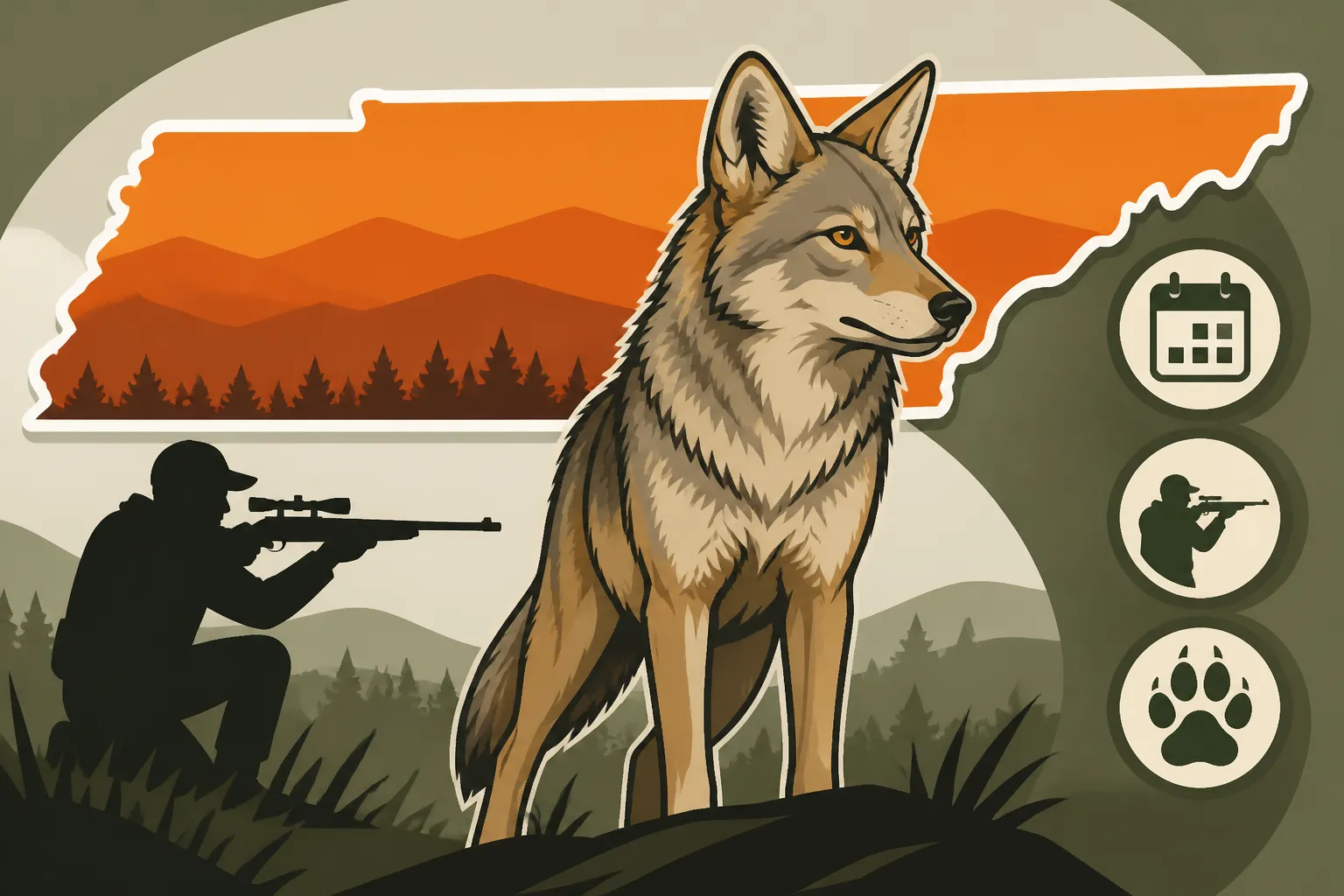
The Tennessee Wildlife Resources Agency (TWRA) classifies coyotes as a "non-game animal." This designation isn't just bureaucratic jargon; it fundamentally changes how they are managed. Because coyotes are not native to Tennessee and their population has exploded across the state, they are widely viewed as a nuisance species. Their predatory nature means they can have significant impacts on livestock, poultry, and even local deer and turkey populations, especially fawns and poults. For these reasons, the TWRA encourages their harvest without the typical restrictions applied to game species. This continuous, year-round open season approach is a direct response to their pervasive presence and the need for population control.
It’s an acknowledgment that these animals are truly here to stay, and active management is necessary. This contrasts sharply with regulated species like deer, where every effort is made to maintain healthy, sustainable populations through carefully managed seasons and limits. With coyotes, the goal is often to reduce their numbers and mitigate their impacts, which means a much more liberal set of hunting rules.
Understanding the Year-Round Open Season
So, let's get right to it: there is no closed season for coyote hunting in Tennessee. You can pursue coyotes 365 days a year, day or night, with very few exceptions. This means if you have a problem coyote lurking around your farm in July, or you want to combine some predator hunting with a late-season deer sit in January, you’re generally good to go. This flexibility is a huge benefit for landowners and hunters who want to contribute to local wildlife management efforts or just enjoy the thrill of predator hunting when other seasons are closed.
However, "no closed season" doesn't mean "no rules at all." You still need to possess a valid Tennessee hunting license to hunt coyotes. This is a crucial point that sometimes gets overlooked. While the season is open year-round, proper licensing is always required. Also, remember that while you can hunt them year-round, you might find some practical limitations. For instance, hunting coyotes during deer season requires adherence to blaze orange requirements if you're on public land, and certain weapon restrictions might apply if you are simultaneously pursuing other game, or if you're on a specific WMA with unique regulations. Always double-check the current TWRA regulations and any specific WMA rules before you head out.
Legal Methods and Equipment for Coyote Hunting
The wide-open regulations for Tennessee coyotes extend to the methods and equipment you can use, offering significant flexibility. This makes it a great entry point for new hunters or a challenging pursuit for seasoned veterans looking to hone their skills. However, as with any hunting, understanding the legalities and safety aspects of your gear is paramount.
Permitted Firearms, Archery, and Trapping Equipment
For hunting coyotes, the list of legal methods is quite extensive. You can use virtually any legal firearm typically used for hunting, from rimfire rifles like a .22LR up to larger centerfire calibers like a .223 Remington, .243 Winchester, or even bigger, depending on your comfort level and the terrain. Shotguns are also highly effective, especially when calling coyotes into close range, with buckshot or heavier loads being common choices. Archery equipment, including traditional bows, compound bows, and crossbows, is also perfectly legal. Many bowhunters enjoy the added challenge of calling coyotes into bow range during the off-season.
One of the most effective ways to manage coyote populations, especially for landowners, is through trapping. Tennessee allows the use of various trapping devices, including foothold traps and snares, under specific regulations. If you're considering this method, it's vital to familiarize yourself with the nuances of Trapping Tennessee Furbearers. There are specific rules regarding trap placement, trap type, and checking frequency to ensure humane and legal trapping practices.
When considering firearms, it's worth noting that during the statewide muzzleloader and gun deer seasons, if you're out hunting deer, you can simultaneously hunt coyotes with your deer weapon, assuming it's legal for deer. However, during the Bowhunting Tennessee's Long Archery Season, you generally cannot carry a firearm while archery hunting, so if your primary goal is coyotes, plan your equipment accordingly.
Night Hunting Rules and Specific Equipment
Night hunting for coyotes is completely legal in Tennessee, and often, it's the most effective time to pursue them, especially in areas with high human activity during the day. However, night hunting comes with its own set of guidelines, especially regarding artificial lights and thermal/night vision devices.
You are allowed to use artificial lights, such as spotlights or headlamps, while night hunting coyotes. This includes powerful handheld spotlights that can illuminate distant fields. The use of night vision and thermal imaging devices is also permitted. These technologies have become incredibly popular for predator hunting, allowing hunters to detect animals at great distances in complete darkness. For instance, devices like the Pulsar Thermion XQ38 or ATN X-Sight 4K Pro offer significant advantages for target identification and shot placement at night. However, always prioritize safety; clearly identify your target and what lies beyond it before taking a shot, especially when visibility is limited.
When night hunting, consider the terrain. Open fields and agricultural areas are often ideal, where you can see farther and have a clear backdrop. In thick timber, night hunting becomes significantly more challenging and potentially unsafe due to limited visibility. Always know your hunting area intimately and be aware of any nearby residences or roads.
Table: Summary of Key Tennessee Coyote Hunting Rules
| Feature | Rule Description | Notes |
|---|---|---|
| Season | Year-round, no closed season. | Huntable 365 days a year. |
| Bag Limit | No daily or seasonal bag limit. | Hunters can harvest as many coyotes as they wish. |
| Hunting Hours | Day or night. | Night hunting is permitted with artificial lights, night vision, and thermal optics. |
| License | Valid Tennessee hunting license (resident or non-resident) required. | No special coyote permit needed, but a general hunting license is essential. |
| Legal Weapons | Any legal firearm, archery equipment (bows, crossbows), or muzzleloader. Shotguns, rimfire, and centerfire rifles are all permitted. | Ensure you comply with any WMA-specific weapon restrictions if hunting on public land. |
| Trapping | Permitted with appropriate trapping license and adherence to specific trap types, placement, and checking regulations. | Consult TWRA furbearer regulations for detailed trapping rules. |
| Carcass Disposal | No specific TWRA regulations for carcass disposal, but ethical disposal (e.g., away from roads, water, or public view) is encouraged. | Be mindful of CWD zones if disposing of deer carcasses near coyote baiting sites, as proper disposal is crucial there. |
| Blaze Orange | Required on public land during statewide big game firearm seasons (deer, bear, elk). Not required during archery-only season or on private land (unless local ordinance dictates). | Even if hunting coyotes, if you are on public land during a gun season, wear your blaze orange! |
| Electronic Calls | Legal for coyote hunting. | Electronic calls are highly effective for drawing in coyotes. |
Best Practices and Ethical Considerations for Tennessee Coyote Hunters
Just because coyotes are classified as a non-game animal with a continuous open season doesn't mean ethical considerations or best practices go out the window. Responsible hunting is crucial, not only for the perception of hunting but also for effective and safe predator management.
Calling Tactics and Shot Placement
Calling coyotes is an art form, and it's a skill that can be incredibly rewarding to develop. Understanding Coyote Calling in Tennessee Farm Country is essential for success. Electronic calls are perfectly legal for coyotes in Tennessee and are often the most effective tool, mimicking everything from rabbit distress calls to pup whines and even coyote fights. Some popular calls that consistently produce results include those from FoxPro or Primos. Acoustic calls, like hand calls or mouth calls, also have their place, especially for close-range work or when you want to avoid carrying extra electronics.
When calling, consider the wind. Coyotes almost always circle downwind to get a scent check before committing, so position yourself to have a shot opportunity as they approach this downwind position. Think about entry and exit routes that conceal your approach and provide a clear shooting lane. When a coyote comes in, shot placement is critical for a quick, humane kill. Aim for the vital organs – typically the shoulder or chest area. For smaller calibers like a .223, a headshot might be considered at very close range if you are confident, but for most situations, the vitals offer a larger target and better chance of a clean kill.
Safety, Public Perception, and Respect for Landowners
Safety should always be your top priority. When hunting coyotes, especially at night, ensure you have a clear understanding of your surroundings. Backstops are crucial, and knowing your shooting lanes is paramount. If you're hunting with a partner, always communicate your positions and wear appropriate safety gear, such as blaze orange during big game seasons, even if you're only targeting coyotes. Many hunters rely on mapping tools like GoHunt to clearly identify property lines and ensure they are not trespassing, especially when a coyote might lead you close to a boundary.
Public perception of hunting is also important. While coyotes are often seen as pests, leaving carcasses in highly visible areas or neglecting to retrieve shot animals can create negative impressions. If you harvest a coyote, consider how and where you dispose of the carcass. Burying it, or leaving it in an out-of-the-way spot where it can decompose naturally, is generally a good practice. In areas within Tennessee's Chronic Wasting Disease (CWD) zone, there are specific regulations regarding the movement of deer carcasses, and while coyotes aren't currently part of those CWD rules, general bio-security practices are always wise.
Respect for landowners is non-negotiable. Always obtain explicit permission before hunting on private land, even if you believe you’re helping them with a nuisance animal. This simple act of courtesy builds trust and opens doors for future hunting opportunities. If you're hunting on land adjacent to residences, make sure you understand and comply with Tennessee's firearms discharge setback rules, which dictate how close you can discharge a firearm to a dwelling.
Navigating Public Land and Private Land for Coyotes
Tennessee offers a mix of public and private land opportunities for coyote hunters. Each comes with its own set of considerations and challenges. Understanding these differences is key to a successful and legal hunt.
Public Land Opportunities and Restrictions
While coyotes are legal to hunt year-round, public land such as Wildlife Management Areas (WMAs) and national forests often have their own specific regulations that supersede or add to the statewide rules. For example, some WMAs might have restricted vehicle access, mandate specific weapon types during certain periods, or even have temporary closures for other management activities. It's not uncommon for a WMA to have different hunting hours or blaze orange requirements depending on the season, even for non-game animals. Before you plan a hunt on any public land, always check the individual WMA regulations on the TWRA website or using tools like the GoHunt app for up-to-date information.
Finding ground others walk past can be a challenge on public land, especially if you're trying to escape pressure from other hunters. Knowing how to read aerial photos for Cumberland Plateau deer can often translate to finding hidden pockets where coyotes might feel more secure. Look for remote clear-cuts, thick cover bordering fields, or overlooked timber blocks that require a longer walk. While you might not be allowed to place permanent stands or baits on most public lands, using portable ground blinds or simply hunting from a kneeling position is perfectly acceptable. Understanding the nuances of Hunting Pressure on Tennessee Public Land will greatly improve your chances of finding undisturbed coyotes.
Securing Private Land Permission for Coyote Hunting
Private land, particularly agricultural areas or properties adjacent to development, often presents the best opportunities for consistent coyote hunting. Landowners are frequently eager for help in controlling coyote populations that harass livestock, damage crops, or threaten pets. The key here is obtaining permission. Don't just show up and assume; always ask first.
A great approach is to start by knocking on doors in west Tennessee farm country, or any rural area where you see signs of coyote activity. Be polite, explain your intentions clearly – that you're looking to help manage coyotes – and offer to share any information you gather about coyote activity on their property. Building a relationship with a landowner is incredibly valuable. Offering a helping hand with small tasks around the farm, or simply being reliable and respectful, can secure long-term hunting access. Many hunters find that a simple, well-written liability waiver can help ease landowner concerns, though this isn't always necessary. Always know Tennessee Posted Land Rules and respect "No Trespassing" signs if you haven't secured permission.
Coyote hunting can be a fantastic way to enjoy the outdoors year-round and make a positive impact on local wildlife populations and agricultural interests. By understanding and respecting Tennessee's rules and best practices, you can have many successful and ethical hunts.
Disclaimer
Please remember that hunting regulations can change. Always consult the most current Tennessee Wildlife Resources Agency (TWRA) regulations guide before engaging in any hunting activities. This article is for informational purposes only and does not constitute legal advice.