Tennessee Legal Firearms for Deer Hunting
Navigating the labyrinth of hunting regulations in Tennessee can often feel like trying to track a mature buck through a briar patch – confusing, challenging, and sometimes, downright frustrating. One of the biggest head-scratchers for many deer hunters, myself included, often revolves around the ever-important question: "What firearms are actually legal for deer hunting here?" It seems like every season brings a new twist or clarification, leaving us all wondering if our trusty deer rig still passes muster. This comprehensive guide is here to untangle those rules, breaking down the specifics for rifles, shotguns, handguns, muzzleloaders, and even crossbows, ensuring you step into the woods confident and compliant.
Understanding General Firearms for Tennessee Deer Season
When the leaves start to turn and the air gets that crisp bite, many of us are itching to hit the deer woods with our preferred firearm. Tennessee's regulations for general firearms season are quite clear, but it's crucial to understand the nuances that apply to rifles, shotguns, and handguns. Missing a small detail can turn a great hunt into a stressful encounter with a wildlife officer.
Legal Rifles and Minimum Caliber Requirements
For many, the rifle is the quintessential deer hunting tool, especially when you're hunting vast tracts of public land or private timber where longer shots might be necessary. Tennessee sets a minimum caliber requirement for rifles used to hunt deer: it must be a .22 centerfire caliber or larger. This means your standard .22LR rimfire squirrel rifle is out, but something like a .22-250 Remington or a .223 Remington (if it's a centerfire cartridge) is technically legal, although many seasoned hunters opt for larger calibers for ethical reasons.
Most hunters lean towards more traditional deer calibers, and for good reason. Cartridges like the .243 Winchester, .270 Winchester, .30-06 Springfield, .308 Winchester, and 6.5 Creedmoor are incredibly popular and effective in Tennessee. These calibers offer a good balance of power, trajectory, and readily available ammunition, making them excellent choices for harvesting whitetails across the state, from the open fields of West Tennessee to the rugged ridges of the Cumberland Plateau. When considering your rifle choice, it’s always a good idea to research the Tennessee Minimum Rifle Caliber Rules to ensure your setup meets the legal requirements.
It’s not just about the caliber, though; it’s about the ammunition. You must use expanding bullets, designed to mushroom upon impact and deliver maximum energy transfer, leading to a quick, humane kill. Prohibited ammunition includes full metal jacket (FMJ) bullets, tracer rounds, incendiary rounds, and any firearms that are fully automatic. While it might seem obvious to most hunters, these rules are in place to ensure both safety and ethical hunting practices. The frustration of trying to pick the "perfect" caliber is real, but ultimately, reliable shot placement with a legal, effective round is what truly matters for a responsible harvest.
Shotgun Regulations: Slugs, Buckshot, and Gauges
Shotguns often get a bad rap in some deer hunting circles, but a properly set up shotgun firing slugs can be incredibly effective, especially in dense cover where longer shots are rare, or in specific management units where rifle use might be restricted. In Tennessee, shotguns of 20 gauge, 16 gauge, 12 gauge, and 10 gauge are all legal for deer hunting. However, there's a critical distinction to remember: you must use slugs for deer. Buckshot is generally prohibited for deer hunting, although it may be legal for other game species during different seasons or in specific areas, so always double-check the current TWRA regulations.
When it comes to slugs, you have options. Traditional rifled slugs are designed for smoothbore shotgun barrels, while saboted slugs are intended for rifled shotgun barrels, offering significantly improved accuracy at longer ranges. The advancements in shotgun slug technology mean that a modern slug gun with a rifled barrel and appropriate optics can rival the accuracy of some rifles out to 150-200 yards, which is more than sufficient for most deer hunting scenarios in Tennessee. If you're hunting an area with shorter sightlines or if you prefer the versatility of a shotgun, this can be an excellent choice.
Many hunters, especially those who grew up hunting thick woods where shotguns were the norm, appreciate the versatility. It's not uncommon for a single shotgun to pull double duty for deer and then, with a quick barrel or choke change, be ready for waterfowl or small game. However, for deer, slugs are non-negotiable.
Handgun Hunting for Deer
For the dedicated handgun hunter, or those looking for an extra challenge, Tennessee does allow handgun hunting for deer during the general firearms season. The regulations specify that any handgun used for deer must be .357 Magnum or larger and must fire an expanding bullet. This opens up a range of powerful cartridges, from the classic .357 Magnum and .44 Magnum to more exotic options like the .454 Casull or .500 S&W Magnum.
Handgun hunting is definitely a specialized pursuit. The practical considerations for accuracy and effective range mean that most handgun deer hunters limit their shots to much shorter distances than rifle hunters, typically within 50-75 yards. Recoil management, proper grip, and consistent practice are all paramount to being an ethical handgun hunter. It’s a testament to skill and patience, often requiring a hunter to get much closer to their quarry.
While it's a legal option, it’s important to be realistic about your capabilities. Carrying a substantial handgun for deer means carrying a heavy piece of equipment, and practicing extensively to ensure you can make a clean shot when the moment arrives. It’s certainly not for everyone, but for those who master it, it’s an incredibly rewarding experience.
Specifics for Muzzleloader Season and Archery Season with Crossbows
Tennessee's hunting seasons are thoughtfully structured to offer various opportunities, and that includes dedicated periods for muzzleloaders and archery equipment. Understanding the specific rules for these during their respective seasons, and how they sometimes overlap with general firearms season, is key to maximizing your time afield.
Muzzleloader Requirements and Allowed Ammunition
The crack and puff of a muzzleloader often evoke a sense of tradition and connection to hunting's roots. Tennessee has a dedicated Tennessee Muzzleloader Season Dates window, typically bridging the gap between archery season and the main gun season, and sometimes running concurrent with portions of the late gun season. During this time, hunters are restricted to using muzzleloading firearms.
A legal muzzleloader in Tennessee must be a single-barrel firearm, .40 caliber or larger, and loaded from the muzzle. This means no multi-barrel muzzleloaders or breach-loading rifles that simply look like muzzleloaders but function differently. When it comes to propellant, traditional black powder or modern black powder substitutes like Pyrodex are permitted. You can use either a patched round ball or a conical projectile (like a PowerBelt or Hornady SST-ML) for deer. Many hunters find that modern inline muzzleloaders offer exceptional accuracy and ease of use, making them a formidable tool for deer hunting. You can learn a lot more about Muzzleloader Deer Hunting in Tennessee in our dedicated guide.
One crucial detail often overlooked is optics. During the designated muzzleloader-only season, hunters are allowed to use magnified scopes on their muzzleloaders. This is a significant advantage over traditional open sights, allowing for more precise shot placement at longer distances. However, it's always wise to check the current TWRA regulations annually, as rules can sometimes change, especially concerning specific WMA (Wildlife Management Area) regulations which might differ from statewide rules.
Crossbows During Archery Season
The debate between traditional bows and crossbows has been a hot topic for years, but in Tennessee, the rules are clear: crossbows are legal for all hunters during all deer seasons where archery equipment is permitted. This includes the early archery-only season, and then concurrently with muzzleloader and gun seasons. This is a huge win for hunters who might have physical limitations preventing them from drawing a traditional vertical bow, or for those who simply prefer the stability and precision a crossbow offers.
While a crossbow offers many advantages, such as easier aiming, less movement at the shot, and often higher kinetic energy at impact, it’s still important to treat it with the same respect and practice as any other hunting weapon. Bolts must be fitted with broadheads that meet specific cutting diameter requirements, ensuring a humane kill. You can dive deeper into the pros and cons of these setups in our Crossbow Versus Vertical Bow in Tennessee article.
It's tempting to think a crossbow makes hunting "easy," but it still requires scouting, patience, and meticulous shot placement. The effective range of a crossbow is typically shorter than a rifle, usually within 60 yards for most hunting situations, making proximity to the deer still paramount. Always double-check the Tennessee Archery Season Dates to know exactly when you can take your crossbow into the woods.
Important Considerations for Ethical and Legal Hunting
Beyond knowing which piece of equipment is technically legal, there are broader responsibilities that every Tennessee deer hunter must uphold. These considerations ensure safety, promote ethical practices, and help preserve our hunting heritage for future generations.
Blaze Orange and Safety Requirements
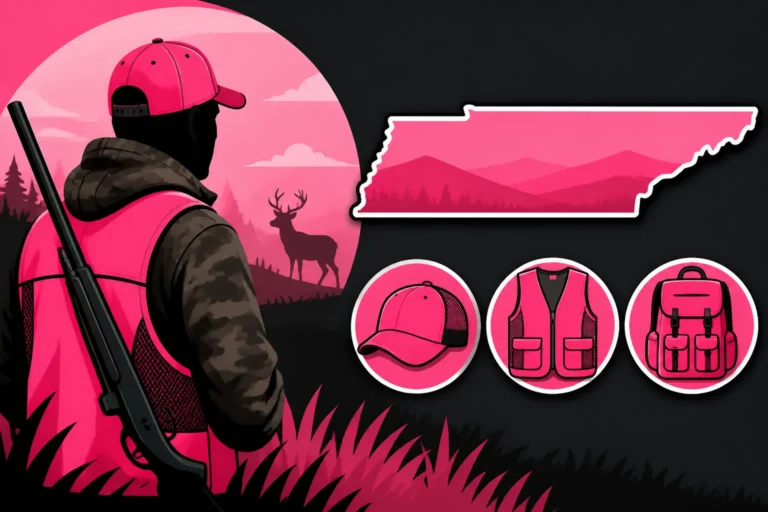
Safety is paramount in the deer woods, and Tennessee's blaze orange (or blaze pink) requirements are a cornerstone of that safety, particularly during gun and muzzleloader seasons. During any portion of the deer season open to firearms (including muzzleloader season), all hunters must wear at least 500 square inches of solid blaze orange or pink on their outer garments above the waist. This includes a hat, which counts towards the 500 square inches.
This requirement is not just a suggestion; it’s a law designed to make hunters highly visible to one another, drastically reducing the risk of accidental shootings. Imagine yourself sitting in a ground blind or still-hunting through thick timber; the bright color alerts other hunters to your presence, especially on crowded public lands. This is particularly crucial during events like Why Tennessee's Gun Opener Draws the Biggest Crowds, when more hunters are out. Always ensure your companions are also compliant. You can find more specific details on Tennessee Blaze Orange Requirements to ensure you're fully covered.
It’s an easy rule to follow and one that quite literally saves lives. Never compromise on safety to try and be "more stealthy." A deer's vision works differently than a human's, and they generally don't perceive blaze orange as a threat, allowing you to remain safe without unduly impacting your hunt.
Legal Shooting Hours and Public Land Considerations
Knowing when you can actually pull the trigger is as important as knowing what you can shoot with. In Tennessee, legal shooting hours for deer hunting are from half-hour before sunrise to half-hour after sunset. This window ensures adequate light for positive target identification and ethical shot placement. Hunting outside these hours is strictly prohibited and can lead to severe penalties.
When hunting on public lands, such as Wildlife Management Areas (WMAs) or the vast expanse of the Cherokee National Forest, understanding property lines and discharge setbacks is critical. Even if you're on private land, you need to be aware of how close you are to neighboring properties or occupied dwellings. Tennessee has specific Tennessee Firearms Discharge Setback Rules to protect people and property. Always be sure of your target and what lies beyond it.
Using a mapping tool like GoHunt can be an invaluable asset for public land hunters. These apps often show property lines, WMA boundaries, and even topo maps, helping you stay on legal ground and out of trouble. Many WMAs also have specific regulations that can differ from statewide rules, so always consult the individual WMA proclamation before you hunt there.
Staying Informed and Ethical Hunting Practices
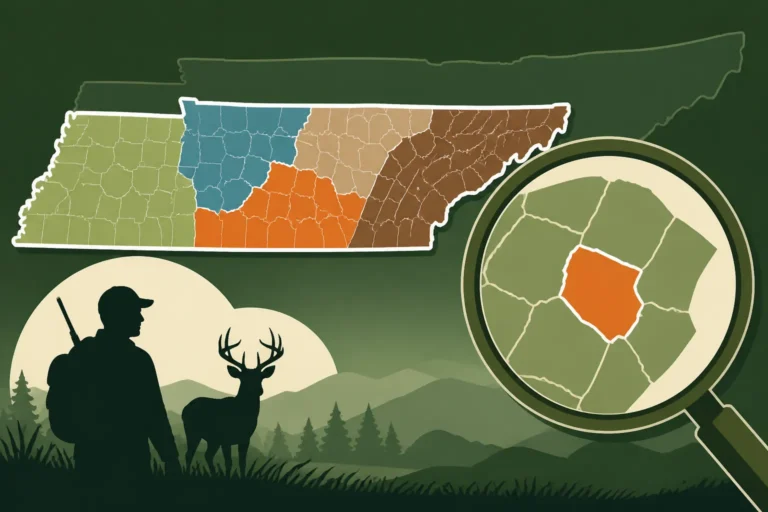
Hunting regulations are dynamic, constantly evolving to address wildlife management needs, disease prevalence (like Tennessee's Chronic Wasting Disease Management Zone), and public safety. What was legal last year might have changed this season. Therefore, the single most important piece of advice I can offer is to always consult the current Tennessee Wildlife Resources Agency (TWRA) Hunting and Trapping Guide before heading afield. This guide is published annually and is the definitive source for all regulations.
Beyond the letter of the law, ethical hunting practices are the cornerstone of our sport. This includes understanding the anatomy of a deer for proper Rifle Setups for Tennessee Deer Hunting and Bow and Crossbow Setups for Tennessee and ensuring ethical shot placement, respecting the animal, and only taking shots you are confident will result in a quick, humane kill. This commitment to ethics not only honors the animal but also ensures a positive public perception of hunting.
Modern tools like GoHunt can also provide real-time updates and help you verify regulations for specific areas right from your phone, which is incredibly useful when planning a hunt or if you find yourself questioning a rule in the field. Ultimately, responsible hunting isn't just about following the rules; it's about being a steward of the land and its wildlife, embodying respect, patience, and a deep understanding of the natural world.
Summary of Legal Firearms for Deer Hunting in Tennessee
To help you keep track of the main legal firearms and their requirements, here's a quick overview:
| Firearm Type | Minimum Caliber/Gauge | Ammunition Type | Legal Season(s) | Notes |
|---|---|---|---|---|
| Rifle | .22 centerfire | Expanding bullet | Gun, Muzzleloader (specific times for exceptions) | No full auto, tracer. Must be centerfire. |
| Shotgun | 20 gauge | Slug only | Gun, Muzzleloader (specific times for exceptions) | No buckshot for deer. |
| Handgun | .357 Magnum | Expanding bullet | Gun, Muzzleloader (specific times for exceptions) | Must be centerfire. |
| Muzzleloader | .40 caliber | Ball or conical projectile | Muzzleloader, Gun (specific times for exceptions) | Single-barrel, loaded from muzzle, black powder/Pyrodex. |
| Crossbow | N/A | Broadhead bolt | Archery, Muzzleloader, Gun | Legal for all hunters during all deer seasons where archery is allowed. |
Understanding these regulations is the first step toward a successful and enjoyable deer season in Tennessee. By staying informed and committed to ethical practices, we ensure that the tradition of deer hunting continues to thrive in our beautiful state.
Disclaimer
Please note that hunting regulations can change. While this guide provides a comprehensive overview based on current information, it is always your responsibility to consult the official Tennessee Wildlife Resources Agency (TWRA) hunting guide for the most up-to-date and specific regulations before engaging in any hunting activities.