Why CWD Keeps Spreading East in Tennessee
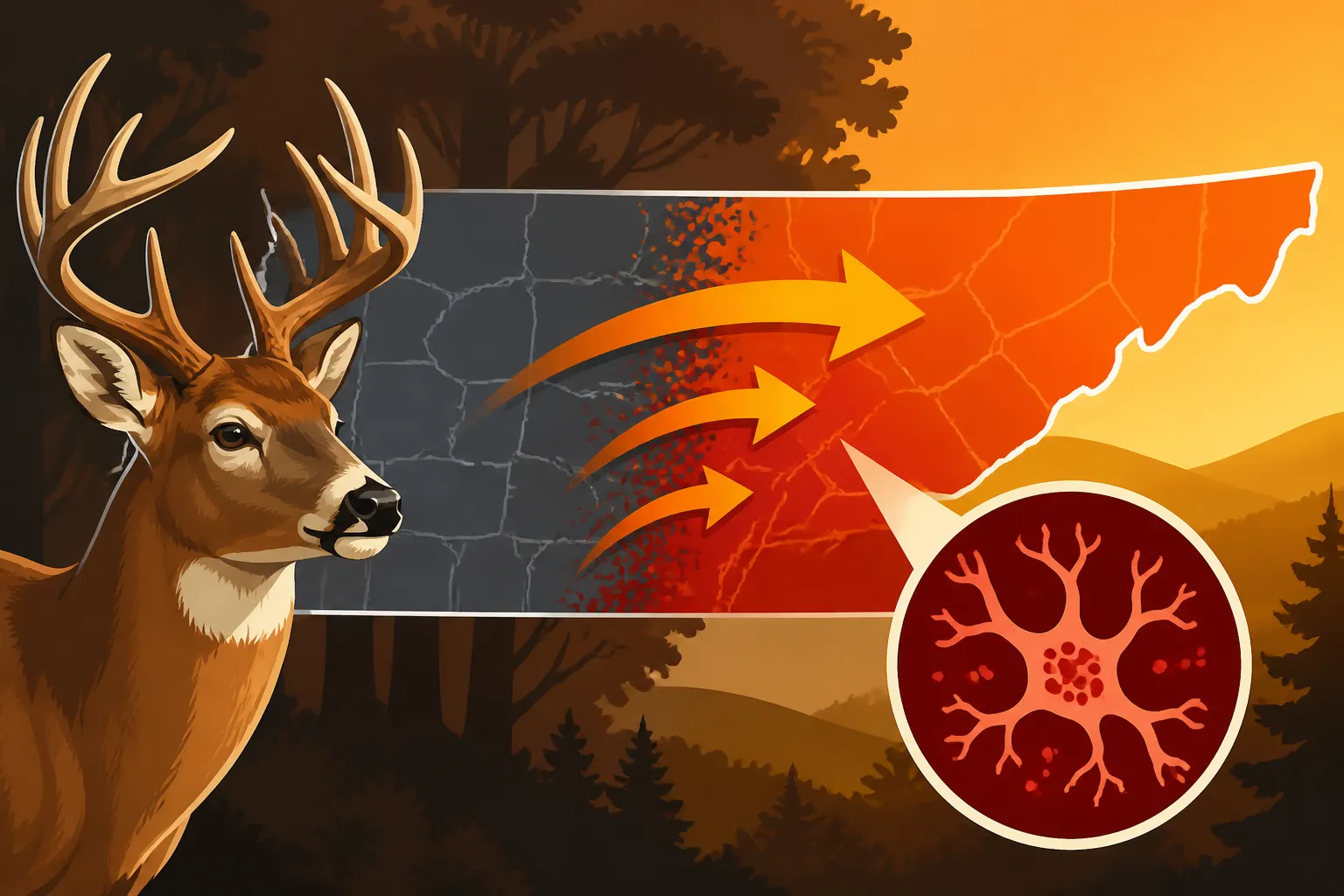
It's heartbreaking to witness Chronic Wasting Disease (CWD) creep further across our beloved Tennessee landscape, spreading from its initial detection points in West Tennessee slowly but surely eastward. For many of us, the sight of a sickly deer is a punch to the gut, not just for the animal, but for the health of the entire herd and the future of our hunting traditions. This guide aims to shed light on exactly why CWD continues its eastern march across the state and what that means for us as hunters and conservationists.
The Relentless Nature of Chronic Wasting Disease
Chronic Wasting Disease is a nasty, always-fatal neurological illness affecting cervids like deer, elk, and moose. It's caused by abnormal proteins called prions that slowly destroy the brain and nervous system. Imagine something that literally wastes away an animal's body and mind, leaving them emaciated, disoriented, and eventually dead. That's CWD in a nutshell, and it’s why hunters and wildlife managers alike are so concerned. It’s not just a passing sickness; it’s a death sentence, and it has no known cure or vaccine.
Understanding Prions and Their Persistence
The prions responsible for CWD are incredibly resilient. Unlike bacteria or viruses, they aren't living organisms, which makes them nearly impossible to eradicate from the environment. They can survive in soil, on plants, and even in water for years, possibly even decades, remaining infectious. This means that once CWD is established in an area, it's incredibly difficult, if not impossible, to get rid of completely. A deer could walk through contaminated soil, pick up prions, and potentially spread them further. It's a silent, microscopic threat that persists long after an infected animal is gone. This environmental persistence is a huge factor in why CWD keeps spreading.
The Long Incubation Period and Symptom Progression
One of the most insidious aspects of CWD is its long incubation period. A deer can be infected for months, sometimes even years, before showing any noticeable symptoms. During this time, the infected animal is actively shedding prions through its saliva, urine, and feces, contaminating the environment without anyone being the wiser. Think about a buck that looks perfectly healthy but is actually a carrier, moving across the landscape, leaving a trail of infectious prions wherever it goes. Eventually, as the disease progresses, signs become more evident: drastic weight loss, stumbling, excessive drooling, listlessness, and a lack of fear of humans. By then, however, the damage is done, and the environment is further contaminated.
Tracing CWD's Arrival and Initial Spread in Tennessee
Tennessee hunters breathed a collective sigh of relief for years as CWD seemed to skirt our borders, infecting deer herds in neighboring states but largely leaving us untouched. That relief shattered in December 2018 when the Tennessee Wildlife Resources Agency (TWRA) confirmed the first positive CWD cases in the southwestern corner of the state.
The First Confirmed Cases in West Tennessee
The initial detection of CWD occurred in Hardeman and Fayette counties, specifically in deer harvested during the firearm season. These counties sit right on the Mississippi border, where CWD had been present in deer populations for some time. It wasn't a huge surprise that the disease eventually made its way across, but it was still a devastating blow. The discovery immediately triggered an aggressive response from the TWRA, establishing a CWD Management Zone (CMZ) and implementing stringent regulations to try and contain the spread. Understanding Which County Found Tennessee's First CWD Case helps to contextualize the initial shock and the immediate scramble to react.
Understanding the Primary Spread Mechanisms
While deer movement is a natural and undeniable factor in CWD spread, human activities often play a significant, if unintentional, role. Transporting an infected carcass, even just parts of it, from a CWD-positive area to a CWD-negative area is a huge risk. For example, a hunter harvesting a deer in a CWD-affected county, then taking the entire carcass home to process in a CWD-free county, risks leaving infected prions in the soil or discarded waste. This is why strict carcass transportation rules are in place within the CMZ. The disease itself doesn't respect county lines, but our actions as hunters can either help mitigate or accelerate its movement. This includes decisions like Moving Deboned Venison Out of the CWD Zone, which is a critical part of the TWRA's strategy.
Key Factors Driving CWD's Eastward Progression
The eastward spread of CWD isn't a single, simple phenomenon. It's a complex interplay of natural deer behavior, human activity, and the insidious nature of the prion itself. Understanding these factors is crucial to grasping why it's been so difficult to stop its march.
Natural Deer Movement and Range Expansion
Deer, especially young bucks during the rut, are notorious travelers. They can cover significant distances, particularly when looking for new territory or breeding opportunities. A buck that picks up CWD in Fayette County could, over the course of weeks or months, travel miles eastward, shedding prions as it goes. If it dies in a new area, its decomposing body will release those prions into the soil, creating a new focal point of infection. This is a primary, unavoidable driver of the slow, creeping expansion. Even if a deer looks healthy, it could be carrying the disease and unknowingly spreading it. This natural expansion helps explain How CWD Spread East From West Tennessee and why containing it is such a monumental challenge.
Human-Assisted Transmission and Carcass Disposal
This is where hunters play a critical, albeit often unintentional, role. Imagine a hunter harvests a deer in, say, Hardeman County, and decides to take the whole animal back to their hunting camp in Humphreys County to process. If that deer was CWD-positive, even if it showed no symptoms, they've just potentially introduced prions to a new area. Improper disposal of carcass parts—like tossing a deer head or spine into a ditch in a new county—can create a new hotspot. The TWRA has strict rules about Tennessee Carcass Deboning Requirements within the CWD Management Zone specifically to mitigate this risk. We all want to manage our harvest, but using a service like GoHunt's mapping tools can help ensure you're aware of zone boundaries before you even head to the field, planning your harvest and processing locations carefully.
For instance, the relatively recent detection in Humphreys County, as we explored in Why CWD Reached Humphreys County, and then Dickson and Williamson counties, highlighted how the disease isn't just following a perfectly contiguous line. These jumps suggest human-assisted transport as a probable factor, even if unintentional. It's frustrating because hunters are often the most dedicated conservationists, yet our actions, when not perfectly aligned with regulations, can inadvertently contribute to the problem.
High Deer Densities and Habitat Conditions
Areas with high deer densities can also accelerate CWD transmission. When deer frequently interact in close proximity, whether at a popular food plot, a shared bedding area, or a natural mineral lick, the chances of disease transmission increase. Prions shed by an infected animal are more likely to be picked up by another deer in these high-traffic zones. West Tennessee, with its rich agricultural lands and historically robust deer populations, can create conditions ripe for disease spread once CWD is introduced. Understanding how to manage deer populations within DMUs, like knowing How Many Antlerless Deer DMU One Allows, becomes even more critical in CWD zones to help reduce deer-to-deer contact.
TABLE: CWD County Detections in Tennessee (Examples)
To illustrate the eastward progression and the counties impacted, here’s a snapshot of some key counties and their CWD status. Please note that the CWD Management Zone (CMZ) is dynamic and can change. Always check the latest TWRA regulations for current boundaries.
| County | First CWD Positive Deer Reported | Status in CMZ (as of recent data) | Initial CWD Zone Type | Notes |
|---|---|---|---|---|
| Hardeman | December 2018 | Positive | High-Risk | One of the first two counties confirmed with CWD. |
| Fayette | December 2018 | Positive | High-Risk | One of the first two counties confirmed with CWD. |
| McNairy | 2019 | Positive | High-Risk | Eastward spread from initial counties. |
| Chester | 2019 | Positive | High-Risk | Further eastward movement. |
| Humphreys | Late 2021 | Positive | High-Risk | Significant jump eastward, indicating potential human-assisted spread. |
| Dickson | Late 2022 | Positive | High-Risk | Adjacent to Humphreys, continuing the push into Middle TN. |
| Williamson | Early 2023 | Positive | High-Risk | Major concern for proximity to Nashville and popular hunting areas. |
This table represents a snapshot and is not exhaustive. The TWRA regularly updates the list of CWD-positive and CWD-buffer counties. Always consult the official TWRA website or your GoHunt app for the most current CWD Management Zone information.
TWRA's Response and Hunter Responsibility in CWD Management
The TWRA has been incredibly proactive since CWD was first detected. Their strategy involves a multi-pronged approach combining regulations, testing, and hunter education, all while adapting to the disease's spread. As hunters, our role in this fight is paramount.
Understanding the CWD Management Zone and Regulations
The TWRA quickly established Tennessee's Chronic Wasting Disease Management Zone (CMZ), which includes both CWD-positive counties and surrounding buffer counties. Within these zones, specific regulations are in place to try and slow the spread. These include restrictions on carcass movement, requirements for mandatory CWD testing in certain areas or during specific periods, and voluntary testing options. Hunters harvesting deer within a High-Risk CWD zone (HRZ), which are counties where CWD has been detected, are generally required to leave the brain and spinal column in the HRZ or at a CWD processing facility. This prevents the highest-risk parts of the animal from potentially carrying prions into unaffected areas. Knowing your specific county's status within the CMZ, which you can easily check on the TWRA's website or through mapping applications like GoHunt, is essential before you head into the field.
Mandatory and Voluntary Testing for CWD
A critical part of monitoring and understanding the spread of CWD is testing. In certain counties or during specific hunt dates, the TWRA may implement mandatory Tennessee CWD Testing for Hunters. This usually involves designated sampling stations where hunters must present their deer for testing. Outside of mandatory periods, voluntary sampling stations are often available, allowing any hunter to get their harvested deer tested. This data is invaluable for the TWRA to track prevalence rates and identify new areas of concern. It’s an inconvenience, yes, but it’s a necessary step to understand the true scope of the problem. For example, the discovery of CWD in Why Williamson County's First Case Surprised Hunters highlighted the importance of continued testing, even in areas where it might not be expected.
The Earn-a-Buck Program and Population Control
To encourage hunters to help manage deer populations and reduce potential CWD transmission, the TWRA implemented an "Earn-a-Buck" program in some CWD-affected areas. This program, detailed further in Tennessee's Earn-a-Buck CWD Program, allows hunters who harvest and submit a certain number of antlerless deer for CWD testing to earn an additional antlered deer tag. The idea is to reduce overall deer density, thereby decreasing deer-to-deer contact and the potential for prion transmission, especially in areas like Tennessee CWD Prevalence in West Tennessee where the disease is more established. It’s a way for hunters to directly contribute to herd health and disease management while still enjoying their passion. Utilizing tools like GoHunt can help hunters identify areas with higher deer densities within CWD zones, aiding in strategic antlerless harvest planning.
Looking Ahead: Living and Hunting with CWD
The reality is that CWD is likely here to stay in Tennessee. While containment efforts are ongoing, complete eradication is not a realistic goal. Our focus, therefore, shifts to managing the disease, slowing its spread, and minimizing its impact on our deer herds and hunting heritage.
Adapting Hunting Strategies in CWD Zones
Hunting in CWD zones requires a shift in mindset and strategy. Understanding the regulations for Tennessee's Deer Season Structure Explained becomes even more critical, as specific harvest rules, testing requirements, and carcass transportation limits will apply. Hunters should prioritize responsible carcass disposal, taking care to debone deer within the CWD zone or at designated processing facilities. This minimizes the risk of inadvertently spreading prions to new areas. Some hunters might also consider targeting a higher number of antlerless deer, especially in High-Risk Zones, to help reduce herd density as part of the TWRA's management goals. Scouting areas with less deer congregation, perhaps more remote public lands that are less frequented, could also be a consideration to minimize potential exposure, and using mapping tools available through GoHunt can assist in finding those less-pressured spots.
The Importance of Hunter Education and Compliance
The most powerful tool we have against CWD is an informed and compliant hunting community. Staying up-to-date on the latest TWRA regulations, understanding the science behind CWD, and diligently following carcass transport and testing rules are essential. This isn't just about avoiding a fine; it's about protecting our wild resource for future generations. Talk to your fellow hunters, share accurate information, and encourage responsible practices. Our collective effort is the strongest defense against this formidable disease. Remember to Report a Tennessee Deer Harvest Online promptly and accurately, providing the TWRA with vital data for their ongoing management efforts.
What CWD Means for the Future of Tennessee Hunting
CWD presents a long-term challenge, but it doesn't mean the end of deer hunting in Tennessee. It means a new era where conservation efforts must be even more vigilant and adaptive. We might see changes in season structures, bag limits, and processing requirements as the TWRA continues to monitor and respond to the disease. It underscores the importance of public land access, where coordinated management efforts can be implemented effectively, as highlighted in topics like Public Hunting Land in Tennessee. While it’s a tough pill to swallow, facing CWD head-on with knowledge and responsible action is the best way to ensure that our children and grandchildren can still enjoy the rich hunting traditions we cherish.
Disclaimer
Please remember that wildlife regulations and disease management zones are subject to change. Always consult the official Tennessee Wildlife Resources Agency (TWRA) website or their current hunting guide for the most up-to-date and accurate information regarding Chronic Wasting Disease and hunting regulations in Tennessee.