Working a Creek Bottom for Late-Season Deer
As the late season rolls into Tennessee, many deer hunters find themselves facing a real challenge: the woods seem empty, pressured deer vanish, and those consistent early-season spots just aren't producing. It's enough to make you wonder if every buck in the county suddenly sprouted wings. But don't give up hope just yet! This guide is all about uncovering the overlooked gems of late-season deer hunting: creek bottoms. We're going to dive deep into why these often-ignored areas become absolute magnets for whitetails when the temperatures drop and hunting pressure mounts.
Why Creek Bottoms Become Late-Season Deer Magnets
When the leaves are gone and the temperatures plummet, deer behavior shifts dramatically. Their primary drivers become survival: finding reliable food, secure cover, and easy access to water. Creek bottoms, with their unique microclimates and diverse habitat features, provide all three in spades, making them prime real estate for savvy hunters.
Unparalleled Thermal Cover and Shelter
One of the biggest struggles for deer in the late season, especially in Tennessee, is simply staying warm. Exposed ridgelines and open timber offer little protection from biting winds and cold precipitation. Creek bottoms, however, are natural shelters. The banks themselves offer a degree of windbreak, and the typical vegetation found along creeks—thickets of briars, honeysuckle, downed timber, and dense evergreens like cedars or pines—create excellent thermal cover. Imagine a buck bedded down on a south-facing slope just above a winding creek, soaking up any available sunlight while being shielded from the north wind. This isn't just a hypothetical; it's exactly where deer will be, conserving energy. It's worth noting that this dense cover also provides security cover, making deer feel safe from predators, including hunters. They can move through these areas with a greater sense of security than they would in more open woods.
Consistent Food and Water Sources
Unlike upland areas where food sources can be scattered or depleted by now, creek bottoms often retain crucial late-season sustenance. Look for areas with persistent green browse, like privet, honeysuckle, or greenbrier. These plants often hold their leaves longer and provide much-needed nutrition. Additionally, the soil along creek banks tends to be richer and hold moisture better, which can encourage the growth of these critical food sources. Don't overlook soft mast that might have fallen and been covered by leaves, only to be uncovered by feeding deer. Acorns, while largely gone by late season, can sometimes still be found in sheltered pockets or under leaf litter along the banks. And of course, the creek itself is a constant water source. Deer don't have to travel far, minimizing their exposure and energy expenditure, which is vital during colder months. This constant availability of both food and water in a sheltered environment makes creek bottoms irresistible.
Natural Travel Corridors and Funnels
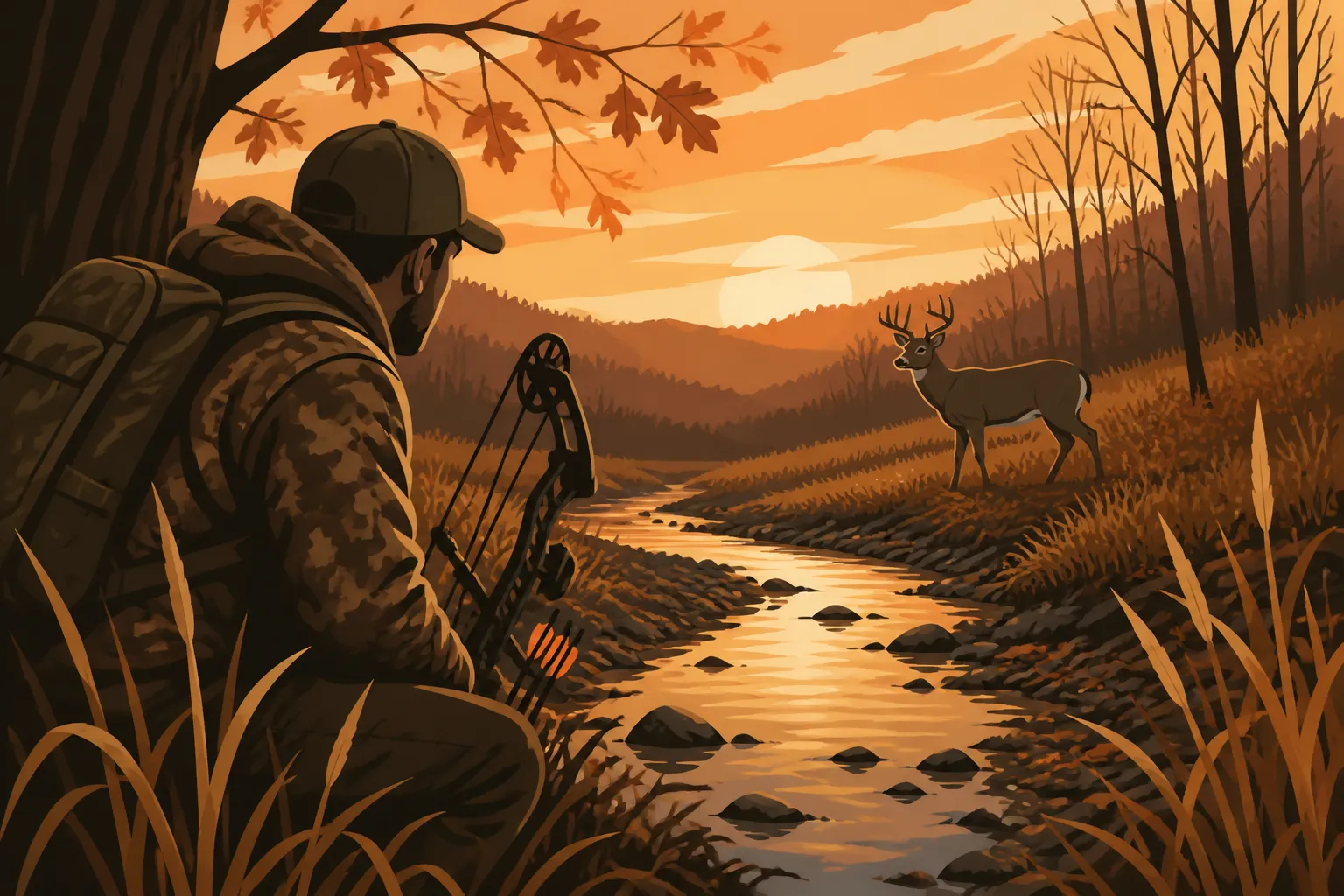
Creek bottoms aren't just places deer hide; they're also major thoroughfares. Deer often use the contours of the land, and a creek bottom provides a natural, often secluded, pathway to move between bedding areas, feeding zones, and water sources. These bottoms act as literal funnels, channeling deer movement along predictable routes. Think about how deer will often parallel a creek, staying just inside the thick cover of its banks rather than exposing themselves on an open ridge. They'll use crossings—shallow spots, downed trees, or narrow points—to navigate the water itself. Identifying these natural travel corridors and choke points is key to successful hunting. A little bit of scouting with a tool like GoHunt's mapping features can really help you visualize these natural funnels and pinpoint where deer movement is most concentrated.
Decoding the Creek Bottom Landscape
Successfully hunting a creek bottom requires more than just knowing deer are there; it demands a keen understanding of how to read the landscape itself. Each bend, bank, and patch of vegetation tells a story about deer movement and habits.
Identifying Key Sign and Movement Patterns
The first step in decoding a creek bottom is to get in there and scout, even during the season. Look for fresh deer sign. This includes tracks along the banks, particularly in muddy areas or sandbars. Pay attention to the size and freshness of the tracks – bigger, deeper tracks might indicate a mature buck, and fresh tracks are always a good sign. Droppings can give you clues about deer numbers and what they're eating. Browsing on low-hanging branches of honeysuckle or briars, especially if the stems are clipped clean, is another excellent indicator of active feeding.
One often overlooked sign is worn trails. Deer, especially when feeling pressured, will follow the path of least resistance through dense cover. These trails will often hug the contours of the creek or cut through thickets. Don't be afraid to get down on your hands and knees to find these subtle pathways. If you find multiple trails converging or crossing the creek at a particular point, you’ve likely found a major travel corridor. Consider how this fits into the broader picture of deer movement by looking at a topographical map and seeing how the creek connects different habitat types, like a field edge to a bedding thicket. For deeper insights into what deer might be doing at this time of year, check out our guide on Late-Season Food Sources for Tennessee Whitetails.
Locating Strategic Funnels and Crossings
As mentioned, creek bottoms are natural funnels. But within these larger funnels, there are micro-funnels and specific crossing points that are absolute goldmines for stand placement. Look for narrow sections of the creek, especially if the banks are steep on either side, forcing deer into a confined area. Downed trees that create natural bridges, or shallow, rocky stretches, are obvious crossing points. These are high-traffic areas where you can often intercept deer moving from one side of the creek to the other.
Also, pay attention to where smaller drainages or finger ridges intersect the main creek bottom. These intersections create natural "hubs" of deer movement, as deer will often follow these smaller contours down to the creek. A slight rise or bench just above the creek bottom, especially if it offers a view of the creek and surrounding cover, can be a prime bedding area or a staging point before deer venture out to feed. Mapping apps like GoHunt can really shine here, allowing you to mark these specific funnels and crossings for future reference and plan your approach.
Identifying Bedding and Feeding Areas
In the late season, deer will bed in locations that offer the best combination of thermal cover, security, and proximity to food and water. Along creek bottoms, this often means dense thickets of young cedars, briar patches, or areas with a lot of blowdowns. Look for sunny, south-facing slopes or benches that can catch the warmth of the winter sun. Deer will often bed just above the creek, allowing them to survey the terrain below for danger while staying out of the direct wind. Finding a cluster of fresh beds in such a spot tells you deer are actively using it.
Feeding areas will be wherever those persistent green browse plants are most abundant. Honeysuckle patches, privet thickets, and even certain types of grasses can be crucial. Sometimes, deer will utilize a secluded patch of unharvested agricultural crops or a small food plot nestled near a creek if available. The key is that these feeding areas will likely be very close to their bedding cover, minimizing travel. Remember, deer are trying to conserve every calorie, so they won't typically travel far between their bed and their dinner table during the cold snaps. This close proximity makes them vulnerable if you can identify both elements.
Effective Tactics for Hunting Creek Bottoms
Once you've done your scouting and understand why deer are using creek bottoms, it's time to talk about how to hunt them effectively. This isn't always the same as hunting open timber or agricultural fields; creek bottoms present their own unique challenges and opportunities.
Strategic Stand Placement
Choosing the right stand location is paramount in a creek bottom. First, prioritize access. You need to be able to get to and from your stand without alerting deer. This often means using the creek itself as an entry and exit route, walking in the water if feasible, or using a less-used ridge line well away from active deer trails. Second, consider the wind. Creek bottoms can be tricky with swirling winds, so a location that offers a consistent wind direction, perhaps high up on a bank, is ideal. Otherwise, focus on areas where the thermal currents will carry your scent upwards in the morning or downwards in the evening.
Look for pinch points, funnel areas, and crossings you identified during scouting. A stand overlooking a sharp bend in the creek where deer are forced to travel close to the water, or a crossing point, can be deadly. Don't be afraid to set up a ground blind if the cover is dense enough; it can be less intrusive than a treestand and offer more concealment. The key is to be downwind of the most likely travel routes and to have a clear shooting lane into the dense cover where deer will be emerging or moving. If you're wondering about how other hunters are approaching these late-season conditions, you might find valuable insights in articles like Cold-Weather Sitting Strategy in Tennessee.
Mastering Entry, Exit, and Scent Control
Your approach to the stand and your departure are just as important as the stand itself. In a creek bottom, silence is key. The dense vegetation and often damp ground can amplify sounds. Walk slowly, pick your steps, and avoid snapping twigs. As mentioned, sometimes the best approach is to actually walk in the shallow edges of the creek itself, especially if the water is low enough and you have appropriate waterproof boots. This can eliminate ground scent and provide a quieter approach.
Scent control is non-negotiable. Deer in the late season are hyper-aware, especially mature bucks. Use scent-eliminating sprays on your clothing and gear. Play the wind religiously. Even if you think you have the perfect spot, if the wind is wrong, don't hunt it. Deer will often circle downwind of a suspected threat, and your scent will drift into the bottom. Pay close attention to thermals, which are localized air currents. In the morning, cold air sinks, carrying your scent downwards into the bottom. In the evening, the air warms, and scent can rise. Plan your sits accordingly. For more on navigating complex terrain, our article on Reading Aerial Photos for Cumberland Plateau Deer has some excellent tips that can be applied to creek bottoms as well.
Understanding Deer Behavior and Calling
Late-season deer, especially bucks, are largely focused on survival. The rut is long over, and their primary concerns are feeding, bedding, and staying safe. However, this doesn't mean calling is useless. A soft doe bleat or a short, quiet grunt can sometimes pique the curiosity of a deer moving through the bottom, especially if they believe another deer is feeding or relaxing nearby. During bitter cold snaps, deer are less likely to respond to aggressive calls, but a subtle, non-threatening sound might just turn their head enough for a shot opportunity.
Observing deer behavior is crucial. Are they moving quickly through the cover, or are they stopping to browse? Are they alone, or is a small group of does moving together? This information can help you decide if and when to call. If you notice a buck casually working his way along the bank, a quiet call might be all it takes. If deer seem skittish or are blowing at unseen danger, it's probably best to hold off. Remember, the goal is often to simply stop a moving deer, not necessarily to bring them charging in.
Overcoming Late-Season Challenges in Creek Bottoms
Hunting creek bottoms in the late season isn't without its hurdles. From frigid temperatures to hyper-pressured deer, you'll need to be prepared to adapt and overcome.
Dealing with Harsh Weather Conditions
Tennessee winters can be unpredictable, ranging from mild, rainy days to bitter cold with snow and ice. Creek bottoms can often be colder and wetter than surrounding uplands due to pooling water and shaded areas. Dressing in layers is absolutely critical. Start with a moisture-wicking base layer, add insulating layers like fleece or wool, and top it with a waterproof and windproof outer shell. Don't forget insulated boots – especially if you plan to walk through shallow water – and good gloves or mittens. Check out our guide on Boots for Tennessee Hollows and Creek Bottoms for more specific recommendations.
Being prepared for wet conditions means having a dry bag for electronics and extra clothing. A small, portable heater for a ground blind can make an all-day sit much more bearable. When the temperatures really drop, deer are even more reluctant to leave cover, so hunting right in the thick stuff of a creek bottom becomes even more important. Conversely, a sudden warming trend might loosen deer up and make them more active, but also more prone to moving in open areas, so adjust your strategy accordingly. Our article Hunting Deer After a January Cold Front has excellent advice for these exact scenarios.
Navigating Hunting Pressure and Educated Deer
By late season, deer have heard it all. They've been hunted for months, and any mature buck remaining is likely a PhD in hunter evasion. Public land creek bottoms, in particular, can still see pressure, but often less than prime food plot or ridge-top locations. The key is to find the unpressured pockets within the creek bottom. This means looking for areas that are difficult to access, perhaps requiring a long walk, a bushwhack through thick briars, or even a wade across the creek. Most hunters will take the path of least resistance. You can leverage a mapping app like GoHunt to pinpoint areas that are further from roads or popular access points, increasing your odds of finding undisturbed deer.
Consider hunting during the week rather than on crowded weekends. Focus on smaller, overlooked creek drainages rather than the main river bottoms that might see more traffic. Deer will use these smaller, less prominent features as escape routes and bedding areas when the primary bottoms are disturbed. Sometimes, the best strategy is simply to spend more time sitting, being patient, and observing, waiting for an educated deer to make a mistake. For tips on finding those hidden gems, our post on Finding Ground Others Walk Past is a must-read.
Maintaining Vigilance and Patience
Late-season hunting can test your patience. Deer activity might be less frequent, and movement can be subtle. It's easy to get discouraged when you haven't seen anything for hours. This is where vigilance and patience pay off. Every flicker of an ear, every rustle in the leaves, could be a deer. Stay alert, scan your shooting lanes constantly, and resist the urge to fidget or check your phone too often.
Hunting a creek bottom often means tight, close-range encounters, so you need to be ready when the opportunity arises. Practice shooting from various positions, especially those you might encounter in dense cover. Remember that deer movement might be concentrated around dawn and dusk, but with changing food sources and pressure, they can move at any time of day, especially on colder, overcast days. So, commit to your sit, stay warm, and keep your head on a swivel.
Creek Bottom Hunting Considerations
| Factor | Early/Mid-Season Creek Bottoms | Late-Season Creek Bottoms |
|---|---|---|
| Deer Motivation | Primarily food-driven (acorns, crops), some cover & water | Survival-driven (thermal cover, security, persistent food, water) |
| Travel Patterns | More predictable to prime food sources, can be nocturnal | More subtle, leveraging dense cover, often during daylight for feeding |
| Food Sources | Hard mast (acorns), agricultural crops | Persistent green browse (honeysuckle, privet, greenbrier), leftover soft mast |
| Cover Type | Good, but not always critical for warmth | Critical for thermal protection, dense thickets, evergreens |
| Scent & Wind | Important, but deer might be less wary | Paramount; deer are highly educated and wind-conscious |
| Hunter Pressure | Can be high, pushing deer into cover | Often lower in overlooked, hard-to-access areas; deer are extremely wary |
| Approach | Can be more aggressive | Stealthy, quiet, wind-conscious, meticulous |
Hunting creek bottoms in the late season can be incredibly rewarding. It often requires a different mindset and approach than other phases of the season, but by understanding the unique advantages these areas offer and employing smart tactics, you can punch your tag when most other hunters have called it a year.
Disclaimer
Hunting is an inherently dangerous activity. Always prioritize safety, wear appropriate blaze orange or pink when required, and follow all Tennessee Wildlife Resources Agency (TWRA) regulations. Be aware of your surroundings, understand local weather conditions, and inform someone of your hunting plans and location. This guide provides general information and recommendations, and individual hunting situations may vary. Always consult the most current TWRA hunting regulations before heading afield.