Deer Carts on Forest Roads
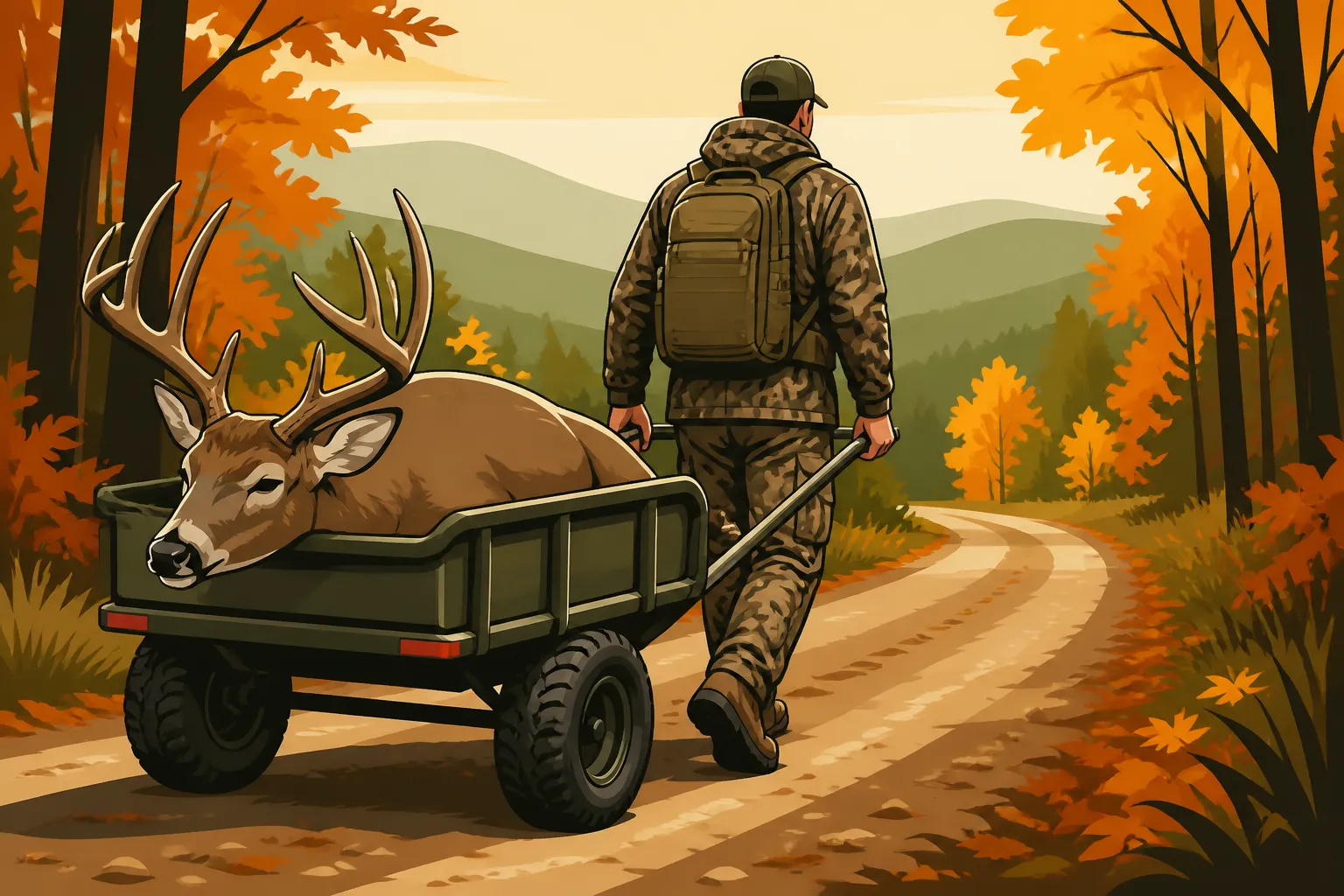
The moment of truth arrives when you've finally connected with that mature Tennessee buck or a hefty doe deep on public land, and the adrenaline is still pumping. Then, the reality sets in: you've got to get it out. If your hunt takes you down those miles of forest roads, especially ones closed to vehicles, a deer cart isn't just a convenience; it's a back-saving necessity. This guide will walk you through making the most of a deer cart to tackle those long, often challenging, hauls out of the Tennessee woods.
Why a Deer Cart is a Game Changer on Tennessee Forest Roads
We've all been there. You're deep in the Cherokee National Forest Hunting or along some lesser-known logging road in a Wildlife Management Area, and you drop a deer. The feeling of success is quickly followed by the daunting thought of dragging hundreds of pounds of deer, often uphill, over roots, and through mud, all while trying not to exhaust yourself before you even get to your truck. This is precisely where a deer cart shines, transforming a grueling ordeal into a manageable task.
Saving Your Back and Your Energy
Let's be real, dragging a deer, especially a big Cumberland Plateau buck, can be a monumental effort. It’s hard on your shoulders, your knees, and your lower back. Not only does it make the extraction process painful, but it also drains your energy for the rest of your day, or even your hunting trip. A deer cart shifts that heavy burden from your body to a set of wheels, distributing the weight and making it infinitely easier to move your harvest. Instead of pulling dead weight across uneven ground, you're essentially pushing or pulling a wheelbarrow. This simple change can mean the difference between dreading the recovery and being able to handle it solo. Think about those long hauls out of a deep hollow near the Cumberland River Corridor Public Access; a cart means you're not wiping out your reserves just getting back to the truck.
Navigating Public Land Access Restrictions
Many of Tennessee's prime public hunting lands, including vast sections of the Cherokee National Forest, the North Cumberland Wildlife Management Area, and various other WMAs, have strict rules about vehicle access. Forest roads are often gated, allowing foot traffic only beyond a certain point. This means that even if you're hunting right off a logging road, you might still have a mile or more to walk to your truck. Trying to drag a deer down these roads, which can be gravelly, muddy, or have significant inclines, is incredibly tough. A deer cart respects these regulations by allowing you to transport your game efficiently without breaking any rules. It's the perfect solution for bridging the gap between where your vehicle must stop and where your hunt ends.
Types of Deer Carts and What to Look For
Just like any piece of hunting gear, not all deer carts are created equal. They come in various designs, each with its own advantages and disadvantages. Choosing the right one for your style of hunting and the typical Tennessee terrain you encounter can make a big difference in how effective it is for you. Whether you're navigating relatively flat West Tennessee River Bottoms or the steep pitches of East Tennessee, there's a cart designed to help.
Single-Wheel vs. Two-Wheel Designs
The most common distinction you'll find in deer carts is whether they have one wheel or two.
- Single-Wheel Carts (Game Barrows): These carts often resemble oversized wheelbarrows. The advantage here is maneuverability. A single wheel allows you to navigate tighter trails, weave through dense timber, and make sharper turns more easily. They tend to be lighter and can often be packed down more compactly. However, balancing a heavy load, especially a large deer, can be more challenging, requiring constant effort to keep it upright. If you're often hunting in thick cover where every inch matters, like some of the tighter spots on Catoosa Wildlife Management Area, a single-wheel design might be appealing.
- Two-Wheel Carts: These are much more stable, as the two wheels inherently support the load. You don't have to worry as much about balancing the deer as you move. This stability is a huge plus, particularly on uneven ground, side slopes, or when dealing with exceptionally heavy animals. The trade-off is often less maneuverability in very tight spaces and potentially a wider profile that might catch on trees. For hauling a deer out of a relatively open Reading a Ridge for East Tennessee Deer or down a well-defined forest road, a two-wheel cart often reduces fatigue significantly.
Frame Materials and Tire Options
Beyond the number of wheels, the construction of the cart's frame and its tires are crucial considerations.
- Frame Materials: Most deer carts are made from either steel or aluminum.
- Steel frames are typically more robust and can handle heavier loads and more abuse. They are often more affordable but come with a weight penalty. A heavier cart means more effort to push or pull, even without a deer.
- Aluminum frames are lighter, making the overall cart easier to transport to and from your hunting spot and less effort to move when loaded. However, they might not be as durable as steel under extreme stress and generally come at a higher price point. If you're a serious public land hunter who puts a lot of miles on your gear, investing in a durable yet lightweight aluminum cart might pay off in the long run.
- Tire Options: The tires are what connect your cart to the ground, and they dictate how smoothly and easily your cart rolls over different terrains.
- Pneumatic (Air-Filled) Tires: These offer the best shock absorption, making for a smoother ride over rough terrain like rocks, roots, and uneven gravel roads. They also provide better traction in mud or soft ground. The downside is that they can go flat, so carrying a small repair kit or sealant is a good idea. Many hunters find the comfort and performance of pneumatic tires worth the minor risk of a flat.
- Solid Rubber (Flat-Free) Tires: As the name suggests, these tires can't go flat. This is a huge advantage for hunters who want reliability and don't want to worry about punctures miles from their vehicle. However, they offer less cushioning, which can make for a bumpier ride over rough terrain and require more effort to push. They also tend to have less grip on slick surfaces. For short hauls on relatively smooth forest roads, or if you simply despise flats, these can be a solid choice. Think about where you usually hunt: if it's mostly maintained logging roads, solid tires might be fine. If you're regularly pulling across old clear-cuts or rocky trails, air-filled tires will be a blessing.
| Feature | Single-Wheel Deer Cart | Two-Wheel Deer Cart |
|---|---|---|
| Maneuverability | High, good for tight spaces and dense cover | Lower, wider profile, better on open trails |
| Stability | Requires constant balancing, can be tiring | Very stable, less effort to keep upright |
| Terrain Suitability | Better for weaving through trees, narrow paths | Excellent on uneven ground, side slopes, roads |
| Weight Distribution | More on the user to balance | Distributed between wheels and user |
| Ease of Loading | Can be trickier to load and secure initially | Generally easier to load and strap down |
| Portability (Folded) | Often more compact when disassembled | Varies, some fold flatter than others |
| Ideal For | Thick woods, narrow trails, solo hunters | Open timber, established roads, heavier loads |
Maximizing Your Deer Cart's Efficiency in Tennessee Terrain
Owning a deer cart is one thing; using it effectively to make your life easier is another. There are a few tricks and considerations that can significantly improve your experience, especially when dealing with the varied and sometimes challenging landscape of Tennessee. From proper loading techniques to navigating tricky spots, these tips will help you get your deer from the field to the cooler with less fuss.
Loading and Securing Your Harvest
Properly loading your deer is perhaps the most critical step. A poorly loaded deer can shift, make the cart unstable, or even fall off, turning your "easy" extraction into a frustrating wrestling match.
- Head First or Feet First? Generally, loading the deer headfirst, with the body extending over the axle and the legs tucked in, helps with balance. The heaviest part of the deer (chest and shoulders) should be as close to the axle or slightly forward of it as possible. This minimizes the weight you're lifting and leveraging.
- Strategic Placement: Try to center the deer's weight on the cart's axle. If the weight is too far back, the handles will lift off the ground, and the cart will tip. Too far forward, and you'll bear too much weight on your arms. Experiment a little before you cinch it down. Many hunters find that if they've field-dressed the animal, positioning the cavity upwards helps keep things cleaner and prevents blood from pooling and running off the cart.
- Secure with Straps: Always use high-quality cam-buckle or ratchet straps. Bungee cords are not sufficient; they stretch and allow movement. Use at least two straps, one near the shoulders and one near the hips, pulling the deer tightly against the cart's frame. Make sure the straps are tight enough that the deer won't shift, even when going over bumps or inclines. This is where a quick check from your GoHunt app's map of your route can help you anticipate rough patches.
Working with Grades and Obstacles
Tennessee terrain is rarely flat. You'll encounter hills, ditches, mud, and sometimes rocky sections even on what's considered a "road."
- Uphill Battles: When going uphill, it's often easier to pull the cart backward. This allows you to lean into the load and use your legs more effectively. Take frequent, short breaks. If it's a very steep grade, consider removing any extra gear from the cart and carrying it separately, or even breaking down the deer if conditions allow and you have game bags.
- Downhill Control: Going downhill requires control. Don't let the cart get away from you. With a two-wheel cart, you can walk in front and pull it down, using your body as a brake. With a single-wheel, you might still prefer to pull it backward to maintain better control, especially on slick surfaces. Muddy or gravelly downhills can be treacherous, so watch your footing.
- Overcoming Obstacles: For logs, rocks, or deep ruts, approach them slowly. If you have a two-wheel cart, you can often "rock" it over by lifting one side slightly, then the other. For a single-wheel, you might need to lift the handles higher to clear the obstacle. If all else fails, a quick unstrap, move the cart, then lift the deer over the obstacle can save you a lot of grief. Don't be afraid to take a few extra minutes to make it easier on yourself.
Partnering Up for Tough Hauls
While a deer cart can make solo extractions much more feasible, having a hunting buddy can turn a tough haul into a relatively easy task. Many carts are designed with handles that allow two people to pull or push simultaneously. One person can take the handles, guiding the cart, while the other can grab a strap on the front of the cart frame and pull. This is particularly effective on long hauls, steep grades, or through especially muddy or rugged sections. There's a reason why Deer Drives With Three or Four Hunters are often successful – not just for pushing deer, but for sharing the load afterward! Coordinating with your partner beforehand on how you'll handle various terrains can save time and frustration when the moment comes.
Maintaining Your Deer Cart for Years of Service
Like any good piece of gear, your deer cart will last longer and perform better if you give it a little love. A small amount of maintenance can prevent big headaches down the road, ensuring it's ready for action when you are. After all, you don't want to find out your tire is flat or a wheel is seized up when you've got a fresh buck waiting! Keeping tabs on your gear, perhaps even noting its condition in your GoHunt scouting notes, can prevent unwelcome surprises.
Post-Hunt Cleaning and Storage
Your cart is going to get dirty, especially in Tennessee's often damp and muddy woods. Cleaning it immediately after use is crucial.
- Wash it Down: Use a hose to spray off all blood, mud, leaves, and debris. A stiff brush can help get into crevices. If there's dried blood, a little soap and water will do the trick. Pay special attention to the axle, wheels, and any moving parts.
- Dry Thoroughly: Allow the cart to dry completely to prevent rust, especially if it's steel-framed. If you store it in a damp shed, consider wiping it down with an old towel.
- Lubricate Moving Parts: Apply a light oil or silicone spray to the wheel axles and any folding mechanisms. This prevents rust, keeps things moving smoothly, and extends the life of these components.
- Proper Storage: Store your cart in a dry place, ideally somewhere it won't be exposed to extreme temperatures or direct sunlight for extended periods. If it folds, fold it to save space. Standing it upright or hanging it can also free up floor space in your garage or shed.
Pre-Season Checks and Repairs
Before hunting season officially kicks off, or even before your first big game hunt of the year, take a few minutes to inspect your deer cart.
- Tire Inspection:
- Pneumatic Tires: Check the tire pressure. Inflate them to the recommended PSI, which is usually stamped on the tire sidewall. Look for any cracks, punctures, or signs of dry rot. If the inner tube is showing through the tread, it's time for a replacement.
- Solid Tires: Inspect for excessive wear, cracks, or damage. While they won't go flat, they can still degrade over time.
- Frame and Fasteners: Examine the entire frame for any bends, cracks, or loose bolts. Tighten any bolts or nuts that might have worked their way loose during last season's adventures. If you see significant rust on a steel frame, consider sanding it down and applying a rust-inhibiting paint.
- Straps and Accessories: Check your tie-down straps for fraying or damage to the buckles. Replace them if they show significant wear; a failed strap can be disastrous. Ensure any quick-release pins or folding mechanisms work smoothly.
- Test Run: If you have the space, do a quick test run with some weight on the cart (even a heavy bag of feed or firewood). This helps you identify any squeaks, wobbles, or issues before you're out in the field with a deer on board. Catching a problem now, when you have time for a repair or replacement, is far better than discovering it miles from the truck with a trophy on your hands. Just as you'd Zeroing a Rifle for Mixed Distances before the season, tune up your cart!
Taking care of your deer cart ensures it's always ready to perform its vital role, making those hard-earned Tennessee deer recoveries a whole lot easier on your body and your spirit.
Disclaimer
This article is for general informational purposes only and does not constitute professional advice. Laws, prices and regulations vary by location and change over time. Consult a qualified professional for guidance on your specific situation.