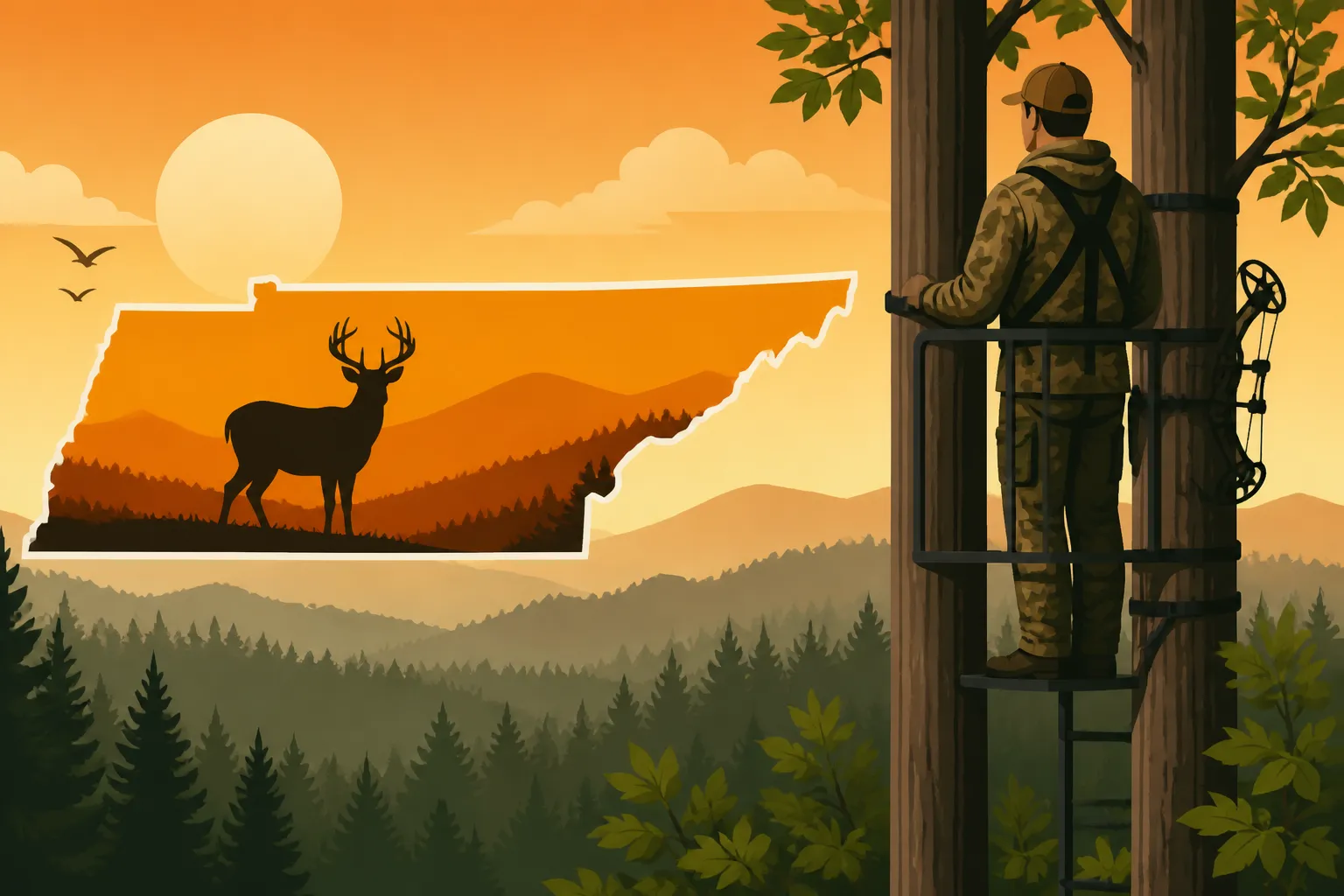
Climber Stands on Straight Trunks
Finding the perfect treestand setup can feel like a never-ending quest, especially when you're dealing with diverse terrain and ever-changing conditions in the Tennessee woods. Many hunters get frustrated with fixed stands that limit their mobility or heavy hang-ons that are a pain to carry deep into public land. This guide is all about embracing the freedom and versatility of climber stands, specifically focusing on how to master their use on those perfectly straight trunks that are so prevalent across our state, making your hunting experience safer and more effective.
Why Climber Stands are a Great Choice for Tennessee's Woods
When you're chasing whitetails or even scouting for turkeys in Tennessee, adaptability is key. Our landscapes range from the rolling hills of West Tennessee bottomlands to the steep, often rugged terrain of the Cumberland Plateau and the towering hardwoods of the Cherokee National Forest. A climber stand, when used correctly, gives you an incredible edge in these varied environments. It's not just about getting off the ground; it's about getting into the right spot, often where others won't go or can't set up.
The Portability Advantage on Public Land
One of the biggest headaches for public land hunters is the sheer effort of hauling gear. Dragging a heavy ladder stand or even a bulky hang-on with multiple sections of climbing sticks can be exhausting, especially when you're trying to get a mile or more deep to escape pressure. Climber stands truly shine here. They break down into a compact unit, typically two pieces that nest together, making them relatively easy to backpack in. You can carry your stand, your bow or rifle, and your daypack, often without needing an extra trip. This portability allows you to be much more dynamic in your scouting and hunting. If your initial spot isn't producing, you can pull your stand down and relocate to a new area with minimal fuss, which is a game-changer when you're Finding Ground Others Walk Past.
Think about the vast expanses of our Wildlife Management Areas or federal lands like the Cherokee National Forest. Many of these areas feature extensive stands of mature hardwoods, often with perfectly straight sections of trunk, especially after the first few branches. These trees are ideal for a climber. You don't need to find a specific branch configuration for a hang-on, nor do you need to lug multiple sections of sticks. Just find a good, straight tree in the right location, and you're in business. This freedom to pick and choose your exact tree, rather than being limited by what you can carry or what has a good branching pattern, is invaluable for adapting to changing wind directions, deer movement, or even unexpected hunting pressure.
Stealth and Adaptability in Changing Conditions
Beyond portability, a climber stand offers a significant advantage in terms of stealth and adaptability. Setting up a hang-on stand with climbing sticks can be noisy, especially if you're trying to do it quietly in the dark before dawn. The clanking of sticks, the scraping of bark, and the effort involved can alert nearby game. With a well-practiced climber, the process is far smoother and quieter. Once you've secured the stand to the tree, your ascent is a continuous, controlled movement, minimizing sudden noises that might spook a deer browsing nearby.
Furthermore, Tennessee weather can be fickle. A cold front might push deer to a specific food source one day, only for warm temperatures to scatter them the next. With a climber, you can react quickly. If your original plan was to hunt a ridge overlooking a food plot but the wind shifts unfavorably, you can pack up your climber and move to a different ridge system or a creek bottom funnel, finding a new, suitable tree on the fly. This flexibility means you're not locked into a single setup, allowing you to chase deer wherever they decide to move. I've often used this adaptability when Hunting the Late-Season January Lull, shifting my position to whatever small pocket of cover or food the deer are hitting that day.
Choosing the Right Climber for Tennessee's Diverse Woods
Just like picking the right rifle caliber or broadhead, selecting the right climber stand is crucial for comfort, safety, and effectiveness. There are a lot of options out there, and what works great in a southern pine plantation might not be ideal for the gnarly oaks of the Cumberland Plateau. Understanding the features and how they apply to Tennessee's varied timber can save you a lot of frustration and discomfort.
Material, Weight, and Design Considerations
Most climber stands are made from either aluminum or steel. Aluminum stands are generally lighter, which is a huge benefit when you're packing in long distances, especially if you're doing a lot of pre-season scouting or frequently relocating. A lighter stand means less fatigue, allowing you to walk further and spend more time hunting. However, aluminum stands can sometimes be more expensive. Steel stands, while often more budget-friendly, are noticeably heavier. If you primarily hunt small, easily accessible private tracts or only move your stand short distances, the extra weight might not be a deal-breaker. But for serious public land excursions, every pound counts.
Beyond material, consider the design. Some climbers feature an open front, which is fantastic for bowhunters who need an unobstructed shooting lane. Others have a sit-and-climb bar, which offers an additional point of contact and a sense of security during ascent and descent, often preferred by gun hunters or those who prioritize stability. Think about the average tree diameter you'll encounter. Most climbers are designed for trees between 8 and 20 inches in diameter, but some larger models can accommodate wider trunks. Make sure the stand's jaws can securely grip the trees you'll be hunting. A mapping app like GoHunt can actually help here, allowing you to zoom in on satellite imagery to get a sense of tree density and canopy structure in different areas, which can inform your stand choice.
Here's a quick comparison of common climber stand features:
| Feature | Aluminum Climber | Steel Climber | Open Front Climber | Sit-and-Climb Bar Climber |
|---|---|---|---|---|
| Weight | Lighter, easier for long hauls | Heavier, more effort for packing | Generally lighter designs | Often slightly heavier due to bar |
| Cost | Typically higher upfront | More budget-friendly | Varies, but can be competitive | Can be higher with additional features |
| Portability | Excellent for mobile hunting and deep woods | Good for shorter distances or less frequent moves | Great for easy packing | Can be bulkier with the bar |
| Bowhunting | Ideal, clear shot lanes | Good, if an open-front design is chosen | Excellent, unrestricted draw and shot | Good, but bar might interfere with certain shots |
| Gun Hunting | Excellent, easy to maneuver | Excellent, robust platform | Excellent, especially for standing shots | Excellent, provides a stable rest |
| Safety Feel | Very secure when properly attached | Very secure when properly attached | Secure, but no front "railing" | Enhanced feeling of security during climb |
| Tree Grip | Various designs, ensure aggressive teeth for bark | Various designs, ensure aggressive teeth for bark | Focus on secure V-bar or cable system | Same as open front, plus the bar's contact |
Foot Platform and Seat Comfort for Long Sits
Hunting often involves long hours of waiting, especially during the peak of the rut in early November or during cold, late-season hunts. A comfortable stand can make all the difference between sticking it out until legal shooting light ends and bailing out early. Pay close attention to the size and design of the foot platform. A larger platform offers more room to shift your weight, stretch your legs, and potentially even stand and turn for a shot without feeling cramped. Some platforms feature built-in footrests or stirrups, which can relieve pressure on your legs during prolonged sits.
The seat is another critical component. Many basic climber stands come with a simple sling-style seat, which can become uncomfortable after a few hours. Look for models with padded seats, or consider aftermarket seat upgrades if your chosen stand has a less-than-ideal factory option. Some stands offer a true "sit-and-stand" design where the seat can be adjusted or even flipped up and out of the way, giving you more standing room when you need it. Remember, if you're not comfortable, your focus will wane, and you might miss that critical moment. Investing in a stand that allows you to sit quietly and patiently for extended periods, even when Hunting the Tennessee Rut in Early November, will significantly increase your odds of success.
Safety First: Operating Your Climber Stand
I cannot stress this enough: treestand safety is paramount. Every year, hunters are injured, some severely, from falls. With a climber stand, because you are actively ascending and descending the tree, proper technique and the use of safety equipment are even more critical. Don't let complacency ever creep into your routine, no matter how many times you've used your stand.
Essential Safety Gear and Practices
First and foremost, you absolutely must wear a full-body harness every single time you leave the ground. This isn't optional; it's a non-negotiable part of treestand hunting. The harness should be properly fitted and attached to the tree with a lineman's rope or a tether that allows you to remain connected from the moment your feet leave the ground until they touch back down. This is the "lifeline" concept – you are always connected. There's a reason they make these universal components for Treestand Safety Gear for Steep Ground; falls happen in flat woods too.
Before you even start climbing, inspect your stand thoroughly. Check all cables, straps, bolts, and welds for any signs of wear, damage, or fatigue. Make sure the pivot points are functioning smoothly and that nothing is loose. If your stand uses a cable system, ensure the cables are free of frays or kinks. You're entrusting your life to this piece of equipment, so treat it with the respect it deserves. Another crucial piece of gear is a haul rope. Use it to pull up your bow or rifle, backpack, and other gear only after you've safely reached your desired height and secured yourself in the stand. Never climb with equipment in your hands or strapped to your back, as it can interfere with your balance and create a dangerous situation.
Proper Setup and Ascent Techniques
The proper setup of your climber stand is foundational to safe operation. Always select a live, healthy tree with a straight trunk, free of dead limbs, knots, or excessive vines that could impede your climb. Check the tree's diameter to ensure it falls within your stand's recommended range. Start by securing the bottom section of your stand to the base of the tree. The stand should be level, or even angled slightly downward away from the tree, to account for the angle of the trunk as you ascend.
Once the bottom section is secure, attach the top section. Ensure both sections are firmly gripping the tree. Before you start climbing, attach your full-body harness to the tree. As you ascend, use a controlled, deliberate motion. Slide the bottom section up the trunk with your feet, then bring the top section up with your hands. Maintain three points of contact at all times (two hands and one foot, or two feet and one hand). Keep your body close to the tree, and avoid sudden jerks or movements. If you're using a sit-and-climb style, you'll sit, slide the foot platform up, stand, and then slide the seat platform up. For open-front models, you'll often use a hand-over-hand motion on the upper bars. Take your time, especially in the dark or in adverse weather. The faster you rush, the higher the risk of a misstep. Don't forget that Treestand Rules on Tennessee Public Land often require certain safety measures, so always be compliant.
Tips for Maximizing Success with Your Climber
Having the right gear is only half the battle; knowing how to use it effectively to increase your hunting success is where the real skill comes in. A climber stand, with its mobility, opens up a world of possibilities that fixed stands just can't match, especially when you're deeply focused on Scouting Tennessee Public Land Before Season.
Scouting for the Perfect Tree
Effective scouting is the bedrock of successful hunting, and it's especially critical when you're planning to use a climber. You're looking for that needle in a haystack: the perfectly straight tree, free of low limbs and other obstructions, situated in a high-traffic deer area. This might sound simple, but finding such a tree exactly where a fresh rub line crosses a creek bottom, or where deer are filtering between a bedding area and a preferred food source, takes keen observation.
Start your scouting by identifying prime habitat features using tools like GoHunt's mapping overlays or even good old-fashioned topographical maps. Look for funnels, pinch points, creek crossings, ridge saddles, and areas with preferred mast crops. Once you've pinpointed a promising area, get on the ground and look for fresh sign: tracks, droppings, rubs, and scrapes. With a climber, you're not restricted to the few trees that might support a hang-on. You have the flexibility to choose the absolute best tree for the situation – one that offers good cover, a clear shooting lane, and the right height for visibility. Remember that just because a tree is straight doesn't mean it's the right tree. It needs to be the right tree in the right place, offering you the best advantage based on prevailing winds, sun angle, and deer travel patterns. Don't be afraid to walk a little further to find the perfect spot.
Practice Makes Perfect: Before the Hunt
Never take a brand-new climber stand straight to the woods on opening day without practicing. Seriously, it's a recipe for disaster or, at the very least, a frustrating and noisy experience. Set up your stand in your backyard or a safe area near your home. Find a suitable tree – straight, healthy, and not too tall – and practice ascending and descending multiple times. Get comfortable with the feel of the stand, the rhythm of the climb, and the subtle movements required to maintain balance and quiet.
Practice not only the physical climb but also the setup and takedown. Learn how to quietly attach and detach the stand, how to manage your haul rope, and how to get your weapon and gear situated once you're aloft. This practice will build muscle memory and confidence, making your actual hunts smoother, safer, and stealthier. It's also a great opportunity to fine-tune your safety harness setup and practice using your lifeline effectively. Think of it like patterning your shotgun for turkey season; you wouldn't head into the woods without knowing exactly how your gun and choke perform. The same goes for your treestand. The more proficient you are with your climber, the less time and noise you'll make in the field, and the more focused you'll be on the hunt itself. For more insights on honing your climbing skills and adapting to various tree conditions, you might want to review Climbing Sticks for Rough Bark or even Saddle Hunting in Tennessee Hardwoods to explore other mobile options.
Disclaimer
This article is for general informational purposes only and does not constitute professional advice. Laws, prices and regulations vary by location and change over time. Consult a qualified professional for guidance on your specific situation.