Rangefinders Under 100 Yards
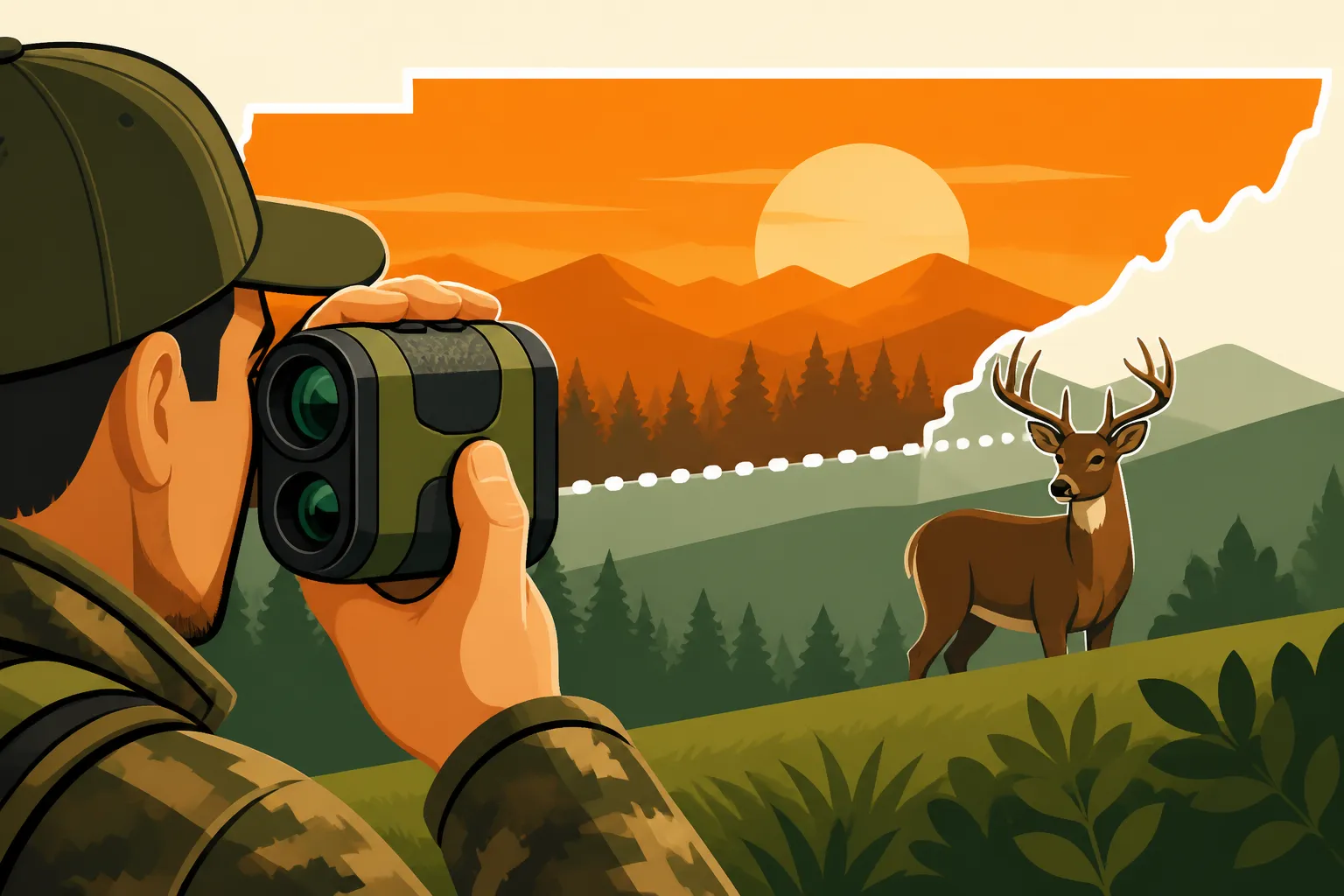
It's a common misconception that you need a hefty investment in optics to be a successful hunter, especially when much of our Tennessee hunting occurs in tight, unforgiving cover. Many hunters grapple with the challenge of accurately judging distances when a deer slips through a thicket or a gobbler struts into a small clearing, often leading to missed opportunities or, worse, unethical shots. This guide is here to tell you that reliable, accurate rangefinding doesn't have to break the bank, and we're going to dive deep into finding effective rangefinders that cost less than a hundred dollars, focusing on their performance for those crucial close-range shots.
Why Short-Range Accuracy Matters in Tennessee's Diverse Terrain
When you picture hunting, you might imagine vast, open plains where long-range shooting is the norm. But here in Tennessee, things are often quite different. Our landscape is a beautiful, rugged tapestry of dense forests, rolling hills, steep hollers, and choked creek bottoms. This means that a significant portion of our hunting, whether for whitetails or wild turkeys, takes place at much closer distances than many realize.
The Realities of Thick Cover and Undulating Hills
Think about still-hunting a ridge on the Cumberland Plateau, or slowly picking your way through a cedar thicket in Middle Tennessee. How often do you get a clear, unobstructed shot beyond 100 yards? More often than not, deer materialize out of the shadows at 20, 40, or 60 yards. In these situations, knowing the exact distance isn't just helpful; it's absolutely critical for making an ethical shot. An animal at 40 yards looks vastly different than one at 60 yards, especially when adrenaline is pumping, and a slight misjudgment can mean a clean miss or a wounded animal.
Even when setting up a treestand, precise measurements are your best friend. You might know your lane is "about 30 yards," but is it 28 or 35? That small difference can be the margin between hitting vitals and merely grazing a shoulder, particularly with archery gear. Our undulating hills and deep hollows also play tricks on the eye, making flat ground distances feel longer and downhill shots seem closer than they are. Hanging a Stand on a Cumberland Ridge involves carefully mapping out your shooting lanes and knowing the precise distances to key features, something a rangefinder excels at.
Beyond Deer: Small Game and Turkey Scenarios
While deer hunting often comes to mind first, the need for short-range accuracy extends far beyond. Consider spring turkey hunting, for instance. A gobbler can close the distance rapidly, and knowing exactly when he hits 40 yards—the typical maximum ethical range for most turkey shotguns—is paramount. Ranging prominent trees or bushes beforehand, like "that big oak is 35, the cedar behind it is 50," can make all the difference when a bird is responding to your calls. You don't want to hesitate and let him slip past a shooting window, nor do you want to take an unethical shot. Turkey Tactics for Farmland Field Edges often involves setting up at a known distance from a field edge, and a rangefinder confirms those ranges precisely.
For small game hunters, while you might not range every squirrel in a tree, understanding shot distances for rabbits flushing out of a fencerow or grouse bursting from thick cover can improve your success rate. For precise rimfire shots on squirrels, knowing if that target is 25 or 45 yards away directly impacts holdover or hold-under. Even for shotgunning, understanding how your pattern performs at different distances is critical, and a rangefinder provides that objective data.
What to Look for in a Budget-Friendly Rangefinder (Under 100 Yards)
Now that we've established why short-range accuracy is so vital, let's talk about what features truly matter when you're looking for a rangefinder that won't empty your wallet but will still perform reliably under 100 yards. The good news is that for these closer distances, you don't need all the bells and whistles found on high-end models designed for extreme long-range shooting.
Key Features for Close-Range Performance
When operating under the $100 mark, prioritize the core function: accurate distance measurement. Look for models that boast accuracy within +/- 1 yard, which is standard even for many entry-level rangefinders. The speed at which it acquires a reading is also important. You don't want to be fumbling with buttons and waiting several seconds when a deer is walking past your shooting lane. Most modern budget rangefinders will give you a reading in less than a second, which is perfectly adequate for hunting situations.
Ease of use is another non-negotiable. A simple two-button operation (power/measure and mode) is ideal. The display should be clear and easy to read, even in low light. While advanced reticles or multiple display settings might be nice, a clean, uncluttered display showing just the distance is often all you need for close-range work. Finally, consider its physical size and weight. A compact, lightweight unit that easily slips into a pocket, hangs comfortably on a lanyard, or attaches to your Binocular Harnesses Worth Wearing will be much more likely to be carried and used consistently in the field.
Understanding Angle Compensation and Scan Mode
While not strictly necessary for every close shot, angle compensation and scan mode can still be incredibly valuable features, even in a budget rangefinder, especially given Tennessee's varied topography. Angle compensation, sometimes called "bow mode," measures the horizontal distance to your target, not the line-of-sight distance. Why does this matter? Because gravity affects your arrow or bullet based on the horizontal distance, regardless of whether you're shooting uphill or downhill. For example, a deer 40 yards away straight downhill might only be a 35-yard horizontal shot. Without angle compensation, you could easily shoot over it. For steep ridge country, this feature can be a game-changer.
Scan mode allows you to press and hold the measure button while panning across multiple targets or a moving animal. This is fantastic for acquiring a quick range on a deer walking through patchy cover or for ranging several trees in a potential shooting lane. Instead of individual, slower readings, you get continuous updates. Even if a budget unit doesn't explicitly market these features, many include them. It's worth checking the specifications, as they add significant utility without necessarily driving up the price much. When scouting Cumberland Plateau Ridgelines, being able to quickly scan the terrain for shot opportunities is invaluable.
Durability and Weather Resistance
Tennessee weather is notoriously fickle. One minute it's crisp and clear, the next a pop-up shower or heavy morning dew rolls in. A hunting rangefinder, even an inexpensive one, needs to be able to stand up to the elements. Look for models that are at least water-resistant or, ideally, rainproof. This means they can handle light rain, snow, or the occasional dunk in a shallow puddle without immediately failing. You don't need a submarine, but protection against typical hunting conditions is essential.
Beyond water, consider the general build quality. A rugged, rubber-armored housing will provide better grip and shock absorption if you accidentally drop it from your treestand or it tumbles out of your pack while climbing a steep incline. Remember, this tool is going into the woods with you, not staying on a pristine shooting bench. A little extra robustness goes a long way in ensuring your rangefinder lasts more than a single season.
Top Considerations for Rangefinders Under 100 Yards
When you're trying to stay within a tight budget, it can feel like you're sacrificing quality, but for the specific need of ranging under 100 yards, that's not necessarily the case. Many manufacturers offer excellent value propositions at this price point, especially if you know what you truly need.
Balancing Cost and Performance
It's true that a rangefinder costing several hundred dollars will likely have brighter optics, longer maximum range, and more advanced features like ballistic calculators. However, for 90% of Tennessee hunting scenarios, where shots are typically inside 100 yards (and often much closer), those high-end features are simply overkill. An affordable rangefinder's optics might not be as crystal clear as premium binoculars, but for quickly identifying a deer and getting a distance, they're perfectly functional.
The key is to define your primary use. If you're primarily a bowhunter, or a gun hunter in thick timber, a rangefinder excelling at 500+ yards isn't what you need. What you need is something that gives you a fast, accurate reading at 10 to 80 yards, is easy to use, and can handle a little abuse. Many sub-$100 rangefinders from reputable optics companies (and even some lesser-known brands) deliver exactly this. Focus on the specifications that directly relate to close-range performance rather than marketing hype about extreme distances you'll never use.
Brands and Models Known for Value
While specific models come and go, there are a few brands that consistently offer solid performance at budget-friendly prices. Look for entry-level models from established optics manufacturers. Sometimes, their base models are designed to hit an attractive price point while still offering reliable core functionality. You might not get the latest bells and whistles, but you'll get accurate distances.
When you're researching, don't be afraid to look at user reviews, especially those that mention performance at shorter ranges. Many hunting publications and forums offer insights into which budget models punch above their weight. While GoHunt might be known for its more advanced mapping and scouting features, and their higher-end optics, the principle of smart scouting and precise data applies across all levels of gear. Even if you're not using a GoHunt app for your rangefinder integration, the core idea of accurate information for better decision-making holds true. The market is competitive, and that competition benefits us, the hunters, by pushing prices down on very capable devices.
| Feature | Budget Rangefinder (Under $100) | Mid-Range Rangefinder ($100-$300) | Premium Rangefinder ($300+) |
|---|---|---|---|
| Max Range | Typically 400-600 yards (effective under 100) | 800-1,200 yards | 1,500+ yards |
| Accuracy | +/- 1 yard (reliable at short ranges) | +/- 0.5-1 yard | +/- 0.3-0.5 yard |
| Speed | 0.5-1 second | 0.3-0.7 second | Instantaneous to 0.2 second |
| Display | LCD, basic black readout, sometimes backlit | Clearer LCD, often red or green OLED, adjustable brightness | High-res OLED, multiple reticle options, custom ballistics |
| Optics Clarity | Acceptable for ranging, not ideal for glassing | Good, often multi-coated lenses | Excellent, fully multi-coated, low-light performance |
| Angle Comp. | Often included (basic mode) | Usually included (advanced modes possible) | Always included (highly advanced ballistic features) |
| Scan Mode | Often included | Usually included | Always included |
| Weatherproof | Water-resistant, some rainproof | Rainproof, often fog proof | Fully waterproof, fog proof, nitrogen purged |
| Build Quality | Durable plastic/rubber | Rugged, rubber-armored | Premium materials, ergonomic, high shock resistance |
| Size/Weight | Very compact, lightweight | Compact, manageable | Varies, can be slightly larger for features |
Practical Application: Using Your Sub-100 Yard Rangefinder in the Field
Having a rangefinder is one thing; effectively integrating it into your hunting strategy is another. For those short, critical distances, knowing how and when to use your budget-friendly device can significantly boost your confidence and success in Tennessee's diverse hunting environments. It's not just about a quick glance when a deer appears; it's a tool for planning and executing.
Pre-Season Scouting and Stand Setup
Long before opening day, your rangefinder should be a staple in your scouting kit. When you're out in the woods, trying to find optimal stand locations, this little device becomes invaluable. Imagine you've found a promising pinch point or a well-used trail. You can range specific trees to use as markers for your shooting lanes. "Okay, that big double oak is 25 yards. The gap past that blowdown is 40. And if a deer pops out onto that old logging road, it's a 65-yard shot." This allows you to trim shooting lanes strategically and mentally map out your effective ranges from your chosen stand site. This precision helps immensely when you're actually hanging a stand, ensuring you're positioned correctly.
This meticulous preparation is especially helpful on public land, where you might be Scouting Tennessee Public Land Before Season and need to be efficient with your time. Knowing your exact maximum ethical shot distance from your stand, whether it's 30 yards with a bow or 75 yards with a shotgun, means you won't be guessing when the moment of truth arrives. It builds confidence in your setup and your abilities. For hunters using Treestands and Saddles on Public Land, knowing exact distances for anchor points and shooting lanes is key to a safe and effective setup.
Real-Time Hunting Situations
When you're actually in the stand or blind, your short-range rangefinder continues to be an essential tool. It's not always about ranging the animal itself, which can be tricky and lead to unnecessary movement. Often, it's about ranging objects around you. Let's say you're Using a Ground Blind on Tennessee Public Land near a field edge. Before legal shooting light, you can range prominent bushes, a fence post, or a lone tree at varying distances (e.g., 20, 30, 40, 50, 75 yards). When a deer steps out, you can quickly assess its position relative to these pre-ranged markers.
This is particularly useful during the rut when deer can move quickly and unpredictably. If a buck is grunting and moving through thick timber, you might not get a clear shot, but you can range the last tree he passed or the next opening he's likely to appear in. Grunt Calls in Mature Tennessee Timber can draw a buck in close, but you need to be ready to confirm that distance quickly. For archery hunters, removing all doubt about yardage for those critical 20-40 yard shots is paramount. With a reliable, budget-friendly rangefinder, you get that peace of mind without breaking the bank.
Disclaimer
This article is for general informational purposes only and does not constitute professional advice. Laws, prices and regulations vary by location and change over time. Consult a qualified professional for guidance on your specific situation.