Waders for Flooded Timber Hunting
The moment you step into that frigid, murky water in a Tennessee flooded timber area, you realize just how quickly a duck hunt can turn miserable if your gear isn't up to par. It's a bone-chilling experience when water seeps into your boots or your waders snag on submerged branches, leaving you cold, wet, and exposed. This guide is all about equipping you with the knowledge to choose the right waders, ensuring you stay warm, dry, and comfortable, even when standing for hours in the challenging conditions of Tennessee's best waterfowl spots.
Why Flooded Timber Hunting Demands Specialized Waders
Hunting flooded timber for waterfowl in Tennessee isn't just a walk in the park with a little water around your ankles. It's a unique and often brutal environment that regular hunting boots or even general-purpose waders simply aren't designed to handle. We're talking about deep water, unseen obstacles, constantly changing conditions, and the need for stealth and endurance. If your gear fails here, your hunt is over, plain and simple.
The Unpredictable Nature of Tennessee's Waterfowl Habitats
Think about places like the bottomlands along the Mississippi River or the cypress swamps around Reelfoot Lake Waterfowl Access. These aren't manicured ponds. Water levels can fluctuate dramatically overnight due to rain or river stages, turning a shallow wade into a deep slog. Beneath that seemingly calm surface lie hidden stumps, submerged logs, sharp branches, and uneven ground that can trip you up, tear your waders, or send you sprawling. I’ve seen more than one hunter underestimate the power of a shifting current or the sudden drop-off in a slough.
It's not just the depth; it's the variability. One minute you might be walking through ankle-deep water, the next you're chest-deep trying to navigate around a fallen oak. This unpredictability means your waders need to be versatile, tough, and provide reliable protection, not just against water, but against punctures and abrasions. They need to be a true shield against the environment, allowing you to focus on the birds, not on keeping your feet dry or wondering if your next step will lead to a painful surprise.
Beyond Just Staying Dry: Durability, Comfort, and Mobility
While staying dry is obviously paramount, a good pair of flooded timber waders offers so much more. Durability is non-negotiable. Imagine hiking through a tangle of downed timber and brush just to get to your spot, only for a sharp stick to pierce your waders before you even set up your first decoy. That's a day-ender right there. The material needs to be robust, particularly in high-wear areas like the knees and seat, which are constantly subjected to friction and impact.
Comfort, too, plays a massive role. You could be standing for hours, sometimes almost motionless, in freezing water. Ill-fitting or stiff waders can cause chafing, restrict movement, and lead to fatigue, ruining your focus and your hunt. Mobility is also critical for setting out Decoy Spreads for Reelfoot Mallards, retrieving birds, or simply maneuvering quietly through the timber without sounding like a herd of elephants. You need to be able to bend, squat, and step over obstacles with ease, something many cheaper waders just don't allow. The right waders become an extension of you, not a hindrance.
Understanding Wader Materials and Their Best Use
When you start looking at waders, you’ll quickly notice that they come in a few main material types. Each has its own strengths and weaknesses, and understanding these can make a huge difference in choosing the right pair for the specific conditions you'll face while Hunting Reelfoot's Flooded Cypress Timber or any other Tennessee waterfowl hotspot.
Neoprene: The Insulated Workhorse for Colder Hunts
Neoprene waders are the traditional go-to for many cold-weather waterfowl hunters, and for good reason. Neoprene is essentially a type of synthetic rubber that offers excellent insulation, even when wet. This means that even if you spring a small leak, the insulating properties of the material will still help keep you warmer than, say, a breathable wader that's compromised. Think of it like a wetsuit; it traps a thin layer of water against your skin, which your body then warms, providing insulation.
The thickness of neoprene is usually measured in millimeters (mm), with 3.5mm being a good all-around choice for many hunters, and 5mm offering superior warmth for those truly frigid late-season hunts or extended periods of standing in icy water. The downside? Neoprene is heavy and doesn't breathe. This can lead to overheating and sweating during long walks to the blind or on warmer days, and that trapped sweat can quickly turn cold and uncomfortable once you stop moving. They're also less flexible than breathable options, which can slightly reduce mobility.
Breathable Materials: When Mobility and Sweat Management are Key
In contrast to neoprene, breathable waders are designed to let moisture vapor (sweat) escape while preventing external water from entering. Fabrics like GORE-TEX, or various proprietary membranes, are laminated to a durable nylon or polyester shell. This technology is a game-changer for active hunters or those who find themselves trekking long distances to their hunting grounds. You arrive at your spot drier and more comfortable, which is crucial for maintaining body temperature when you stand still for extended periods.
While breathable waders offer superior comfort and mobility, they typically don't provide the inherent warmth of neoprene. This means you’ll need to layer up underneath significantly more, especially when dealing with Tennessee’s late-season cold fronts. They also tend to be more susceptible to punctures and tears than thicker neoprene, though manufacturers are constantly improving durability with reinforced sections. For early season hunts or when hiking is a major component of your strategy, breathable waders are often the preferred choice.
Hybrid Designs: Combining the Best of Both Worlds
Recognizing the trade-offs, many manufacturers now offer hybrid waders that attempt to combine the advantages of both neoprene and breathable materials. These designs often feature breathable uppers, which help manage sweat and reduce bulk around the chest and shoulders, paired with neoprene lowers that provide insulation and enhanced durability in the legs and boot area. This can be a fantastic compromise for the Tennessee hunter who faces a variety of conditions throughout the season.
Some hybrid designs might also integrate tougher, abrasion-resistant fabrics in key areas like the knees and seat, regardless of the primary material. This strategic reinforcement significantly extends the life of the waders and provides peace of mind when navigating dense timber or kneeling to pick up decoys. When considering a hybrid, look closely at the specific material placement and how it aligns with your typical hunting movements and environmental challenges.
Key Features to Look for in Flooded Timber Waders
Beyond the basic material, the devil is truly in the details when it comes to waders for flooded timber. Specific design elements can make or break your hunting experience, impacting everything from your comfort to the longevity of your gear. Pay close attention to these features, as they’re often the difference between a season of successful hunts and a frustrating series of leaks and discomfort.
Boot Construction: Traction, Insulation, and Ankle Support
The boots integrated into your waders are arguably one of the most critical components. First and foremost, you need serious traction. Flooded timber bottoms are often slick with mud, decaying leaves, and algae, not to mention submerged logs. A deeply lugged sole pattern designed for mud and uneven terrain is essential to prevent slips and falls. Nobody wants to take an unexpected swim in freezing water, especially not while carrying a loaded shotgun.
Insulation in the boots is also key. Even if your upper body is warm, cold feet will quickly make you miserable. Look for boots with ample thinsulate or similar insulation, often rated in grams. Something in the 1200-gram range is a good starting point for cold Tennessee mornings. Finally, ankle support is crucial. Walking through uneven, submerged terrain is a recipe for twisted ankles if your boots don't provide adequate stability. Boots that fit snugly but comfortably around your foot and ankle will provide the necessary support to navigate the unseen dangers of flooded timber. Many hunters appreciate the fit and durability of a more traditional lace-up boot design integrated into their waders, even if they don't actually lace up.
Reinforcements and Pockets: Durability Where It Counts and Practical Storage
Flooded timber hunting is tough on gear, so reinforcements are a non-negotiable feature. High-wear areas like the knees, shin, and seat need extra layers of durable fabric – often a heavier denier nylon or a double layer of the wader material itself. These are the areas most likely to rub against logs, brush, or the bottom of a boat, and where punctures are most common. Having extra protection here can drastically extend the lifespan of your waders.
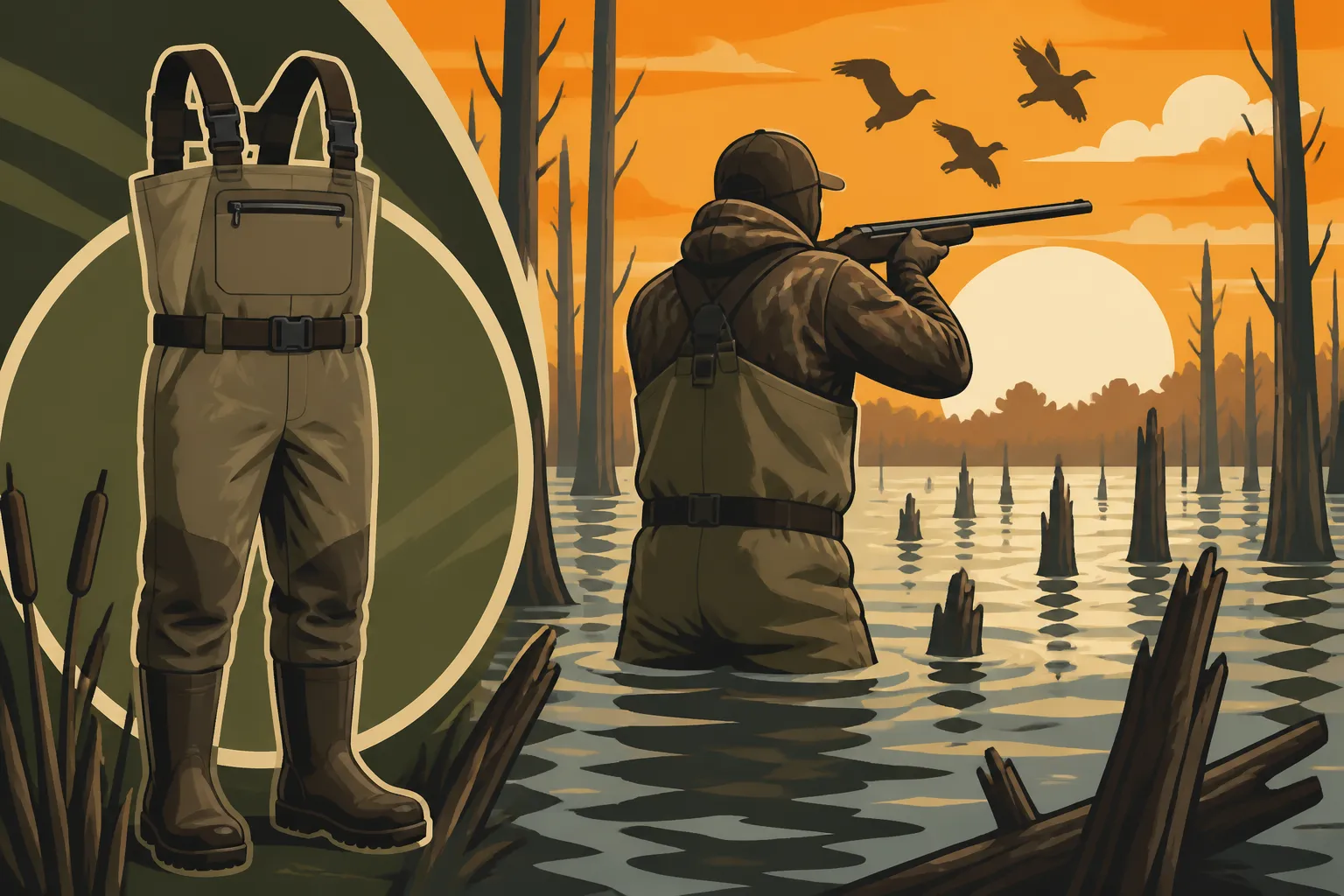
Practical storage is another often-overlooked feature. You'll need pockets for calls, shells, gloves, and other essentials you want to keep easily accessible and dry. A large, fleece-lined chest pocket with a water-resistant zipper is invaluable for keeping hands warm and storing items like your phone or license, perhaps a digital map from GoHunt. Look for shell loops or holders on the chest pocket to keep extra rounds at the ready, and maybe even a hand-warming pocket for those bitter mornings. Too few pockets, or poorly designed ones, can be a constant annoyance in the field.
Suspension Systems and Fit: All-Day Comfort and Adaptability
Even the best waders won't be comfortable if they don't fit right or have a poor suspension system. Adjustable suspenders are standard, but look for ones that are wide, padded, and don't dig into your shoulders. Some waders offer X-back or H-back designs that distribute weight more effectively, preventing slippage and discomfort. A wading belt is also critical, not just for supporting the waders, but more importantly, for safety. In the event of a fall into deep water, cinching the belt tightly helps prevent your waders from filling up completely with water, which can be extremely dangerous.
The overall fit of the waders is paramount. They should be roomy enough to allow for layering underneath without being baggy or cumbersome. Pay attention to the inseam and chest measurements. Walking in waders that are too short in the stride, or too tight across the chest, will limit your mobility and lead to chafing. Conversely, waders that are too large will bunch up, create friction, and make walking through water more difficult. Getting the fit right means you can wear them comfortably all day, focusing on the hunt, not on your gear.
Practical Considerations for Tennessee Hunters
Navigating the unique challenges of waterfowl hunting in Tennessee's flooded timber requires more than just good waders; it requires thoughtful planning and an understanding of how your gear interacts with the environment. From staying warm to keeping your investment in top shape, these practical tips can make your hunts more successful and enjoyable.
Seasonal Adaptability and Layering Under Your Waders
Tennessee's waterfowl season can see a massive swing in temperatures, from mild early season mornings to biting cold in January. Your waders are just one part of your cold-weather defense. Layering is crucial. For colder hunts, start with a good moisture-wicking base layer that pulls sweat away from your skin. Over that, add insulating layers, such as fleece pants or a pair of Wool Versus Synthetics in Wet Cold. Avoid cotton at all costs, as it loses its insulating properties when wet and takes forever to dry.
For milder days, you might only need a lighter base layer, but always be prepared for conditions to change. The beauty of breathable waders is their versatility with layering; you can add or subtract insulation as needed. Even with neoprene waders, strategic layering can enhance warmth and manage sweat. Remember, the goal is to maintain a comfortable core temperature, which means regulating your exertion and layering appropriately for both the activity level and the ambient temperature. Don't forget a warm hat and gloves – heat escapes quickly from your extremities.
Maintenance and Longevity: Protecting Your Investment
Waders are an investment, and like any good piece of hunting gear, they require proper care to last. The number one rule is to dry them thoroughly after every use. Hang them upside down to allow water to drain from the boots, then turn them right side out and hang them in a well-ventilated area away from direct sunlight or heat. Never store them wet or crumpled up, as this can lead to mold, mildew, and material degradation, especially if they are neoprene. Mildew can eat away at the fabric and seams, creating weak points that lead to leaks.
Inspect your waders regularly for punctures, abrasions, or seam issues. Small holes can often be patched with a wader repair kit, but catching them early prevents them from becoming major leaks. Clean them periodically with mild soap and water to remove dirt, mud, and chemicals that can break down the fabric. Paying attention to these simple maintenance steps will significantly extend the life of your waders, ensuring they’re ready for many more seasons of Waterfowl Hunting Reelfoot Lake and Beyond.
Safety First: Navigating Deep Water and Hidden Obstacles
Flooded timber, while incredibly productive for waterfowl, presents inherent safety challenges. Always wear a wading belt and cinch it tight, even in seemingly shallow water. This simple step can be a lifesaver if you trip and fall, preventing the waders from filling with water and dragging you down. When walking in unfamiliar water, shuffle your feet to feel for obstacles rather than taking large, confident strides. A sturdy wading staff can provide an extra point of contact and help gauge water depth and bottom stability.
Never hunt flooded timber alone if possible, and always let someone know where you're going and when you expect to return. Be especially mindful of currents, as these can quickly sweep you off your feet. During hunting, be aware of your surroundings, including other hunters and your dog, if you have one. Navigating the murky depths requires patience and caution, ensuring that your successful hunt is also a safe one. Using tools like the GoHunt app for aerial scouting can sometimes reveal subtle depth changes or potential underwater obstacles before you even get on the water, helping you plan safer routes.
Choosing the Right Waders for Your Hunting Style (and Budget)
With so many options on the market, selecting the perfect pair of waders can feel overwhelming. It really comes down to understanding your specific hunting needs, what kind of conditions you'll predominantly face in Tennessee, and balancing that with your budget. Remember, the "best" wader isn't necessarily the most expensive; it's the one that best suits you and your hunting style.
Assessing Your Primary Hunting Conditions
Before you even start looking at brands, sit down and think about where and how you typically hunt waterfowl in Tennessee. Are you primarily Hunting West Tennessee Bottomland Deer and also ducks on relatively mild early-season mornings, where long walks are common? Then a breathable, lightweight wader might be your champion. Do you mostly find yourself standing motionless for hours in icy water during the late season, perhaps in a blind on Reelfoot's Flooded Cypress Timber? Then the warmth and durability of 5mm neoprene could be indispensable.
Consider the average water depth in your preferred spots, the type of terrain you navigate, and how much gear you need to carry. Do you require maximum flexibility for retrieving birds in dense cover, or is brute warmth your primary concern? Answering these questions honestly will help narrow down the material type, boot insulation, and features you truly need, preventing you from overspending on features you won't use or, worse, underspending and being miserable.
Budgeting for Quality: Where to Invest Your Dollars
Waders come in a vast range of price points, and generally, you get what you pay for. Cheaper waders often use less durable materials, have simpler boot construction, and may skimp on seam sealing, leading to quicker leaks and a shorter lifespan. Investing in a quality pair upfront can save you money and frustration in the long run.
Think of it this way: how much is a ruined hunt worth to you? A few extra dollars spent on reinforced knees, better seam technology, or superior boot insulation can make all the difference. While I can't give you specific prices, understand that a solid, reliable pair of waders for challenging flooded timber conditions will be a significant purchase. Research reviews, check manufacturer warranties, and consider brands known for their waterfowl gear. Sometimes, if you're looking for gear comparisons or user feedback, online communities or resources found through a search engine via a tool like GoHunt can provide valuable insights from other hunters.
Finding the Right Fit: A Crucial Step for Comfort and Performance
I cannot stress this enough: try them on. Just like a good pair of Boots for Tennessee Hollows and Creek Bottoms, the fit of your waders is paramount. Wear the type of layers you'd typically wear underneath them. Walk around, squat, and lift your knees to ensure they offer adequate mobility without binding or feeling too loose. Pay attention to the boot fit – it should be snug enough to prevent your foot from sliding around but not so tight that it restricts circulation or causes discomfort.
Many waders are sized by boot size and then by chest/inseam. Don't assume your street shoe size is your wader boot size; sometimes you need to go up a size to accommodate thick socks. If possible, try on several different brands and models, as sizing can vary significantly between manufacturers. A well-fitting pair of waders will feel almost unnoticeable, allowing you to move freely and stay comfortable, turning a grueling hunt into a memorable one.
| Wader Material | Key Advantages | Key Disadvantages | Best Use Case for Tennessee Flooded Timber |
|---|---|---|---|
| Neoprene | Excellent insulation, very warm, good puncture resistance for its class. | Heavy, not breathable (can cause sweating), less flexible, slower drying. | Late-season, very cold conditions, static hunting in deep, icy water. |
| Breathable | Lightweight, highly breathable (manages sweat), excellent mobility, faster drying. | Less inherent warmth (requires more layering), potentially less puncture-resistant, often higher cost. | Early season, active hunting, long walks to the blind, warmer days. |
| Hybrid | Combines features (e.g., breathable upper, neoprene lower), versatile. | Can be a compromise in extreme conditions, cost varies widely. | Mid-season versatility, hunters facing varied conditions and activity levels. |
Disclaimer
This article is for general informational purposes only and does not constitute professional advice. Laws, prices and regulations vary by location and change over time. Consult a qualified professional for guidance on your specific situation.