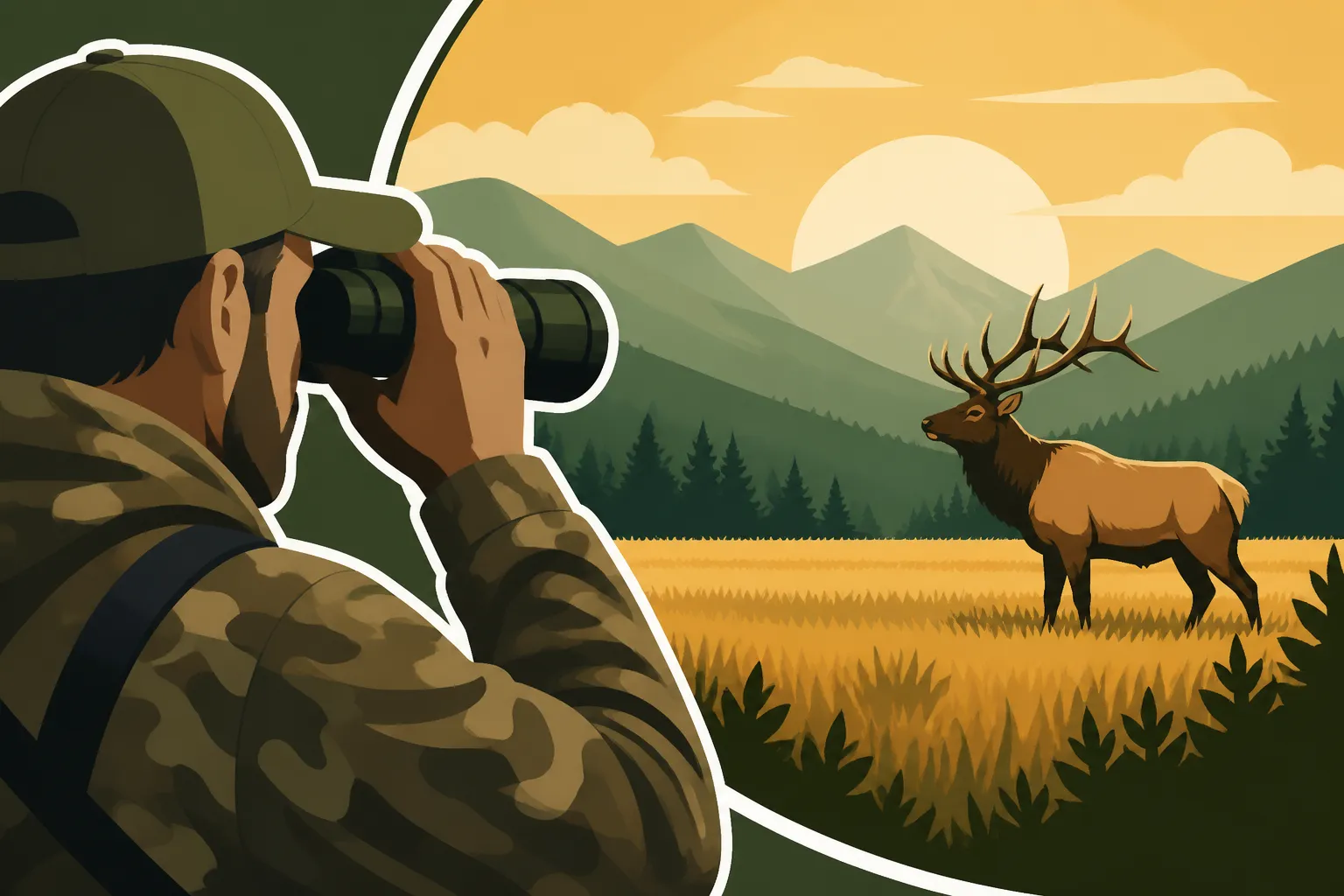
Optics for Glassing Elk Meadows
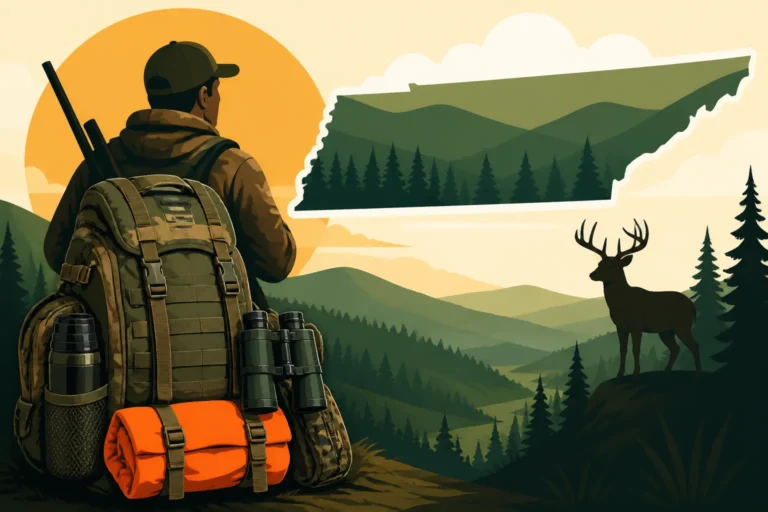
One of the biggest frustrations for hunters pursuing elk in Tennessee's vast North Cumberland Wildlife Management Area is the sheer scale of the landscape. You can spend hours staring at distant hillsides and sweeping meadows, convinced there's an elk out there, but without the right tools, it's like looking for a needle in a haystack. This guide is all about equipping you with the knowledge to choose and use the best optics, transforming those distant blurs into identifiable elk and making your glassing efforts truly effective.
Why Quality Optics Are Non-Negotiable for Elk Meadows
Hunting the restored elk herd in the North Cumberland is an experience unlike any other in Tennessee. The terrain itself, a mix of rugged mountains, deep hollows, and expansive reclaimed mine lands that have transformed into rolling meadows, demands a different approach than deer hunting in a smaller woodlot. You're not just looking for a flash of white tail in the hardwoods; you're often trying to pick out a tan speck against a distant green or brown hillside, sometimes a mile or more away.
The Sheer Scale of North Cumberland Terrain
Imagine standing on a high point overlooking one of those vast, grassy meadows or clear-cuts that stretch for hundreds of acres. With the naked eye, it's a beautiful vista, but it's impossible to discern detail in the distant tree lines or the subtle dips and rises where an elk might be bedded or feeding. The North Cumberland offers incredible opportunities, but it also presents a huge challenge in terms of locating game. Without powerful, clear optics, you're essentially walking past animals you never even knew were there. This isn't your average whitetail property where you can count on deer being within a few hundred yards; elk country demands you see further and clearer. North Cumberland Wildlife Management Area provides a great overview of this unique hunting ground, emphasizing the vastness you'll encounter.
Identifying Elk vs. Other Game or Features
It's not just about seeing something far away; it's about confidently identifying what you're seeing. Is that a bull elk's antler peeking over a rise, or just a dead tree branch? Is that a cow elk feeding in the shadows, or a patch of lighter-colored brush? The ability to distinguish between an elk, a deer, a bear, or even just a stump from a half-mile away is crucial. Poor optics will leave you guessing, potentially sending you on a wild goose chase or, worse, causing you to overlook the animal you've been searching for. The subtle difference in an animal's silhouette, the gleam of an antler, or the way it moves through cover are all details that only quality optics can reveal at long distances. You might even spot a lone bull while Elk Viewing in the North Cumberland Zone, which can be a valuable scouting opportunity.
Essential Optics for Elk Meadow Glassing
When you're serious about elk hunting in Tennessee, you're going to need more than just a cheap pair of binoculars you picked up for birdwatching. Your optic system becomes an extension of your eyes, allowing you to effectively cover vast areas with precision. Most hunters will benefit from a combination of binoculars and a spotting scope to maximize their chances.
Binoculars: Your Primary Scouting Tool
Binoculars are your go-to for general scanning and finding potential hot spots. They offer a wider field of view compared to spotting scopes, which is critical for quickly surveying large sections of an elk meadow or distant ridge. For elk hunting, most experienced hunters opt for 10×42 or 12×50 power binoculars. The "10x" or "12x" refers to the magnification, meaning the object appears 10 or 12 times closer. The "42" or "50" refers to the diameter of the objective lens in millimeters, which dictates how much light the binoculars can gather. A larger objective lens (like 50mm) will perform better in low-light conditions, such as dawn and dusk when elk are often most active.
While 10x magnification is perfectly suitable for many situations, especially in timbered areas, the openness of North Cumberland meadows often makes 12x a more effective choice for discerning details at greater distances. Just be aware that higher magnification can be harder to hold steady freehand, which we'll address later. A quality pair of 10×42 or 12×50 binoculars from a reputable brand will give you crisp, clear images, even at the edges of the view, which is vital when you're straining to identify an elk. Consider what you'll be primarily doing – quick scans or more detailed checks – when choosing your magnification.
Spotting Scopes: Reaching Further for Confirmation
Once your binoculars have picked up a suspicious shape or movement in the distance, that's when your spotting scope truly shines. A spotting scope, with its much higher magnification (typically 20x to 60x, or even higher), allows you to truly "zoom in" and evaluate an animal with incredible detail. You can count antler points, assess body size, and confirm whether that "blob" is indeed the bull you've been looking for, or just another deer. This saves you countless hours and miles of hiking after false positives.
For the open terrain of Tennessee's elk meadows, a 60mm to 85mm objective lens is common for spotting scopes. Again, larger objective lenses mean better light gathering and clearer images, especially at high magnifications or in dim light. The trade-off, of course, is size and weight. A straight eyepiece is often preferred for ease of use when mounted on a tripod for glassing from a vehicle or a fixed position, while an angled eyepiece can be more comfortable for prolonged glassing sessions from a seated position, especially on uneven ground. Think about how much detail you need to glean from extreme distances; if judging antler size for Tennessee Elk Quota Hunt Rules is critical, a spotting scope is a must-have.
Rangefinding Binoculars: A Dual Threat
For those looking to streamline their gear and combine functionality, rangefinding binoculars offer a compelling solution. These innovative optics integrate a laser rangefinder directly into a binocular, allowing you to scan for elk and instantly get an accurate distance reading without having to switch tools. This can be a huge advantage when an elk suddenly appears or when you're trying to figure out if that distant bull is within your comfortable shooting range for your Rifles Built for a North Cumberland Elk Hunt.
While rangefinding binoculars can be a significant investment, the convenience and speed they offer in the field are undeniable. Instead of pulling out binoculars, finding the animal, then putting them down to grab a separate rangefinder, you can do it all with one fluid motion. This can be particularly useful in dynamic hunting situations where every second counts. They typically come in 10×42 configurations, balancing magnification with the added weight of the rangefinding technology.
Key Features to Look For in Elk Optics
Choosing the right optics isn't just about magnification; it's about understanding a range of features that contribute to performance, durability, and ease of use in the demanding environment of Tennessee's elk country.
Magnification and Objective Lens
As mentioned, magnification determines how much closer an object appears, while the objective lens diameter dictates how much light enters the optic. For long-distance glassing in elk meadows, a balance is key. A 10x or 12x binocular is excellent for wide-area scanning. Going much higher with binoculars can introduce shake and a narrower field of view, making it harder to find animals quickly. For spotting scopes, 20x-60x or even 20x-80x is ideal. This allows you to start wide and then pinpoint details.
The objective lens directly impacts brightness and clarity, especially in low-light conditions. Larger lenses (e.g., 50mm on binoculars, 60mm-85mm on spotting scopes) gather more light, giving you a brighter, clearer image at dawn and dusk—prime elk movement times. However, bigger lenses mean heavier and bulkier optics. You need to weigh the benefit of enhanced low-light performance against the extra weight you'll be carrying on those long hikes.
Field of View and Eye Relief
Field of view (FOV) refers to the width of the area you can see through your optics at a given distance, usually measured in feet at 1,000 yards. A wider FOV is incredibly valuable for scanning large areas quickly with binoculars, helping you pick up movement or an entire animal more easily. As magnification increases, FOV typically decreases, which is why spotting scopes have a much narrower view.
Eye relief is the distance your eye can be from the eyepiece and still see the full, unvignetted image. This is particularly important for hunters who wear eyeglasses. You need enough eye relief (typically 15mm or more) to comfortably use your optics without having to remove your glasses, which can be a real nuisance in the field. Most modern binoculars and spotting scopes feature adjustable eyecups that can be twisted up or down to accommodate both eyeglass wearers and those without.
Durability and Weatherproofing
Tennessee weather can be unpredictable, especially in the mountains. From scorching summer scouting trips to damp, chilly fall hunts for Hunting the Rut in Early November, your optics need to withstand the elements. Look for optics that are fully waterproof and fog-proof. This typically means they are O-ring sealed and nitrogen or argon purged to prevent internal fogging in fluctuating temperatures or humid conditions. You don't want your glass to fog up just as that bull steps out.
Beyond weather, your optics need to be rugged. They're going to get bumped, jostled, and perhaps even dropped. Rubber armor coating not only provides a better grip but also offers an essential layer of protection against minor impacts. Choosing optics from reputable brands often ensures better build quality and materials that can handle the rigors of backcountry hunting in places like the North Cumberland.
Weight and Portability
While it's tempting to go for the biggest, most powerful optics, remember you'll be carrying them, often for miles, across uneven terrain. Every ounce counts. A large, heavy spotting scope might offer incredible clarity, but if it stays in your truck because it's too much to carry, it's useless. Consider your hunting style and how far you typically range from your vehicle.
For binoculars, 10×42 or 12×50 are generally manageable for all-day carry, especially with a good bino harness that distributes the weight evenly. For spotting scopes, consider models that offer a good balance of objective lens size and overall weight. Sometimes, sacrificing a tiny bit of optical performance for significant weight savings is a smart trade-off for mobility in steep country. The goal is to have the best optics you'll actually carry and use.
Techniques for Effective Glassing in Elk Meadows
Having top-tier optics is only half the battle. Knowing how to use them effectively to spot those elusive elk is just as important. It’s a skill that improves with practice, but some techniques can significantly boost your success rate.
Grid Glassing for Thoroughness
The most common mistake hunters make is scanning too quickly or haphazardly. Elk are masters of camouflage, and they can easily blend into their surroundings. Instead of just sweeping your binoculars across a meadow, employ the "grid glassing" technique. Pick a section of the landscape, like a distant hillside or a portion of a meadow. Start at one edge, usually the bottom, and slowly scan horizontally, moving your optics in small, overlapping increments. Once you reach the other side, drop your gaze slightly and scan back across in the opposite direction, systematically covering the entire area as if you were reading a book.
This methodical approach ensures you don't miss anything. Pay close attention to changes in color, texture, or linear patterns that might indicate an animal. Even a flicker of an ear, a patch of hide, or a horizontal line that doesn't quite match the vertical trees can give an elk away. Dedicate at least 5-10 minutes to thoroughly glassing each small section before moving to the next. This patient approach is often what separates successful elk hunters from those who come home empty-handed. When Scouting Tennessee Public Land Before Season, this method is invaluable.
Utilizing Tripods for Stability
Even the steadiest hands can't hold a 12x binocular perfectly still for extended periods, and a high-magnification spotting scope is utterly useless without stable support. A sturdy tripod is an absolute game-changer for elk glassing, especially in open country where you're looking for subtle details at long ranges. Using a tripod eliminates shake, allowing you to maximize the resolution and clarity of your optics. It makes hours of glassing much more comfortable and significantly increases your ability to pick out small details.
Many hunters use lightweight carbon fiber tripods that can be packed in easily. Look for a tripod head that allows smooth, precise adjustments. A pan-and-tilt head is often ideal for glassing, letting you fluidly move your optics across the landscape. You can also get adapters to mount your binoculars to a tripod, making even your primary scanning tool much more effective for detailed searching. The ability to lock onto a distant object and study it for minutes without your arms getting tired or the image shaking is truly transformative.
Optimal Times and Conditions for Glassing
Elk, like most game, are most active during low-light periods – dawn and dusk. These are your prime glassing windows. In the early morning, look for elk moving from feeding areas to bedding grounds, or still feeding in open meadows. In the evening, watch for them emerging from cover to feed. The hours just after sunrise and just before sunset often offer the best opportunities.
Overcast days can sometimes extend these active periods, as elk might feel more comfortable moving in cooler, darker conditions. After a rain shower, when the air is clear and the landscape is washed clean, can also be an excellent time for optics. However, heavy fog or torrential rain will severely limit visibility, making glassing impossible. Always position yourself with the sun at your back, or at least to the side, to avoid glare and maximize light on your target. Using a mapping application like GoHunt can help you identify high points with good views of these meadows, and then your optics confirm the presence of elk. Preparing for a North Cumberland Elk Hunt often involves understanding these optimal times.
Caring for Your Optics in the Field
Your optics are a significant investment and critical tools for your elk hunt. Proper care and maintenance ensure they perform optimally season after season, and don't let you down when it matters most.
Cleaning and Maintenance
Dust, dirt, pollen, fingerprints, and even dried water spots can quickly degrade the performance of your lenses, making images appear hazy or blurry. Always carry a lens cleaning kit in your pack. This usually includes a soft lens brush (to gently remove loose debris), a microfiber cleaning cloth, and a lens cleaning solution. Never wipe dry lenses with a shirt tail or harsh cloth, as this can scratch the delicate coatings.
Start by gently brushing any loose dust or grit off the lenses. Then, apply a small amount of lens cleaning solution to the microfiber cloth (not directly to the lens) and gently wipe the lens in a circular motion, working from the center outwards. Allow the lenses to air dry, or gently blot with a clean, dry section of the microfiber cloth. Regularly check your optics for any signs of fogging or damage, especially after a rough outing or exposure to wet weather.
Protecting Your Investment
Beyond cleaning, protecting your optics from physical damage and the elements is paramount. Always use lens caps when not actively glassing to prevent scratches and accumulation of debris. A good bino harness not only keeps your binoculars readily accessible but also protects them from bumps and swings as you walk through brush. For spotting scopes, a padded case or a "stay-on" cover is highly recommended. These covers allow you to use the scope while still protecting it from light rain, dust, and minor impacts.
When packing your optics, ensure they are securely stowed in a padded compartment of your backpack, away from other hard objects that could scratch or dent them. Never leave your optics exposed to extreme heat (like on a car dashboard in summer) or extreme cold for extended periods if avoidable, as drastic temperature changes can sometimes stress seals and coatings. Treat your optics like the valuable instruments they are, and they will serve you well. Elk Calls and Cow Decoys are important, but you need to see the elk first!
Complementary Tools for Enhancing Your Glassing Strategy
Even with the best binoculars and spotting scopes, a successful elk hunt in Tennessee’s sprawling North Cumberland area requires a holistic approach. Integrating modern technology and strategic planning will dramatically increase your odds.
Digital Mapping and Scouting Platforms
Before you even step foot in the woods, modern digital mapping apps are your best friend for scouting and planning. Platforms like GoHunt allow you to overlay satellite imagery with public land boundaries, topographical maps, and even specific land features like old logging roads, clear-cuts, and water sources. This pre-scouting is crucial for identifying potential elk habitat and glassing vantage points. You can mark areas of interest, plan your routes, and understand the terrain long before you arrive.
Once in the field, GoHunt can help you navigate to those prime glassing spots you identified. Combine the intelligence from your map with your physical observation through optics. For example, if your GoHunt app shows a large meadow bordered by thick timber, you'll know exactly where to focus your glassing efforts as elk transition between feeding and bedding. It's about working smarter, not just harder. Having this kind of digital resource in your pocket means you can quickly adapt your strategy based on what you’re seeing through your glass. Scouting With the Tennessee TWRA App offers another layer of information that can be combined with these tools.
Tripod Systems and Accessories
We've already touched on the importance of tripods for stability, but let’s dive a little deeper. A full-size tripod for your spotting scope is essential. However, many savvy hunters also utilize smaller, lighter tripods or bipods that can be attached to their binoculars. This offers even more versatility, allowing you to use your binoculars hands-free for prolonged observation from a comfortable, stable position, such as when sitting or kneeling.
Accessories like phone adapters for your optics are also gaining popularity. These adapters allow you to attach your smartphone to your spotting scope or binoculars, enabling you to take photos or videos of distant elk, or even share what you're seeing with a hunting partner. This can be incredibly useful for documenting an animal, confirming antler points, or simply reliving the memory later. Investing in a good tripod system, including quick-release plates, makes switching between optics or packing up much faster and smoother.
Here’s a quick comparison of essential optics for elk glassing:
| Optic Type | Best Use | Key Features | Typical Magnification | Pros | Cons |
|---|---|---|---|---|---|
| Binoculars | General scanning, locating animals, close-mid range | Wide field of view, good light gathering (42-50mm obj.) | 8x-12x | Portable, quick to deploy, useful for hiking, two-eyed viewing | Limited magnification for fine detail, can be shaky at higher powers |
| Spotting Scope | Detailed animal assessment, long-range observation | High magnification, large objective lens (60-85mm obj.) | 20x-60x (variable) | Excellent detail at extreme range, crucial for judging trophy quality | Heavy, requires a tripod, narrow field of view, single-eyed viewing |
| Rangefinding Binoculars | Scanning, locating, and ranging simultaneously | Integrated laser rangefinder, waterproof, fog-proof | 10x | Combines two tools, fast distance acquisition, efficient | More expensive, potentially heavier than standard binoculars |
Navigating the challenging but rewarding terrain for Hunting Tennessee's Restored Elk Herd requires a combination of patience, skill, and the right gear. By investing in quality optics and learning how to use them effectively, you're not just buying equipment; you're buying more time in the field, more confidence in your decisions, and ultimately, a better chance at success on your Tennessee elk hunt.
Disclaimer
This article is for general informational purposes only and does not constitute professional advice. Laws, prices and regulations vary by location and change over time. Consult a qualified professional for guidance on your specific situation.