Public Ground Near Cookeville
Finding quality public hunting land near Cookeville, Tennessee, can feel like searching for a needle in a haystack for many hunters. While the rolling hills and deep hollows of the Cumberland Plateau offer incredible natural beauty and abundant wildlife, navigating the patchwork of public and private ownership, not to mention the varying regulations, can be a real headache. This guide is here to break down the best public hunting opportunities surrounding Cookeville, offering practical advice and insights to help you plan a successful and enjoyable hunt in this unique part of the Volunteer State.
The Challenge of Finding Public Land Near Cookeville
Cookeville sits right in the heart of the Cumberland Plateau, a geographic region known for its rugged topography, dense forests, and often tricky access. It’s not like the wide-open spaces of some western states, nor is it the vast, unbroken national forest land you might find further east in the Appalachians. For many hunters, this means sifting through maps and often driving considerable distances, only to find disappointment if they haven't done their homework.
Cookeville's Unique Geographical Position
Cookeville's location is both a blessing and a curse for hunters. On one hand, you're close to some truly wild and expansive public areas that hold fantastic hunting opportunities. On the other, the immediate vicinity is heavily populated with private land, farms, and suburban sprawl, making casual "knock on doors" access difficult without prior connections. The Cumberland Plateau itself is characterized by steep-sided drainages, high bluffs, and extensive hardwood forests mixed with pine plantations and occasional clear-cuts, all of which influence game movement and hunter access. It’s a beautiful place, but its geography demands careful planning and a good understanding of where you can and cannot go. Many hunters feel the frustration of looking at a map that shows promising green areas, only to find them inaccessible or surrounded by posted land once they arrive.
Understanding Different Types of Public Access
Before you even load your truck, it's crucial to understand the different flavors of public land you'll encounter around Cookeville. This isn't a one-size-fits-all situation. Each type comes with its own set of rules, management styles, and even the type of hunting experience it offers. We're primarily looking at Wildlife Management Areas (WMAs) managed by the Tennessee Wildlife Resources Agency (TWRA) and larger tracts of National Forest land, though state parks sometimes offer quota hunts.
WMAs are typically acquired or leased by the state specifically for wildlife management and public recreation, including hunting. They often have very specific regulations that can differ from statewide rules, such as special season dates, bag limits, or vehicle restrictions. You'll almost always need a WMA permit in addition to your regular hunting license to hunt these areas. National Forests, like parts of the Cherokee National Forest (though that's a bit further east from Cookeville), are federal lands managed for multiple uses, including timber, recreation, and wildlife. Their rules usually align more closely with statewide regulations but still have specific guidelines regarding camping, vehicle use, and certain types of hunting. Knowing the distinction helps you anticipate what permits you'll need and what rules to expect, preventing an unwelcome surprise when you're already in the field.
Key Public Hunting Areas Around Cookeville
When you're looking for public hunting close to Cookeville, you're primarily going to be focusing on a few key areas that stand out in terms of size, accessibility, and hunting opportunities. These aren't secret spots, by any means, but with a bit of effort, they offer rewarding experiences.
Catoosa Wildlife Management Area
Catoosa WMA is probably the crown jewel for public land deer hunting in the Cumberland Plateau, and it's a very reasonable drive north of Cookeville. This massive WMA, covering well over 80,000 acres, is known for its rugged terrain, dense timber, and a reputation for producing quality deer, as well as turkey and bear. It's truly a big woods experience, with plenty of room to roam and get away from the crowds if you're willing to walk. The habitat is primarily mature hardwood forest mixed with some pine and regenerated clear-cuts, providing excellent cover and diverse food sources. However, with its popularity comes pressure, especially on opening weekends.
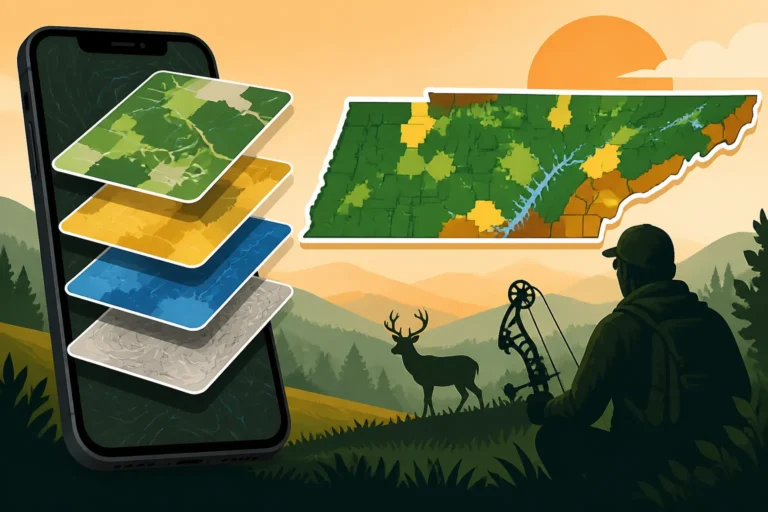
Hunting Catoosa means embracing the challenge of the Cumberland Plateau. The terrain can be steep, rocky, and unforgiving, so good physical conditioning and reliable gear are a must. Access is typically via a network of maintained gravel roads, but venturing off those roads requires diligent navigation. This is where tools like onX Hunt truly shine. You can layer public land boundaries, topo maps, and aerial imagery right on your phone, helping you pinpoint those hard-to-reach ridges and hollows that might hold less-pressured game. Knowing where you are relative to property lines and interior roads can make all the difference in a successful day in Catoosa. Reading Aerial Photos for Cumberland Plateau Deer can be a game-changer here, helping you identify potential pinch points and bedding areas from your couch.
Pickett State Forest and Pogue Creek Canyon State Natural Area
A bit further north of Cookeville, you'll find Pickett State Forest and the adjacent Pogue Creek Canyon State Natural Area. While not as large as Catoosa, these areas offer unique hunting experiences, particularly for those interested in a quieter, more primitive hunt. Pickett State Forest, for instance, provides opportunities for deer, turkey, and small game like squirrel and rabbit. The terrain here also features the classic plateau characteristics – sandstone bluffs, deep ravines, and mature hardwood forests.
Hunting these areas often means focusing on different tactics than you might use in Catoosa. For small game, finding mature oak ridges will be key for squirrel hunting, while dense brushy areas and fencerows can hold rabbits. Turkey hunting can be excellent here, with birds often utilizing the numerous ridges and creek bottoms. Deer hunting can be tougher due to lower densities than Catoosa, but the chance at an unpressured buck is always there if you put in the legwork. Always double-check the specific regulations for these state forest and natural area sections, as they can sometimes have unique rules or designated hunting zones. The beauty of these areas, particularly Pogue Creek Canyon, is their breathtaking scenery, making even an unsuccessful hunt a memorable outdoor experience.
Big South Fork National River and Recreation Area
The Big South Fork National River and Recreation Area is a colossal expanse of protected land straddling the Tennessee-Kentucky border, and a significant portion of it lies within a reasonable drive northeast of Cookeville. This area is truly wild, characterized by its deep gorges, towering sandstone arches, and the meandering Big South Fork of the Cumberland River. Hunting here is a true backcountry experience, offering opportunities for deer, turkey, and even some bear in its remotest sections. It's a place where you can easily get lost, but also a place where you can find solitude and unpressured game.
Access into Big South Fork is varied; some areas have decent road access, while others require hiking miles from the nearest trailhead. This is an ideal place to utilize detailed mapping applications like onX Hunt or GoHunt, as GPS signal can be spotty in the deep canyons, and understanding the topo lines is paramount. The rewards of hunting here are immense – the chance to pursue game in a genuinely wild setting, far from the sounds of traffic and other hunters. Just be prepared for strenuous climbs, long walks, and the need to pack out anything you harvest over rugged terrain. It’s a serious hunt, but for those up for the challenge, it’s one of the most rewarding public land experiences in Tennessee. Hunting the Cumberland Plateau gives a broader overview of tactics applicable to this type of rugged environment.
Navigating and Maximizing Your Hunt on Public Ground
Public land hunting, especially in the challenging terrain around Cookeville, requires more than just showing up with your gear. It demands preparation, strategic thinking, and a good understanding of the tools and tactics that give you an edge.
Essential Tools for Public Land Hunters
Gone are the days when a paper map and a compass were your only navigation tools. While those are still good to have as backups, modern mapping applications like onX Hunt and GoHunt have become indispensable for public land hunters. These apps allow you to view public and private land boundaries, topo maps, aerial imagery, and even mark waypoints for your stand locations, rubs, scrapes, or animal sightings. Before you ever step foot in the woods near Cookeville, you can scout from your couch, identifying potential access points, terrain features that funnel deer, and bedding areas.
Using these tools for pre-season scouting is not just about finding game; it’s about understanding the lay of the land, planning your entry and exit routes, and estimating how far you’ll need to walk to get away from road noise. They also help you identify important features like saddles, benches, and creek crossings where deer are likely to travel. Even after you've spent hours digitally scouting, nothing beats boots on the ground. Take advantage of the off-season to physically walk the areas you've identified, confirming travel corridors and fresh sign. This blend of digital and physical scouting is crucial for success. For more on this, check out Scouting Tennessee Public Land Before Season.
Strategies for Dealing with Pressure
Let's be realistic: public land, especially WMAs like Catoosa, can see significant hunting pressure, particularly during opening weekends of deer and turkey season. The key to success often lies in finding pockets that other hunters overlook or aren't willing to reach. This means putting in the extra effort. While many hunters stick close to roads and easy access points, the deer often quickly retreat to thicker, steeper, or more remote areas.
Consider walking deeper into the woods, especially into those rugged hollows and up those steep ridges that deter others. Look for terrain features that naturally funnel animals but are difficult for hunters to access, such as narrow ridgetops connecting two larger blocks of timber, or dense cedar thickets on steep slopes. Pay attention to wind direction and thermals, especially when hunting the numerous drainages of the Cumberland Plateau. A strong understanding of how these elements impact scent control can help you set up in a less-pressured area and remain undetected. Wind and Thermals on a Ridge System is a great resource for understanding this critical aspect of hunting. Sometimes, simply hunting midweek instead of on a busy Saturday can make a world of difference. To delve deeper into avoiding crowded areas, explore Finding Ground Others Walk Past.
Regulations and Respecting the Land
Every WMA and National Forest has its own set of regulations, and it's your responsibility to know and follow them. This often includes specific WMA permits (beyond your general hunting license), blaze orange requirements during certain seasons, and rules about vehicle use, camping, and even the type of equipment you can use. Always check the current TWRA hunting guide or the specific WMA regulations on the TWRA website before heading out. Tennessee WMA Permit Requirement details what you'll need.
Beyond the written rules, a good public land hunter also practices ethical conduct and respect for the land. This means practicing "Leave No Trace" principles: pack out everything you pack in, including spent shell casings, food wrappers, and anything else. Avoid damaging trees or vegetation when setting up stands (check regulations on stand types and placement). When encountering other hunters, be courteous and respectful of their space. We're all out there for similar reasons, and a little civility goes a long way in fostering a positive hunting community on public lands.
Game Species and Opportunities Near Cookeville
While deer hunting often takes center stage, the public lands around Cookeville offer a diverse array of game species, providing opportunities throughout much of the year.
Deer Hunting Prospects
The Cumberland Plateau, particularly in WMAs like Catoosa and portions of the Big South Fork, is known for its healthy white-tailed deer population. While you might not find the sheer numbers of some West Tennessee river bottoms, the bucks here can grow to impressive sizes, often due to the older age structure that rugged, pressured land can sometimes foster. The terrain means deer often utilize benches along hillsides, saddles between ridges, and thick cover in creek bottoms for bedding and travel. Understanding Where Cumberland Plateau Bucks Bed can be invaluable.
Hunting the rut in early November is a prime time, but the plateau can offer good hunting throughout the archery, muzzleloader, and gun seasons. Early season bow hunters might focus on acorns and soft mast sources, while late season hunters will be glassing south-facing slopes or creek bottoms for deer seeking thermal cover and any remaining food. Success often comes down to scouting diligently, understanding deer movement patterns in complex terrain, and being patient. The region falls into various Deer Management Units (DMUs), so always confirm the antlerless limits and specific regulations for your hunting area. To get a better understanding of the local deer population, you can read Cumberland Plateau Deer Density.
Turkey and Small Game
Spring turkey hunting in the Cookeville area can be phenomenal on public lands. The vast timbered tracts of Catoosa and Big South Fork are ideal turkey habitat, offering plenty of roosting trees and open woods for gobblers to strut. However, just like deer, these birds can become pressured quickly, so being willing to walk and use run-and-gun tactics can be effective. Locator calls work well in the expansive terrain, helping you pinpoint birds across hollows and ridges. Hunting the Statewide Turkey Opener in April outlines general strategies that are perfect for this region.
Beyond big game, small game hunting is a time-honored tradition and a fantastic way to enjoy the woods. Squirrel hunting is excellent throughout the mature hardwood forests, especially in oak and hickory bottoms. Tennessee Squirrel Season Dates will show you when to plan your hunt. Rabbit hunting can also be productive in brushy clear-cuts, fencerows, and overgrown field edges, especially with a good dog. These pursuits offer a different pace of hunting, often more social and less demanding than big game, and they're a great way to introduce new hunters to the sport.
Other Opportunities (Hogs, Predators)
While not the primary focus for many, wild hogs are present in parts of the Cumberland Plateau, including some of the public lands around Cookeville. They are often opportunistic harvests during deer or bear season, but dedicated hog hunters can find success by targeting creek bottoms and areas with disturbed soil. It's important to remember that hogs are considered a destructive invasive species in Tennessee, and there are often liberal hunting opportunities. Consult Hog Hunting Tennessee's Wild Boar for specific regulations.
Predator hunting, primarily for coyotes, is another year-round opportunity. Coyotes are abundant in Tennessee and can be called in using various vocalizations or electronic calls. Many public land hunters will carry a predator call during deer season, as a coyote responding to a distress call can be an exciting bonus. Furbearer trapping also has seasons in these areas, offering yet another way to engage with the natural resources of the region.
Public Land Opportunities Near Cookeville: A Snapshot
Here's a quick look at the main public hunting grounds discussed, to help you visualize your options:
| Area | Primary Game | Terrain Type | Key Considerations |
|---|---|---|---|
| Catoosa Wildlife Management Area | Deer, Turkey, Bear, Small Game | Rugged, forested, steep ridges, deep hollows | High pressure on opening weekends, requires WMA permit, excellent for getting away from crowds if you walk far, good deer genetics, a true "big woods" experience. |
| Pickett State Forest | Deer, Turkey, Small Game | Less rugged than Catoosa, but still forested and hilly, sandstone bluffs | Good for quieter hunts, beautiful scenery, check specific state forest rules, focus on mast crops for small game. |
| Big South Fork National River and Recreation Area | Deer, Turkey, Bear, Small Game | Very rugged, deep gorges, rivers, primitive, extensive wilderness | True backcountry hunt, requires good navigation (onX Hunt / GoHunt essential), physical stamina needed, offers solitude and unpressured game, check specific BSF regulations. |
Exploring the public hunting opportunities around Cookeville is a rewarding endeavor for any hunter willing to put in the effort. From the challenging big woods of Catoosa and the Big South Fork to the more intimate settings of state forests, there's a hunt waiting for you. Remember that thorough preparation, including digital and physical scouting, understanding regulations, and respecting the land, are your best allies for a successful and enjoyable experience. The beautiful Cumberland Plateau is calling!
Disclaimer
This article is for general informational purposes only and does not constitute professional advice. Laws, prices and regulations vary by location and change over time. Consult a qualified professional for guidance on your specific situation.