Public Ground Near Johnson City
Finding quality public hunting land near Johnson City, Tennessee, can feel like a real challenge sometimes. With much of the surrounding area being private property and the mountains presenting their own unique hurdles, it's easy to get discouraged when you're just trying to find a spot to chase a deer or call a gobbler. This guide is here to cut through that frustration, breaking down the prime public land opportunities accessible from Johnson City and offering practical advice to make your next hunt a success.
Understanding the Landscape Around Johnson City
East Tennessee is a breathtaking region, but its rugged beauty also dictates the type of hunting experience you can expect, especially on public land. Johnson City, nestled in the Appalachian foothills, is surrounded by a mix of agricultural areas, developing suburbs, and significant swaths of the vast Cherokee National Forest.
Geographic Context and Challenges
The terrain immediately around Johnson City, especially as you head east and south, quickly transitions into the steep, heavily forested slopes of the Appalachian Mountains. This isn't your flat West Tennessee river bottom country; here, you'll encounter dramatic elevation changes, thick rhododendron and laurel thickets, and deep hollows that can swallow sound and sunlight. Water sources are often abundant, but finding level ground or easily navigable paths can be a full-body workout. For a hunter, this means being physically prepared, understanding how game moves on such varied topography, and being equipped with reliable navigation tools.
These mountains provide incredible habitat for whitetails, black bears, and wild turkeys, but their very nature also presents challenges. Scouting often involves more hiking than driving, and pulling a deer out of a steep hollow can be an epic undertaking. Success here often comes down to knowing how to read the terrain, understanding thermals, and being willing to put in the effort to get off the beaten path where other hunters might not venture.
Public Versus Private Land Dynamics
In many counties across Tennessee, the balance of public and private land heavily favors private ownership, and Washington County, where Johnson City is located, is no exception to this general trend. While there are smaller private tracts and farm leases, the primary and most expansive public hunting opportunity in the region is undoubtedly the Cherokee National Forest. However, even within the national forest, you'll sometimes encounter a "checkerboard" pattern of ownership, where private inholdings are interspersed with public land. This can be incredibly frustrating if you're not meticulous about knowing where you stand, literally.
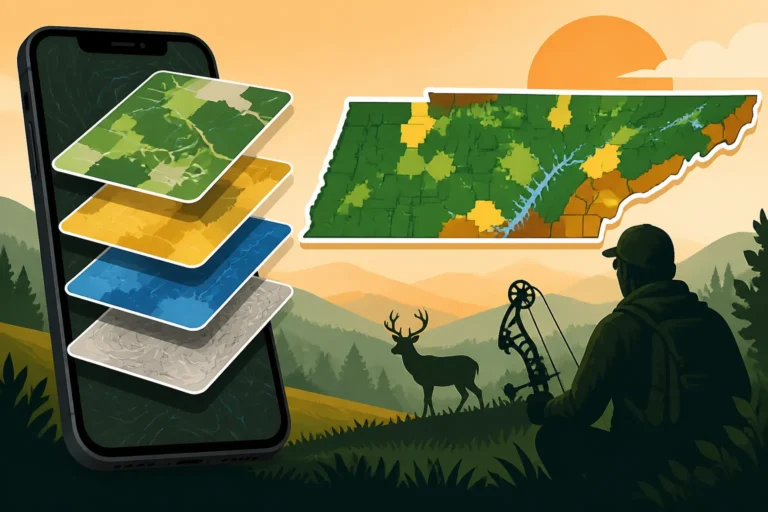
The key to navigating this is reliable mapping. Tools like onX Hunt have revolutionized how hunters approach these mixed-ownership landscapes, allowing you to clearly see property boundaries and avoid unintentional trespassing. While securing private land permission can be rewarding, the sheer scale of the Cherokee National Forest means that vast opportunities exist for those willing to learn its intricacies.
Key Public Hunting Areas Accessible from Johnson City
When you're based in Johnson City, your primary and most significant public land resource will be the Cherokee National Forest. This expansive federal land offers diverse hunting opportunities, but it's important to understand its different units and characteristics.
Cherokee National Forest – Unaka Unit (North End)
The northern reaches of the Cherokee National Forest, often referred to as the Unaka Ranger District, are your closest and most abundant public hunting grounds from Johnson City. This unit sprawls across several counties, including portions of Washington, Carter, Johnson, and Unicoi counties, presenting hundreds of thousands of acres of mountainous, mixed hardwood and conifer forests. This is prime habitat for white-tailed deer, black bears, and wild turkeys. Cherokee National Forest Hunting delves into this in more detail.
Access into the Unaka Unit is generally via a network of forest service roads, some paved but many gravel, and often gated during certain times of the year or for wildlife management purposes. You'll find numerous pull-offs and trailheads leading into vast timberlands. The hunting experience here is rugged; expect steep climbs, dense cover, and the need to cover ground. Deer sign might be subtle, but persistent scouting for mast crops, rubs, and scrapes can pay off. Bear hunters often find success hunting over natural mast crops in these mountains, and turkey hunters will appreciate the expansive roosting habitat. For those willing to walk far from the roads, truly unpressured pockets of game can be found. Understanding the specific characteristics of Cherokee Forest's Unaka Unit can give you a significant advantage.
Specific Wildlife Management Areas (WMAs) in the Region
While much of the Cherokee National Forest is managed under general forest regulations, certain sections within or adjacent to it are designated as Wildlife Management Areas (WMAs) by the Tennessee Wildlife Resources Agency (TWRA). These WMAs often have specific regulations, seasons, and sometimes even require WMA-specific permits in addition to your standard hunting license and big game permits. It's crucial to consult the current TWRA hunting guide for the specific WMA you plan to visit, as rules can vary significantly.
For example, areas like the Phipps Bend WMA or even portions of the Cherokee National Forest itself (like the Cherokee WMA within the larger forest) might operate under special regulations. These areas are specifically managed for wildlife, often with habitat improvements, which can concentrate game. While potentially smaller than the overall national forest, WMAs can offer fantastic hunting if you understand their nuances. The TWRA's "Go Outdoors Tennessee" app and website are indispensable resources for checking specific WMA boundaries, regulations, and permit requirements. This is where tools like GoHunt, with its detailed mapping capabilities integrated with state regulations, can be incredibly helpful for understanding boundaries and specific rules. Knowing how to use Using the Go Outdoors Tennessee Map Tool effectively can save you a lot of guesswork.
Comparison of Regional Public Lands
Here's a quick overview to help you differentiate between the types of public land available near Johnson City:
| Public Land Type | Primary Focus | General Terrain | Typical Access | Key Considerations |
|---|---|---|---|---|
| Cherokee National Forest | Multi-use, vast forest habitat | Steep mountains, dense timber, deep hollows | Forest service roads, hiking trails | Extensive, rugged, less regulated, challenging terrain |
| TWRA Managed WMAs | Wildlife management, hunting | Varies greatly (from mountain to bottomland) | Designated entrances, gates | Specific regulations, permits, potentially higher game density |
This table provides a generalized comparison. Always remember to check the most current regulations for any public land you plan to hunt, as rules can change seasonally or annually.
Maximizing Your Hunt on East Tennessee Public Land
Hunting public land in the mountains of East Tennessee, particularly around Johnson City, requires a different approach than hunting private land or flatter terrain. Success often hinges on preparation, adapting to the environment, and utilizing modern tools.
Pre-Season Scouting and Digital Tools
Before you ever step foot into the woods with your weapon, the real work begins with scouting. On vast public tracts like the Cherokee National Forest, covering ground effectively and identifying potential hotspots is paramount. You can't just drive around hoping to stumble upon game. This is where digital mapping applications become indispensable. Platforms like onX Hunt allow you to download maps for offline use, pinpoint property lines, identify topo features like saddles, ridges, and hollows, mark historical sign, and even analyze recent timber cuts or prescribed burns that might influence game movement. For example, knowing Reading Aerial Photos for Cumberland Plateau Deer can translate directly to success in similar mountain terrain.
Similarly, the TWRA's "Go Outdoors Tennessee" app offers detailed public land overlays and regulations that integrate seamlessly with your scouting efforts. Using these tools to identify remote areas away from road systems, pinpointing potential bedding areas on lee slopes, and locating pinch points or funnels in the terrain can give you a significant edge. Don't underestimate the power of "boots on the ground" scouting in conjunction with these digital aids; walk the ridges, check creek bottoms for tracks, and look for acorns or other mast crops in the fall.
Adapting to Mountain Terrain and Pressure
Hunting the mountains is physically demanding, but it also offers opportunities to escape hunting pressure that plagues more accessible areas. Deer, bears, and turkeys in heavily hunted zones quickly learn to avoid roads and human activity. Your strategy should involve finding those overlooked pockets. This often means being willing to hike further, climb steeper, and venture into thicker cover than most other hunters. Understanding Wind and Thermals on a Ridge System is critical, especially in the mountains where air currents can shift dramatically, affecting how your scent travels.
Focus on terrain features that naturally concentrate game or provide thermal advantages. Ridge-top saddles, benches along steep slopes, and the heads of deep hollows are all places where game might travel or bed. During periods of heavy pressure, like the opening days of gun season, many animals will move into the densest cover available, often on north-facing slopes or in thick rhododendron thickets. By Finding Ground Others Walk Past and being willing to navigate it, you can often find unpressured animals. It also helps to consider Hunting Pressure on Tennessee Public Land when planning your approach.
Essential Gear for East Tennessee Public Land
The right gear can make or break a mountain hunt. Given the rugged terrain and often unpredictable weather, prioritizing comfort, durability, and utility is key. Good quality, waterproof hiking boots are non-negotiable for the steep climbs and potentially wet conditions. Layered clothing, ideally moisture-wicking synthetics or wool, will allow you to adapt to temperature swings from frosty mornings to warm afternoons. A reliable backpack that can comfortably carry your essentials – water, snacks, first-aid, navigation tools, and potentially game – is also critical. Packs for a Cherokee Forest Day Hunt are designed for this kind of rigorous outing.
Navigation is paramount. While phone apps like onX Hunt are powerful, a physical map and compass, or a dedicated GPS unit, serve as excellent backups in areas with spotty cell service. A headlamp is essential for early morning walks in or late evening walks out. Finally, consider how you'll get game out. A deer cart might work on some forest roads, but in truly steep, remote areas, you'll be quartering the animal and packing it out. Boots for Tennessee Hollows and Creek Bottoms are necessary to handle the steep and rocky terrain you'll encounter.
Regulations and Responsible Hunting
Hunting on public land in Tennessee comes with specific rules and a shared responsibility to maintain these resources for future generations. Knowing and following regulations is not just about avoiding fines; it's about ethical hunting and land stewardship.
Understanding Permits and Regulations
Before you plan any hunt near Johnson City, or anywhere in Tennessee, the first step is always to verify that you have the correct and current licenses and permits. This typically includes a basic Tennessee hunting license, any necessary big game permits (like a deer or turkey tag), and potentially a WMA permit if you're hunting in a designated Wildlife Management Area. As mentioned, the Cherokee National Forest itself has general rules, but specific units or areas within it might fall under WMA regulations. Tennessee Hunting Licenses and What They Cost and Tennessee Big Game License Requirements are great starting points for understanding the financial and legal aspects of getting properly licensed.
Always carry proof of your licenses and permits while afield. The Go Outdoors Tennessee app can store digital copies, but a printed copy is a good backup. Familiarize yourself with season dates, bag limits, weapon restrictions, and any blaze orange requirements for the specific species and location you're hunting. These details are outlined annually in the Tennessee Hunting & Trapping Guide, available online through the TWRA website or at local license retailers. Double-check for any special regulations related to Chronic Wasting Disease (CWD) if hunting in or near a CWD management zone, as these can include carcass transport restrictions and mandatory testing.
Ethical Hunting and Respect for the Land
When you're hunting on public land, you're sharing that space with hikers, mountain bikers, bird watchers, and other hunters. Practicing ethical hunting and good stewardship is vital for maintaining access and fostering a positive image of hunting. This means adhering to "Leave No Trace" principles: pack out everything you pack in, and perhaps even a little extra trash you find. Avoid damaging trees with stands or trail cameras where prohibited, and be mindful of noise levels, especially when other users are present.
Proper game recovery is also a critical part of ethical hunting. Taking a responsible shot and then diligently tracking your animal, even if it leads into thick cover or steep terrain, is paramount. Dragging a Deer Out of a Steep Hollow is hard work, but it's part of the commitment we make as hunters. If you encounter another hunter or recreationist, a friendly greeting goes a long way. Our public lands are a treasure, and responsible behavior ensures they remain open and enjoyable for everyone.
Disclaimer
This article is for general informational purposes only and does not constitute professional advice. Laws, prices and regulations vary by location and change over time. Consult a qualified professional for guidance on your specific situation.